


Brown Pine Settle
A brown pine settle offers sturdy domestic seating shaped by centuries of everyday country use.
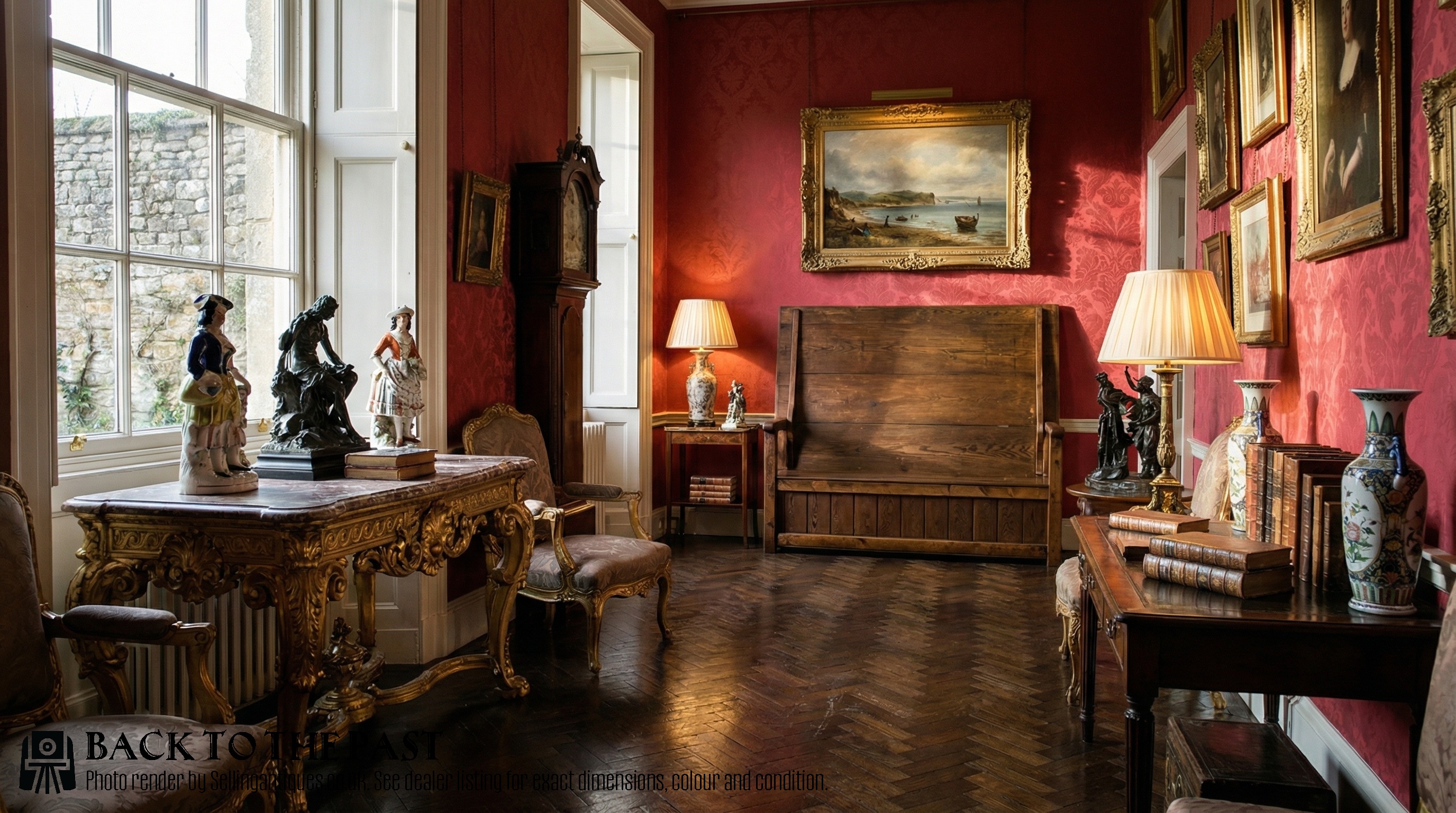
Brown Pine Settle
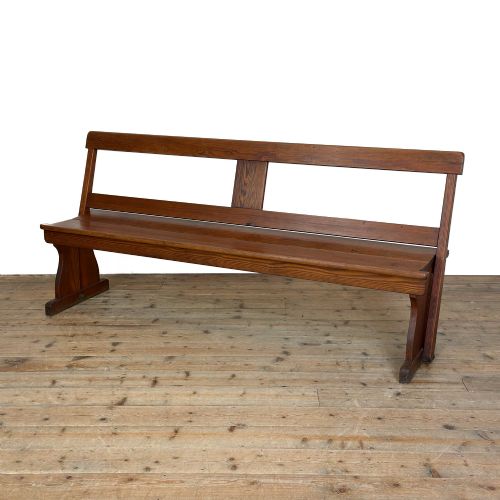
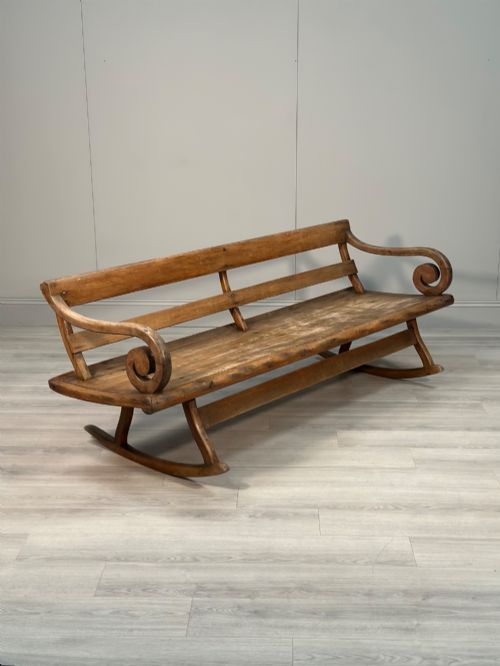
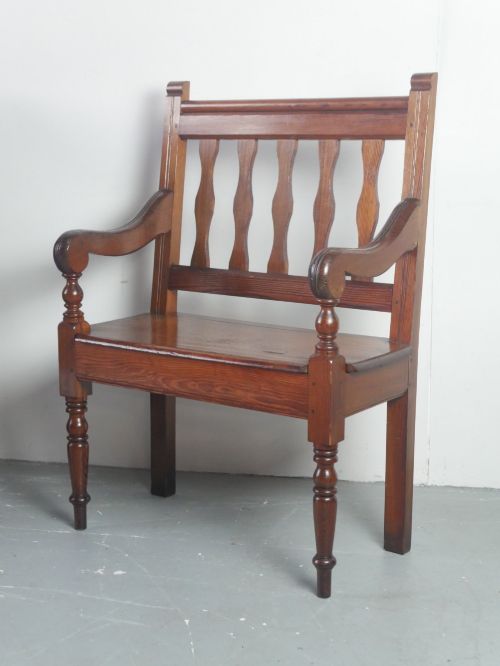
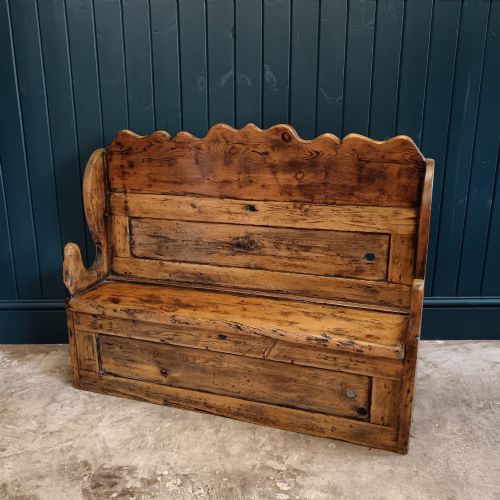
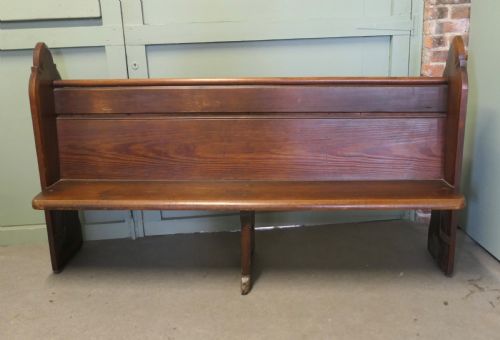
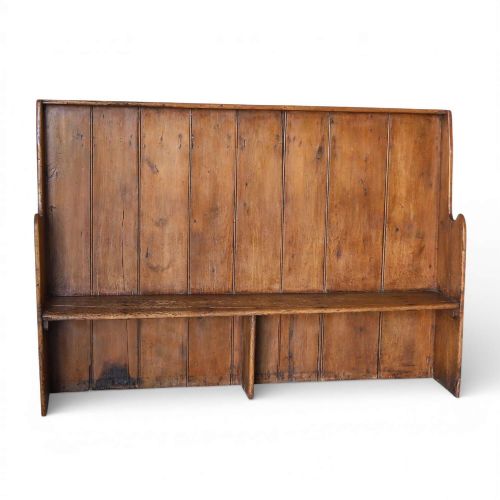
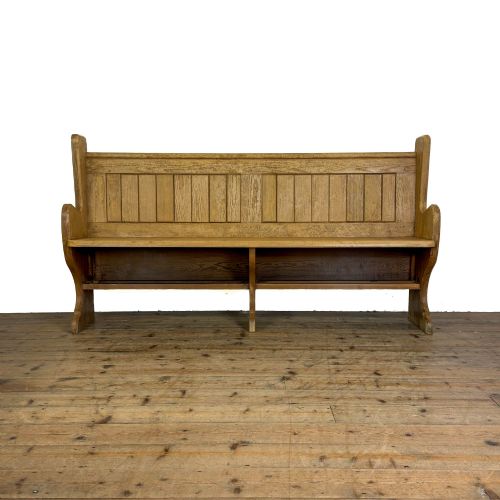
A brown pine settle provides high-backed wooden seating designed originally to block draughts in farmhouse halls and country taverns. You will encounter various regional forms on this page, ranging from simple panelled hall benches to barrel-backed and box seat variants.
The material record spans centuries of vernacular carpentry, showing pieces dated from the eighteenth century through the Victorian era and into the early twentieth century. These benches frequently combine pine with elm, oak, or pitch pine, reflecting the practical choices of regional makers.
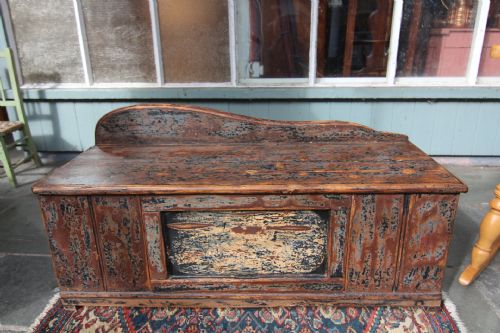
Many examples retain traces of their working history through original painted surfaces, polychrome decoration, or honey brown patina. Settles serve equally well today as deep seating in a kitchen or a functional storage bench in a hallway.
Materials and construction
Makers built these pieces using solid pine alongside secondary timbers like elm and oak for structural strength. Construction typically involves traditional joinery, including panelled backs and sturdy box bases designed to withstand heavy daily use.
Surface treatments vary from polished wood showing a warm brown patina to layered original paint finishes. Iron fixings and hardware appear where structural reinforcement was required by the carpenter.
Several pieces double as clever dual-purpose furniture, transforming from a high-backed seat into a flat wooden table with a simple flip.
Judging quality in country seating
Quality rests in the integrity of the timber and the honesty of the surface, whether that is an untouched honey brown patina or an authentic early painted finish. Proportion and scale also dictate value, with slim hallway benches and barrel-backed forms commanding particular attention.
The degree of original vernacular character defines the better examples on the market. Retaining original structural elements and unblemished panel construction distinguishes superior pieces from heavily restored or later adaptations.
The Brown Pine Settle Glossary
- Settle
- A wooden bench with a high back, solid arms, and often a enclosed box base. It was designed to keep out cold draughts in unheated rooms.
- Barrel-backed settle
- A seating form featuring a curved, enclosing wooden back that wraps around the occupant for maximum thermal protection. This specialised design is frequently associated with Georgian tavern furniture.
- Box seat
- A bench configuration where the seat lifts to reveal a deep storage compartment underneath. This practical addition made efficient use of domestic space in small vernacular homes.
- Patina
- The surface sheen and colour developed by wood over decades of handling, exposure, and waxing. A desirable honey brown tone indicates long age and gentle maintenance.
Brown Pine Settle: Frequently Asked Questions
Where should I place a settle?
A settle fits naturally in an entrance hallway or against a long kitchen wall where its high back provides structure to the room.
Because of their depth, ensure you measure your floor space carefully before positioning one in a tighter corridor.
How do I care for antique pine?
Maintain the wood by applying a natural beeswax polish occasionally to nourish the dry fibres and preserve the surface sheen.
Keep the bench away from direct heat sources and radiators to prevent the timber from splitting or warping over time.
Are these benches comfortable to sit on?
These are traditional wooden seats designed primarily for upright support rather than deep lounging. Many owners add loose cushions or pads to soften the wooden bench for everyday seating.
The high back and solid arms do, however, create a remarkably sheltered and cosy spot.
How can I tell an older settle apart?
Examine the construction methods, tool marks on the timber, and the nature of the surface wear to gauge age. Eighteenth and early nineteenth-century pieces often display pegged joints, hand-planed boards, and deeper patination.
Later Victorian and Edwardian examples tend to show more uniform machine-sawn timber and standardised hardware.