


Brown Oak Miniature Chest
A brown oak miniature chest is a small-scale piece of furniture, and collectors seek these items for their dense timber and precise cabinetwork.
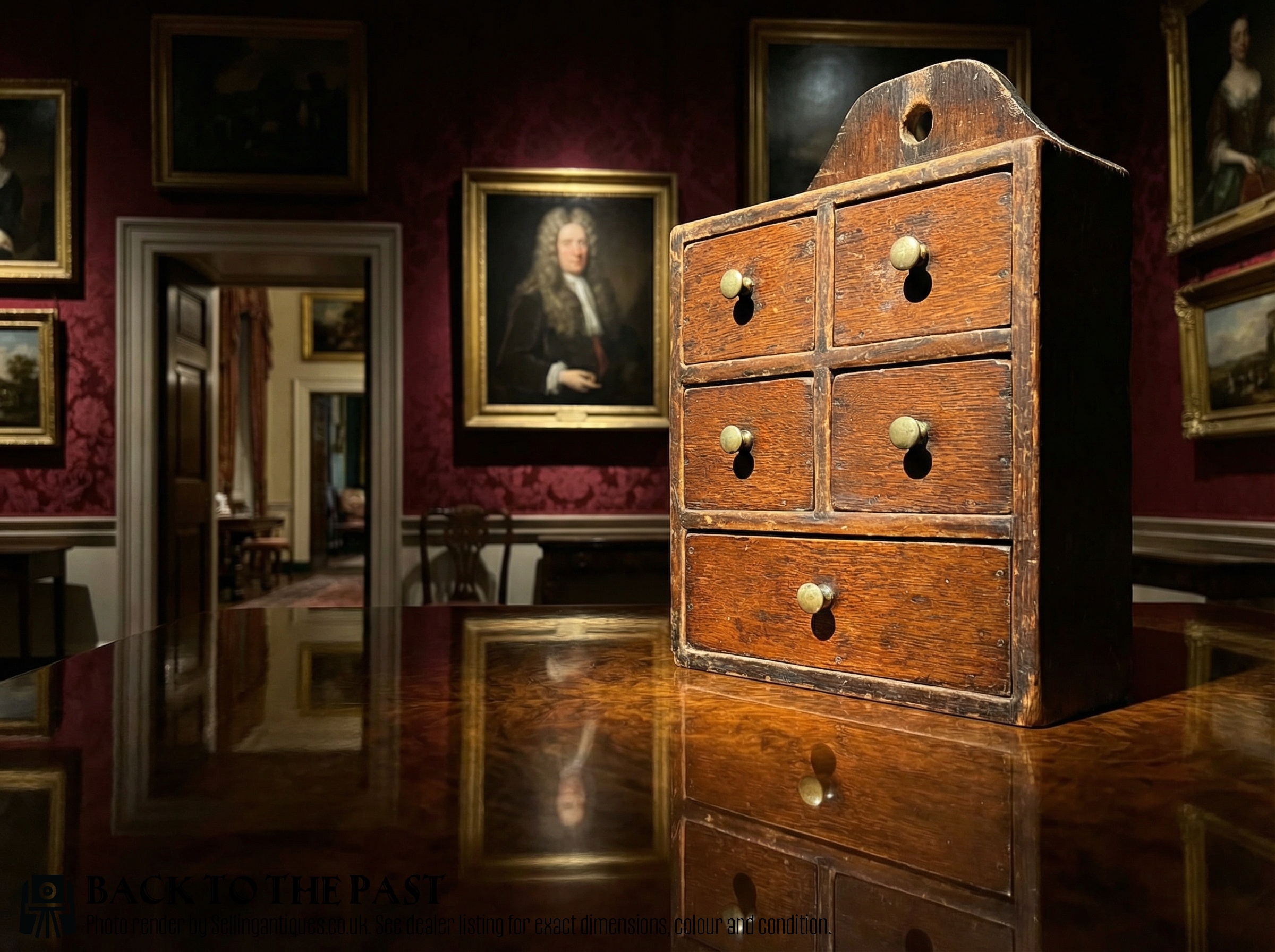
Brown Oak Miniature Chest
A brown oak miniature chest represents a scaled-down version of domestic storage furniture, produced across the eighteenth and nineteenth centuries. These pieces encompass forms such as the Welsh coffor bach, tabletop chests, and miniature chests of drawers.
The materials and styles span Georgian, Victorian, and Edwardian periods, frequently demonstrating vernacular traditions. Oak forms the primary structural timber, often enriched with burr oak surfaces, pine elements, and contrasting wood inlay.
How they were made
Cabinetmakers utilised solid oak and burr oak timbers, frequently pairing them with secondary woods like pine for internal partitions and drawer linings. Joinery techniques relied on pegged construction and neat dovetails for drawer boxes.
Surface ornamentation involved timber inlay, timber banding, and small brass fittings such as drop handles and escutcheons. Turners shaped integral feet from the solid wood to elevate the miniature carcases.
Object forms span miniature chests of drawers, coffers, spice boxes, armoires, and tea caddies.
What varies in quality
The standard of timber selection divides simpler examples from finer works, particularly where burr oak or figured grain is present. Cabinetmakers who matched the grain patterns across drawer fronts achieved a more harmonious visual balance.
Proportion and scale dictate the refinement of the piece, alongside the crispness of the dovetail joints and the retention of original brass hardware. Vernacular variations display differing levels of decorative turning on feet and mouldings.
The Brown Oak Miniature Chest Glossary
- Coffor bach
- A small Welsh coffer or chest, traditionally featuring a hinged lid and often a drawer below. These miniature pieces served as presentation items or dowry chests.
- Burr oak
- A timber harvested from oak tree growths, prized for its swirling grain patterns and rich figure. Cabinetmakers used burr veneers on prominent surfaces like drawer fronts.
- Dovetail
- A joint formed by interlocking wedge-shaped fingers, utilised in drawer construction. This method provides robust tensile strength without relying solely on adhesives.
- Escutcheon
- A protective plate surrounding a keyhole, usually fashioned from brass. It guards the surrounding wood from wear caused by the insertion of keys.
Brown Oak Miniature Chest: Frequently Asked Questions
What is a brown oak miniature chest used for?
These small chests served diverse domestic purposes, from storing jewellery and documents to acting as apprentice pieces or presentation gifts.
Today, collectors utilise them as tabletop display pieces or for containing small items of personal collection.
How do I date a miniature oak chest?
Dating relies upon examining construction methods, such as hand-cut dovetails, timber choices like pine secondary woods, and regional vernacular styles.
Hardware styles, including brass drop handles and escutcheons, also offer chronological indicators alongside distinct period characteristics.
What is a Welsh coffor bach?
A coffor bach is a small Welsh coffer, functioning as a miniature version of a blanket chest with a hinged lid.
Many examples incorporate one or more drawers beneath the main compartment and stand upon bracket or turned feet.
Are all these chests made of solid oak?
While oak remains the primary structural timber, makers frequently incorporated secondary woods such as pine for drawer linings and internal dividers.
Surfaces often display decorative wood inlay or burr oak veneers over the primary carcase.