
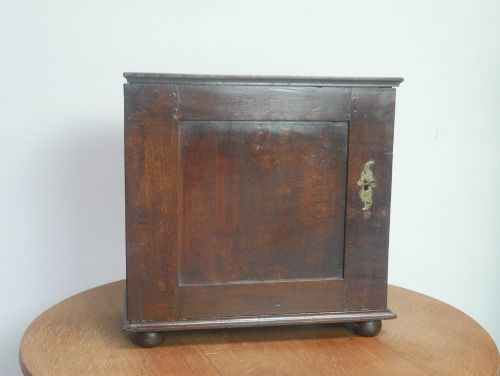
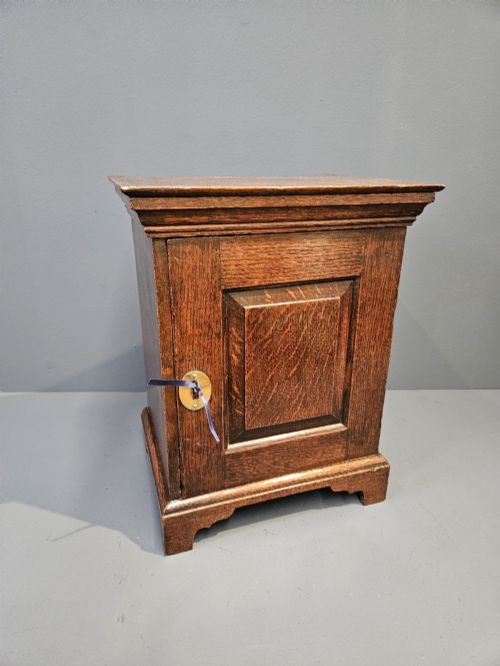


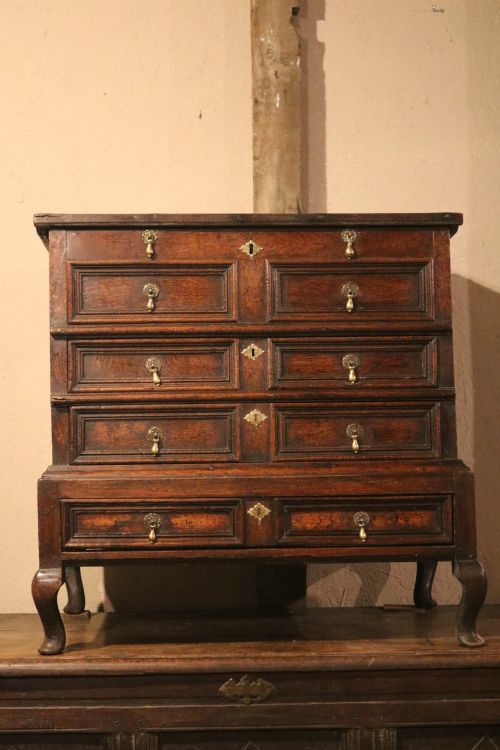


Dark Oak Spice Chest
A dark oak spice chest is a small, compact storage piece holding precious dry goods, prized for its rich timber and regional British vernacular character.
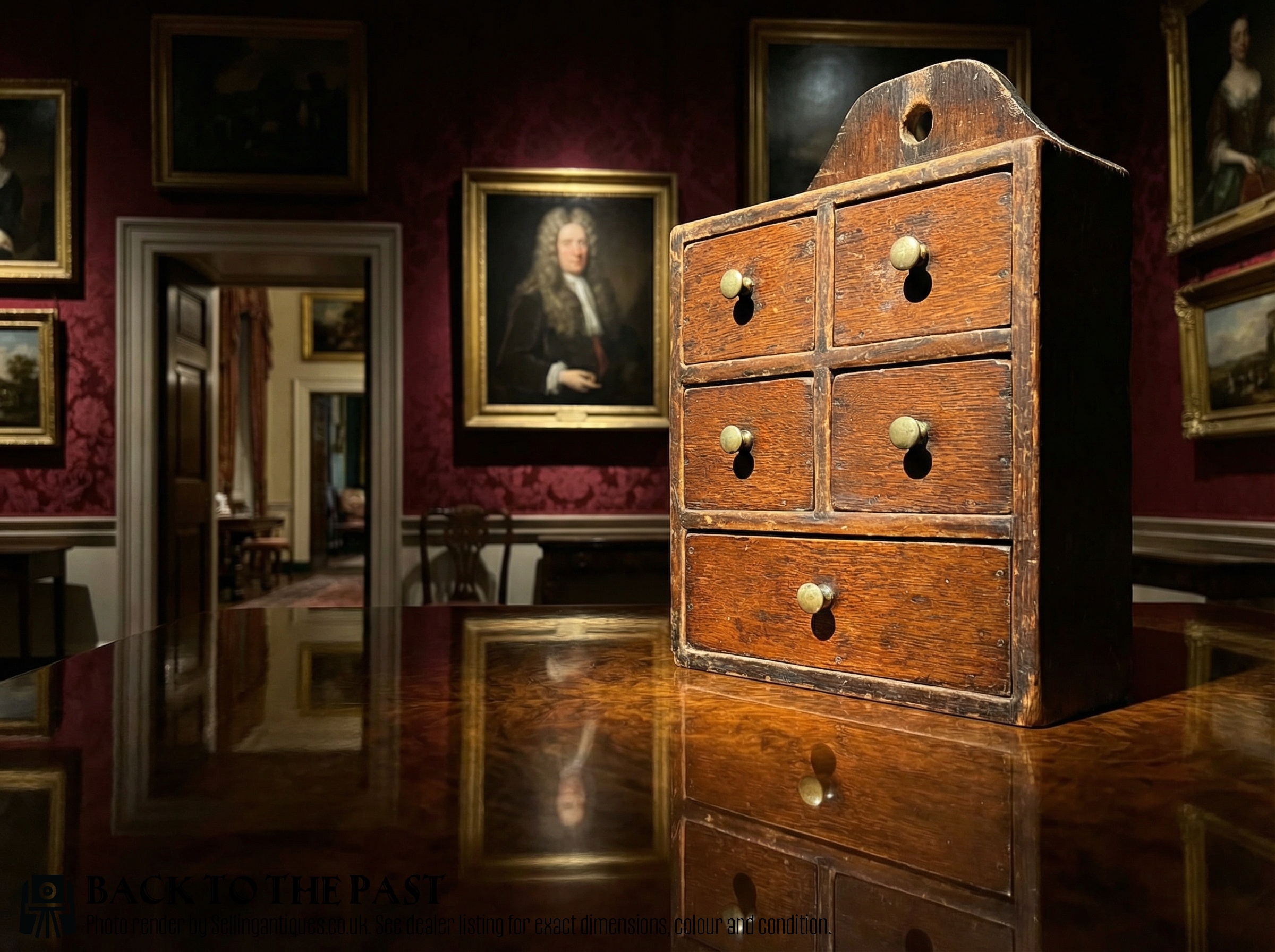
Dark Oak Spice Chest
The selections available here lean heavily into Georgian and Welsh vernacular traditions, spanning both eighteenth-century origins and nineteenth-century country pieces. Buyers encounter various diminutive forms, including miniature court cupboards, tallboys, and drawer chests alongside traditional wall-mounted spice boxes.
Most examples utilise solid oak complemented by secondary timbers such as pine, whilst incorporating functional brass hardware, iron hinges, and occasional bone or mixed wood inlay. These forms reflect centuries of domestic utility, surviving primarily as wall cabinets and small desk-top cupboards.
Materials and construction methods
Construction relies predominantly on solid oak boards joined with traditional methods, paired with pine used for secondary elements like drawer linings and interior backs. Regional cabinet makers shaped these dense timbers into wall-hanging spice boxes and miniature chests using straightforward joints suited to vernacular workshops.
Hardware consists of brass escutcheons, hinges, and drawer pulls, alongside iron fittings that secure doors and lids. Occasional decorative touches include mixed wood inlay and bone details, enhancing the surfaces of eighteenth-century Welsh and Georgian pieces.
Listings span oak, pine, iron, bone, and mixed wood inlay across eighteenth-century Georgian and nineteenth-century country periods.
Factors of quality in miniature furniture
Quality rests in the fidelity of the proportions and the depth of the timber's patina, which develops across centuries of handling. Pieces that maintain their original hardware, hinges, and internal arrangement command greater appreciation from collectors of vernacular antiques.
The refinement of the joinery and the presence of regional decorative elements, such as deliberate inlay or characteristic Welsh architectural details, distinguish finer examples from standard country workshop output.
The Dark Oak Spice Chest Glossary
- Vernacular
- Everyday objects made by local tradesmen rather than metropolitan workshops. These pieces reflect regional styles and materials characteristic of specific British counties.
- Escutcheon
- A protective brass plate surrounding a keyhole. It prevents the timber around the lock from splitting with repeated use.
- Court cupboard
- A formal type of small storage furniture featuring tiered levels or enclosed sections. Miniature versions replicate full-scale domestic forms in diminutive proportions.
- Tallboy
- A tall chest of drawers consisting of one chest stacked upon another. Miniature variants scale down this vertical storage form for tabletop or cabinet display.
- Patina
- The surface sheen and darkening acquired by wood over long periods of exposure and handling. It indicates age and depth of character.
Dark Oak Spice Chest: Frequently Asked Questions
What did people store inside a spice chest?
Householders stored expensive imported spices, herbs, and culinary aromatics behind locked doors to protect precious goods from dampness and theft.
These compact containers also held medicinal recipes, documents, and small personal valuables safely away from general household traffic.
Were these chests meant for walls or tables?
Many examples feature original hanging brackets or flat backs designed for wall mounting in kitchens and parlours to save floor space.
Other variations sat securely upon desks, tables, or larger pieces of furniture as portable repositories for documents and small items.
How do I identify a Georgian spice cabinet?
Georgian pieces typically display restrained proportions, panelled doors, and brass H-hinges characteristic of eighteenth-century British cabinet making.
They often incorporate small internal drawers arranged behind a primary locking door, reflecting the domestic requirements of the period.
What is Welsh vernacular furniture?
Welsh vernacular describes domestic pieces built by regional craftsmen using local timber traditions distinct from London workshop styles.
These items frequently showcase distinctive regional characteristics, such as mixed wood inlay and characteristic local mouldings dating to the seventeen-hundreds.