

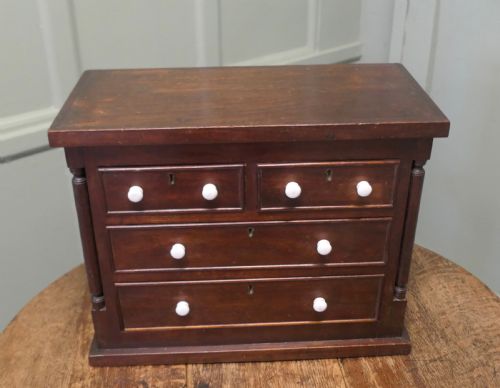
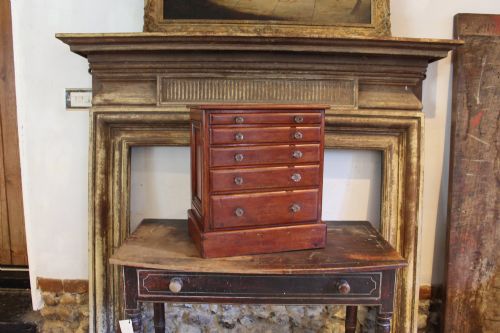
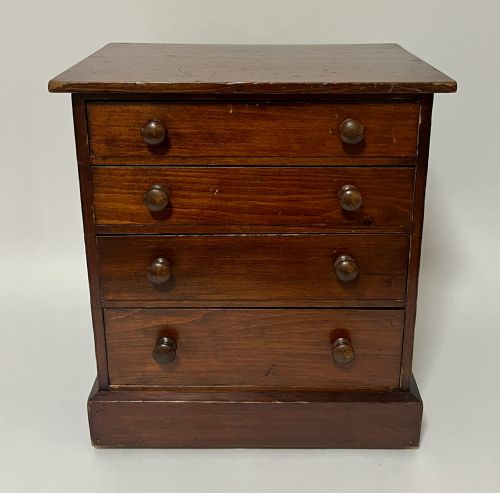
Wooden Apprentice Chest
These small wooden apprentice chest examples offer scaled-down cabinet work spanning multiple historic periods, prized for traditional joinery and tabletop utility.
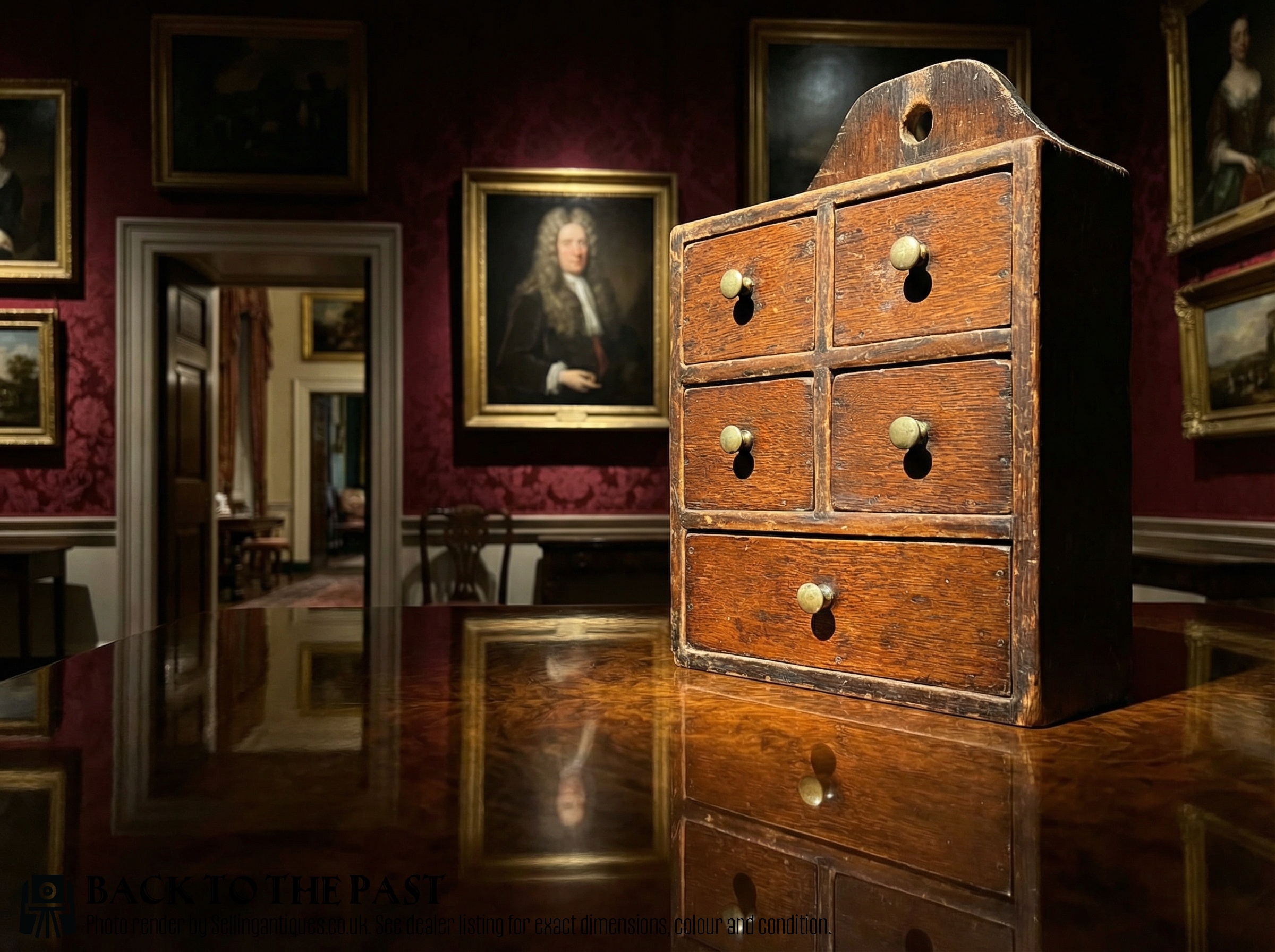
Wooden Apprentice Chest
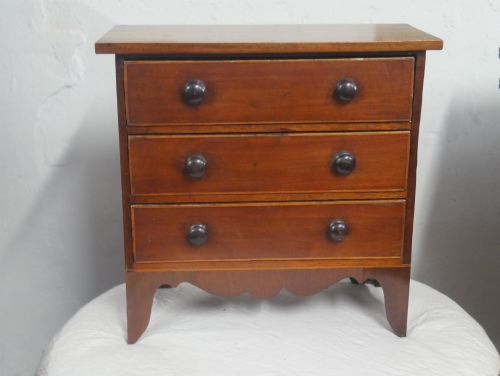
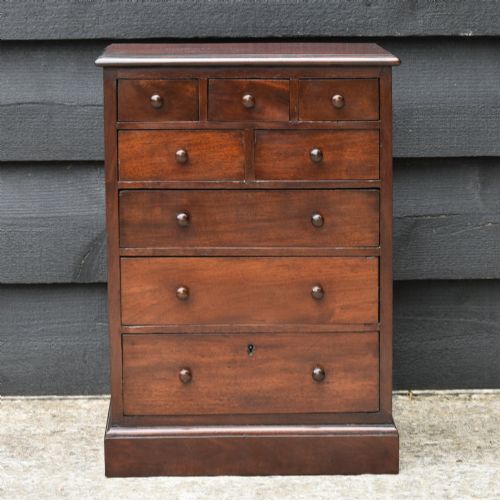
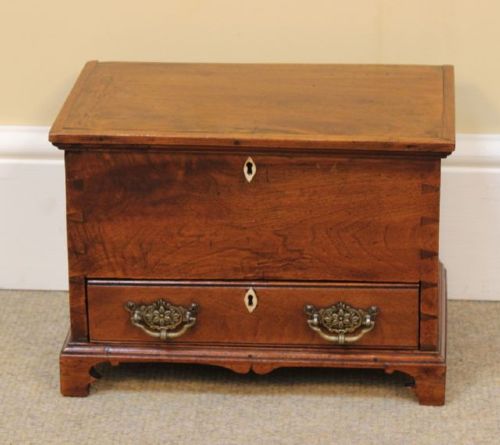
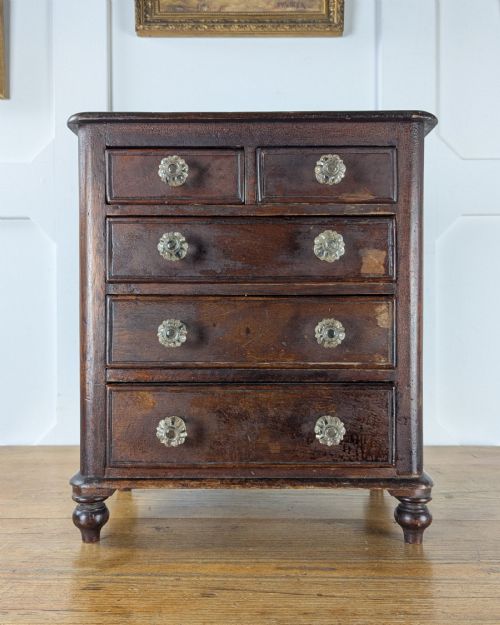
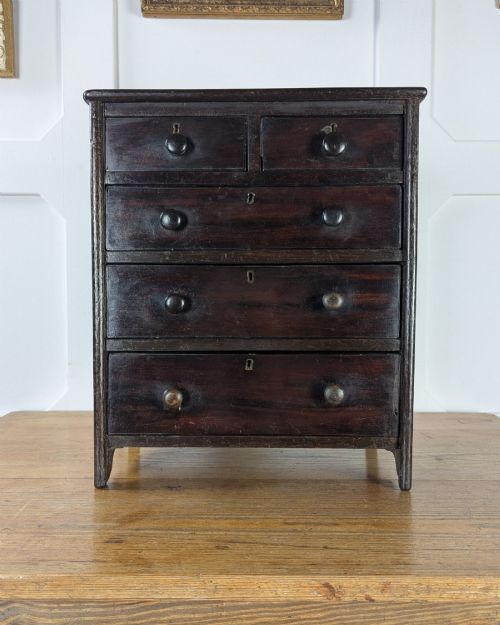
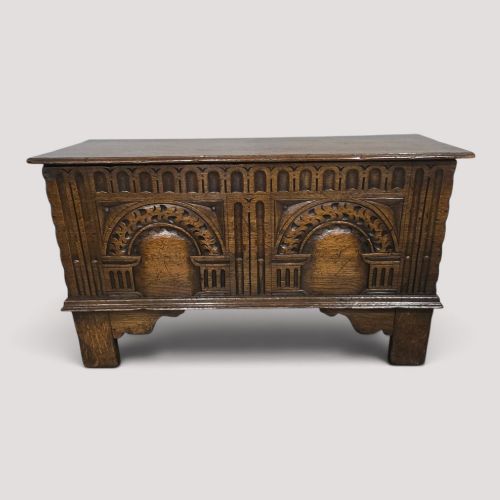
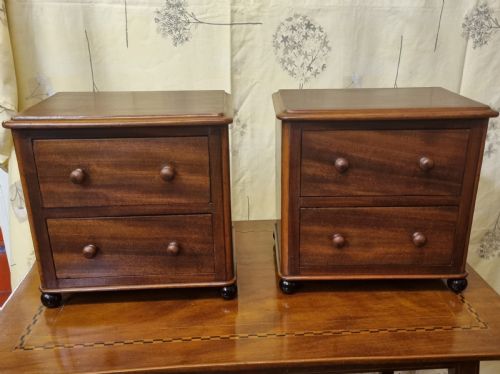
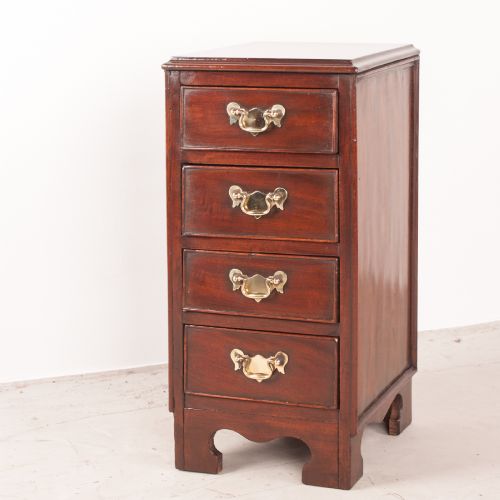
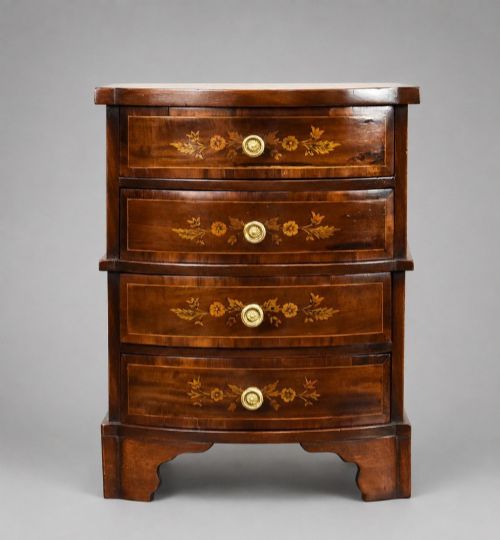
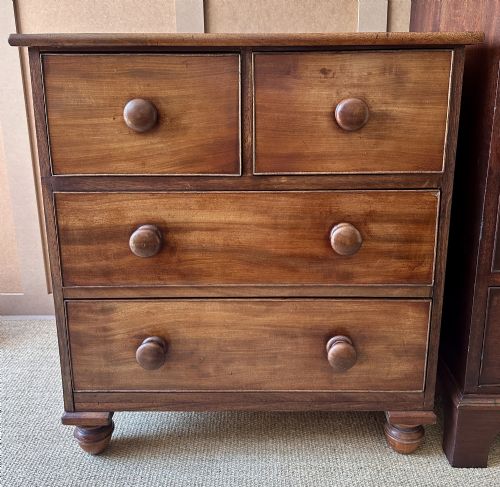
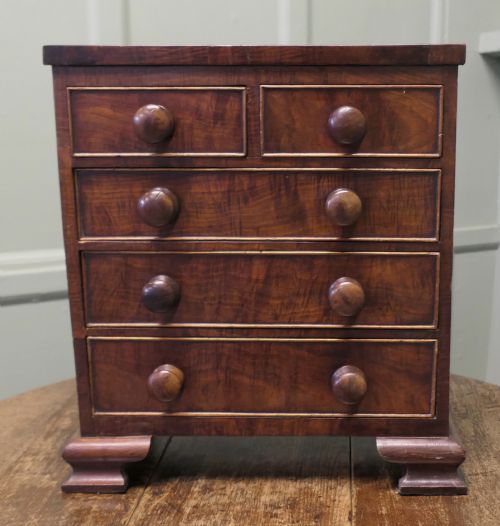
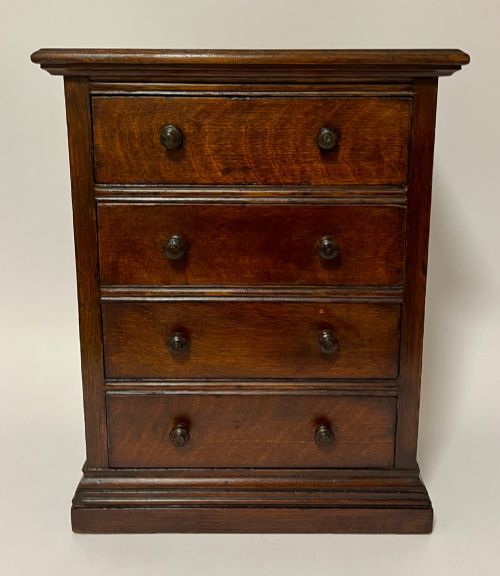
A wooden apprentice chest takes the form of miniature furniture, miniature chests of drawers, and tabletop storage pieces created across the Georgian, Victorian, and Edwardian eras. Buyers encounter pieces configured as small drawers, mule chests, spice boxes, and coffeers scaled down for display or workshop demonstration.
Makers produced these objects in regional British centres, including Scottish workshops and provincial cabinet shops, utilising dense timbers like mahogany, oak, walnut, and pine. The selection ranges from plain utility specimens to marquetry-inlaid collector cabinets featuring turned feet and secret compartments.
Materials and Technique
Cabinetmakers constructed these miniature forms using solid hardwoods such as mahogany, oak, walnut, and burr yew, frequently pairing them with secondary pine linings. Workshops applied decorative veneers including burr oak and amboyna, alongside marquetry inlays and brass hardware to replicate full-sized case furniture.
Joinery techniques mirror domestic furniture production, employing dovetailed drawer construction, pegged frames, and turned wooden feet. Surfaces received polished finishes that accentuated the natural grain of elm, rosewood, and stained pine.
Listings feature woods such as mahogany, oak, walnut, pine, amboyna, and burr yew spanning the Georgian, Regency, and Victorian periods.
Quality and Proportion
Proportion and scale dictate the distinction between standard items and superior cabinet work, since skilled makers maintained architectural harmony at a reduced size. Fineness of timber selection, such as figured walnut or burr yew against plain stained pine, separates basic utility boxes from accomplished display pieces.
The complexity of internal arrangement influences worth, with secret drawers, fitted interiors, and intricate brass escutcheons marking superior execution. Dovetailing precision and the preservation of original surface patination indicate the level of workshop care invested in the piece.
Thomas Dennis
The Wooden Apprentice Chest Glossary
- Apprentice piece
- A scaled-down item demonstrating a craftsman's skill to attain master status in a guild. These objects replicate full-sized furniture forms.
- Mule chest
- A storage box fitted with one or more drawers at the base beneath a hinged lid. This form bridges the evolution from trunk to drawer-based furniture.
- Marquetry
- Decorative veneer work forming pictorial or geometric patterns using various coloured woods. Craftsmen applied thin slices of timber to carcase surfaces.
- Secret drawer
- A concealed compartment built into a case piece, accessed through a hidden release mechanism or removable divider. Cabinetmakers incorporated these to secure valuables.
Wooden Apprentice Chest: Frequently Asked Questions
What is a wooden apprentice chest?
A wooden apprentice chest is a small-scale model of a chest of drawers or cabinet produced by craftsmen to demonstrate proficiency. These items replicate domestic furniture styles across Georgian and Victorian periods.
Cabinetmakers utilised leftover fine timbers like mahogany and oak to construct these functional miniature pieces for tabletop use.
How were these miniature chests used?
Historic uses included desktop storage for trinkets, jewellery, and letters, alongside service as salesman samples or apprentice qualification pieces. Their compact dimensions suited placement on larger tables or chests.
Collectors today employ them for display and specialised storage of small items.
How do I date a wooden apprentice chest?
Dating relies on identifying period characteristics in the timber, secondary woods, hardware, and construction methods. Georgian pieces display different dovetailing and proportions compared to Victorian or Edwardian examples.
Stylistic markers such as bracket feet, turned feet, or applied mahogany veneers help narrow the decade of production.
Are these chests made of solid wood?
Most examples combine solid primary hardwoods like mahogany, oak, or walnut with secondary woods such as pine for drawer linings and carcase backs. Finer items feature decorative veneers applied to a stable core.
Construction materials varied according to the workshop tradition and the period of manufacture.