

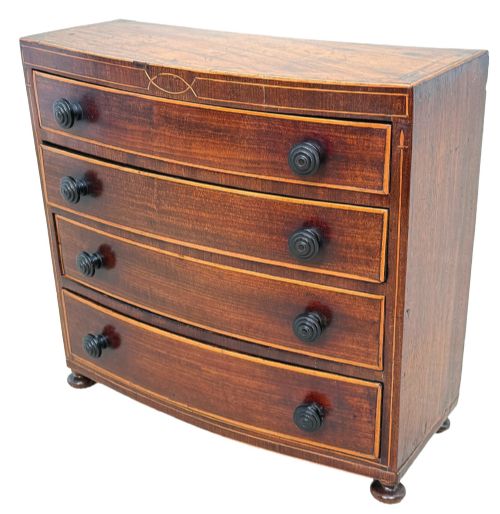
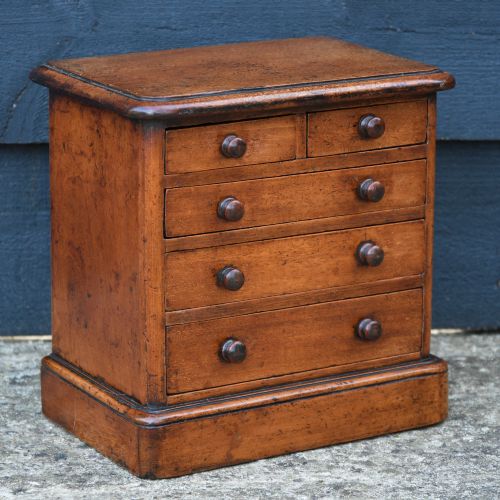
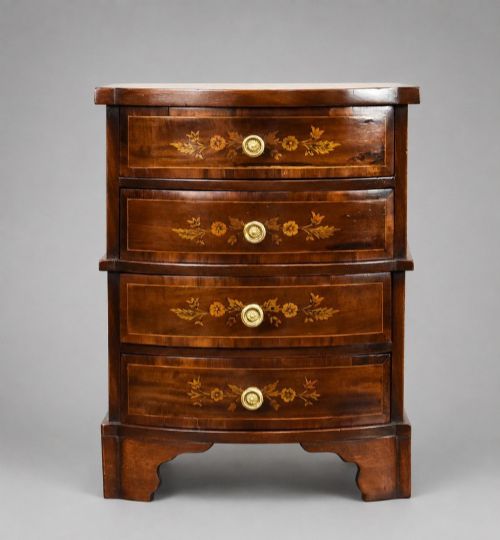
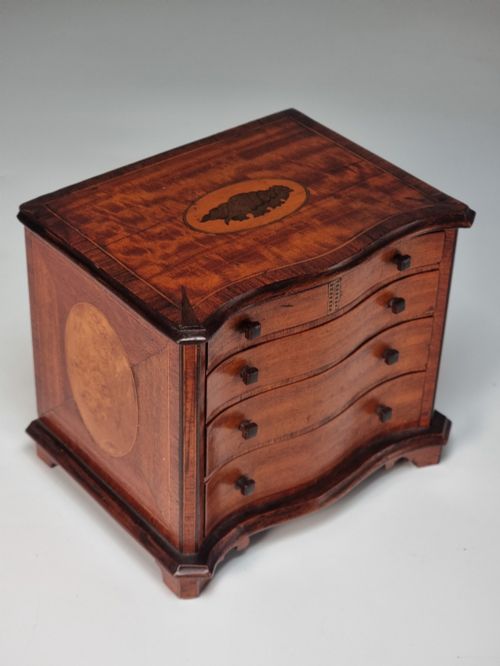
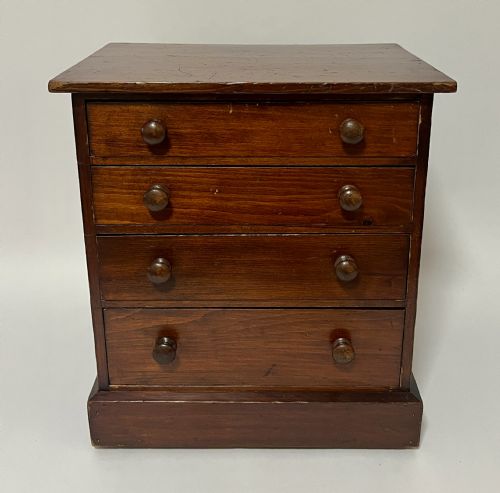


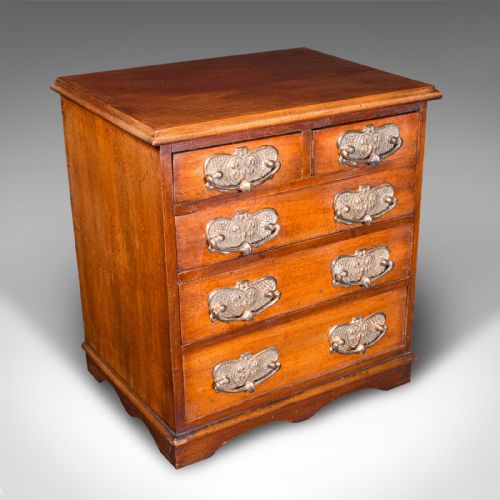

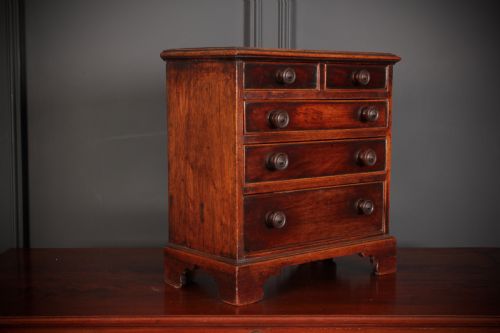


Brown Wood Apprentice Chest
A brown wood apprentice chest is a small-scale piece of furniture offering charming proportions and precise cabinet-making.
Brown Wood Apprentice Chest
When you search for a brown wood apprentice chest, you encounter miniature chests of drawers, small collectors cabinets, and diminutive bureaux originating from periods such as the Georgian, Victorian, and Edwardian eras. These diminutive items reflect the full-scale furniture forms of their respective times, spanning bow front, serpentine, and straight-front designs.
Judging the work
Quality rests in the precision of the joinery, the selection of timber veneers, and the preservation of original hardware such as brass pulls and escutcheons.
Superior items maintain crisp mouldings, smooth-running drawers, and well-proportioned scaling that mirrors full-sized furniture without looking crude.
Brown Wood Apprentice Chest Retail Price Guide 2026
Typical asking prices for brown wood apprentice chest among the pieces listed under this phrase on Sellingantiques today, from the lower quarter to the upper quarter. They describe what is for sale here now, not the wider market.
Materials recorded across current items include brass, mother of pearl, pitch pine, amboyna, and yew wood.
A. F. Lloyd, Bideford
The Brown Wood Apprentice Chest Glossary
- Apprentice piece
- A miniature furniture item traditionally made by a craftsman to demonstrate skill for guild admission or qualification. These pieces show advanced joinery techniques.
- Bow front
- A convex curved front contour popular in Georgian and Victorian cabinet-making. This shape requires skilled timber bending or shaping.
- Serpentine
- A gently undulating front edge featuring a convex centre flanked by concave curves. It demands precise woodworking precision.
- Escutcheon
- A protective plate surrounding a keyhole, usually made of brass or bone. It prevents wear to the surrounding wood.
- Dovetailed
- A joint formed by interlocking wedge-shaped fingers, prized for strength. This method binds drawer corners securely.
Brown Wood Apprentice Chest: Frequently Asked Questions
Were these chests made by actual apprentices?
Some small chests were produced by trainees proving their competence to master craftsmen, whilst others served as salesmen's samples or domestic trinket boxes.
Cabinet-makers also built them simply to utilise leftover fine timber or to satisfy a market for miniature furnishings.
How do I date a miniature chest?
Dating relies on identifying timber species, construction methods, and hardware styles that match specific historical periods like the Georgian or Victorian eras.
Secondary woods inside the drawers and the style of dovetailing offer further clues to the decade of manufacture.
Where were these small chests placed?
Owners typically kept these diminutive cabinets on top of larger dressers, desks, or mantelpieces to store small valuables, documents, or collections.
Their compact proportions allowed them to function as desktop specimen cases or jewellery storage in parlours and bedrooms.