


Edwardian Miniature Drawers
Edwardian miniature drawers are scaled-down wooden chests designed for keepsakes or samples, offering compact period charm for modern collectors.
Edwardian Miniature Drawers
Edwardian miniature drawers form part of a broader group of small-scale furniture and collectors cabinets that appear across various periods including the nineteenth century and the Regency era. When searching for Edwardian miniature drawers, buyers frequently encounter mahogany and satinwood chests, alongside related forms such as jewellery boxes and small display cabinets.
The evidence shows these items spanning multiple decades, from eighteen hundred through to nineteen hundred and nineteen twenty, with specific Edwardian examples featuring satin walnut and inlaid mahogany. Alongside chest of drawers forms, the records demonstrate compactum wardrobes and specimen cabinets sharing identical diminutive proportions.
Makers and origins recorded in the inventory range from regional English cabinet makers to American interpretations in mahogany. The pieces serve practical functions for storage or display on tabletops and counters, maintaining the exact construction methods of full-sized furniture in miniature scale.
Materials and Construction
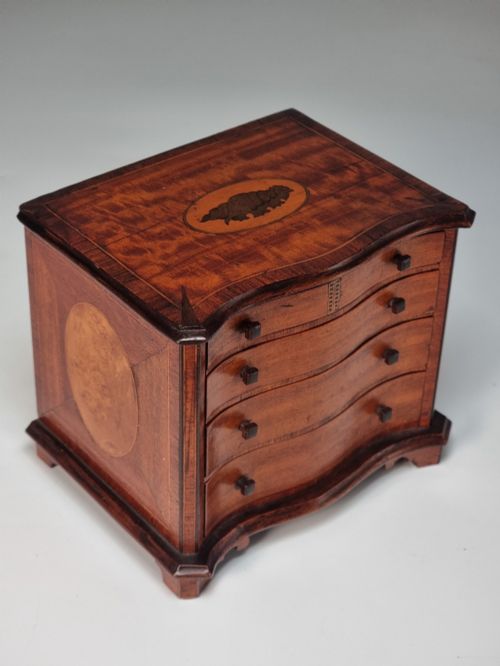
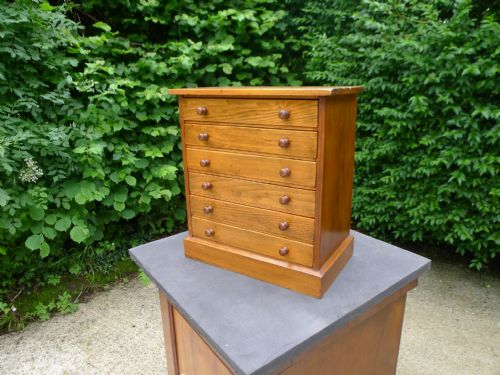
Construction relies upon traditional cabinet timbers, predominantly mahogany, oak, satinwood, and satin walnut, occasionally combined with stained deal or ebony detailing. The use of brass for knobs and key fittings provides functional contrast to the dark and figured wood grains.
Surface decoration incorporates mother of pearl inlay and contrasting stringing, particularly on serpentine and straight-fronted chest designs. Glazed panels appear on display variants, while internal compartments accommodate specialised storage needs for jewellery and specimens.
Listings feature miniature furniture made from mahogany, oak, satinwood, and brass across the Edwardian and Victorian periods.
Assessing Quality and Execution
Quality separates simple utility boxes from fine cabinet work through the selection of timber veneers, such as figured satinwood and richly grained mahogany. The precision of the joinery and the integration of decorative elements like mother of pearl inlay indicate the maker's skill level.
Hardware choice distinguishes standard pieces from superior examples, where turned brass knobs and fitted keys with functioning locks demonstrate higher production standards. The complexity of the form, such as serpentine fronts rather than plain boxes, requires greater carpentry expertise.
A. F. Lloyd, Bideford
The Edwardian Miniature Drawers Glossary
- Serpentine
- A curved front shape featuring a convex centre flanked by concave sides. This profile requires advanced woodworking skill to execute properly on small drawers.
- Satinwood
- A hard, durable timber with a characteristic golden-yellow sheen and smooth grain. It was frequently used for fine veneers on Edwardian and earlier furniture.
- Compactum
- A multi-functional wardrobe or cabinet combining hanging space with multiple internal drawers. Miniature versions condense these large storage units into tabletop proportions.
- Deal
- A soft timber cut from fir or pine, often stained to imitate more expensive woods. Stained deal appears on simpler utility pieces in the record.
- Specimen cabinet
- A specialised piece of furniture designed to store natural history or coin collections. These feature multiple shallow drawers tailored for small objects.
Edwardian Miniature Drawers: Frequently Asked Questions
What were miniature drawers originally used for?
These small chests served multiple purposes in period homes, from storing delicate jewellery and trinkets to housing specialised coin or natural history collections.
Cabinet makers also produced them as salesman samples to demonstrate furniture designs to prospective clients without transporting full-sized items.
How do I identify an Edwardian piece?
Edwardian items typically date from nineteen hundred to nineteen ten, utilising timbers like satin walnut and light mahogany alongside simpler structural lines.
Comparing the construction methods, hardware styles, and wood types against dated examples helps confirm the period of manufacture.
Where should I place these in a home?
Their compact dimensions make them suitable for tabletops, sideboards, and desk tops where they function as decorative storage.
They sit securely on most flat surfaces while providing practical organisation for small contemporary items like keys or stationery.
Are all miniature chests from the Edwardian era?
The inventory demonstrates that small-scale chests span a wide chronological range, including Regency and Victorian periods alongside Edwardian pieces.
Earlier nineteenth-century examples often display distinct timber choices and inlay techniques compared to those produced around nineteen hundred.