


Inlaid Wood Tabletop Chest
These small inlaid wood tabletop chest examples are portable receptacles for jewellery, trinkets, and collections, combining fine cabinet-making with decorative veneers.
Inlaid Wood Tabletop Chest
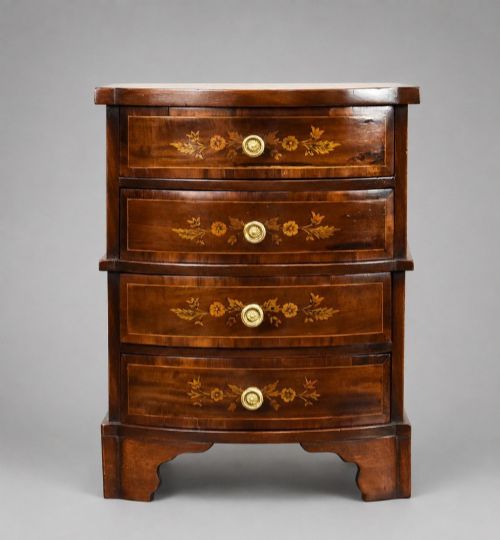
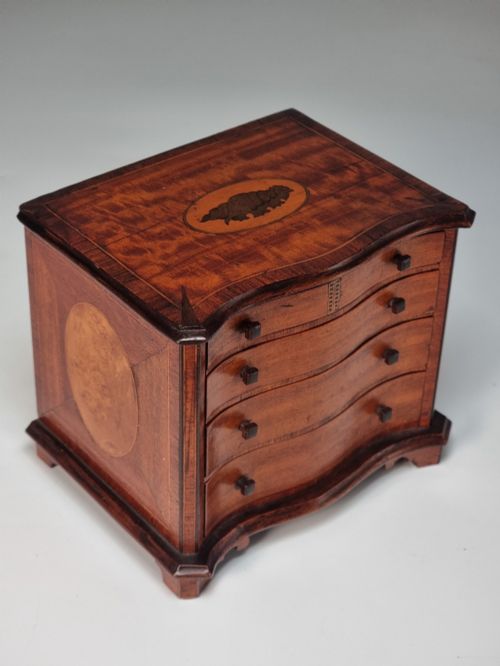
An inlaid wood tabletop chest is a scaled-down piece of furniture or a fitted box designed to sit upon a table, desk, or dresser. The selections here include miniature chests of drawers, jewellery cabinets, collectors' cabinets, table cabinets, and music boxes.
The versions most commonly met on this page date from the Victorian and Edwardian eras, alongside earlier Georgian and 18th-century examples. Makers constructed these small chests to house precious items, miniature collections, or personal papers close at hand.
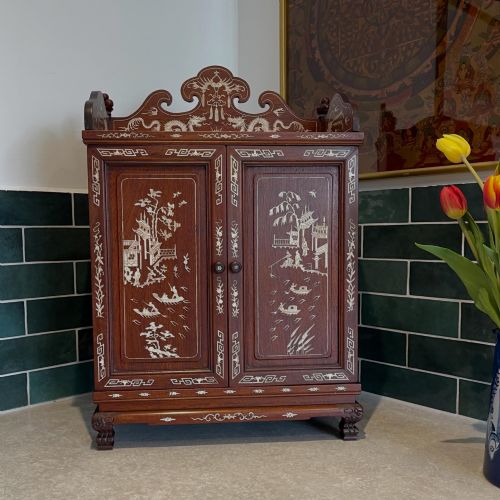
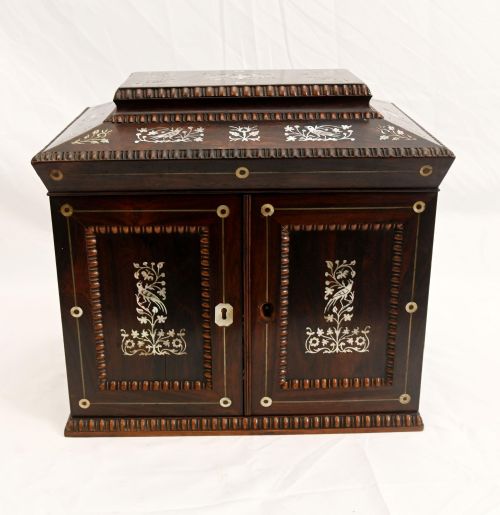
Forms vary from serpentine and bow-front chests of drawers to hinged tabletop cabinets decorated with contrasting woods and mother of pearl. Each piece serves as both a functional storage container and a demonstration of intricate woodworking skill.
How they were made
Craftsmen utilised dense hardwoods such as mahogany, rosewood, amboyna, and satinwood as the primary structural bodies for these tabletop pieces. They applied decorative veneers and contrasting inlays of lighter woods to create geometric patterns and pictorial marquetry.
Many examples incorporate mother of pearl and brass escutcheons, handles, or stringing to accent the polished wooden surfaces. Interior compartments frequently feature velvet or silk linings tailored to hold delicate jewellery and trinkets.
One dated miniature satinwood chest carries the exact record of its maker in Bideford from 1907.
What varies in quality
The refinement of the cabinetry and the precision of the inlay work determine the standard of an individual piece. Superior examples display tightly fitted drawer joints, perfectly aligned veneers, and well-balanced proportions that mimic full-scale furniture.
The choice of secondary timbers and the complexity of the internal fittings also separate ordinary utility boxes from finer decorative cabinets. Retaining original brass hardware and well-preserved interior linings adds to the integrity of the object.
A. F. Lloyd, Bideford
The Inlaid Wood Tabletop Chest Glossary
- Marquetry
- Decorative veneer work formed by fitting together small pieces of wood, shell, or bone to create pictorial designs on a surface. This technique requires considerable patience and precision from the cabinet-maker.
- Serpentine
- A furniture front curving inward centrally and outward at the ends in a gentle wave shape. It adds visual movement and sophistication to miniature chests.
- Escutcheon
- A flat plate of brass or other metal surrounding a keyhole to protect the surrounding wood from wear. It often doubles as a decorative element on the front of a drawer or cabinet door.
- Stringing
- Thin inlay lines of contrasting wood or light-coloured material embedded into the surface of furniture to create borders and panels. It defines the structural lines of the piece.
Inlaid Wood Tabletop Chest: Frequently Asked Questions
What were inlaid wood tabletop chests used for?
These small chests served primarily to hold valuable jewellery, trinkets, letters, or small personal collections in private rooms. Their portable nature allowed owners to keep precious items secure and close at hand on dressing tables or desks.
Some specialised versions also housed musical movements or served as miniature chests of drawers for displaying curiosities to visitors.
How do I date an inlaid wood tabletop chest?
Dating relies on observing the secondary woods, construction methods, and prevailing stylistic influences such as Victorian, Georgian, or Edwardian design. The types of veneer, brass hardware, and inlay materials also provide strong clues to the decade of manufacture.
Makers occasionally inscribed dates or signatures inside drawers or beneath linings, offering a direct record of origin.
Are these chests solid wood or veneer?
Most examples utilise a stable secondary wood carcass covered with fine decorative veneers on the exterior surfaces. This technique allowed makers to display expensive figured woods like rosewood and amboyna without risking the splitting associated with solid exotic timber.
Solid mahogany and satinwood do appear in certain miniature pieces, particularly among earlier Georgian examples.
How do I care for an antique wood tabletop chest?
Keep the wood away from direct sunlight and sudden temperature shifts to prevent the delicate veneers and inlays from lifting. Apply a suitable microcrystalline wax periodically to nourish the polished surface and protect the timber.
Avoid placing damp items directly onto the interior linings to preserve the original fabrics and paper interiors.