

Miniature Mahogany Chest Drawers
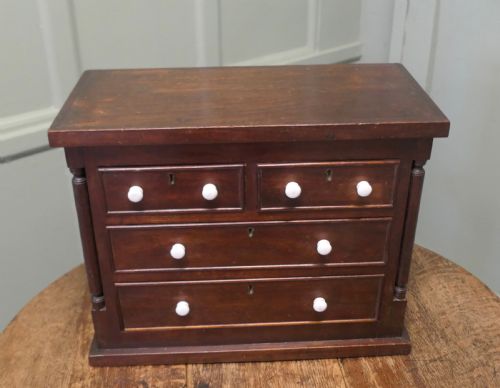
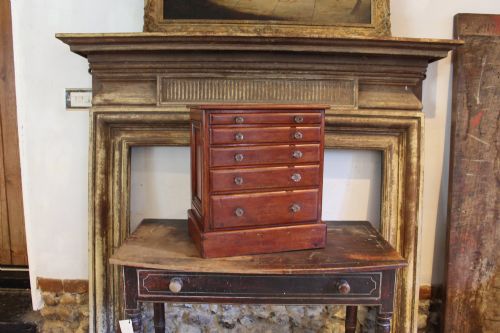
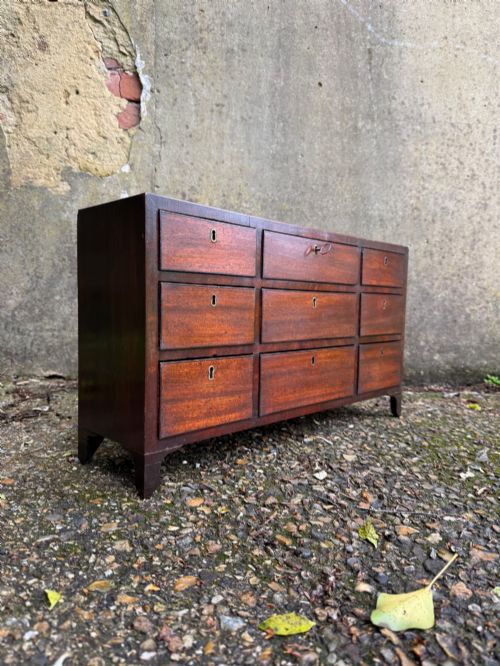
When you handle a miniature mahogany chest drawers, you hold a remarkably detailed piece of cabinet-making designed to serve as a salesman sample, apprentice demonstration, or intimate tabletop storage.
Miniature Mahogany Chest Drawers
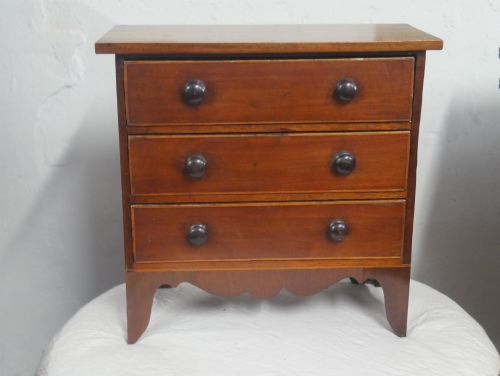
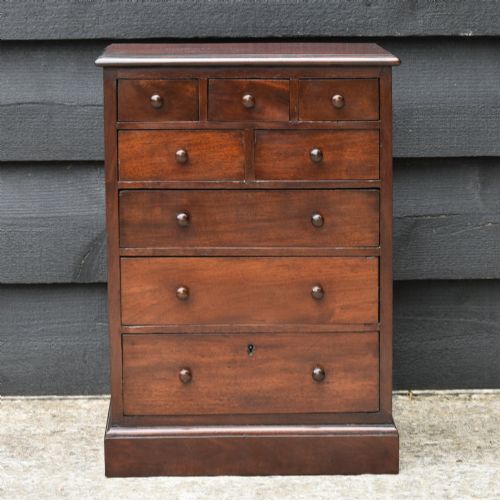
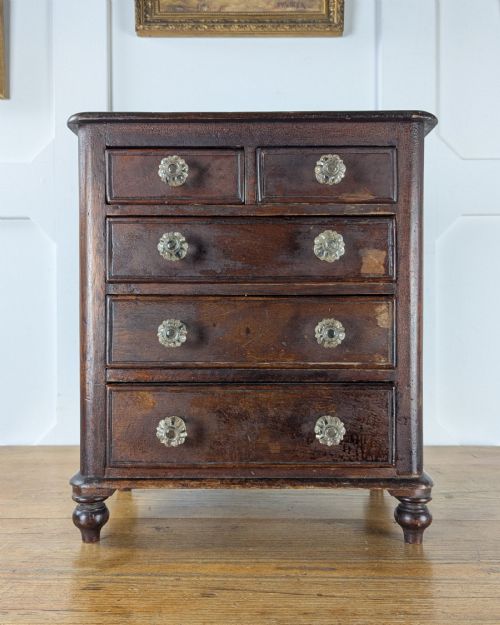
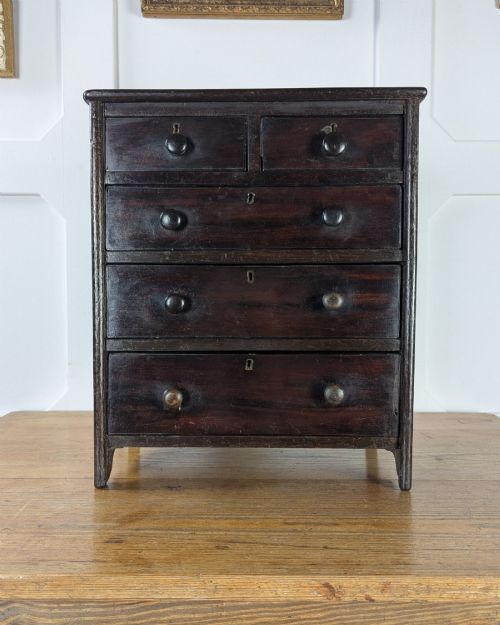
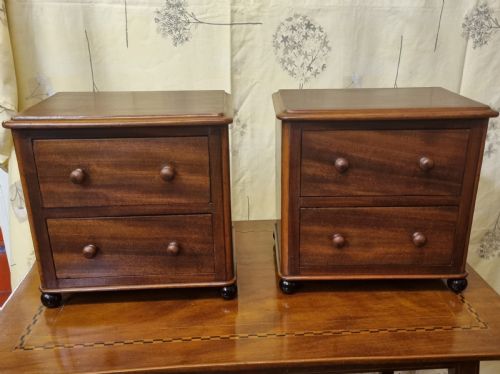
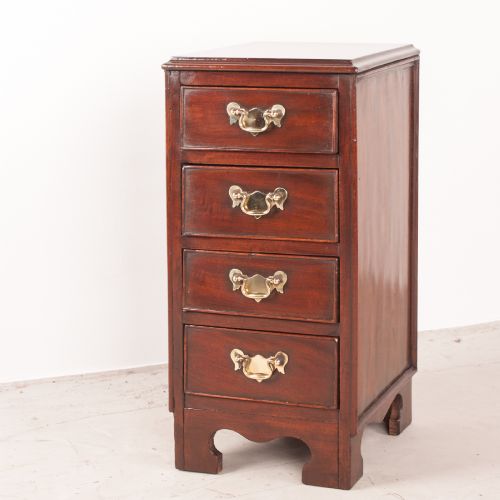
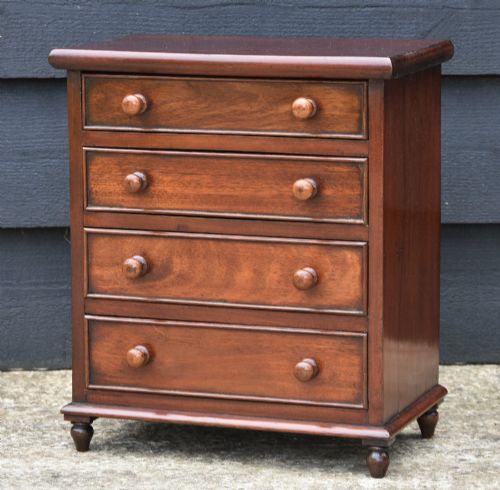
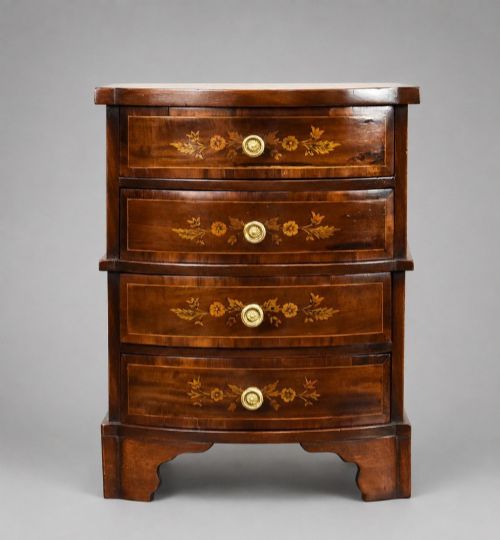
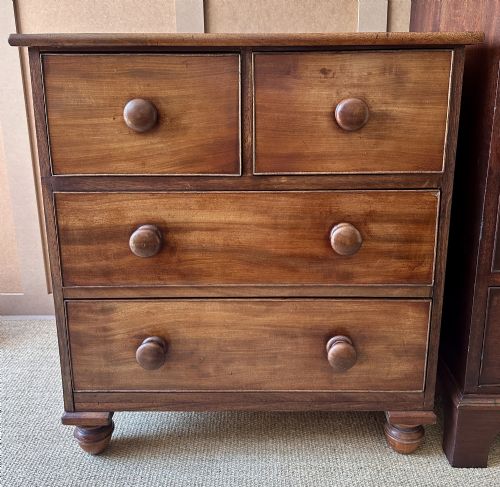
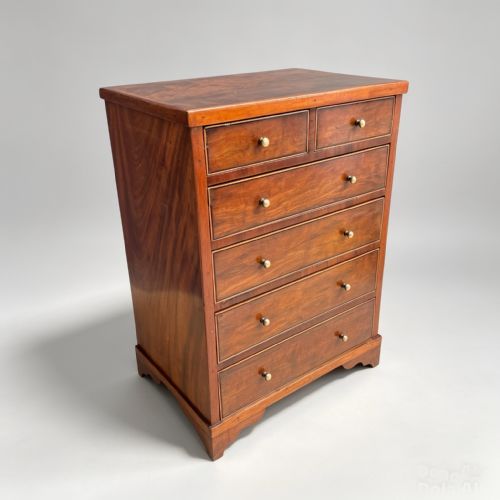
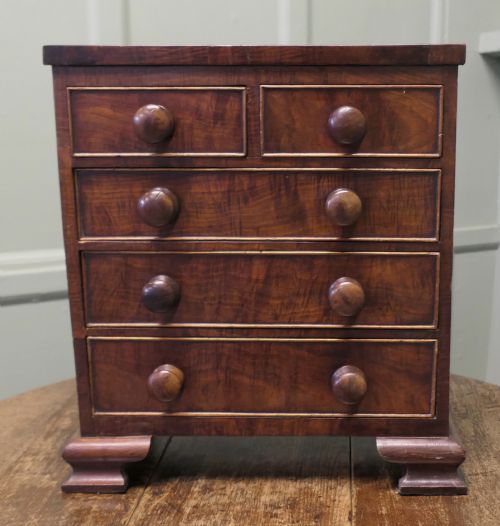
A miniature mahogany chest drawers represents a scaled-down version of full-sized domestic furniture, appearing frequently in forms such as bow-fronts, Scotch chests, and Wellington cabinets dating from the Georgian, Regency, and Victorian eras. These items served multiple historical purposes, functioning traditionally as apprentice pieces to demonstrate joinery skills, salesman samples for travelling merchants, or personal trinket storage for affluent households.
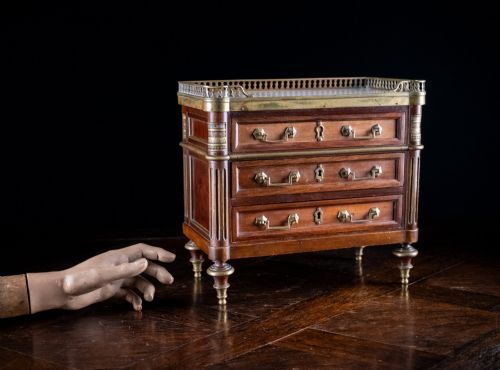
Buyers browsing this selection encounter tabletop storage units and specialised specimen cabinets constructed primarily in the 19th century. The diversity spans simple utilitarian desk organizers to elaborate Louis XVI style commodes featuring bronze and marble details, reflecting the varied domestic scales of past centuries.
How they were made
Cabinet-makers utilised solid mahogany timber alongside secondary woods like oak and pine for internal framing, applying meticulous hand-cut dovetail joints to drawer construction. This dense tropical wood allowed craftsmen to plane exceptionally thin sections while retaining structural integrity for small-scale proportions.
Decorative embellishments relied on contrasting materials embedded into the primary surface, incorporating bone, mother of pearl, and brass fittings such as drop handles and escutcheons. Surface finishes were achieved through applied polish that enhanced the deep grain patterns of the wood over time.
Listings demonstrate a strong presence of 19th-century mahogany and Victorian styles, alongside specialised multi-drawer specimen cabinets and Wellington chests.
What varies in quality
The standard of a miniature chest rests on the fidelity of its proportional reduction and the precision of its miniature joinery. Superior examples maintain the exact architectural proportions and sliding tolerances of full-sized furniture, whereas lesser pieces display simplified internal construction and coarser drawer runners.
Material selection and decorative restraint also divide the range, with better specimens showcasing figured mahogany veneers and refined inlay work rather than heavy, plain timber. The presence of original hardware, working locks, and secondary woods appropriate to the period elevates the standing of an individual cabinet.
The Miniature Mahogany Chest Drawers Glossary
- Apprentice piece
- A small-scale item created by a trainee woodworker to demonstrate mastery of joinery techniques before gaining guild admission. These objects often display ambitious detailing on a reduced footprint.
- Bow front
- A convex curved cabinet front popular during the Georgian and Regency periods. This shape requires specialised framing and curved drawer sides.
- Wellington chest
- A tall, narrow stack of drawers secured by a locking side flap hinged to the right stile. This proprietary form protected the contents during transport.
- Specimen cabinet
- A specialised tabletop chest containing numerous shallow drawers intended for storing natural history collections or microscope slides. These interiors frequently utilise green baize or velvet linings.
- Escutcheon
- A decorative brass plate surrounding a keyhole to protect the surrounding wood from wear. They serve both a practical and ornamental function on small drawer fronts.
Miniature Mahogany Chest Drawers: Frequently Asked Questions
What were miniature chests used for?
These small pieces served distinct purposes ranging from trade demonstrations to personal storage on dressing tables. Many functioned as apprentice test pieces or salesman samples to show clients furniture designs without transporting heavy inventory.
Others remained in homes as delicate repositories for jewellery, trinkets, or specialised collections. Their fine construction allowed them to sit comfortably on tabletops or desks.
How do I date a miniature chest?
Dating relies on examining the secondary woods, construction methods, and prevailing architectural styles of the period. Georgian and Regency examples typically feature straight lines or bow fronts with fine cockbeading, while Victorian pieces often incorporate turned feet and heavier proportions.
Internal elements like hand-cut dovetails and hand-sawn timber marks provide further clues. Hardware styles and inlay materials also align closely with the decade of manufacture.
Are apprentice pieces genuine antiques?
Authentic apprentice pieces date from the eighteenth and nineteenth centuries when formal trade training required a mastery demonstration. These items are genuine period antiques made by skilled hands using traditional hand tools and period timbers.
Careful inspection of the timber shrinkage, interior wear, and joint construction distinguishes genuine historical examples from later decorative reproductions. The accumulated patina across the mahogany surfaces provides evidence of age.
How should I care for mahogany?
Mahogany requires stable environmental conditions away from direct heat sources and strong sunlight to prevent the timber from splitting or fading. Regular dusting with a soft, dry cloth preserves the finish without requiring heavy polishes.
Applying microcrystalline wax occasionally helps nourish the wood and maintain its natural lustre. Maintaining moderate room humidity protects both the outer veneers and the internal structural joints.