


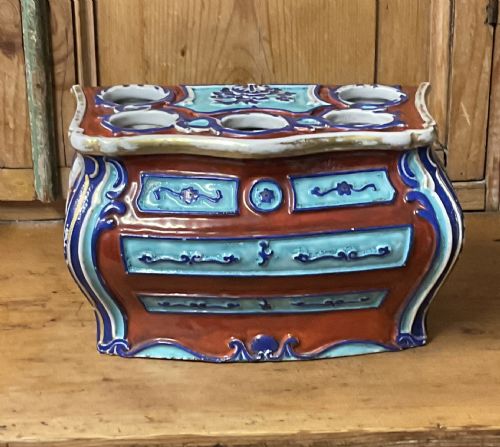


Antique Miniature Commode
These antique miniature commode examples are small-scale chests of drawers and commodes built to master-maker standards, offering rich cabinetmaking in miniature.
Antique Miniature Commode
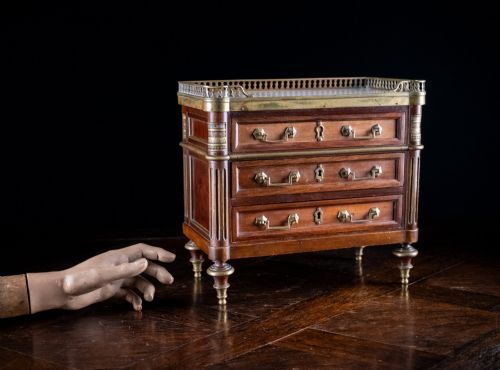
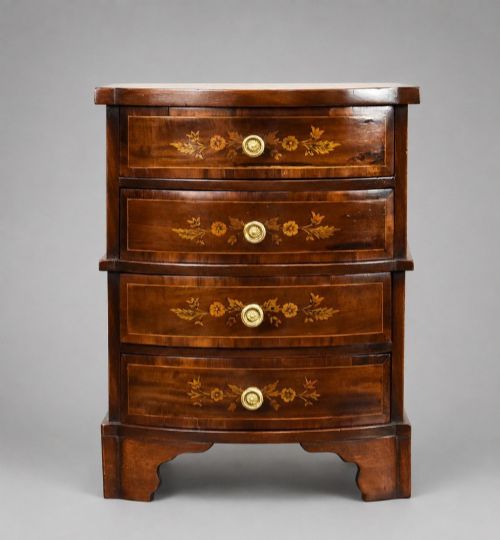
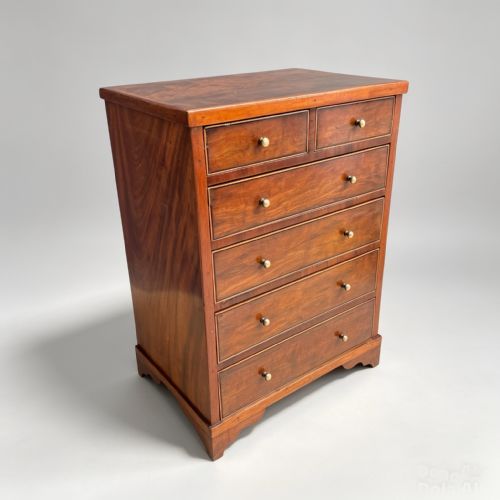
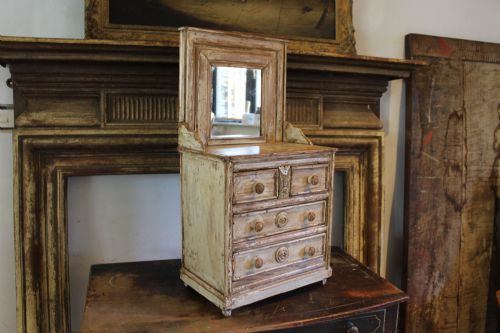
An antique miniature commode represents a scaled-down version of full-sized case furniture, taking the form of miniature chests of drawers, jewellery boxes, and bough pots. The pieces on this page span the eighteenth, nineteenth, and twentieth centuries, originating from English, French, Dutch, Welsh, and Chinese workshops.
The most common forms you will encounter are mahogany and walnut chests of drawers from the Georgian, Regency, and Victorian periods. Alongside these, French commodes and apprentice pieces demonstrate the diverse regional interpretations of small-scale case furniture.
What varies in quality
The distinction between ordinary and exceptional work rests on the handling of timber figure and the precision of the miniature proportions. Superior examples show careful grain matching across drawer fronts and crisp execution of moulded edges.
Hardware integration and internal drawer construction also separate standard pieces from masterworks. Original brass fittings, clean secondary wood linings, and smooth drawer operation indicate higher workshop standards.
Someone once carved an entire miniature chest of drawers out of heavy slate, proving that not every apprentice wanted to work with wood.
The Antique Miniature Commode Glossary
- Apprentice piece
- A small-scale item created by a journeyman to demonstrate skill before admission to a guild. These objects often display ambitious joinery and decorative timber choices.
- Bow front
- A convex curved cabinet front popular during the Georgian and Regency periods. This shape softens the profile of miniature chests.
- Commode
- A low chest of drawers or cabinet originating in France. The term covers both practical storage units and decorative porcelain bough pots.
- Veneer
- A thin slice of decorative wood applied to a secondary wood foundation. Cabinetmakers used burr walnut, kingwood, and tulipwood to create patterned surfaces.
Antique Miniature Commode: Frequently Asked Questions
What is an apprentice piece?
An apprentice piece is a demonstration item made by a craftsman proving his skill to a guild. These smaller objects mirror full-sized construction methods.
The survival of these pieces indicates they were valued domestic items rather than mere practice scraps. Their diminutive scale allowed makers to test complex techniques safely.
How old are these miniature chests?
The pieces span from the mid-eighteenth century through to the early twentieth century. Georgian and Regency examples sit alongside Victorian interpretations.
Dating relies on timber choice, construction techniques, and hardware styles. Regional English, Welsh, and French traditions also help anchor the timeline.
Were these used as doll furniture?
These items were built as salesmen's samples, masterworks, or decorative table storage rather than children's toys. Their fine joinery reflects adult furniture standards.
Collectors treated them as ornamental pieces for side tables and desk tops. Their small size provided practical storage for letters, trinkets, and jewellery.
How do I care for wood veneer?
Maintain stable room humidity and keep wooden surfaces away from direct heat sources. Natural waxes help protect historic timber finishes.
Avoid excessive moisture during cleaning. Gentle dusting preserves the patina built up over centuries of handling.