


Edwardian Miniature Chest Drawers
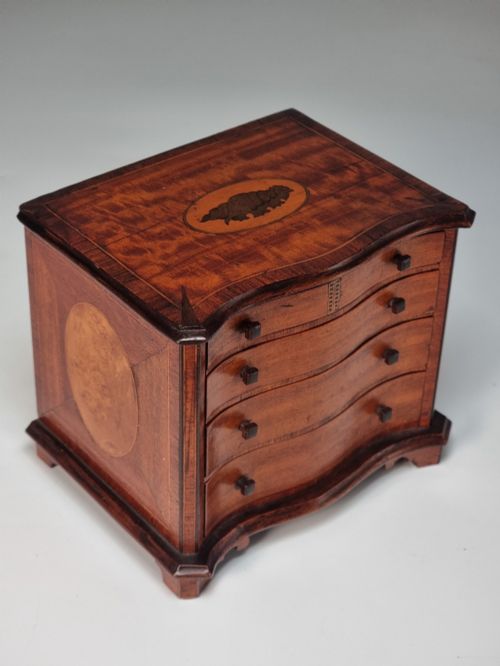
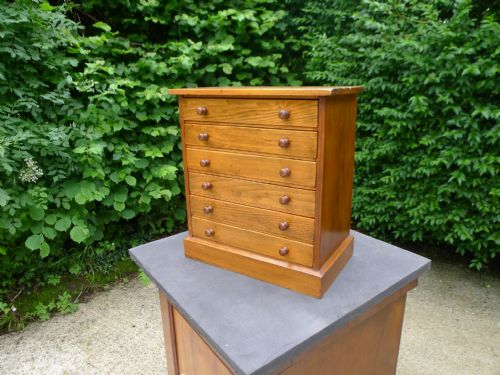
These edwardian miniature chest drawers offer delightful small-scale carpentry and neat storage, prized by collectors for their intricate craftsmanship and compact charm.
Edwardian Miniature Chest Drawers
When you search for edwardian miniature chest drawers, you encounter a specialised form of small-scale furniture designed for intimate storage or as cabinetmaker samples. These pieces bridge domestic utility and ornamental display, reflecting full-sized cabinet design scaled down with immense precision.
You are most likely to meet mahogany examples from the Edwardian era on this page, alongside satin walnut, oak, and stained deal alternatives. Forms range from simple multi-drawer collectors cabinets and jewellery boxes to miniature wardrobes and serpentine chests.
The historical spread spans from the early nineteenth century through the Victorian period and into the nineteen twenties, though pieces from around nineteen hundred predominate. Surviving items often feature brass handles, glass elements, or intricate inlaid details.
Materials and construction
Cabinetmakers utilised dense timbers like mahogany, satinwood, and satin walnut to construct these small frames, often applying contrasting veneers and mother-of-pearl inlay. Brass fittings such as knobs and locks provide functional contrast against the polished wood surfaces.
Joinery methods mirror those of full-scale antique furniture, requiring high precision due to the diminutive proportions. Secondary woods like stained deal appear in functional interior elements or simpler variants.
Some miniature drawers are so diminutive they could comfortably store a collection of postage stamps rather than your everyday socks.
Quality variations
The standard of execution in timber selection and inlay work dictates the distinction between standard items and superior pieces. Finer specimens display carefully matched veneers, such as satinwood or figured mahogany, alongside precise dovetail joints in the drawer construction.
Hardware and secondary materials further separate the ranges, where original brass knobs and working locks with keys elevate a piece. The crispness of proportion and the retention of original surface finishes determine the overall success of the miniature form.
A. F. Lloyd Bideford
The Edwardian Miniature Chest Drawers Glossary
- Serpentine
- A curved front shape featuring a convex centre flanked by concave ends, requiring advanced woodworking skill. This undulating profile appears frequently on finer Edwardian and Georgian miniature chests.
- Compactum
- A multi-compartment wardrobe or cabinet combining hanging space, drawers, and shelves within a single unit. Miniature versions pack these varied storage options into a small tabletop or floor-standing format.
- Inlay
- A decorative technique where contrasting woods, shell, or mother-of-pearl are set into recesses flush with the surface. It provides geometric or floral ornamentation on drawer fronts and top panels.
- Deal
- A soft timber cut from pine or fir, commonly stained to imitate more expensive hardwoods in utilitarian or secondary furniture parts. It offers a lighter weight alternative for internal framing and simpler cabinets.
- Specimen cabinet
- A specialised housing unit with multiple shallow drawers designed for organising natural history collections or small artefacts. These pieces often feature numbered or fitted internal compartments.
Edwardian Miniature Chest Drawers: Frequently Asked Questions
What were miniature chests used for?
Cabinetmakers originally produced these small chests as travelling sample pieces to demonstrate their skill to prospective clients. Owners also utilised them domestically to store small valuables, jewellery, or specialised collectors items.
Over time, they transitioned purely into decorative objects and tabletop display pieces collected for their charming proportions and technical virtuosity.
How do I date an antique miniature chest?
Dating relies on identifying the primary wood species, construction techniques, and stylistic markers characteristic of specific eras. Regency and early nineteenth-century pieces often display clean classical lines, while Edwardian examples frequently incorporate lighter satinwood or detailed inlay.
Hardware styles, such as the shape of brass knobs or lock mechanisms, provide additional clues to the exact period of manufacture.
Are these pieces made by apprentice woodworkers?
While some miniature furniture represents apprentice masterpiece pieces created to demonstrate proficiency before joining a guild, many were commercial products. Professional cabinetmakers manufactured them in small workshops to satisfy the Victorian and Edwardian demand for novelty furnishings.
Both origins result in high levels of craftsmanship, though apprentice pieces occasionally display experimental joinery.
How should I care for wooden miniatures?
Keep these items away from direct sunlight and steady heat sources to prevent the delicate veneers and small timbers from drying out or splitting. Maintaining stable room humidity preserves the original polish and prevents brass fittings from tarnishing rapidly.
Dust gently with a dry, soft cloth and avoid applying modern chemical polishes that can damage aged nineteenth-century finishes.