


Brown Mahogany Apprentice Piece
A brown mahogany apprentice piece is a scaled-down antique item representing mastery of furniture making, highly sought after by collectors for its fine joinery.
Brown Mahogany Apprentice Piece
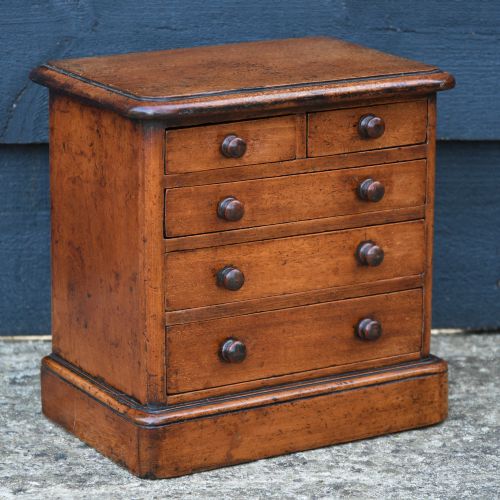
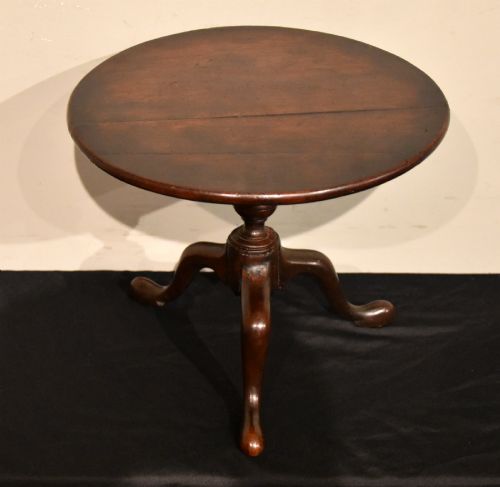
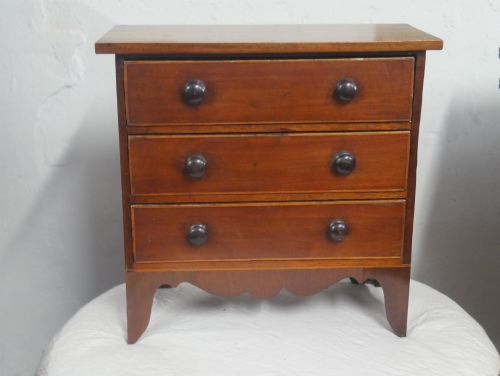
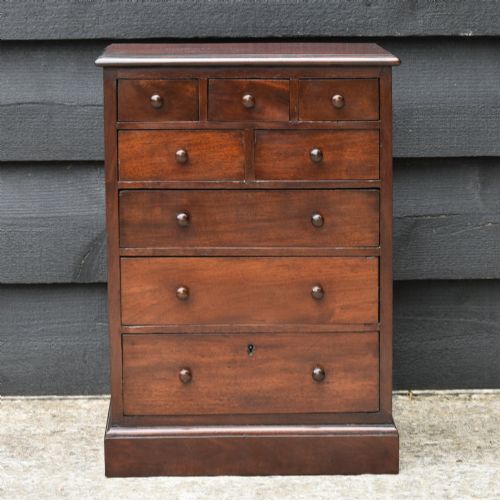
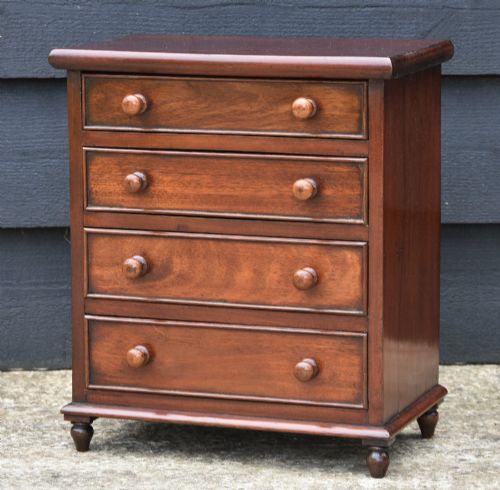
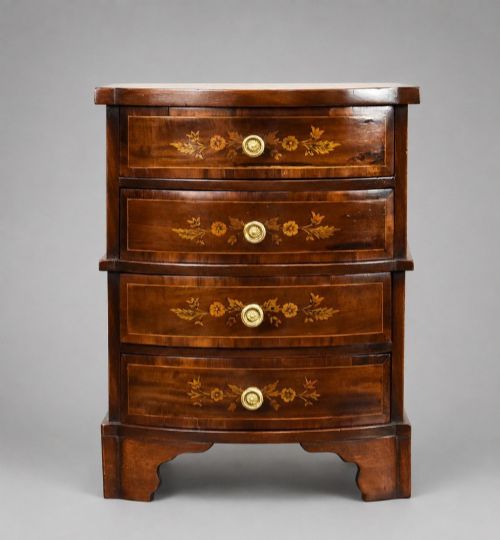
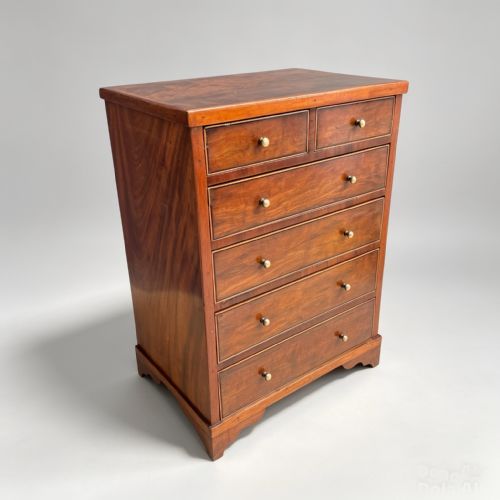
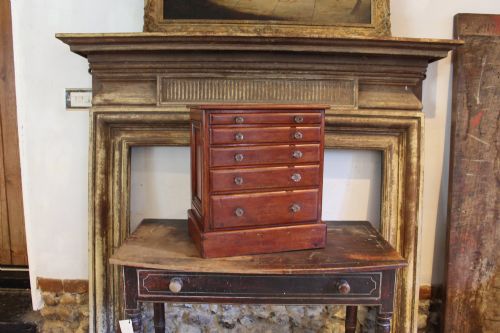
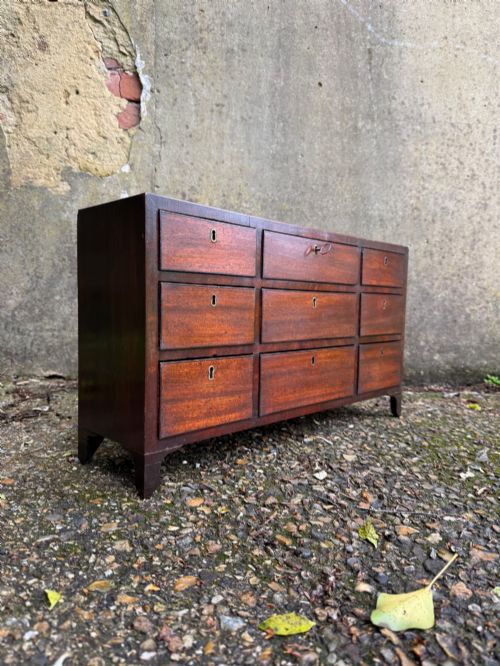
When you search for a brown mahogany apprentice piece, you encounter scaled-down examples of full-sized furniture made in miniature proportions. These objects appear in forms such as chests of drawers, miniature cabinets, side tables, bureaux, and tea caddies.
The pieces on this page span several periods, including Georgian, Regency, Victorian, and Edwardian eras. Miniature chests of drawers dominate the selection, showing traditional cabinet maker forms scaled down for display or demonstration.
Makers produced these items across the eighteenth, nineteenth, and early twentieth centuries using dense tropical timbers. They serve today as desktop specimen cases, jewellery chests, and cabinet work samples.
How they were made
Craftsmen built these miniature items using mahogany timber, often applied as wood veneer over secondary woods like pine. Workshops incorporated brass fittings, glass panels, and bone details to match the construction methods of full-sized furniture.
Surface finishing involved French polishing and marquetry inlay, along with mother of pearl details seen on specific nineteenth-century pieces. Joinery techniques mirrored standard cabinet making, resulting in working drawers and functional miniature fall front desks.
Listings feature mahogany miniatures from the Georgian, Regency, Victorian, and Edwardian periods, constructed using wood, brass, glass, and bone.
What varies in quality
The refinement of the miniature proportions and the precision of the joinery set finer examples apart from simpler items. Superior pieces exhibit careful attention to drawer linings, timber selection, and decorative inlay work.
Surface preservation and the retention of original brass hardware or French polish contribute significantly to the standing of an item. Pieces showing restrained, accurate scaling to standard furniture forms represent the higher end of the range.
The Brown Mahogany Apprentice Piece Glossary
- Apprentice piece
- A scaled-down item made by a trainee craftsman to demonstrate mastery of woodworking skills to a guild or master. These objects replicate full-sized furniture forms in miniature dimensions.
- Marquetry
- Decorative veneer work arranged in geometric or pictorial patterns on furniture surfaces. Craftsmen assemble thin slices of various woods to create contrasting designs.
- French polishing
- A wood finishing technique that applies numerous coats of shellac dissolved in methylated spirit using a rubbing pad. This method produces a high gloss surface with a deep warm tone.
- Bow front
- A convex curved furniture front popular in Georgian and Victorian design. This curved shape appears frequently on miniature chests of drawers.
- Bureau bookcase
- A writing desk with a sloping fall front enclosing small drawers and pigeonholes, topped by a glazed cabinet section. Miniature versions replicate this complex combination in reduced proportions.
Brown Mahogany Apprentice Piece: Frequently Asked Questions
What is an apprentice piece?
An apprentice piece is a small-scale model of furniture created by a craftsman in training to prove skill to a master. These items demonstrate mastery in joinery, proportion, and finishing.
Such pieces allowed makers to test difficult techniques before applying them to full-sized furniture. They survive today as collectible miniature furnishings.
How were these miniature chests used?
Historical uses for miniature chests included travel samples for salesmen, presentation pieces for trade guilds, and desk accessories. Owners later utilised them to store jewellery, trinkets, or small specimens.
Their domestic scale made them suitable for placement on tabletops and sideboards rather than the floor. Today they function primarily as cabinet display items.
How do I date a mahogany miniature?
Dating relies on examining the timber, construction methods, and stylistic details characteristic of specific design periods. Georgian pieces show different proportions and handle styles compared to Victorian or Edwardian examples.
Secondary woods inside drawers and the type of fixings used provide further clues to the manufacturing era. Cabinet hardware and veneer thickness also help narrow down the decade of creation.
Are these pieces made of solid mahogany?
Makers constructed these items using solid mahogany for primary visible surfaces, often combined with secondary timbers like pine for drawer linings and carcases. Many examples also feature mahogany wood veneer applied over a structural core.
Inlay work incorporates contrasting woods, while specific nineteenth-century items add bone or mother of pearl details. The material composition mirrors the construction standards of full-sized furniture from the same era.