
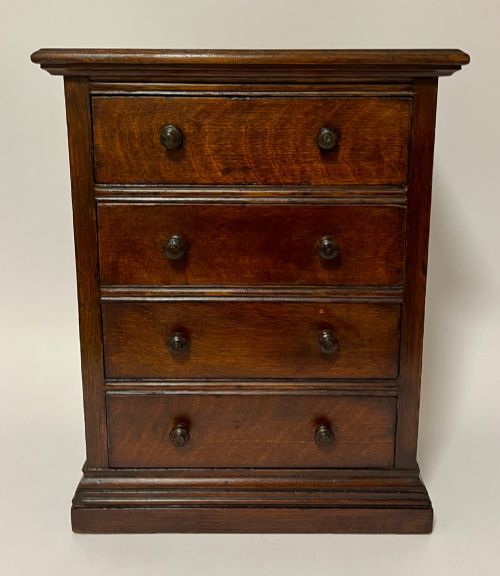
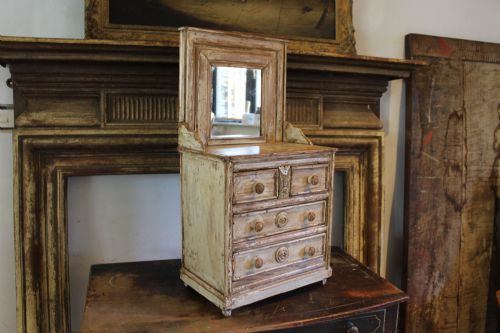
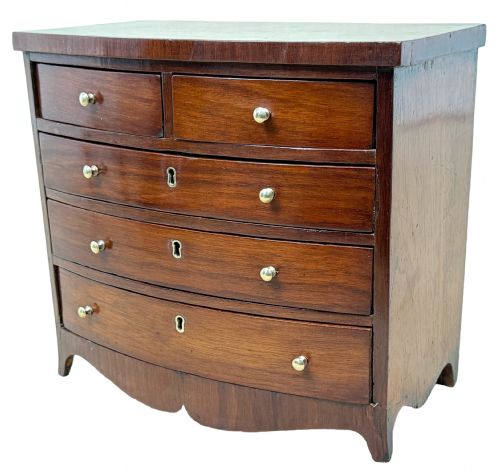


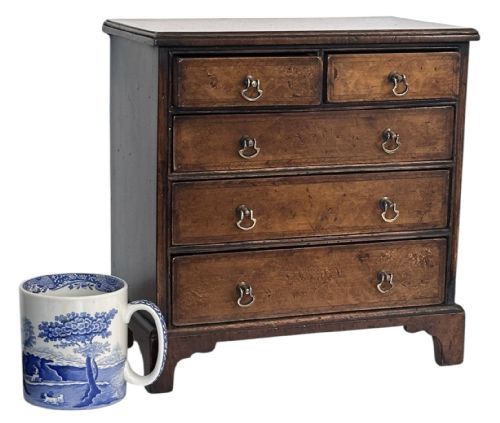


Desktop Jewellery Chest Drawers
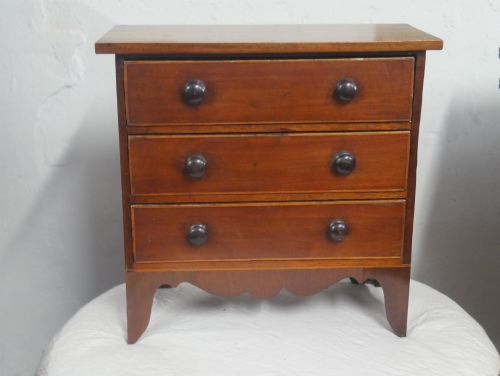
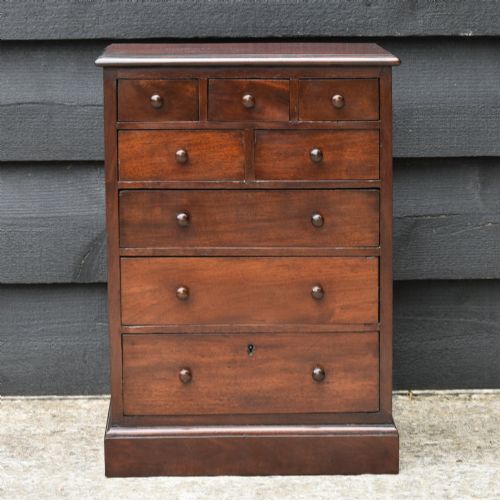
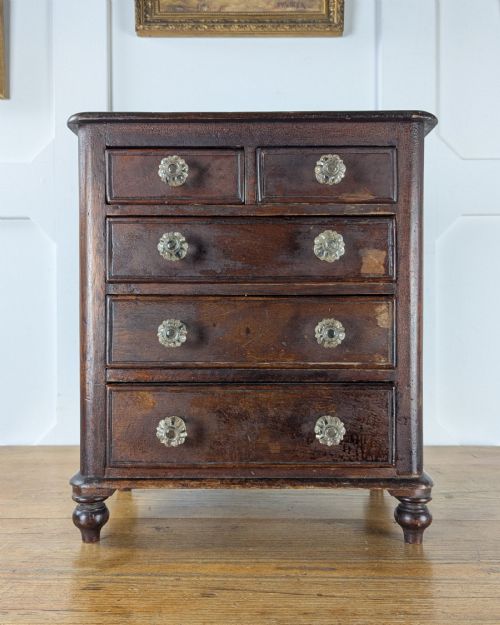
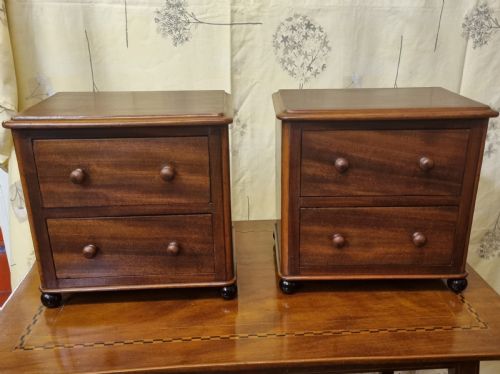
These desktop jewellery chest drawers are compact wooden containers that organise precious items on a table.
Desktop Jewellery Chest Drawers
When you search for desktop jewellery chest drawers, you encounter compact miniature furniture designed to hold valuables, rings, and small trinkets on a tabletop. These items appear across various historical periods, including the eighteenth century, the Victorian era, the Regency period, and the Edwardian years.
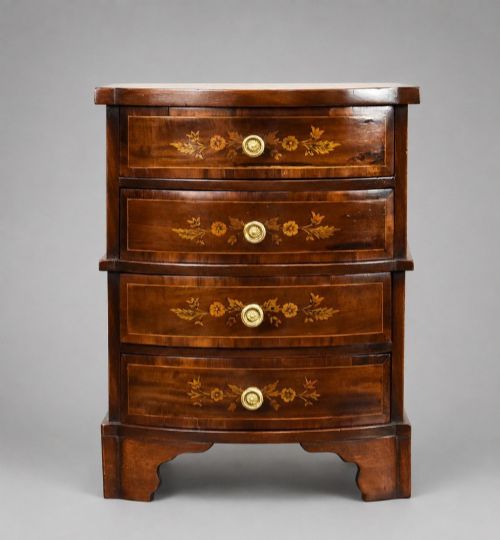
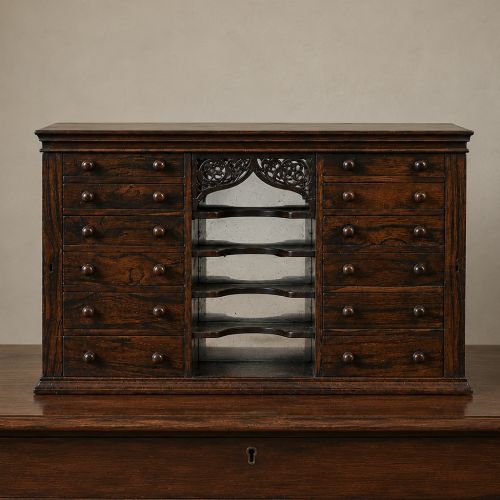
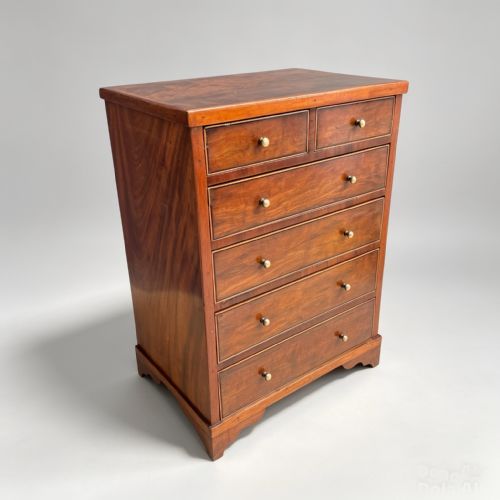
The most common examples on this page take the form of miniature mahogany chests of drawers, apprentice pieces, and tabletop cabinets. Makers constructed these small receptacles using timbers like oak, walnut, rosewood, and elm, often incorporating satinwood stringing, brass fittings, or glass elements.
Construction and materials
Cabinetmakers built these small pieces using traditional joinery methods suited to furniture on a domestic scale. Primary hardwoods such as mahogany, oak, and walnut form the structural carcasses, frequently paired with secondary woods for internal drawer linings.
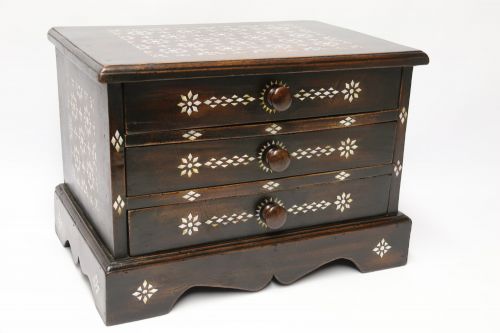
Surface decoration relies on natural grain figures, marquetry inlays, burr veneers, and ebonised moulding. Many items utilise turned feet, brass handles, and occasionally a functional key for security.
At least one nineteenth-century example doubles as a cigar humidor.
Assessing quality
The standard of execution depends heavily on the precision of the miniature proportions and the choice of timber figure. Pieces featuring well-matched burr walnut, figured mahogany, or intricate marquetry display a higher degree of artisan skill.
Subtle details such as crisp edge moulding, clean dovetail joints on the small drawers, and retained original brass hardware elevate the status of an item from a simple container to a refined collector piece.
The Desktop Jewellery Chest Drawers Glossary
- Apprentice piece
- A small item of furniture created by a craftsman to demonstrate skill for guild admission or training. These frequently resemble scaled-down chests of drawers.
- Wellington chest
- A tall, narrow cabinet featuring a locking stile that secures all the internal drawers simultaneously. This form appears scaled down in tabletop formats.
- Marquetry
- The art of applying decorative veneer pieces to a structure to form geometric or pictorial designs. Cabinetmakers used this technique on Edwardian examples.
- Bow front
- A convex curved cabinet or drawer front that swells outward. This contour frequently appears on Victorian miniature chests.
- Specimen case
- A small cabinet or chest fitted with shallow drawers for housing natural history samples or small collectibles. They share a similar scale with jewellery chests.
Desktop Jewellery Chest Drawers: Frequently Asked Questions
What were desktop jewellery chests used for?
These small chests served to store rings, small valuables, and precious trinkets securely on tables or desks. Their compact scale allowed owners to keep personal items close at hand in private chambers.
Over time, people also utilised similar small cabinetry as specimen cases or collector boxes for storing delicate items.
How do I date a miniature chest?
Dating relies on observing the timber species, construction methods, and prevailing style characteristics. For instance, Regency pieces often show rosewood veneers and brass inlay, while Victorian examples frequently employ figured mahogany.
Examining the internal drawer construction and secondary woods provides further clues regarding the period of manufacture.
Where should I place a tabletop chest?
These compact pieces fit comfortably on dressing tables, sideboards, or large desks where they function as practical storage. Their small footprint allows them to sit securely on flat surfaces without dominating a room.
Keeping them away from direct heat sources helps preserve the polished wood surfaces and delicate veneers.