
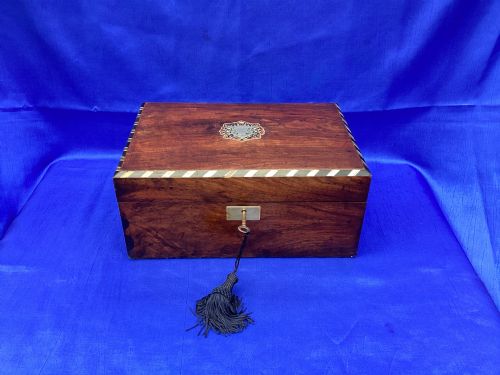
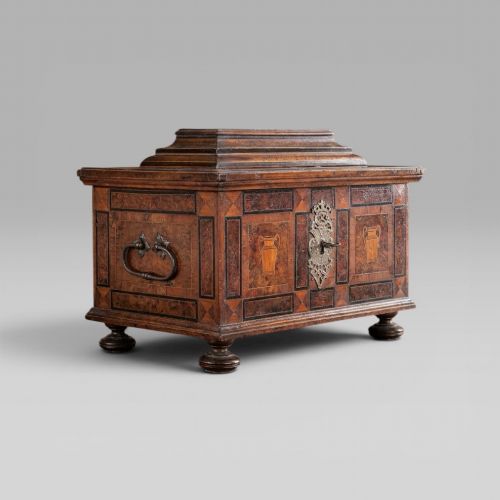
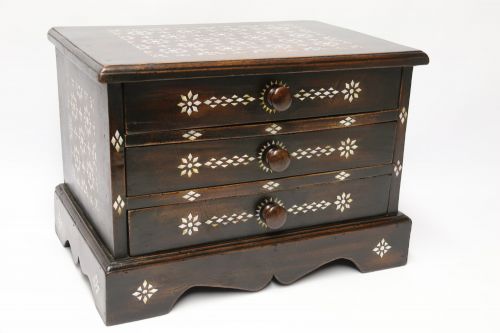
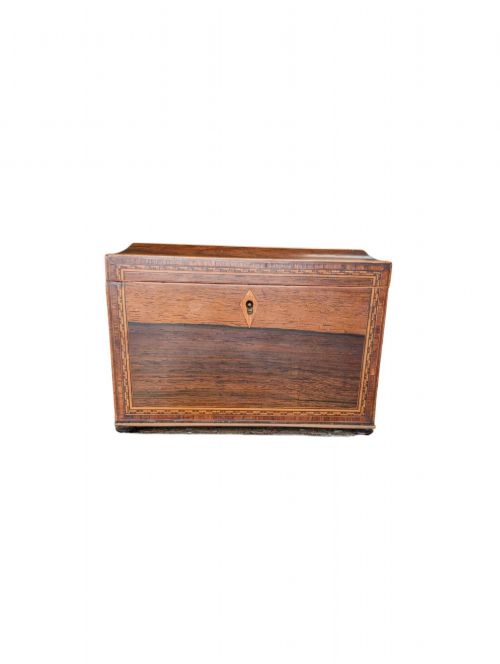




Inlaid Wooden Trinket Chest
An inlaid wooden trinket chest is a compact repository for small valuables, bringing tactile warmth and intricate surface pattern to a desk or dressing table.
Inlaid Wooden Trinket Chest
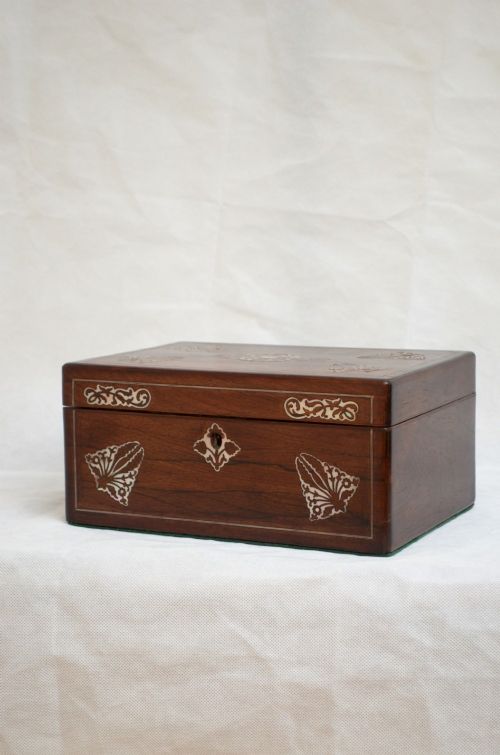
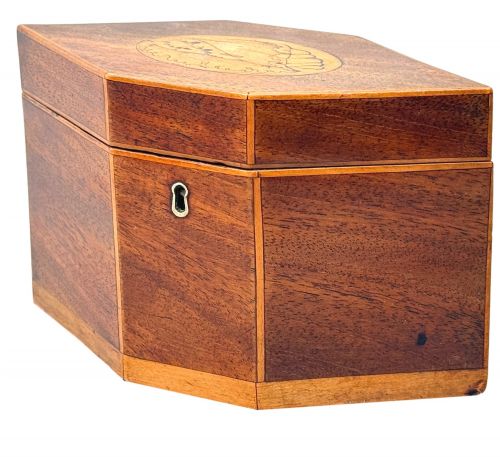
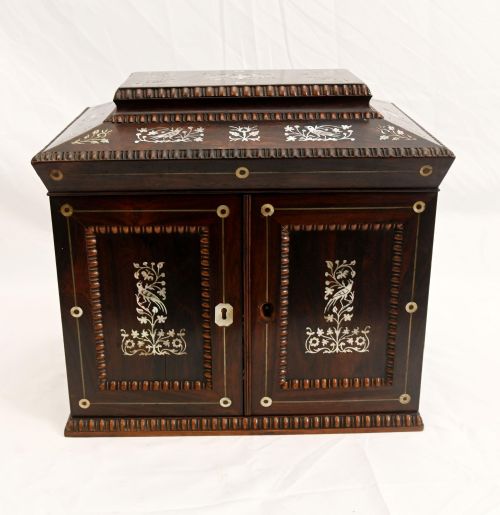
When you search for an inlaid wooden trinket chest, you encounter a diverse gathering of small caskets, tea caddies, jewellery boxes and miniature chests of drawers spanning the Georgian, Regency and Victorian periods.
The pieces on this page originate from diverse workshops, ranging from English Tunbridge Ware creators to continental makers and Anglo-Indian artisans.
Rosewood and mahogany form the structural backbone of these boxes, often enhanced by contrasting veneers, parquetry and fitted interior trays designed for keepsakes and correspondence.
Materials and Technique
Cabinet makers utilised dense timbers such as rosewood, mahogany, walnut and yew, constructing solid carcases or applying decorative veneers to stable bases.
Surface decoration relies on meticulous inlay and marquetry, integrating boxwood, satinwood, holly and contrasting woods into geometric or pictorial compositions.
Many examples incorporate shimmering elements of mother of pearl, bone and brass wire to accentuate the intricate patterns of the timber.
Listings span multiple eras from the 17th century through to the 19th and early 20th centuries.
Judging Quality
The distinction between ordinary and exceptional boxes lies in the precision of the woodwork and the crispness of the inlay, where tight joints and flush surfaces demonstrate superior cabinet-making.
Fitted interiors, original trays, working locks and intact linings elevate a piece, showing that the maker lavished as much care on the hidden compartments as on the exterior facade.
The Inlaid Wooden Trinket Chest Glossary
- Tunbridge Ware
- A form of woodworking originating from Kent, featuring mosaic patterns built from thousands of tiny coloured wood blocks.
- Marquetry
- The art of applying pieces of veneer to a structure to form decorative patterns, pictures or ornate designs.
- Parquetry
- A geometric mosaic of wood pieces used for floorings or decorative box lids, creating repeating triangular or square motifs.
- Caddy
- A small box or chest originally utilised for storing loose tea leaves in locked compartments.
- Boxwood
- A pale, dense wood frequently utilised for contrasting stringing and delicate inlay work against darker timbers.
Inlaid Wooden Trinket Chest: Frequently Asked Questions
How were tea caddies used?
Tea caddies were kept locked in the parlour or dining room to protect precious leaves from domestic servants and guests.
Tea was an expensive commodity, so the mistress of the house dispensed each portion herself using small fitted canisters inside the box.
What went into a trinket chest?
These small chests held rings, brooches, lockets and sentimental keepsakes that needed secure storage on a dressing table.
Many contained velvet-lined trays and compartments to keep delicate jewellery separated and protected from dust.
How do I date a wooden box?
Dating relies on identifying the primary timber, the style of the brass hardware, and the complexity of the internal layout.
Georgian and Regency pieces often favour simple elegance with fine stringing, whereas Victorian examples frequently showcase elaborate mother of pearl inlay and parquetry.
Can I use these for modern jewellery?
These historic boxes adapt well to holding contemporary rings, earrings and watches on a modern dressing table.
The compartmentalised trays and velvet linings provide practical organisation while adding historical character to a room.