
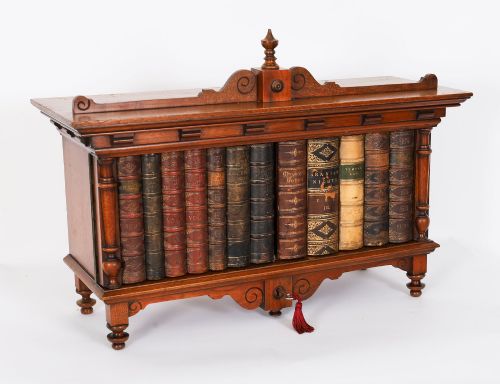
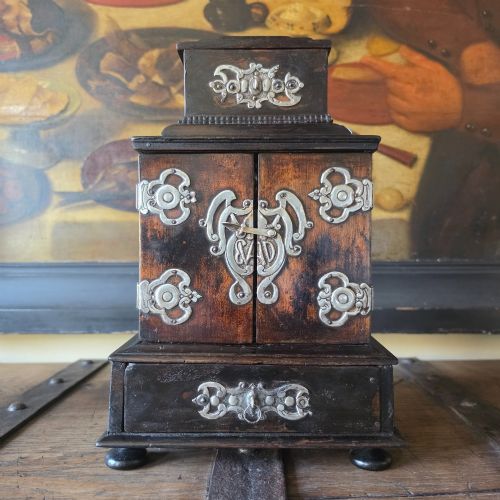
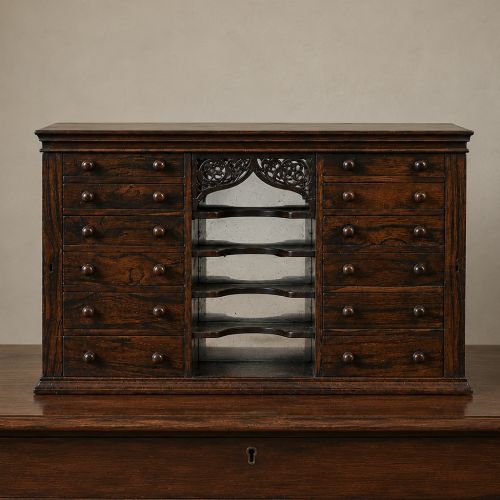
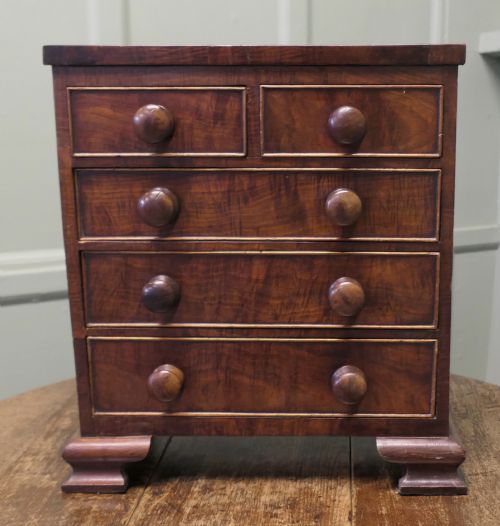
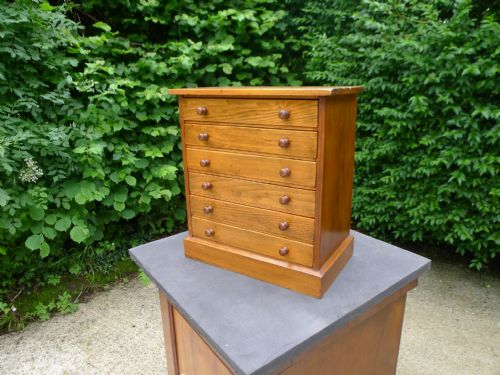
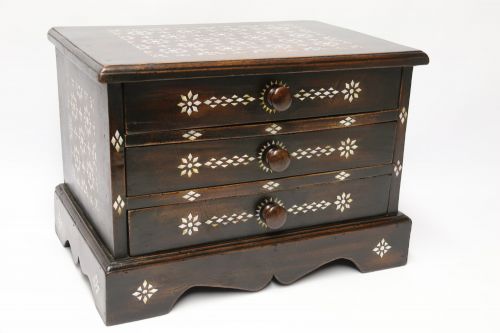
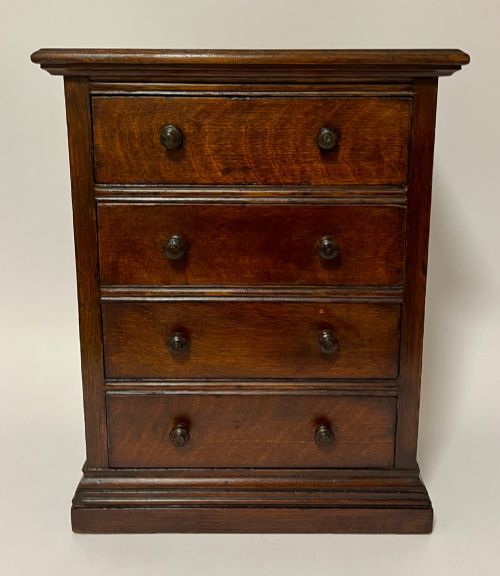
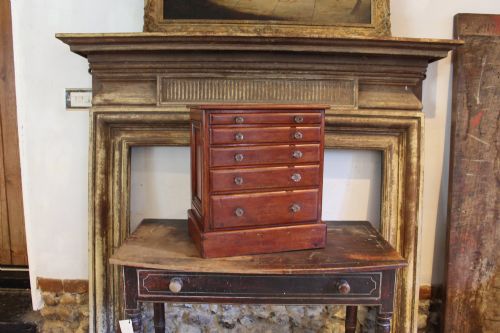
Miniature Collector Cabinet
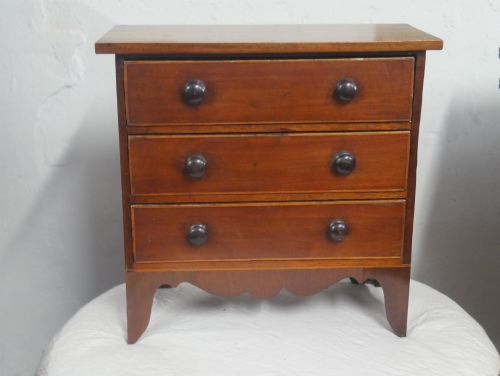
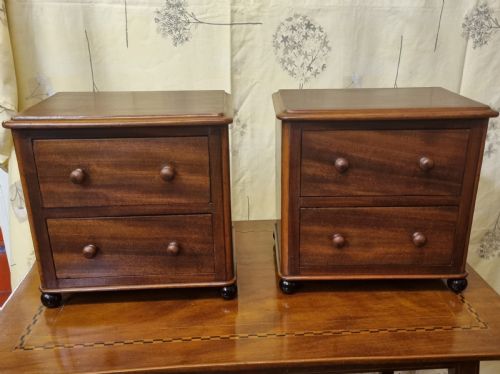
A miniature collector cabinet packs the architectural presence of full-size furniture into a compact tabletop scale designed to house small treasures.
Miniature Collector Cabinet
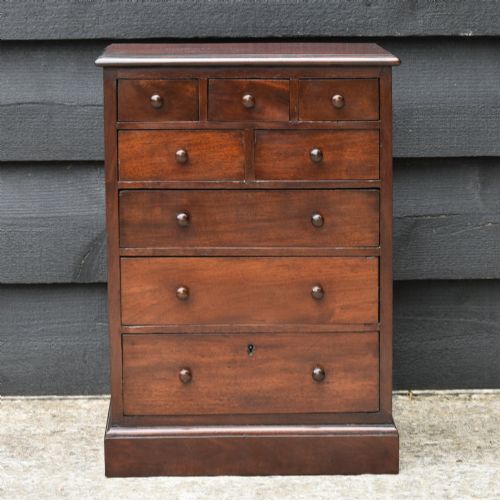
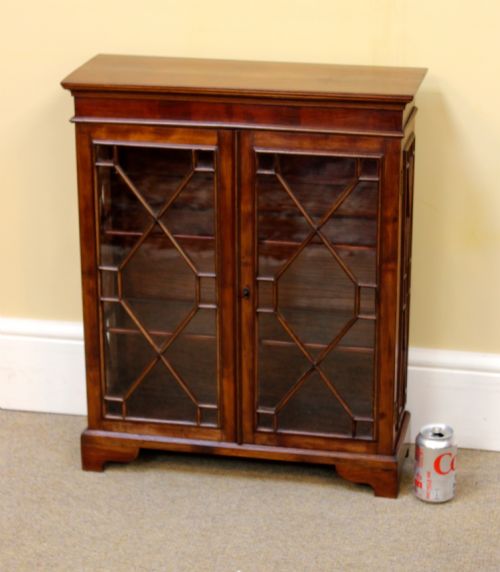
These works span Georgian, Victorian and Edwardian periods, alongside occasional Continental and Japanese regional styles. The forms range from simple spice drawers and miniature Wellington chests to glazed display cases and fitted writing desks reduced in scale.
Cabinetmakers historically produced these pieces either as cabinetmakers' demonstration pieces to prove skill, as trade samples for travelling salesmen, or as bespoke furnishings for wealthy households to store botanical and geological specimens.
How they were made
Cabinetmakers utilised dense timbers like mahogany, walnut, oak and rosewood, frequently applying burr walnut veneers or fruitwood inlays to decorative surfaces. Brass handles, escutcheons and locking mechanisms were fitted to secure the tiny compartments.
Joinery techniques mirrored full-sized case furniture, employing dovetailed drawer construction and framed panels to ensure stability despite the miniature scale. French polishing or wax finishes enhanced the natural grain of the timber.
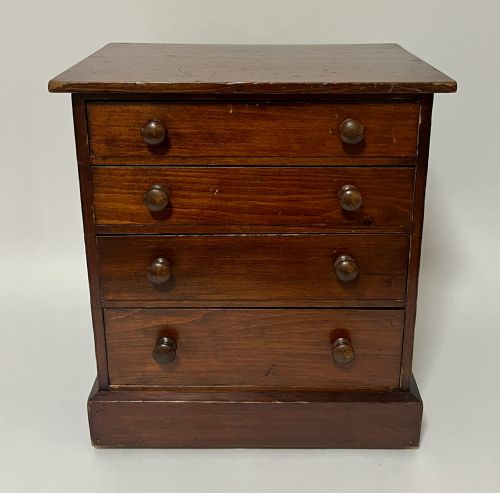
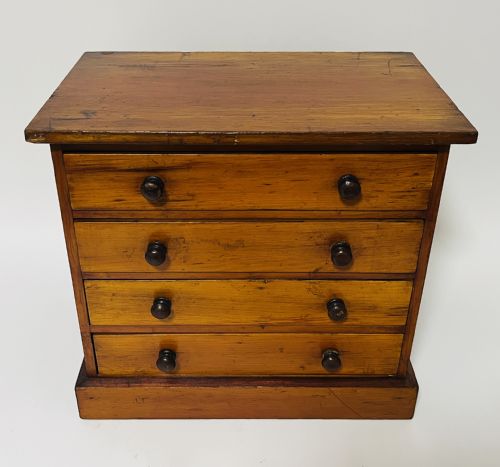
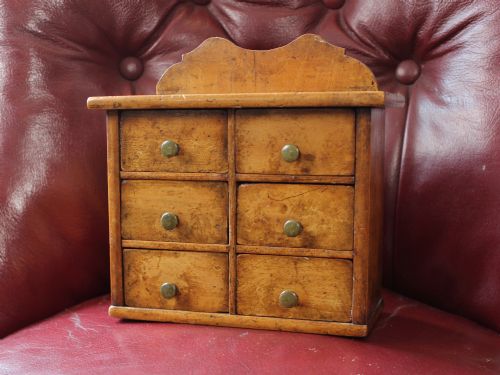
Cabinet forms on this page include Wellington chests, spice drawers, bureau bookcases, spice cabinets and apothecary chests.
What varies in quality
The sophistication of the internal layout largely separates standard pine and stained boxes from high-end specimen and microscope slide cabinets. Superior examples feature numerous precisely fitted drawers with cedar linings, working locks with original keys and finely figured veneers.
Proportion and execution distinguish genuine period work from later reproductions, as skilled makers maintained correct architectural scaling and crisp carving even at a fraction of standard furniture size.
The Miniature Collector Cabinet Glossary
- Apprentice piece
- A miniature item of furniture created by a craftsman to demonstrate mastery of joinery before entering a trade guild. These pieces replicate full-size wardrobes, desks or chests in every structural detail.
- Wellington chest
- A tall, narrow chest of drawers secured by a hinged locking side stile that fastens over the drawer edges. This specific form appears in miniature formats fitted with multiple shallow drawers.
- Specimen cabinet
- A specialised storage unit constructed with numerous shallow drawers designed to hold natural history samples such as butterflies, fossils or botanical slides. They often feature tightly sealed closures to protect contents.
- Escritoire
- A small writing cabinet featuring a drop-front writing surface that conceals pigeonholes and small drawers. Tabletop versions bring bureau functionality to a compact scale.
- Kodansu
- A traditional Japanese small portable chest with multiple internal drawers, often decorated with black lacquer and metal fittings. These imported cabinets complement European miniature forms.
Miniature Collector Cabinet: Frequently Asked Questions
What were miniature collector cabinets used for?
These small cabinets served wealthy households as secure storage for precious items such as jewellery, coins, medals or natural history specimens. Collectors used the shallow drawers to organise delicate items away from dust and light.
Makers also built them as salesman's samples or demonstration pieces to showcase fine woodworking techniques to prospective buyers without transporting full-scale furniture.
How do I tell an apprentice piece apart?
Apprentice pieces share the exact timber selection, dovetail joinery and proportional scaling of full-sized furniture from the same period. They were built by skilled hands learning traditional cabinetmaking.
Later mass-produced miniatures often display simplified construction, machine-cut joints and modern adhesives rather than hand-cut craftsmanship.
Are keys usually included with these cabinets?
Many period miniature cabinets retain their original working locks, though matching replacement keys are occasionally fitted later. Small brass barrel keys operated the locking mechanisms on Wellington stiles and cabinet doors.
Locks on these pieces were intended to secure private collections or jewellery rather than provide heavy-duty security.
How should I clean wood surfaces?
Maintain polished mahogany, walnut and oak surfaces by dusting gently with a dry, soft cloth to prevent abrasion. Avoid modern silicone sprays or wet cloths that can damage historic French polish or wax.
Feed dry period timber occasionally with a quality antique furniture wax to preserve the natural lustre of the grain.