
Miniature Cabinet with Drawers
A miniature cabinet with drawers is a compact piece of furniture built to hold small valuables, specimens or documents.
Miniature Cabinet with Drawers
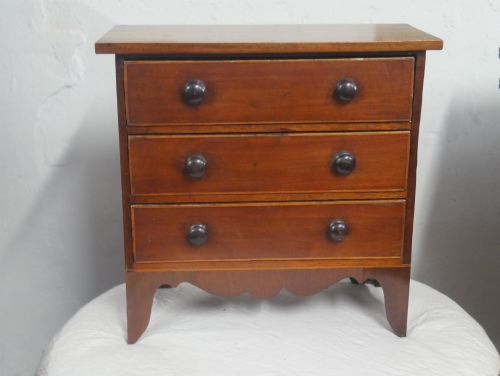
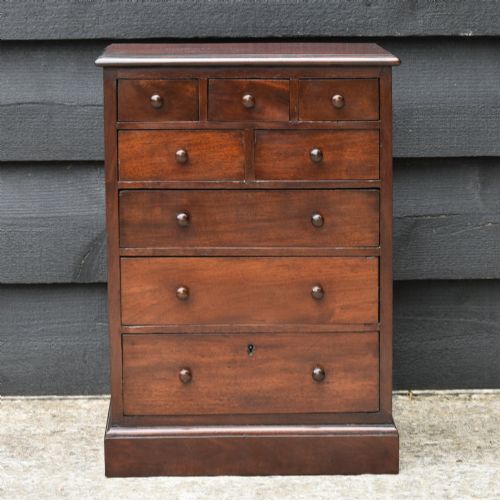
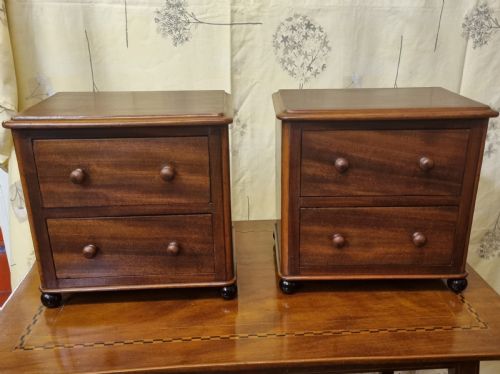
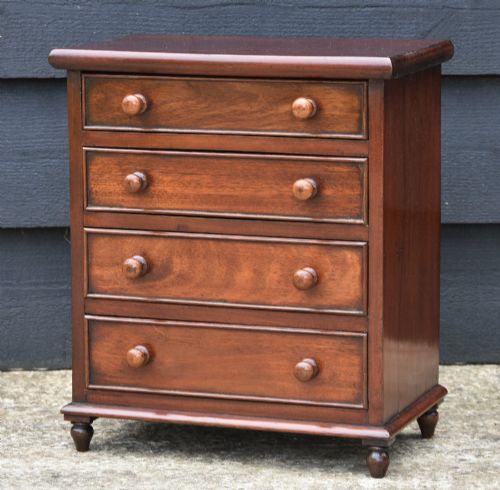
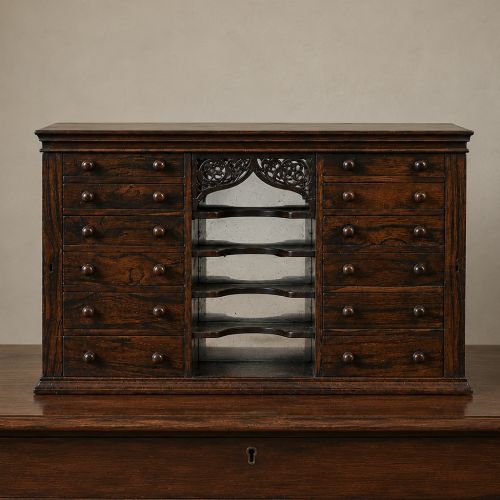
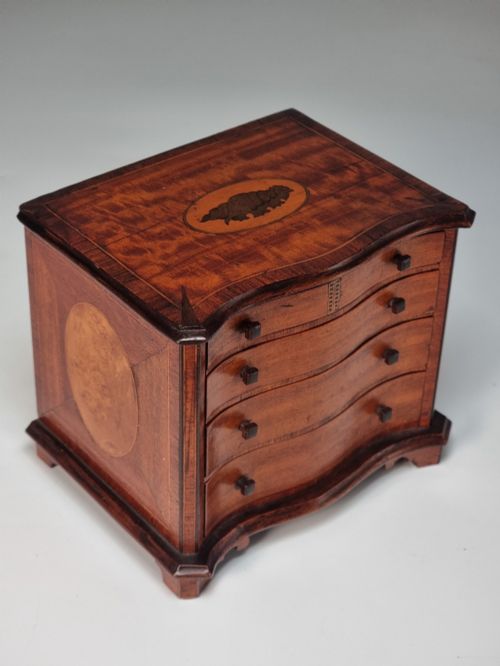
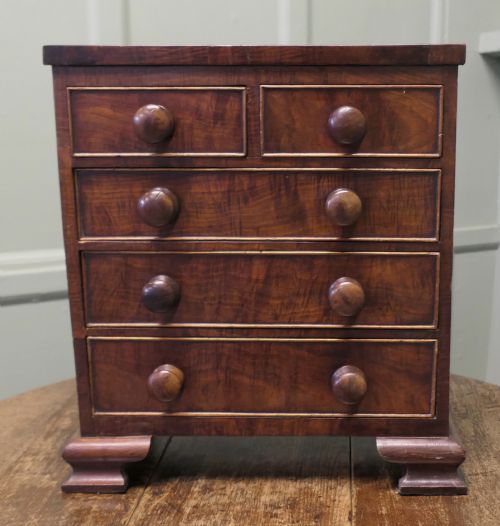
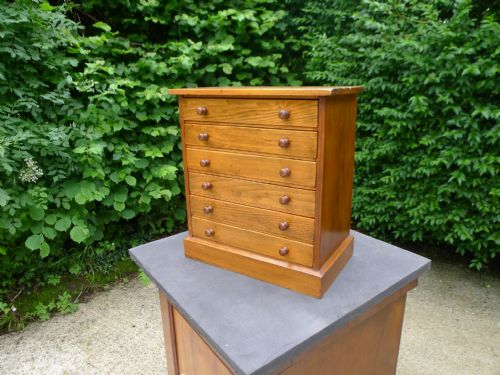
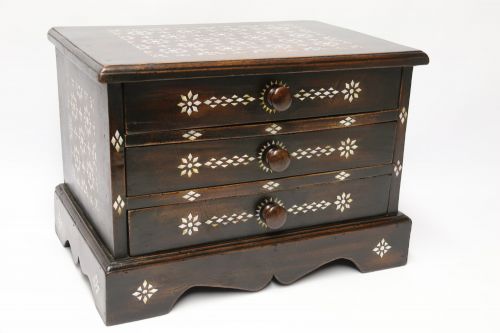
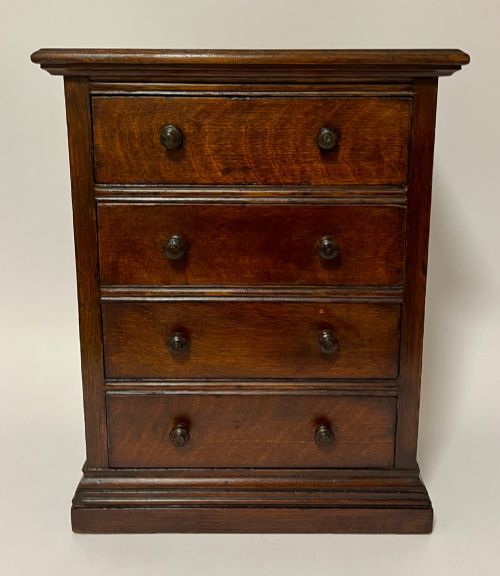
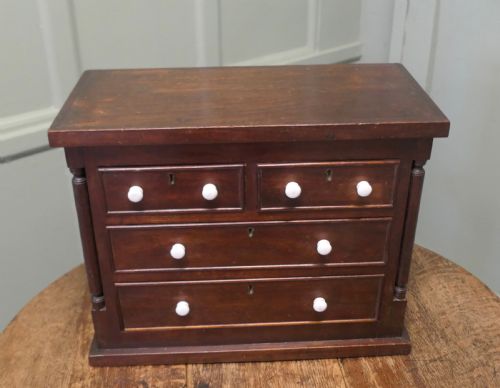
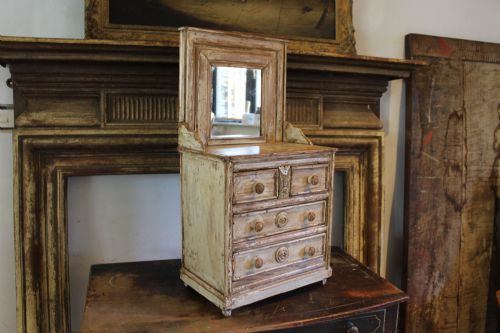
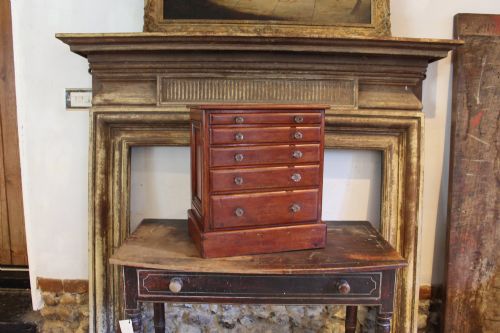
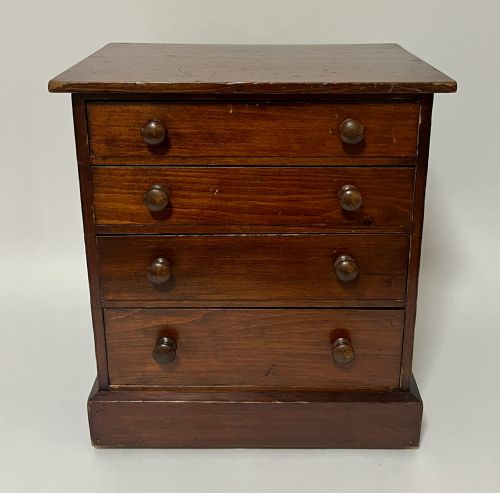
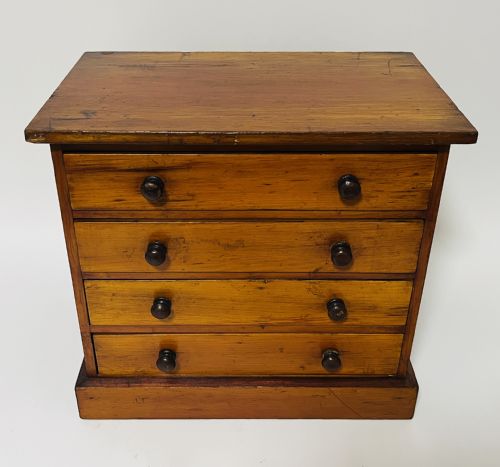
A miniature cabinet with drawers is a small-scale storage piece designed for the tabletop or counter. The selection includes apprentice pieces, tabletop chests, and collector cabinets spanning several centuries.
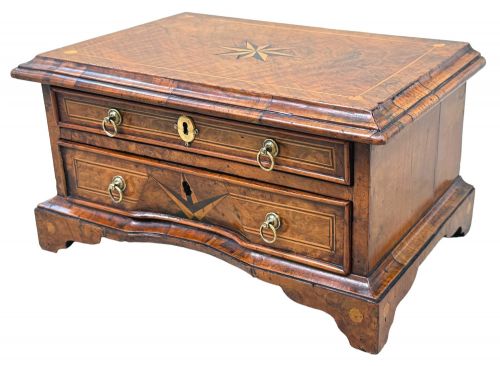
You will encounter regional examples in oak, mahogany, and burr walnut, alongside specific forms like kneehole desks and apothecary chests. These items served practical storage roles in smaller domestic or professional settings.
Most entries date from the nineteenth century or the Edwardian period, though earlier seventeenth-century and eighteenth-century examples appear. Their forms range from simple utility drawers to glazed display units and brass-fitted chests.
How they were made
Cabinetmakers constructed these small pieces using traditional timber framing, dovetail joinery, and applied mouldings. Woods such as oak, mahogany, and pine form the primary carcases, often enhanced with burr walnut veneers or ebonised details.
Metal fittings including brass handles, locks, and keys complete the construction, alongside occasional bronze animal decoration or glass panels. Interior arrangements frequently feature secret compartments or multiple small drawers tailored for specialist collections.
Some miniature apothecary chests still harbour tiny traces of old powders and herbs inside their drawers.
What varies in quality
Quality rests in the crispness of the timber selection, the precision of the drawer joints, and the survival of original hardware. Finer examples display carefully matched veneers and subtle mouldings rather than plain plank construction.
The sophistication of the internal layout distinguishes standard utility boxes from superior collector cabinets and apprentice pieces. Original working locks and keys add to the integrity of a piece.
The Miniature Cabinet with Drawers Glossary
- Apprentice piece
- A small item of furniture made by a trainee to demonstrate proficiency to a guild. These often mirror full-size chests and desks in their construction.
- Burr walnut
- A prized timber veneer showing swirling, knotty grain patterns. It was used on high-status Victorian and Edwardian cabinet surfaces.
- Kneehole desk
- A small writing desk featuring a central recessed space for the legs flanked by banks of drawers. Miniature versions replicate this functional domestic layout.
- Marquetry
- Decorative inlay work using various coloured woods to create pictorial patterns on the surface. German Renaissance examples utilise this technique.
- Apothecary cabinet
- A small chest fitted with numerous small drawers designed for storing medicines and ingredients. They often retain specialised internal fittings.
Miniature Cabinet with Drawers: Frequently Asked Questions
What were miniature cabinets used for?
These small pieces served various storage needs for individuals who required secure desktop organisation. Owners kept documents, jewellery, medical supplies, and natural history specimens inside them.
Cabinetmakers also produced them as trade samples or apprentice test pieces to prove technical skill to master craftsmen.
How old are most miniature cabinets?
The majority of pieces encountered date from the nineteenth century and the Edwardian era. You will also find earlier examples originating from the eighteenth and seventeenth centuries.
Stylistic details, timber types, and lock mechanisms generally indicate the specific period of manufacture.
How do I care for wooden tabletop cabinets?
Keep the wood away from direct heat sources and strong sunlight to prevent the timber and veneers from drying out. Dust the surfaces regularly with a soft, dry cloth.
Avoid using modern liquid polishes that can build up a residue on antique finishes and delicate brass fittings.
What is an apprentice chest?
An apprentice chest is a small-scale model of a full-sized chest of drawers. Trainee craftsmen built them to demonstrate their mastery of dovetailing and framing techniques.
They often display the same proportional accuracy and timber quality as domestic furniture.