
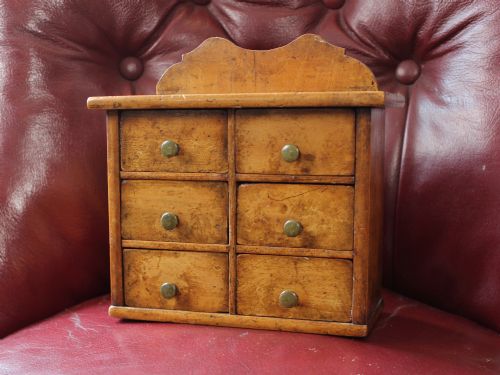


Victorian Spice Chest
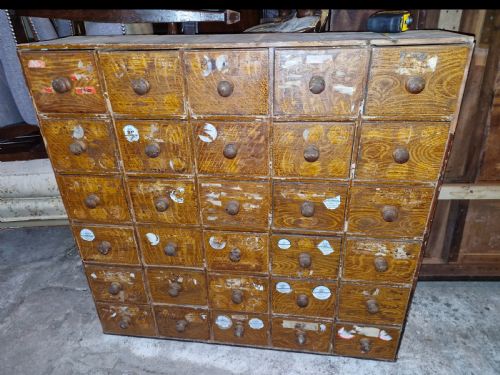
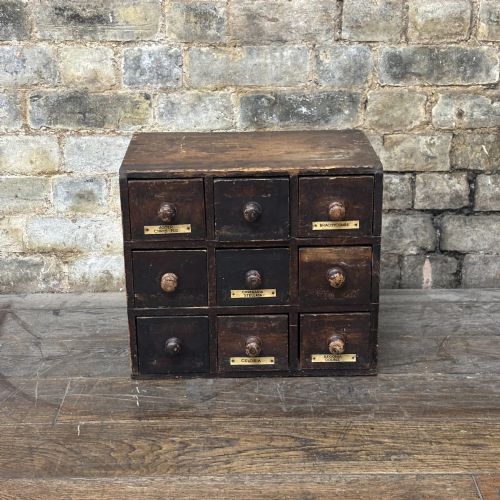
These Victorian spice chest pieces are small, functional storage cabinets designed to hold kitchen ingredients or domestic sundries.
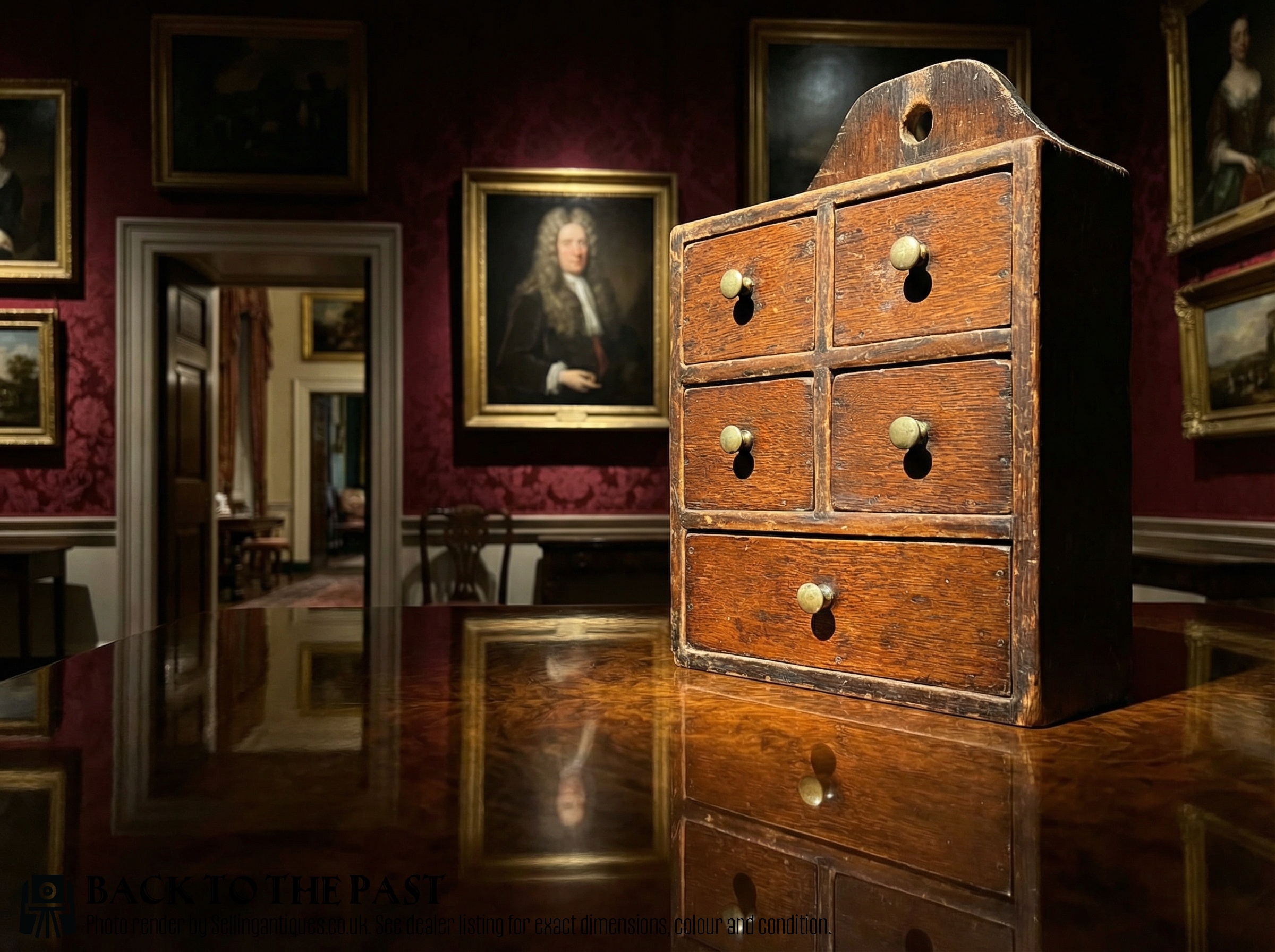
Victorian Spice Chest
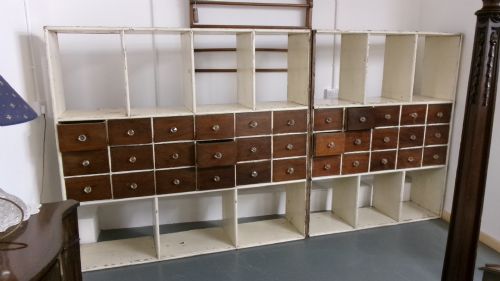
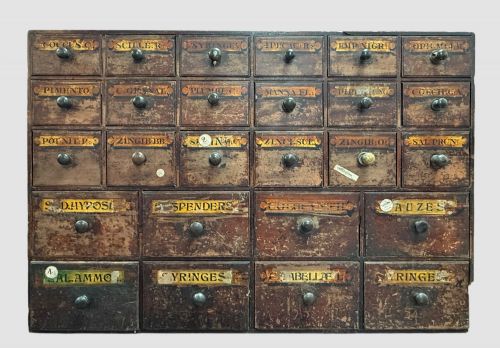
A victorian spice chest is a compact storage form typically found as a small bank of drawers, a table cabinet, or a wall-hanging box. You will most frequently encounter these items in pine, mahogany, or oak, often constructed with multiple small drawers suited for organising dry goods, seeds, or small household items.
The objects span the nineteenth century and into the early twentieth century, encompassing utilitarian forms, country variants, and miniature chests. Examples range from simple pine boxes to burr walnut table cabinets and fruitwood spice drawers designed for domestic utility.
Regional and workshop variations appear across the selection, including Welsh country pieces and English florist or apothecary fittings that share the characteristic multi-drawer format. These domestic and commercial small storage cabinets offer practical organisation on a miniature scale.
Materials and construction
Makers utilised timber appropriate for the intended function, pairing durable softwoods like pine with hardwoods such as oak, mahogany, fruitwood, and burr walnut for decorative surfaces. Joinery methods prioritise straightforward practicality, often employing simple box construction and straightforward drawer fitting.
Metal hardware such as brass pulls and small locks appear on select pieces, adding both functional security and visual contrast to the wood grain. Glass panels and soft wood carvings occasionally supplement the primary timber structures on specific table cabinets and display forms.
Periods represented stretch from the early nineteenth century through Victorian and Edwardian eras into the nineteen twenties.
Quality factors in construction and finish
The distinction between standard utility items and finer pieces lies in the choice of timber and the precision of the joinery. Finer examples display figured veneers like burr walnut or selected fruitwood, whereas utilitarian pieces rely on plain pine or mixed woods built purely for function.
The handling of secondary details, such as the neatness of drawer dovetailing, the integrity of brass furniture, and the proportional balance of miniature proportions, separates basic workshop output from more careful cabinetmaking.
The Victorian Spice Chest Glossary
- Bank of Drawers
- A multi-drawer storage unit arranged vertically or horizontally. This form provides numerous small compartments for sorted contents.
- Table Cabinet
- A small enclosed storage piece designed to sit on a desk, counter, or table. These units feature doors or drawers for desktop organisation.
- Miniature Furniture
- Scale models or small-scale cabinetwork made by makers to demonstrate skill or to fit restricted spaces. These items replicate full-size furniture proportions precisely.
- Burr Walnut
- A wood veneer taken from the growth excrescence of a walnut tree. It yields highly figured, swirling patterns prized for decorative cabinet surfaces.
- Fruitwood
- Timber sourced from fruit-bearing trees such as pear, apple, or cherry. It offers a dense, fine-grained surface favoured for small turned or carved objects.
Victorian Spice Chest: Frequently Asked Questions
What were victorian spice chest pieces used for?
These small cabinets served to store culinary spices, dry goods, seeds, or small domestic sundries in domestic kitchens and shops. Their multi-drawer format kept various ingredients separated and easily accessible.
Commercial variants also functioned as chemist or apothecary fittings, holding medicinal powders, botanical samples, or small botanical specimens in professional settings.
How do you date a spice chest?
Dating relies on examining the timber species, construction methods, and hardware styles present in the piece. Nineteenth-century examples often feature hand-cut joinery and native timbers like pine or fruitwood.
Later pieces from around nineteen hundred or the Edwardian period introduce machine-sawn components and different fastening types, aligning with evolving manufacturing standards.
Are all these chests made of solid wood?
Most examples utilise solid timbers such as pine, oak, mahogany, or fruitwood for their primary structures and drawer construction. However, decorative surfaces on finer cabinets occasionally employ wood veneers like burr walnut laid over a secondary wood base.
Examining the drawer linings and interior surfaces helps clarify whether a piece uses solid construction throughout or incorporates veneered panels.
Where should I place a spice chest at home?
These compact cabinets suit placement on kitchen counters, sideboards, or tabletops where their small footprint allows for practical storage. Wall-hanging versions attach directly to vertical surfaces to save floor and counter space.
Keeping them away from direct heat sources and excessive moisture protects the older timber, drawers, and brass fittings from warping or degradation.