


Oak Tabletop Drawers
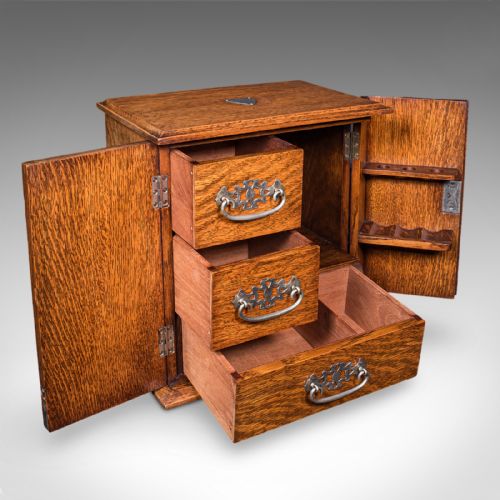
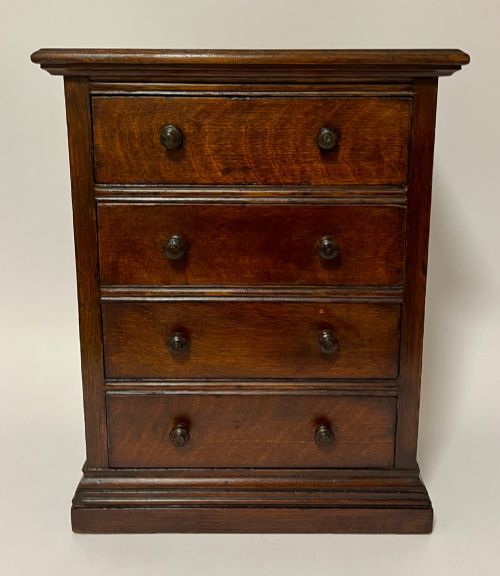
Oak tabletop drawers are compact storage pieces built for small treasures, offering authentic period character for modern desks and surfaces.
Oak Tabletop Drawers
These oak tabletop drawers encompass miniature furniture, spice cabinets, collectors cabinets, and small chests originating from periods spanning the seventeenth century through to the interwar years. A buyer examining this selection encounters formats ranging from Georgian miniature chests of drawers and Welsh coffor bach to Edwardian smoker cases and draper countertop needle drawer cabinets.
The most common examples on this page are miniature chests of drawers and collectors cabinets rendered in solid oak, often featuring small brass pulls or glass panels. These compact items served functional roles in homes, surgeries, and shops before finding favour as decorative storage objects today.
Materials and Construction
Makers utilised solid oak alongside secondary timbers like mahogany, incorporating brass for handles, key escutcheons, and hinges. Metal and iron frequently reinforced internal mechanisms or structural joints on utilitarian shop counters and smoking cabinets.
Joinery techniques on these smaller chests relied on traditional dovetailed drawer boxes and pegged frames suited to miniature proportions. Surfaces were left plain or polished to highlight the natural grain of the timber, occasionally incorporating ebonised wood details or inlay.
An eighteenth-century doctor kept order with a specialised smoking cabinet while apprentices tested their skills on tiny commodes.
Factors of Quality
The standard of a piece rests upon the crispness of its joinery, the selection of figured timber, and the retention of original hardware such as brass pulls and locks. Finer examples display meticulous attention to drawer linings and backboards rather than relying purely on surface decoration.
Proportion and scale distinguish exceptional miniature furniture from simpler utilitarian boxes, as skilled makers maintained architectural harmony on a reduced scale. Pieces retaining working keys and undamaged glass or original finishes command greater regard among collectors.
The Oak Tabletop Drawers Glossary
- Coffor Bach
- A small Welsh miniature coffer or chest, traditionally constructed in oak with a hinged lid above one or more drawers. These pieces served as dowry chests or presentation items.
- Spice Cabinet
- A small wall-hanging or tabletop cabinet containing multiple small internal drawers. They were used to store precious culinary spices and herbs in domestic kitchens.
- Collectors Cabinet
- A specialised case fitted with numerous shallow drawers designed to organise natural history specimens or coins. They frequently feature locking doors to protect fragile contents.
- Ebonised Wood
- Timber treated with a dark stain or chemical process to imitate ebony. This technique provided sharp visual contrast on mouldings and trim.
Oak Tabletop Drawers: Frequently Asked Questions
What were oak tabletop drawers used for?
These small pieces served diverse practical functions in domestic and commercial settings, from housing spices and sewing needles to storing medical supplies and collector specimens.
Shopkeepers used countertop drawer units for small merchandise, while miniature chests held personal valuables or acted as apprentice demonstrations.
How do I date an oak tabletop chest?
Dating relies on observing construction methods, timber choice, hardware style, and overall proportions relative to known historical periods.
Hand-cut dovetails, original brasses, and specific regional forms like Welsh coffor bach provide reliable clues to eighteenth or nineteenth-century origins.
Are these drawers suitable for daily use?
Most antique tabletop drawers function well for storing modern stationery, jewellery, or small desk accessories.
Care should be taken not to overload miniature drawer bottoms, as centuries-old timber can be sensitive to heavy weights.
Where should I place a miniature chest?
Their compact dimensions allow them to sit comfortably on modern desks, sideboards, or dressing tables without demanding excessive space.
Keeping them away from direct heat sources protects the old oak from drying and splitting over time.