




Brown Marquetry Wine Table
A brown marquetry wine table brings patterned timber tops and slender supports into a room, serving drinks or display with compact grace.
Brown Marquetry Wine Table
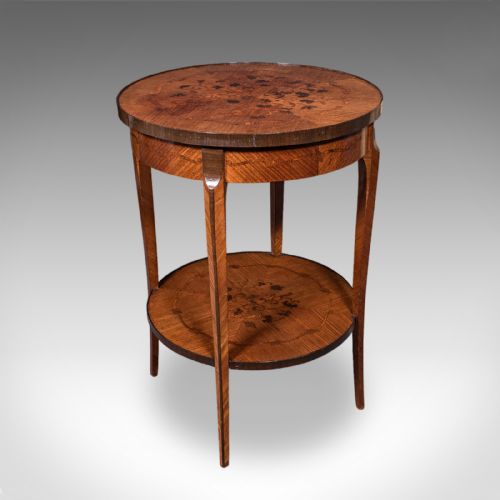
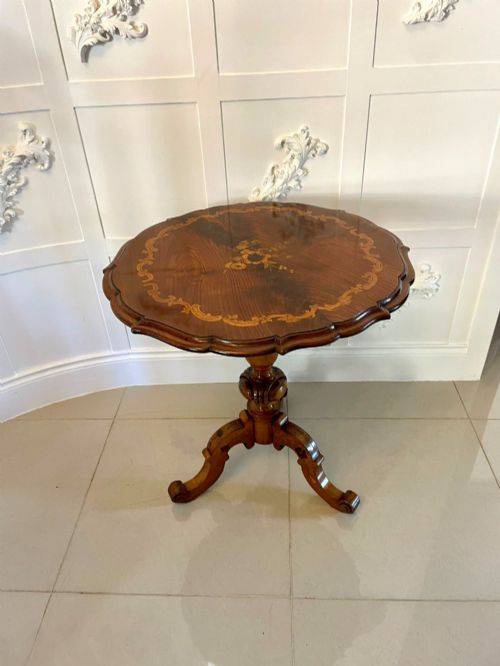
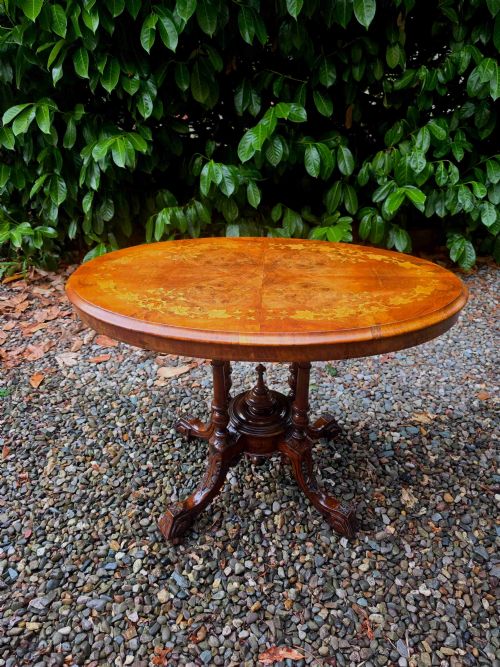
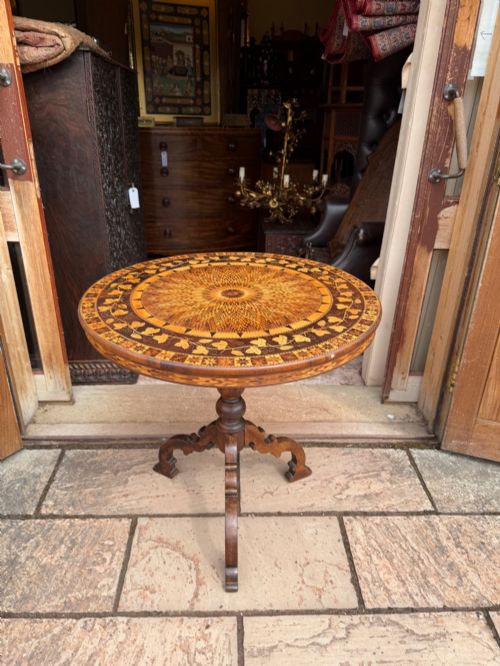
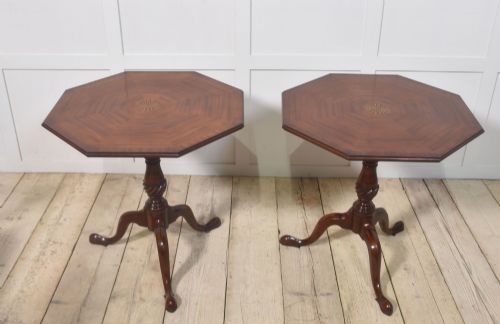
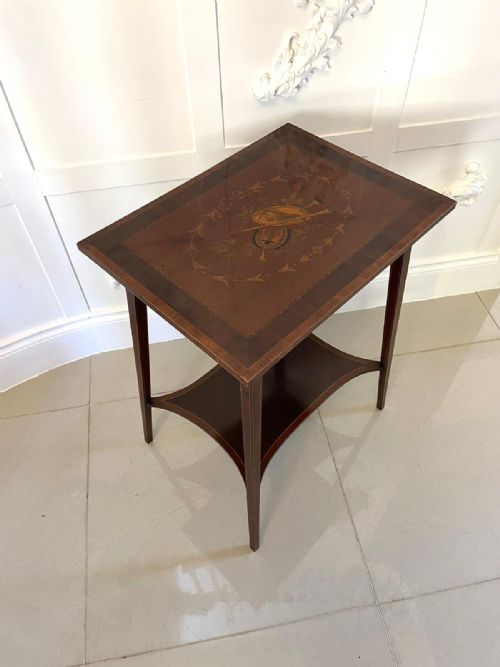
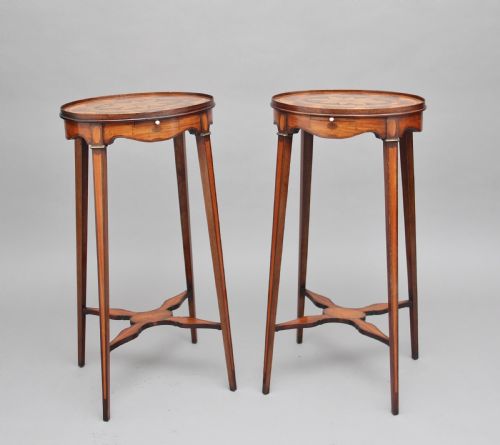
A brown marquetry wine table provides a small surface raised on a pedestal or tripod base, designed for portability and occasional use. These pieces appear across the nineteenth century, including Victorian and Edwardian periods, alongside revival styles and Italian Sorrento work. Walnut, mahogany, and burr walnut form the primary timber bodies for these compact surfaces.
Makers utilised contrasting woods to create intricate floral, geometric, or pictorial inlay directly into the timber tops. Buyers most frequently encounter circular or oval top formats supported by central columns or three-legged bases. These smaller tables suit corners or beside seating where floor space remains restricted.
How they were made
Cabinetmakers constructed these tables using solid foundational timbers such as mahogany, oak, or walnut, applying veneers to create stable surfaces. Marquetry inlay required slicing thin sections of fruitwood, satinwood, and various specimen timbers to fit precisely into hand-cut recesses on the surface.
Support structures combine turned central pedestals with tripod legs, sometimes incorporating tilt mechanisms or snap-top hinges made from brass. Surface finishing relied on French polish to seal the timber and highlight the natural grain contrasts against the inlaid elements.
Listings feature walnut, mahogany, and fruitwood tables produced across Victorian and Edwardian periods, including Italian Sorrento work.
What varies in quality
Quality rests upon the precision of the wood inlay and the depth of the timber selection, such as burr walnut or figured mahogany. Finer examples display tight, seamless joints where contrasting veneers meet, with minimal filler used in the patterning.
The stability of the pedestal base and the crispness of the turned column or leg profiles distinguish superior workshops from standard production. Execution of floral or geometric motifs requires careful hand-cut alignment rather than stamped or printed substitutes.
The Brown Marquetry Wine Table Glossary
- Marquetry inlay
- Decorative woodwork where small pieces of tinted or natural wood veneer form pictorial or geometric patterns on a solid ground. This technique defines the visual character of the surface.
- Tripod base
- A three-legged support structure commonly found beneath small occasional and wine tables. It provides stability on uneven floors.
- Burr walnut
- Timber taken from a tree growth or burl, yielding swirling, knotty grain patterns prized for decorative table tops. It offers rich texture under polish.
- Sorrento ware
- Italian marquetry work originating from the region around Naples, frequently featuring geometric or local scenic motifs. These pieces date largely to the nineteenth century.
- Tilt top
- A mechanism allowing the table surface to pivot vertically against the pedestal for storage when not in use. Brass catches often secure the top in the horizontal position.
Brown Marquetry Wine Table: Frequently Asked Questions
What is a wine table used for?
These small tables originally held bottles, glasses, or candles beside seating during evening gatherings. Today they function effectively as lamp stands or display surfaces for decorative objects in a living space.
Their compact footprint allows them to occupy awkward corners or small wall spaces where larger furniture cannot fit.
How do I date a marquetry table?
Dating relies upon examining the timber species, base construction methods, and the style of the inlay work. Nineteenth-century examples often feature walnut or mahogany with floral marquetry, while Edwardian pieces lean towards Sheraton revival motifs.
Turned column designs and leg profiles also shift from heavier Victorian proportions to lighter Edwardian or Sheraton revival formats.
Where should I place a wine table?
Position these tables beside armchairs, sofas, or in entrance halls where a minor surface is required. Their slender proportions prevent them from dominating a room.
Keep them away from direct heat sources and strong sunlight to protect the polished wood surfaces and delicate veneer work.
How do I care for inlaid wood?
Maintain the timber by dusting regularly with a soft, dry cloth and applying natural wax polish occasionally to nourish the grain. Avoid excessive moisture and liquid spills on the veneer surface.
Keeping the table away from radiators prevents the wood from drying out and lifting the delicate marquetry inlay.