





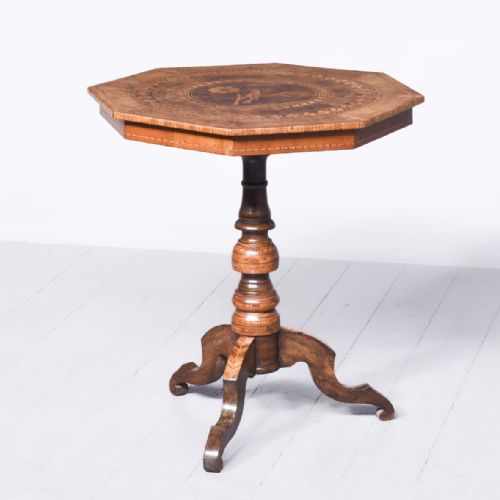
Italian Marquetry Tripod Table
An italian marquetry tripod table brings tactile warmth and intricate pictorial wood craft into a room, offering both history and decorative utility.
Italian Marquetry Tripod Table
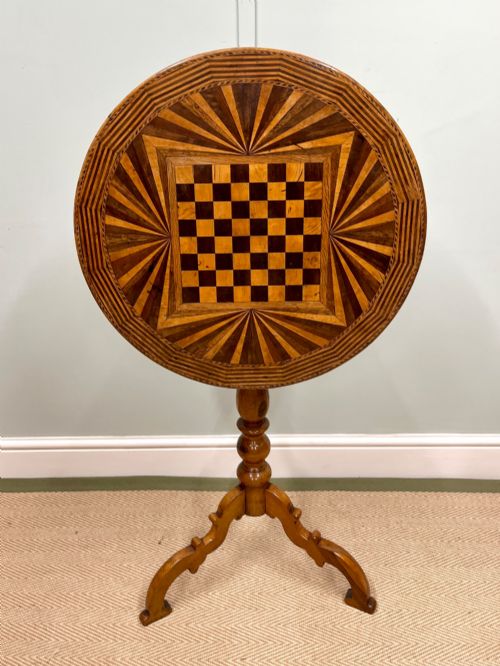
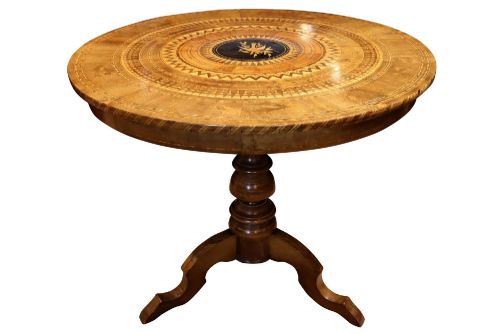
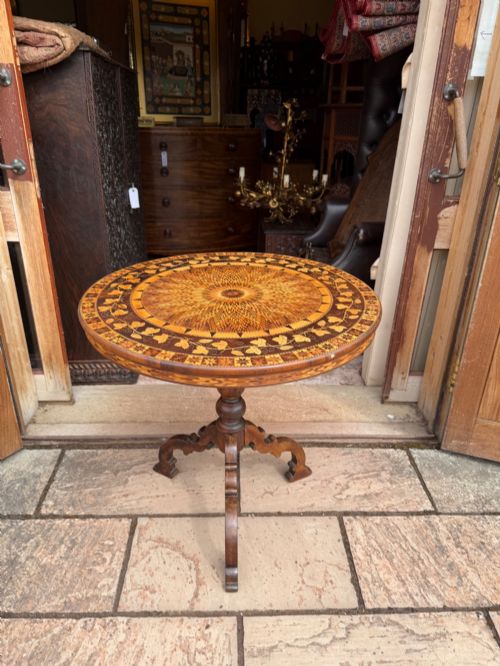
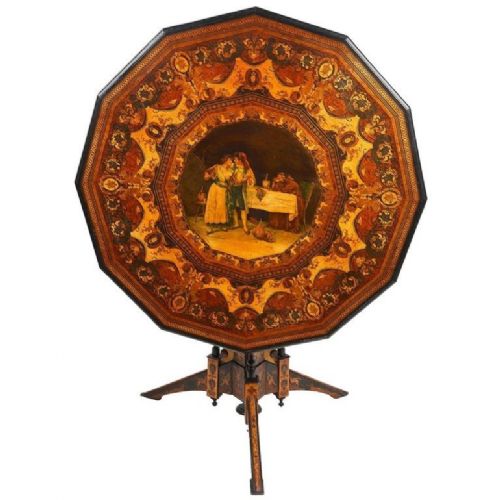
When you search for an italian marquetry tripod table, you encounter portable occasional furniture designed to catch the eye with elaborate pictorial surfaces. The pieces seen on this page span the nineteenth century, including specific dates such as 1870, 1880, 1890, and 1920, alongside broader Victorian designations.
Most examples take the form of occasional, side, tilt top, or centre tables supported by a central pedestal and three feet. Their origins tie directly to nineteenth century Italian production and the Grand Tour, often associated with the coastal town of Sorrento.
The prevalent formats on this page range from stationary occasional stands to flip top and tilt top variants. Buyers find walnut structures paired with varied fruitwood and olive wood veneers that display intricate geometric and pictorial inlay.
Materials and construction
Construction relies heavily on solid walnut and mixed hardwood veneers forming the structural chassis of the pedestal and top. Artisans selected burr walnut and olive wood to provide varied grain patterns and natural colour contrasts across the surfaces.
The defining decorative technique uses finely cut fruitwood inlay and marquetry to build elaborate pictorial scenes or geometric parquetry patterns. Craftsmen fitted these minute timber segments meticulously by hand into recesses carved within the tabletop veneer.
Italian Marquetry Tripod Table Retail Price Guide 2026
Typical asking prices for italian marquetry tripod table among the pieces listed under this phrase on Sellingantiques today, from the lower quarter to the upper quarter. They describe what is for sale here now, not the wider market.
Materials recorded across the inventory include walnut, fruitwood, olive wood, burr walnut, and mixed hardwood veneers.
Judging quality in marquetry furniture
Quality rests in the precision of the veneer work and the complexity of the pictorial or geometric composition. Superior pieces display tight joins between contrasting timber species without visible gaps or coarse filler.
The integrity of the central pedestal and the stability of the three leg support structure dictate the mechanical success of the piece. Better tables maintain flush, smooth surfaces across the tilt top mechanism and balanced proportions in the turned column.
Almerico Gargiulo
The Italian Marquetry Tripod Table Glossary
- Marquetry inlay
- The art of forming decorative patterns or pictures by inserting veneer pieces of different colours and woods into a prepared surface. This technique allows for detailed pictorial representation on tabletops.
- Sorrento ware
- A style of decorative woodwork originating from the Italian town of Sorrento, famous for intricate marquetry and parquetry. Pieces often depict architectural views, figures, or floral motifs.
- Tilt top table
- A table featuring a hinged mechanism that allows the surface to pivot into a vertical position when not in use. This design saved space in nineteenth century domestic interiors.
- Parquetry
- A geometric mosaic of wood pieces used for decorative floors and tabletops. It differs from marquetry by focusing on repeating angular patterns rather than pictorial scenes.
- Burr walnut
- Wood taken from a tree growth where the grain has grown in a deformed manner, resulting in complex swirled patterns. Cabinet makers prized this material for high status veneered surfaces.
Italian Marquetry Tripod Table: Frequently Asked Questions
What is an italian marquetry tripod table?
These pieces are nineteenth century occasional tables featuring a central pedestal base and a top decorated with intricate wood veneer designs. They originated in Italy, particularly associated with Sorrento production and the Grand Tour.
Craftsmen utilised walnut, olive wood, and fruitwood to create detailed pictorial or geometric scenes. Buyers use them today as striking decorative accents in drawing rooms or studies.
How were these tables used originally?
In nineteenth century homes, these tables served as movable stands for holding books, lamps, or decorative ornaments. The tilt top versions allowed the furniture to be folded flat against a wall when floor space was needed.
Grand Tour travellers purchased them in Italy as portable souvenirs of their travels. Their decorative surfaces were meant to be admired closely rather than used for heavy domestic tasks.
How do I live with an antique marquetry table?
Place the table away from direct sunlight and heat sources to prevent the delicate fruitwood veneers from drying out or fading. Use coasters and avoid placing damp objects directly on the polished wooden surface.
Their compact tripod footprint makes them easy to position beside armchairs or in corners. Regular dusting with a soft, dry cloth preserves the polished finish of the timber.
How can I tell periods apart?
Dating relies on examining the timber preparation, the style of the base turnings, and any recorded dates or maker attributions. Nineteenth century examples often display hand cut veneers and specific regional motifs linked to Sorrento.
Later Victorian pieces from the 1880s or 1890s share similar construction methods but can sometimes show shifts in the complexity of the inlay work. Comparing the specific wood species, such as olive wood versus standard fruitwoods, helps narrow down the origin.