




Inlaid Wooden Tilt Table
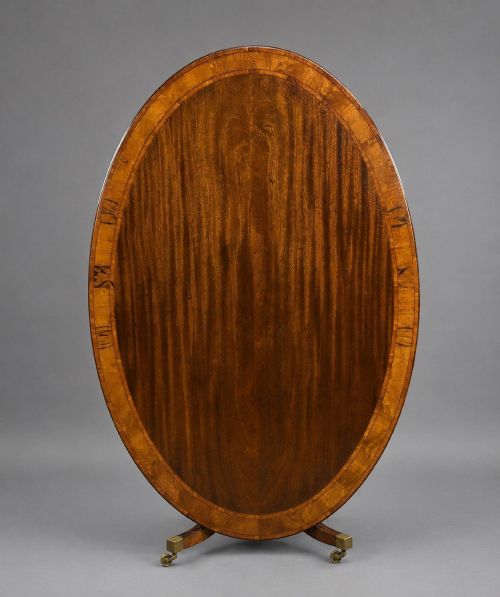
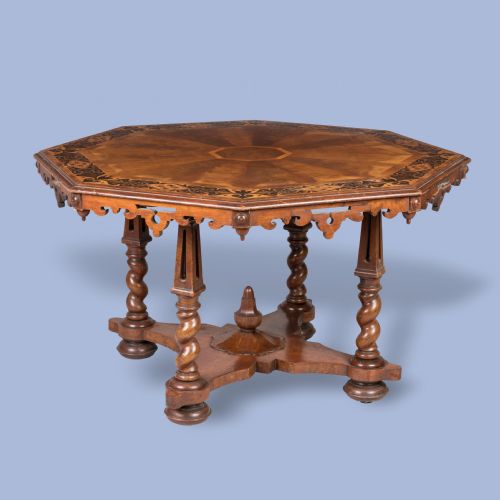
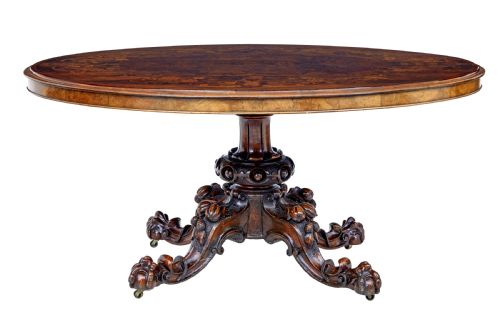
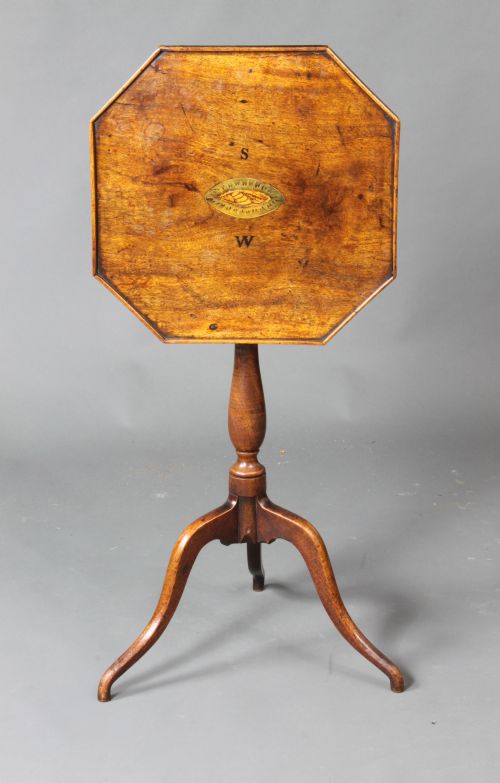
These inlaid wooden tilt table examples combine clever folding tops with rich timber surfaces, offering versatile display space for any room.
Inlaid Wooden Tilt Table
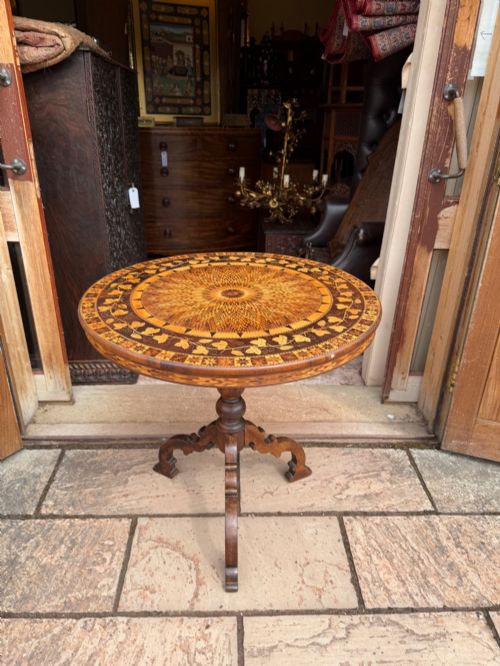
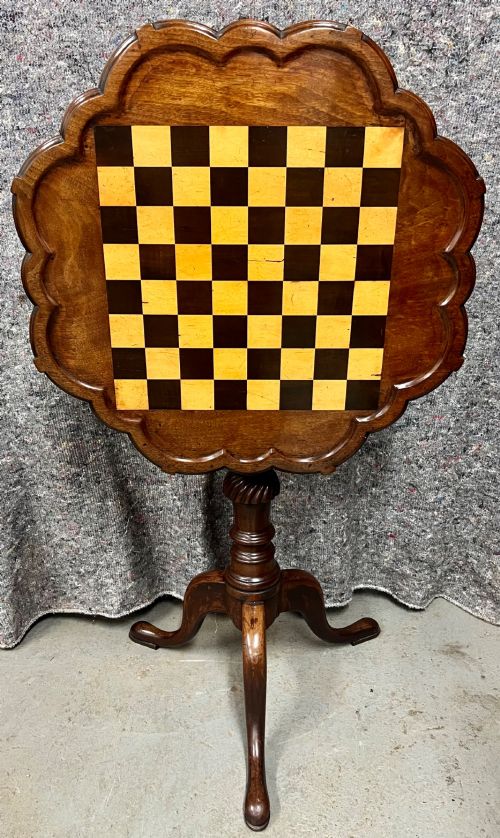
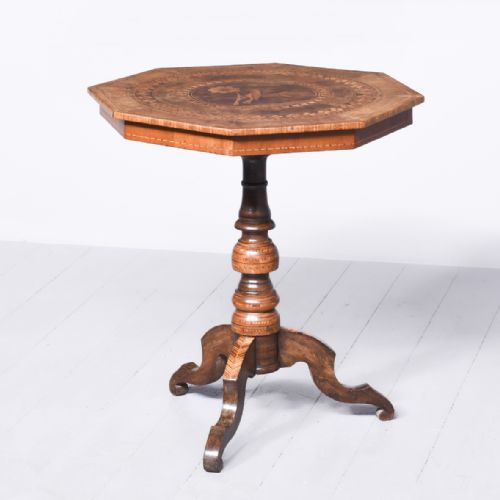
An inlaid wooden tilt table is a flexible furnishing designed to pivot its surface upright when not in use, saving space against a wall. The examples here span periods from the Georgian era through to the Edwardian period, encompassing styles such as Regency, Georgian, and Italian Sorrento.
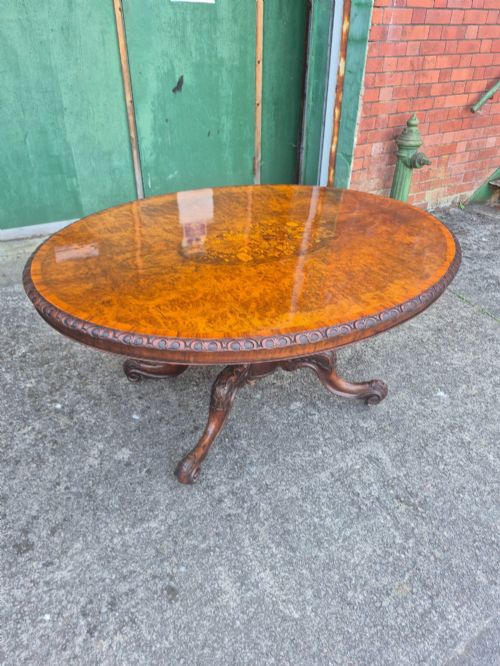
The form appears in various configurations, including breakfast tables, centre tables, and tripod tables, alongside occasional pieces. Most pieces you meet on this page utilise walnut, burr walnut, or mahogany, often enhanced by decorative wood inlay.
Origins stretch from British workshops to Italian Sorrento production, showing diverse regional approaches to timber selection and surface decoration. Buyers select these tables for both practical daily use and their decorative presence.
How they were made
Cabinet makers utilised dense hardwoods such as mahogany, walnut, and burr walnut for the primary structural frames and tilting tops. These timbers provided the stability needed for a pivoting mechanism while offering rich natural grain patterns.
Satinwood and specialised wood inlay were meticulously cut and fitted into recessed channels to create intricate geometric or pictorial borders. Brass fittings frequently reinforced the pivoting mechanisms and tripod support collars beneath the surface.
The listings span several distinct eras, stretching from Georgian and Regency origins through Victorian output into Edwardian times.
What varies in quality
The refinement of the timber selection dictates the visual impact, particularly where burr walnut or figured mahogany exhibits depth and movement. Superior examples display seamless integration of the wood inlay, where contrasting veneers sit perfectly flush with the surrounding surface.
Engineering precision in the tilt mechanism ensures the top locks securely into position without wobble when horizontal. The elegance of the pedestal base and the crispness of any carved tripod legs further distinguish finer output from standard production.
James Winter
The Inlaid Wooden Tilt Table Glossary
- Tilt top
- A pivoting tabletop design that rotates from a horizontal surface to a vertical position. This allows the furniture to be stored compactly against a wall when not in use.
- Inlay
- A decorative technique where pieces of contrasting wood or other materials are inserted into recessed portions of a base timber. It creates flat, ornamental patterns across the surface.
- Burr walnut
- A specialised timber cut from the abnormal growth of a walnut tree, yielding highly swirling grain patterns. Cabinet makers prized this material for high-status table surfaces.
- Tripod table
- A small freestanding table supported by a central pillar resting on three feet. This construction prevents rocking on uneven floors.
- Sorrento ware
- Decorative woodwork originating from the Italian town of Sorrento, characterised by intricate micro-mosaic wood inlay. It frequently depicts architectural scenes, flora, or geometric bands.
Inlaid Wooden Tilt Table: Frequently Asked Questions
Why did tables have tilting tops?
Tilt tops allowed large dining and breakfast tables to be folded flat and pushed against the perimeter of a room when meals concluded. This cleared floor space for other domestic activities during the day.
The pivoting mechanism also made the furniture easier to transport between rooms or houses when necessary.
How do I spot Italian Sorrento work?
Italian Sorrento pieces are easily recognised by their distinctive multi-coloured wood inlay, which often forms elaborate floral motifs or picturesque views. The contrasting light and dark veneers are tightly packed to create a pictorial mosaic effect.
This specific style of decoration appears most frequently on nineteenth-century circular and pedestal tables from Italy.
What is burr walnut?
Burr walnut is harvested from a tree growth that produces chaotic, swirling grain patterns rather than straight lines. It was sliced into thin veneers to cover larger tabletops with dramatic visual texture.
Because of its complex figure, it was reserved for decorative surfaces on finer Victorian and nineteenth-century tables.
How do I care for inlaid wood?
Inlaid surfaces require consistent indoor humidity levels to prevent the delicate veneer woods from shrinking and lifting away from the base timber. Regular dusting with a soft, dry cloth maintains the finish without moisture damage.
Avoid placing these tables in direct sunlight, which can fade the contrasting colours of the inlaid Sorrento or satinwood details.