


Brown Mahogany Standing Mirror
A brown mahogany standing mirror brings warmth and functional elegance to a room, offering full-length reflection through centuries of craftsmanship.
Brown Mahogany Standing Mirror
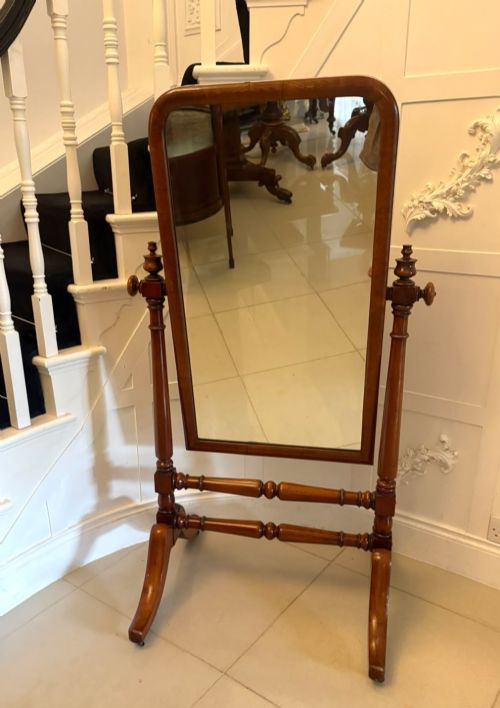
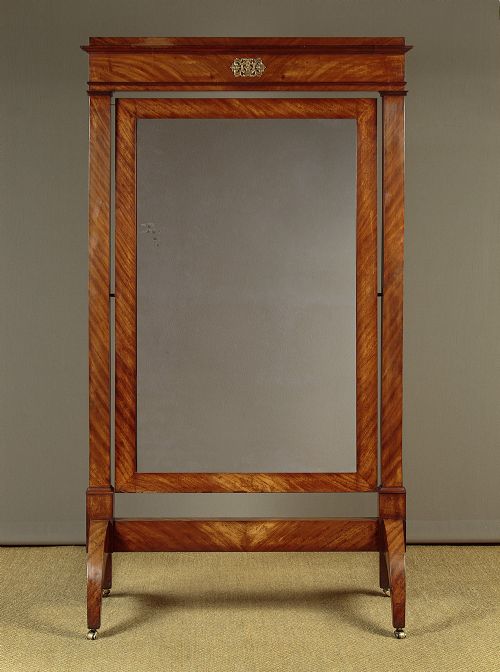
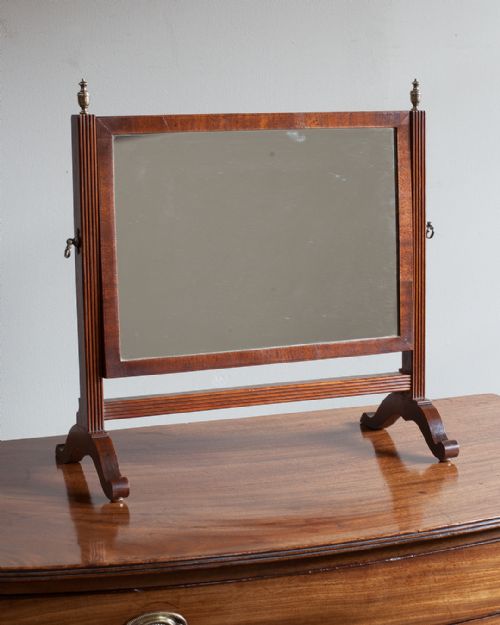
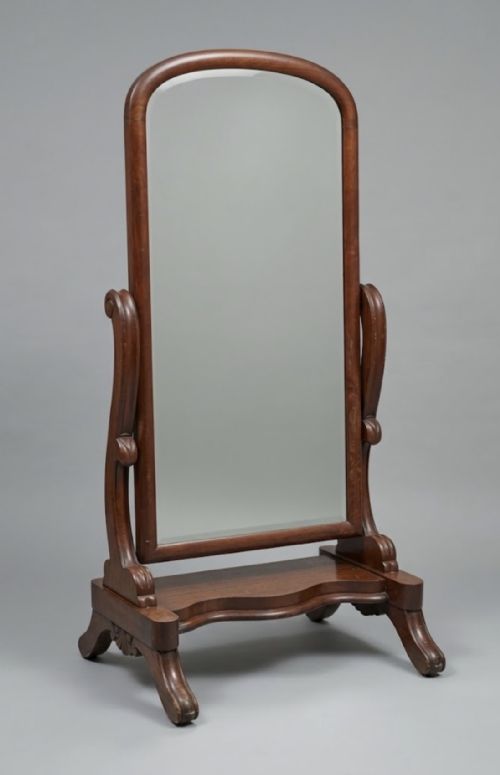
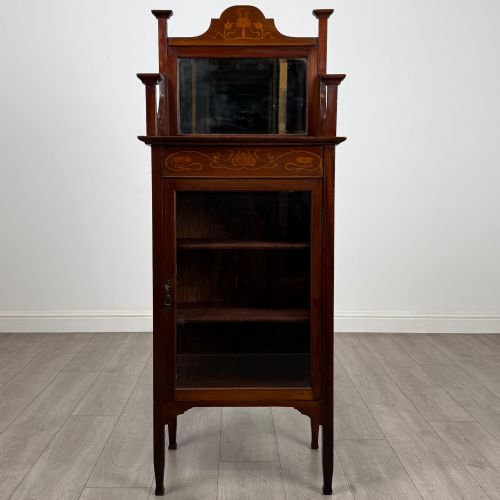
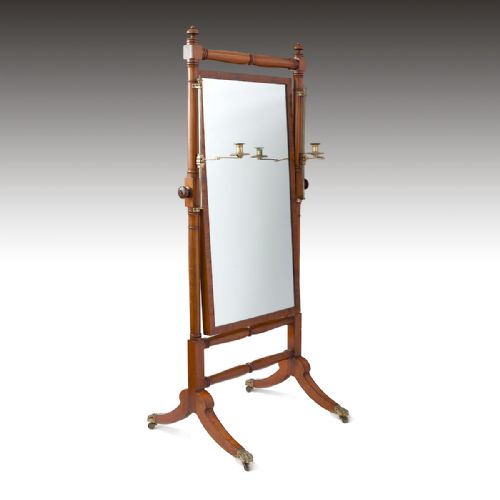
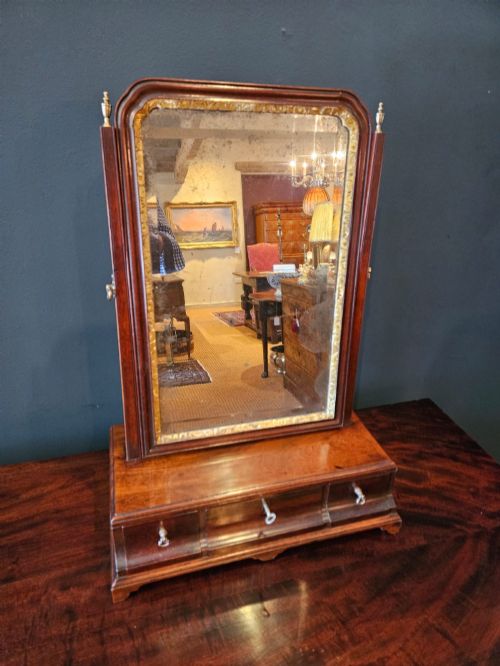
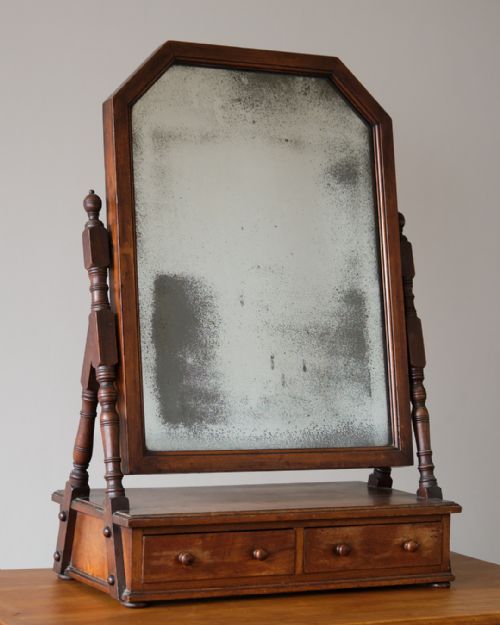
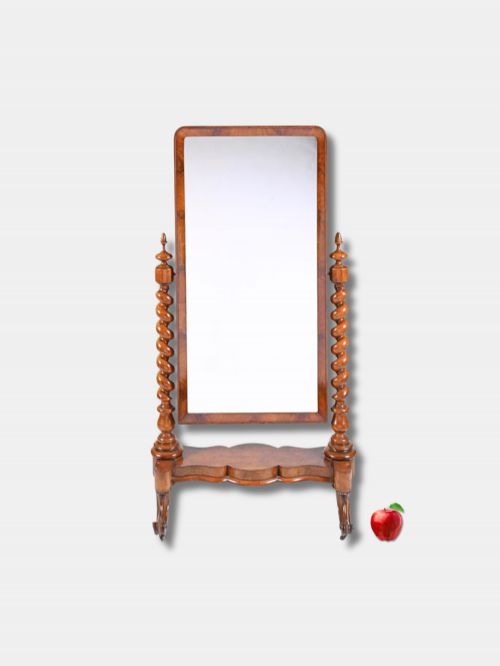
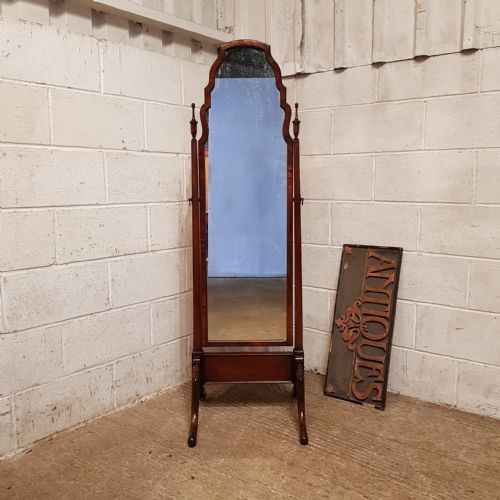
A brown mahogany standing mirror encompasses floor-standing cheval mirrors, dressing mirrors, and shaving stands originating from periods such as the Georgian, Regency, Victorian, and Edwardian eras. These objects range from tall, pivoting frames designed for bedrooms to compact toilet and swing mirrors meant to sit atop tables or chests.
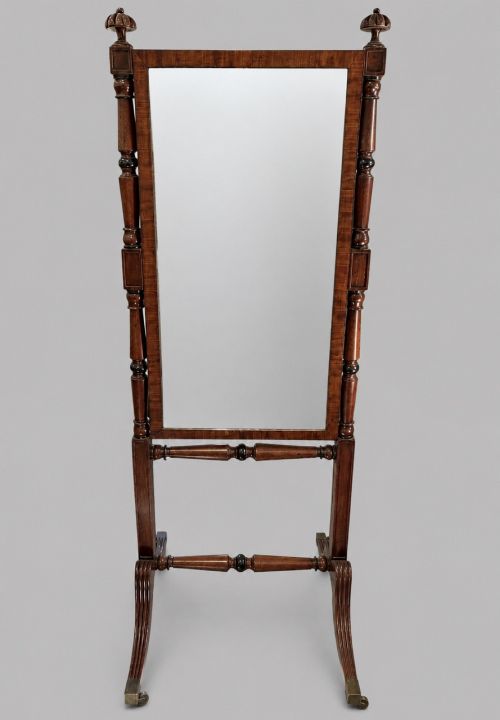
The version most frequently met on this page is the Victorian or 19th Century cheval mirror, often featuring a heavy timber frame mounted on upright supports with robust feet. Alongside these, buyers encounter smaller dressing table mirrors and specialised stands incorporating drawers, marble tops, or adjustable mechanisms.
Makers and retailers from history, including Gillows and Harrods, shaped the evolution of these mirrors, combining dense tropical hardwoods with functional hardware like brass castors and sabots. Whether unadorned or inlaid with satinwood, each piece reflects the domestic habits and interior tastes of its specific decade.
Materials and construction techniques
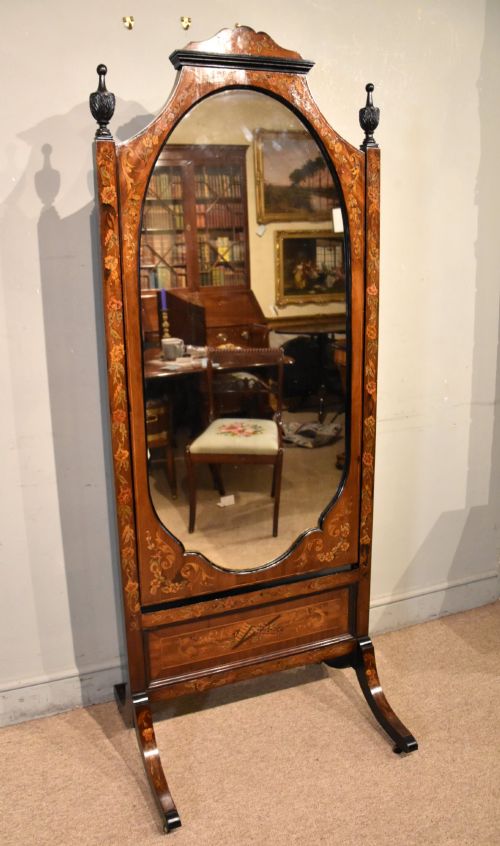
Makers utilised solid mahogany and mahogany veneers over secondary timbers, often selecting rich, dark grain patterns that were hand-polished to a lustrous finish. Inlaid examples frequently incorporate contrasting woods such as satinwood, creating geometric or floral borders along the frame and uprights.
Structural stability was achieved through sturdy timber framing, utilised in barley twist supports, sabre legs, and tripod bases. Brass hardware, including adjustable pivots, castors, and sabots, allowed heavy floor-standing frames to move smoothly and tilt to desired angles.
The reflective glass itself was traditionally silvered and secured within rebated frames, sometimes backed with protective wooden panelling. Joinery techniques varied from simple pegging in earlier Georgian pieces to more complex turned supports and carved decorative mouldings in Victorian workshops.
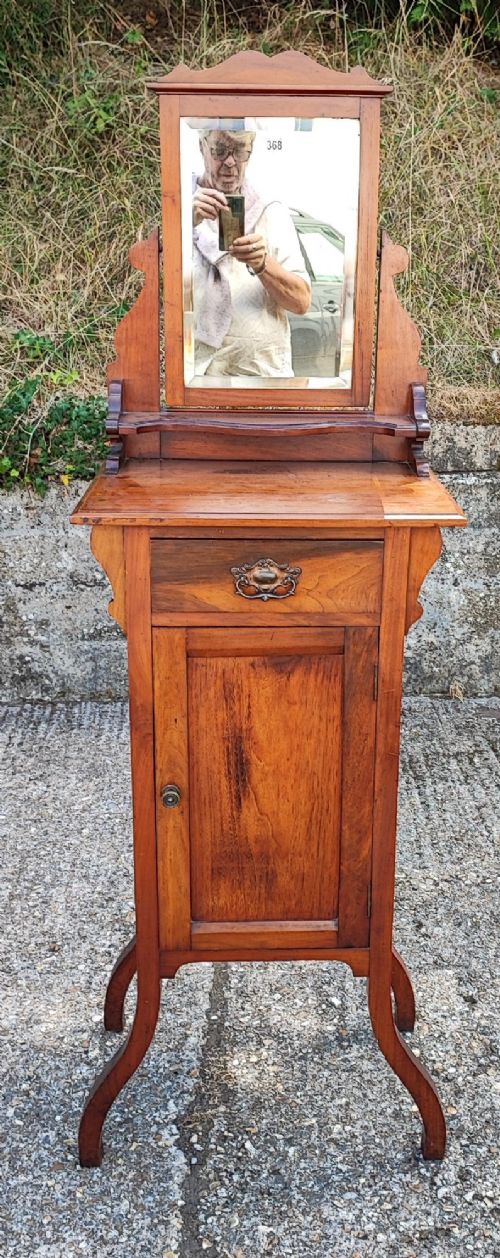
Some Victorian gentleman's shaving stands include adjustable mirrors designed for early morning routines before central heating existed.
Factors influencing quality and craftsmanship
The standard of timber selection and cabinetmaking distinguishes superior pieces from standard domestic furniture. Favour goes to mirrors possessing deep, rich grain patination in the mahogany, alongside precise inlay work and solid structural joinery that prevents wobble in tall frames.
Proportion and decorative detail dictate the visual appeal of a standing mirror. Finely turned barley twist columns, substantial brass castors, well-executed carved mouldings, and maker attribution elevate a piece beyond utilitarian production.
The integrity of the frame and the quality of the glass plate matter significantly. Original mirror glass with gentle age-related foxing is often preferred by collectors over modern replacements, provided the pivoting mechanism operates smoothly and securely.
Gillows·Heal And Sons·Thomas Rubergall
The Brown Mahogany Standing Mirror Glossary
- Cheval mirror
- A large, floor-standing dressing mirror supported by a frame with vertical posts that allow the glass to swing. This form became particularly popular during the Regency and Victorian periods.
- Sabots
- Metal sleeves, typically made of brass, fitted to the feet of furniture legs for protection and decoration. They frequently appear on Regency and William IV standing mirrors.
- Swing mirror
- A smaller mirror plate mounted on pivots between two upright arms, allowing the glass to tilt. These are often integrated into dressing table mirrors or toilet stands.
- Satinwood
- A durable, yellowish timber native to India and Sri Lanka, utilised for contrasting inlay work on mahogany furniture. It adds bright decorative detail to Edwardian and Georgian pieces.
Brown Mahogany Standing Mirror: Frequently Asked Questions
How do I date a mahogany cheval mirror?
Dating relies heavily on observing the joinery, hardware, and stylistic cues of the frame. Earlier Georgian and Regency examples often feature sleeker lines, sabre legs, or brass sabots, while Victorian versions frequently display heavier turnings, barley twist columns, or elaborate carved crests.
Examining the construction methods behind the mirror plate and the wood backing also provides clear clues. Older pieces typically show hand-cut screws, tapered joints, and backboards made of secondary timbers appropriate to the era.
Where should I place a standing mirror?
Standing mirrors suit bedrooms, dressing rooms, and spacious hallways where their height and reflective surface can enhance natural light. Placing them perpendicular to windows maximises the spread of daylight across the room.
Ensure the floor surface is relatively level, particularly with heavier floor-standing cheval mirrors on castors. Secure positioning prevents accidental tipping and allows the pivoting mechanism to function without strain on the upright supports.
Are standing mirrors stable on carpets?
Heavier floor-standing mirrors generally remain stable on carpets, though deep pile can sometimes cause slight movement when adjusting the tilt. Using supportive coasters beneath the feet helps distribute the weight evenly.
For pieces fitted with castors, checking that the wheels are clean and aligned ensures smooth movement. If the floor is uneven, small discreet wedges can stabilize the frame without altering its appearance.
What is the difference between a cheval and a dressing mirror?
A cheval mirror is a tall, floor-standing glass designed to show the viewer from head to toe. It rests on a dedicated frame with vertical posts and feet that support its entire weight independently.
A dressing mirror, or toilet mirror, is significantly smaller and intended to sit on top of a table, chest of drawers, or washstand. These smaller versions often incorporate small drawers in their base for holding trinkets.