
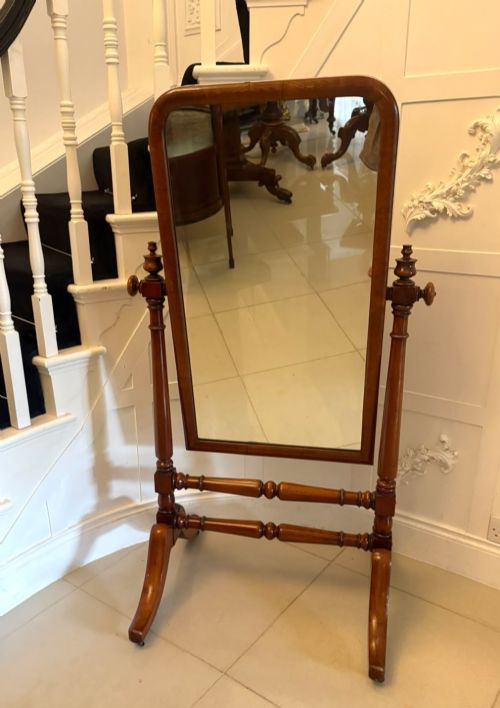
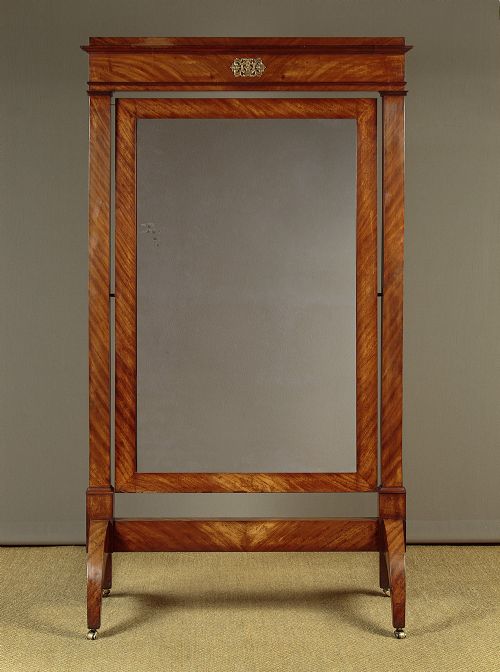
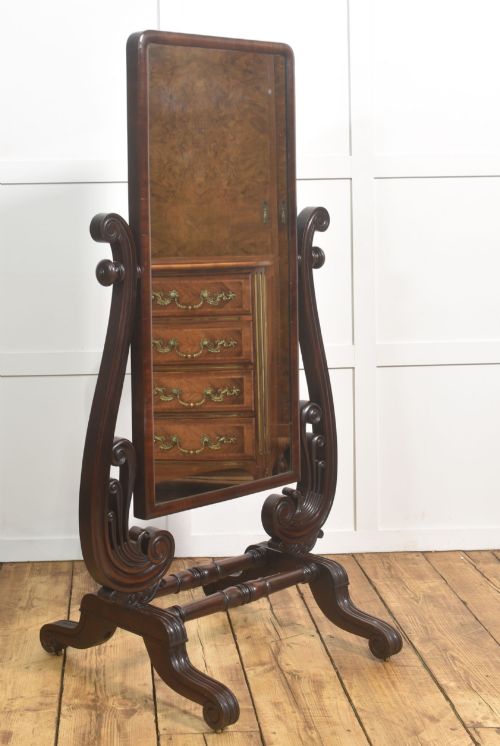
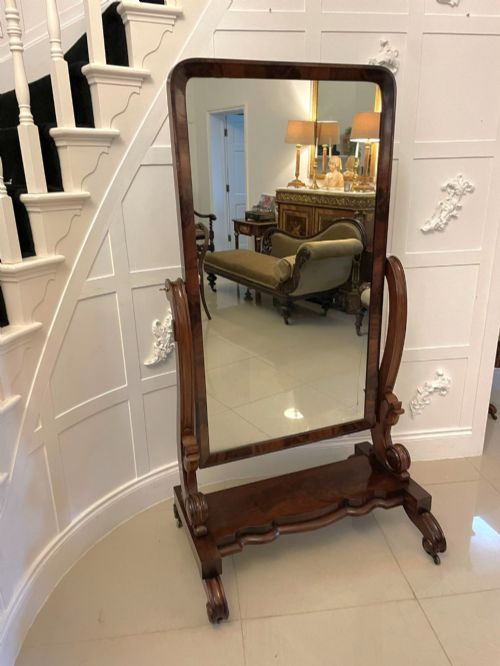
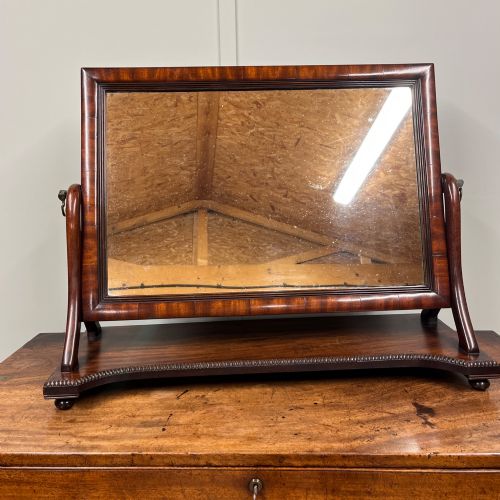
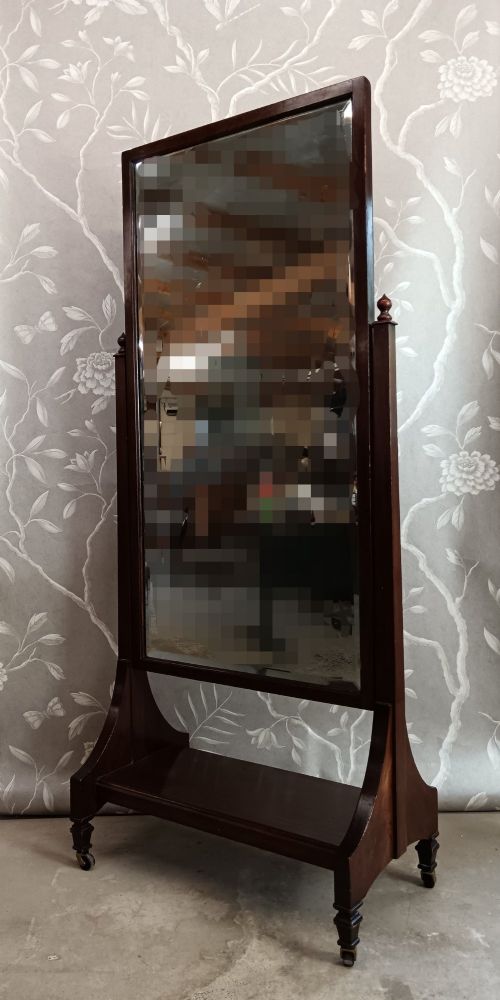
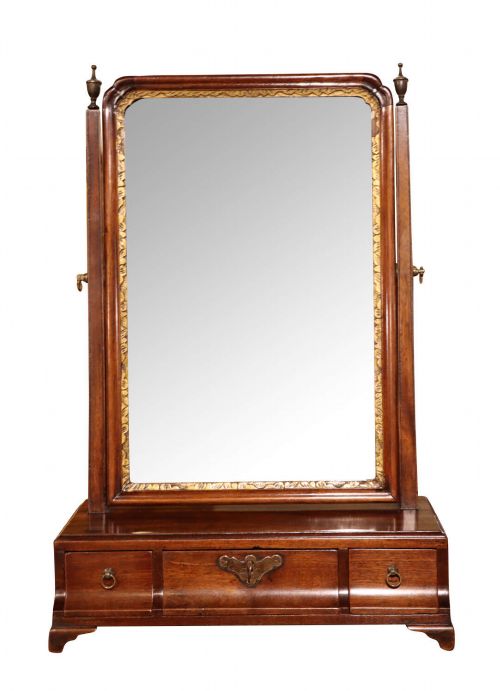
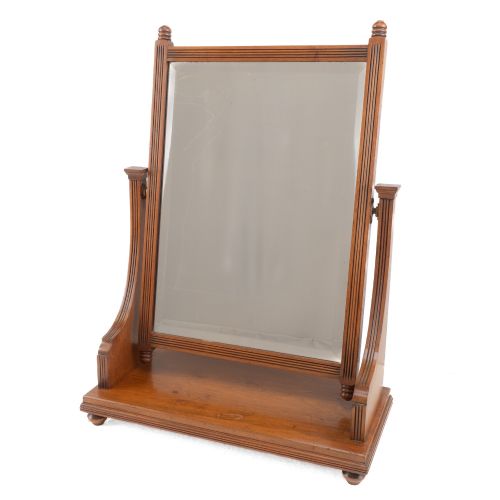
Victorian Mahogany Cheval Mirror
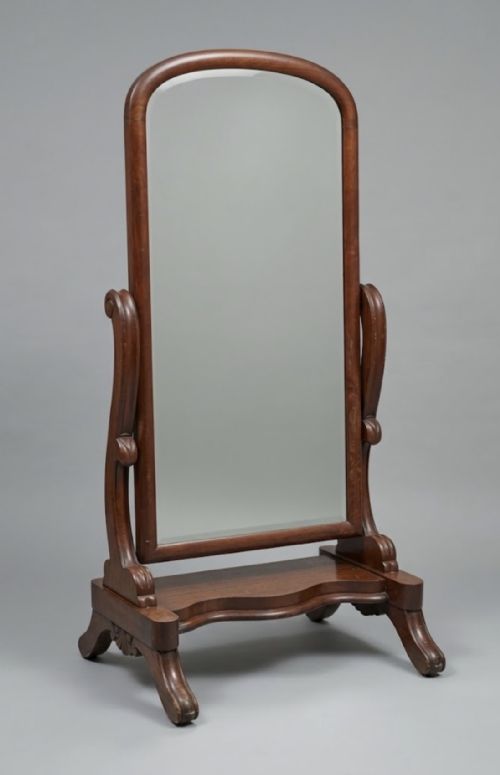
A victorian mahogany cheval mirror is a freestanding full-length swinging glass designed to pivot within a supportive frame for checking attire.
Victorian Mahogany Cheval Mirror
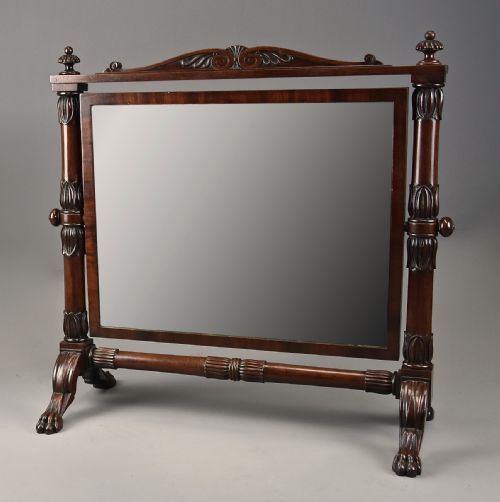
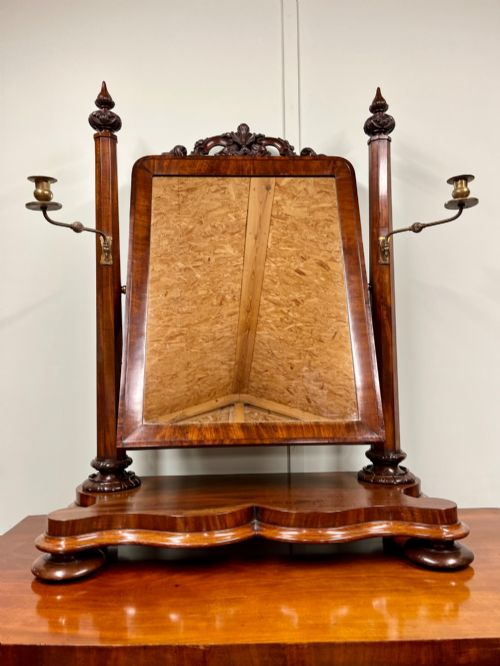
A victorian mahogany cheval mirror stands as a substantial floor-standing piece designed for bedroom dressing, allowing a full-length reflection through a pivoting frame. The search phrase covers both large freestanding examples and smaller table-top dressing variants originating across the nineteenth century.
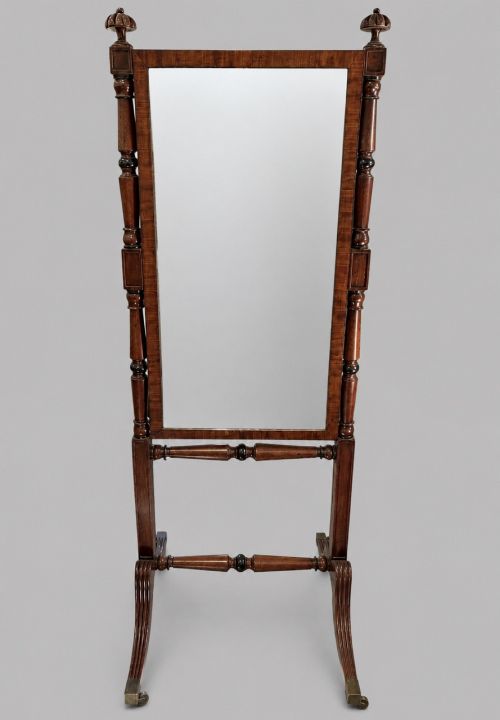
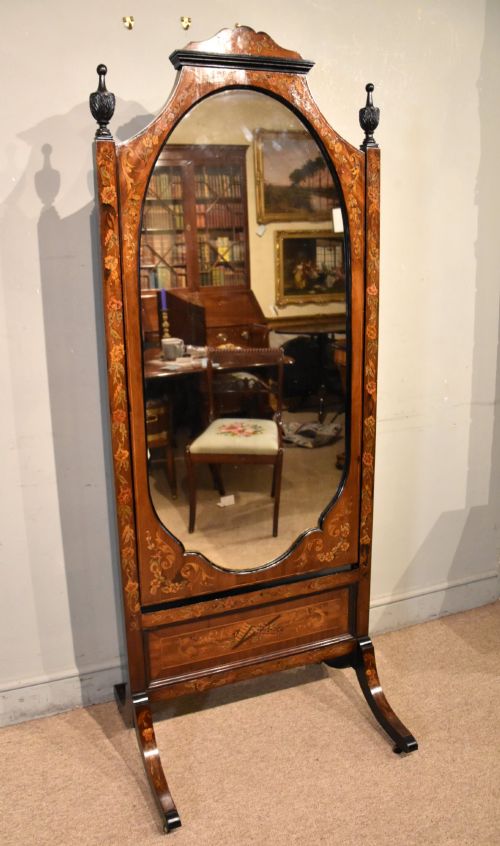
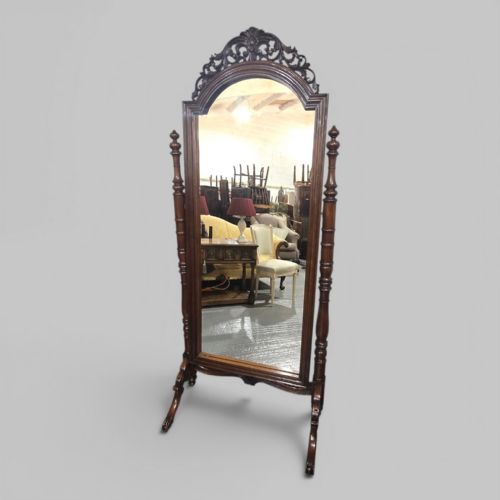
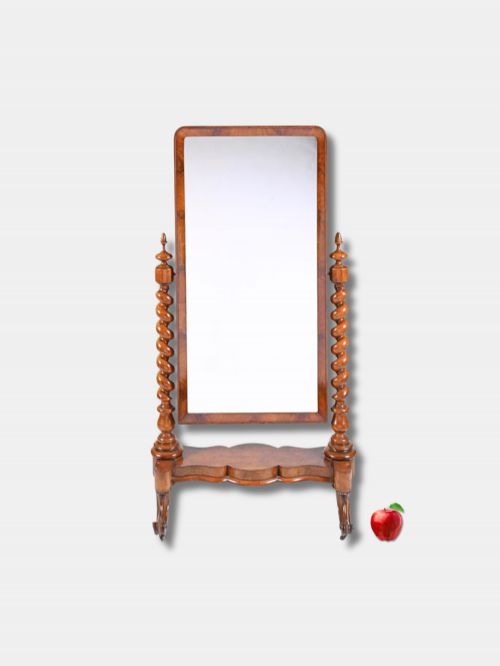
The versions met most frequently on this page date from the Victorian era and the mid-nineteenth century, constructed mainly in mahogany with integrated swing mechanisms. Makers utilised various regional British and continental idioms, ranging from plain functional frames to pieces with barley twist supports or subtle inlay.
Materials and Construction
Makers constructed these frames predominantly from solid mahogany and figured timber veneers, occasionally selecting dense Cuban mahogany for finer grain patterns. Selected examples incorporate brass mounts, sabots, and castors to facilitate movement across the floor.
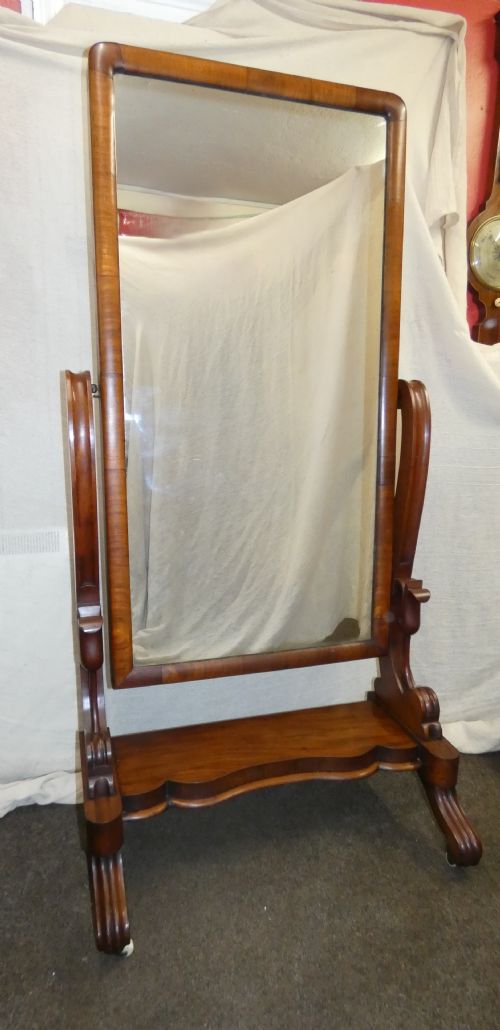
The pivoting glass is held within a swinging frame connected to upright pillars, supported by stable feet such as sabre legs or architectural pedestals. Marquetry and wood inlay appear on specific decorative editions to add detail to the primary mahogany surfaces.
Materials recorded across these mirrors include standard mahogany, Cuban mahogany, walnut, brass fittings, and marquetry inlay.
Judging the Workmanship
The distinction between ordinary and superior pieces rests on the selection of figured timber and the crispness of any applied carving or inlay. Heavier frames demand robust joinery at the pivot points to support the weight of the mirror glass over decades of daily tilting.
Proportion and stability define the upper tier of surviving examples, where well-balanced uprights and substantial bases prevent any tendency to wobble during use. The integration of quality brass hardware, such as original castors and candle sconces or pivot screws, marks the distinction in higher-grade workshop production.
P & MA Nicholson
The Victorian Mahogany Cheval Mirror Glossary
- Cheval mirror
- A large freestanding mirror designed to pivot vertically within a supportive wooden frame, allowing the user to view their entire outfit.
- Cuban mahogany
- A dense and heavily figured variety of mahogany imported from the Caribbean, prized by nineteenth-century cabinet makers for its rich depth and grain.
- Swinging glass
- The central mirror plate suspended on side pivots that permit the user to adjust the tilt angle for a better field of vision.
- Sabot
- A protective or decorative metal socket fitted to the foot of a furniture leg, commonly cast in brass on nineteenth-century supports.
- Barley twist
- A decorative turning technique producing a spiral rope-like column, often found on the upright support posts of Victorian frames.
Victorian Mahogany Cheval Mirror: Frequently Asked Questions
How do I use a cheval mirror?
You tilt the swinging glass plate within its standing frame to adjust the angle until you can see your complete reflection from head to foot.
Position the piece near a window or light source in a bedroom or dressing room to make full use of the pivoting reflective surface.
Where should I place a heavy floor standing mirror?
Place the freestanding frame on a stable, level floor where the heavy base and supporting legs distribute the substantial weight securely.
Ensure there is enough clearance around the upright pillars to allow the glass to swing freely without hitting nearby walls or furniture.
How do I distinguish a Victorian piece from a Regency one?
Look at the overall lines and decorative vocabulary of the frame, noting that Regency examples often feature cleaner classical forms and sabre legs.
Victorian pieces frequently incorporate heavier proportions, occasional applied carvings, or barley twist supports reflecting mid-nineteenth-century taste.
What is the difference between a cheval mirror and a dressing table mirror?
A cheval mirror is a tall, floor-standing piece designed to show your entire outfit while you stand upright in the room.
A dressing table mirror is a smaller scaled glass meant to sit upon a chest or table surface for seated grooming and close-up use.