


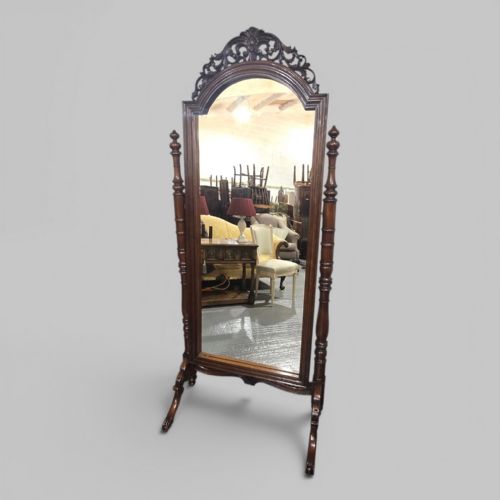


Mahogany Tilt Mirror
Mahogany tilt mirrors are tall or tabletop swiveling glasses held by side pivots, designed to adjust angles for dressing.
Mahogany Tilt Mirror
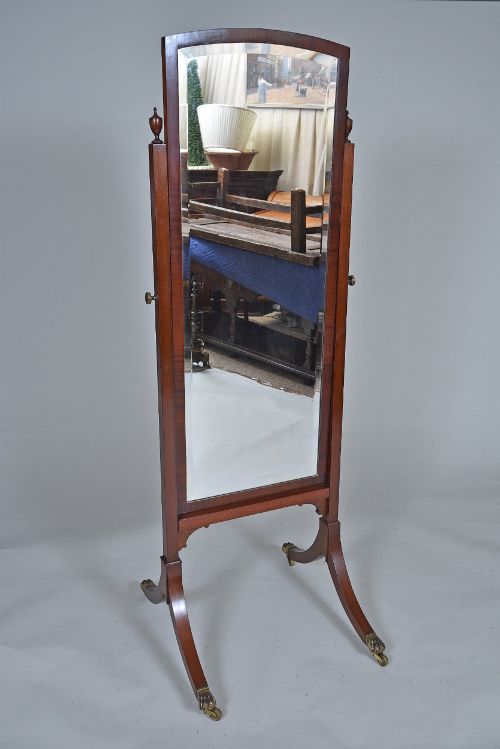
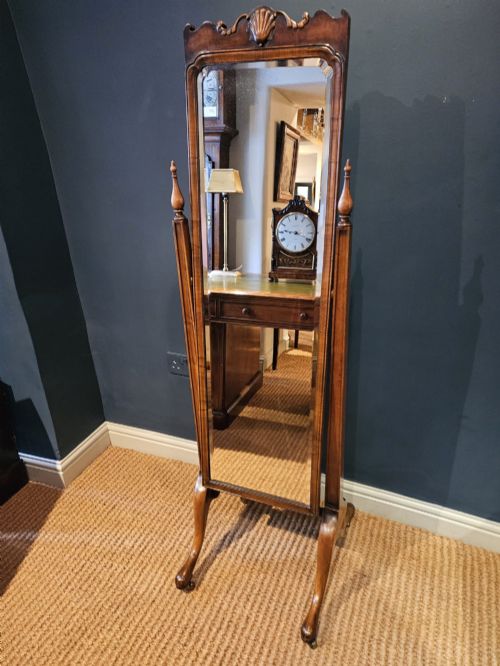
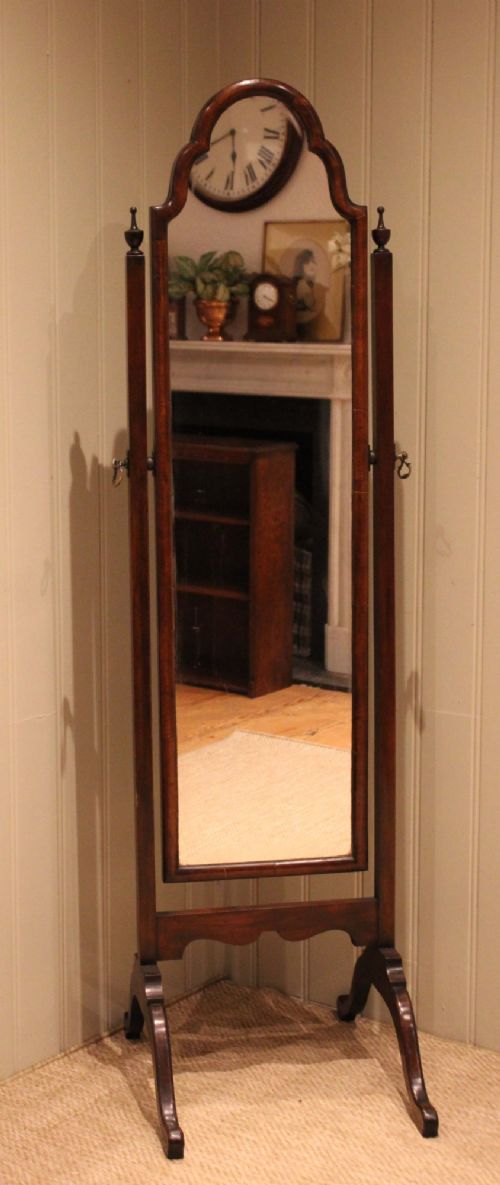
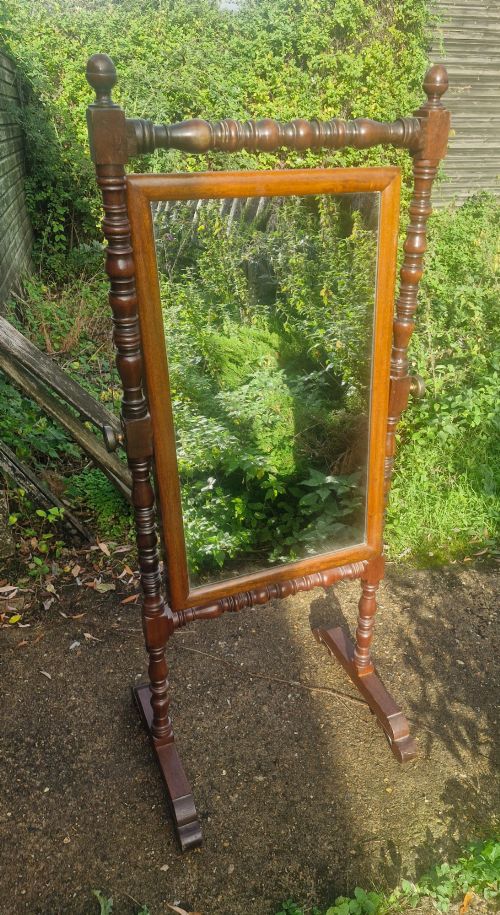
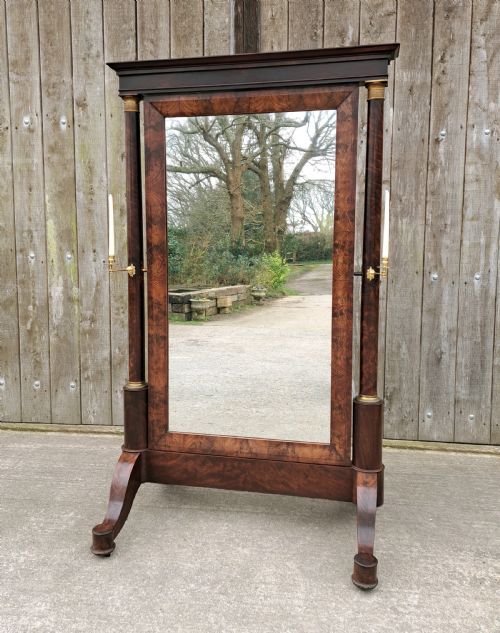
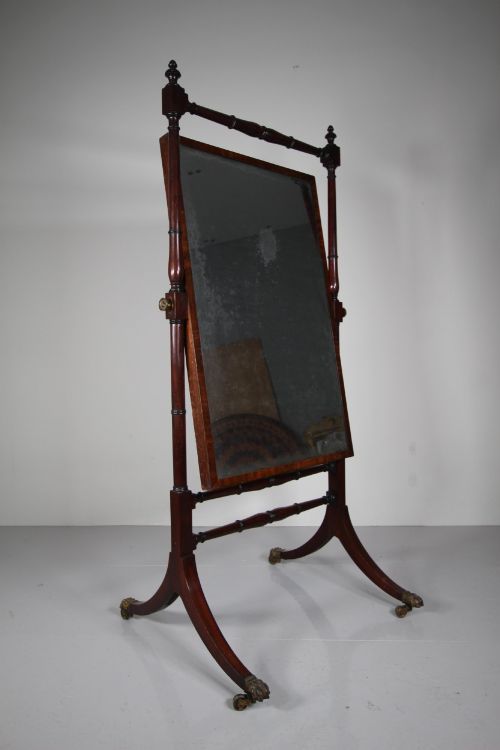
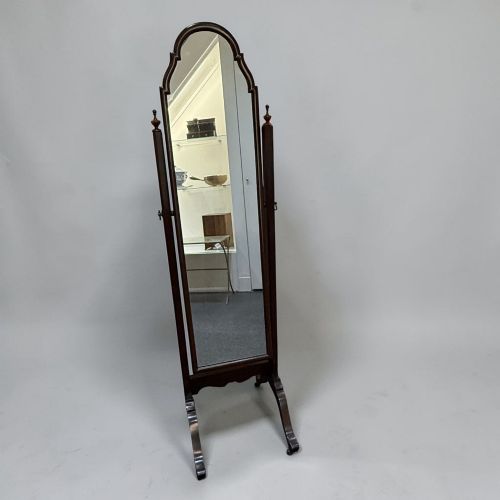
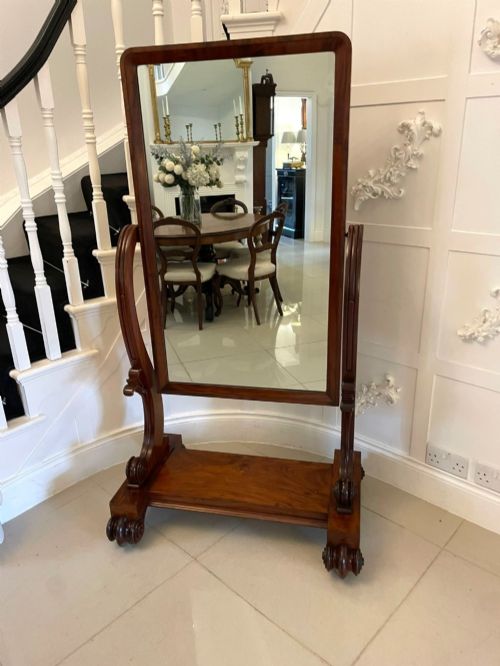
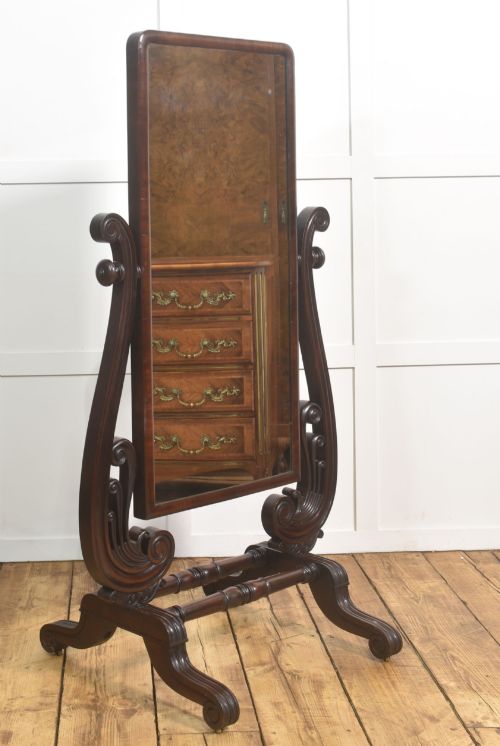
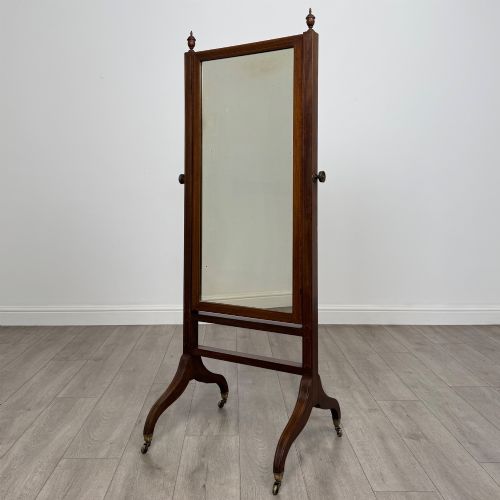
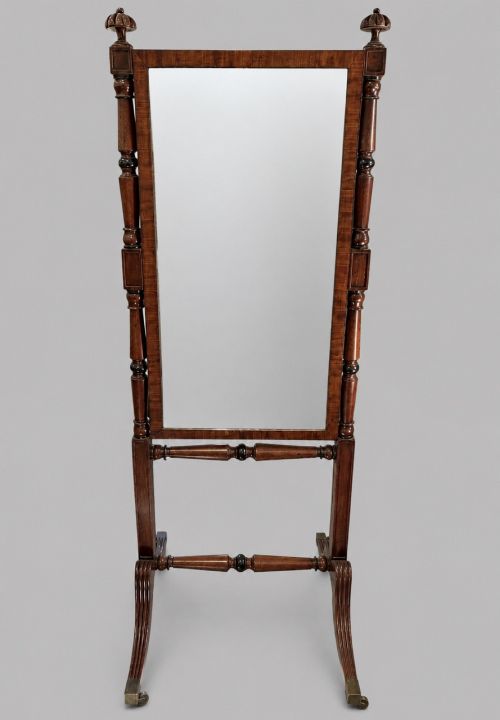
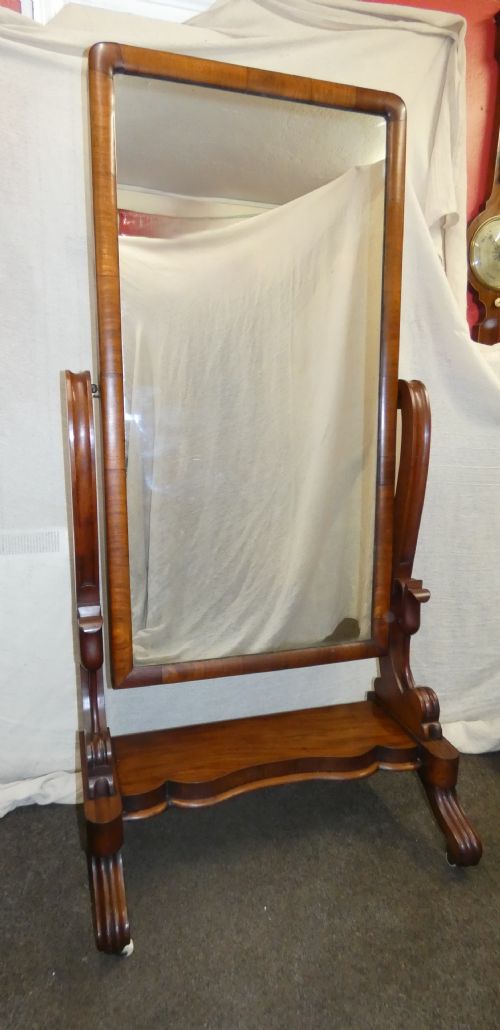
A mahogany tilt mirror is a piece of antique furniture built to tilt on side pivots within a sturdy frame. When buyers search for a mahogany tilt mirror, they encounter two distinct forms: large floor-standing cheval mirrors and smaller tabletop dressing glasses.
The pieces on this page span several periods, with Victorian, Regency, and Edwardian examples appearing most frequently alongside Georgian and William IV designs. Floor-standing cheval mirrors dominate the selections, accompanied by smaller serpentine toilet mirrors.
Origin and styling vary across the listings, ranging from English Regency and Georgian workshop traditions to French Empire and Edwardian inlaid interpretations. Each period brings distinct proportions and leg designs to the fundamental tilting mechanism.
How they were made
Makers constructed the primary frames from solid mahogany and flame mahogany veneers, sometimes incorporating satinwood inlay for decorative contrast. Structural stability relied on dense timber and precise joinery to support the weight of the pivoting glass.
Hardware details included brass pivots, sabots, and castors, while glass components featured mirror glass supported by wooden backboards. Ormolu mounts and gold leaf accents appeared on select French and Empire styles to elevate the visual finish.
Mahogany Tilt Mirror Retail Price Guide 2026
Typical asking prices for mahogany tilt mirror among the pieces listed under this phrase on Sellingantiques today, from the lower quarter to the upper quarter. They describe what is for sale here now, not the wider market.
What varies in quality
Quality in these mirrors rests on the choice of timber and the crispness of the carving on the upright supports and legs. Finely figured flame mahogany and well-executed brass mounts signal a higher grade of manufacture.
The integrity of the tilting mechanism and the proportion of the frame relative to the glass plate dictate the overall success of the piece. Rigidity in the upright posts ensures the mirror holds its adjusted angle without slipping.
The Mahogany Tilt Mirror Glossary
- Cheval mirror
- A full-length floor-standing mirror mounted on a frame that allows it to swing or tilt. These tall glasses were essential bedroom furnishings for checking attire.
- Sabre leg
- A curved, outwardly tapering leg of classical derivation that sweeps outward without a knee. This form appears frequently on Regency examples.
- Sabot
- A metal sleeve or shoe fitted to the foot of a furniture leg for protection and decoration. Brass sabots often housed castors on floor-standing frames.
- Serpentine
- A shape characterised by a gently curving line that is convex in the centre and concave at the sides. It is often found on the base drawers of toilet mirrors.
- Flame mahogany
- A veneer cut from the fork of the mahogany tree where the grain pattern resembles flickering flames. Cabinet makers prized this wood for its dramatic figuring on primary display surfaces.
Mahogany Tilt Mirror: Frequently Asked Questions
What is a cheval mirror?
A cheval mirror is a full-length dressing glass mounted in a frame that allows the plate to tilt back and forth on central pivots. The name derives from the French word for horse, referencing the four-legged supporting frame.
These taller mirrors stand independently on the floor rather than resting on a table or chest of drawers. They became popular in bedrooms and dressing rooms during the late eighteenth and nineteenth centuries.
How do you use a tilt mirror?
The glass is held within a frame by two side screws or pivots that allow the user to angle the reflection up or down. Adjusting the tension on these pivots keeps the mirror in the desired position.
Tabletop versions sit on dressing chests to aid with grooming, while floor-standing cheval mirrors provide a full-length view for checking outfits.
Where should I place a tilt mirror?
These mirrors work well in bedrooms, dressing areas, and hallways where their height and pivoting function are practical. Floor-standing cheval versions need sufficient floor space to allow the frame to tilt safely.
Placing them near a light source maximises their utility for dressing while highlighting the mahogany grain and brass hardware.