
Freestanding Mirror
A freestanding mirror gives you a full reflection without hanging, spanning grand cheval designs and compact table-top glasses.
Freestanding Mirror
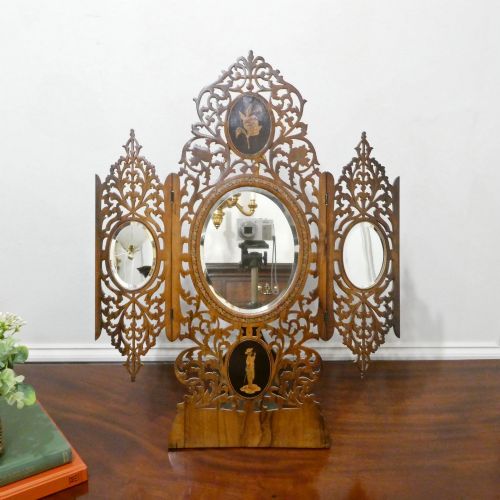
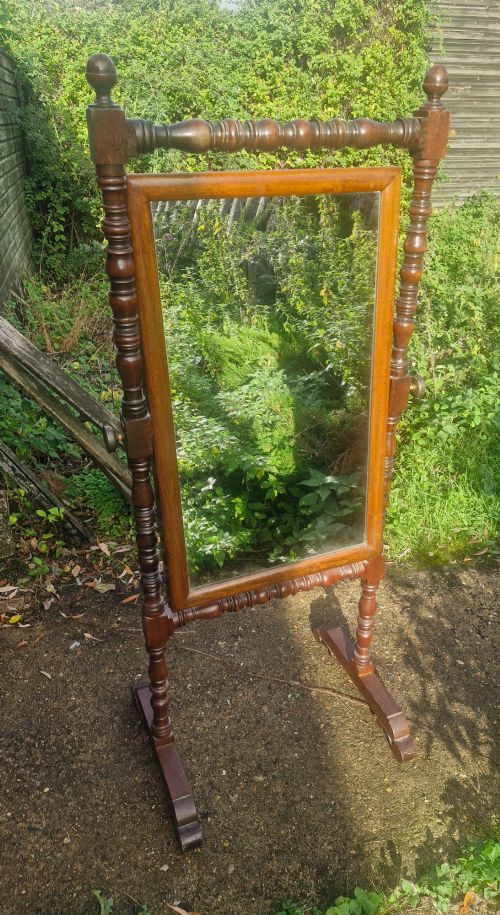
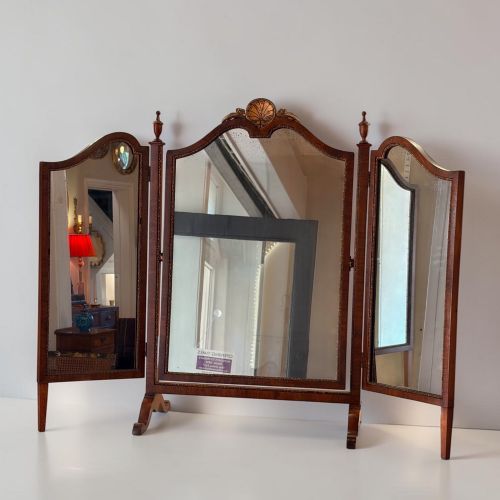
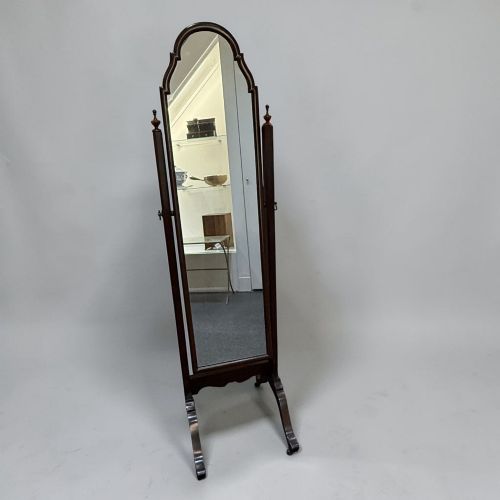
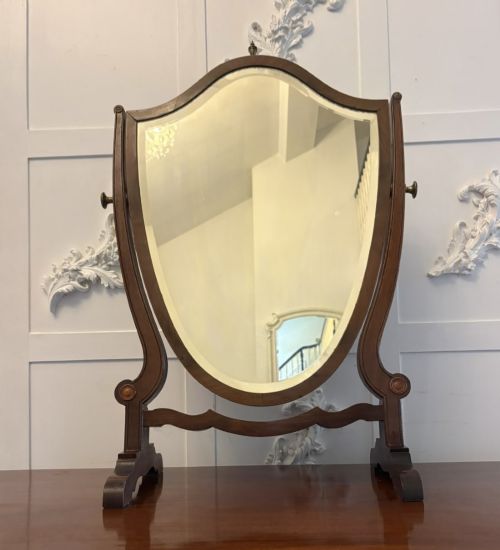
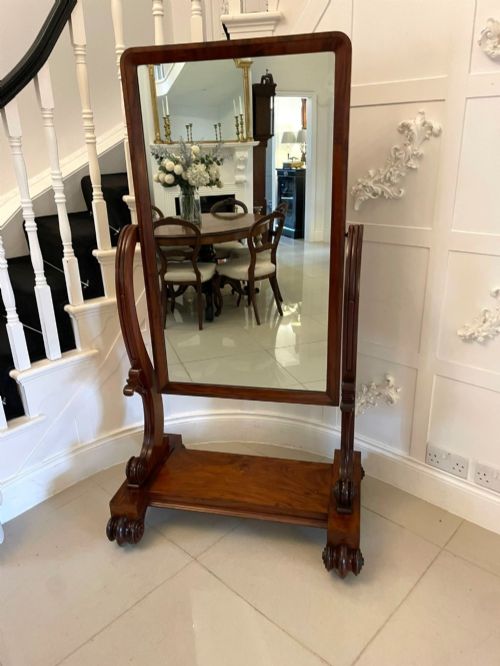
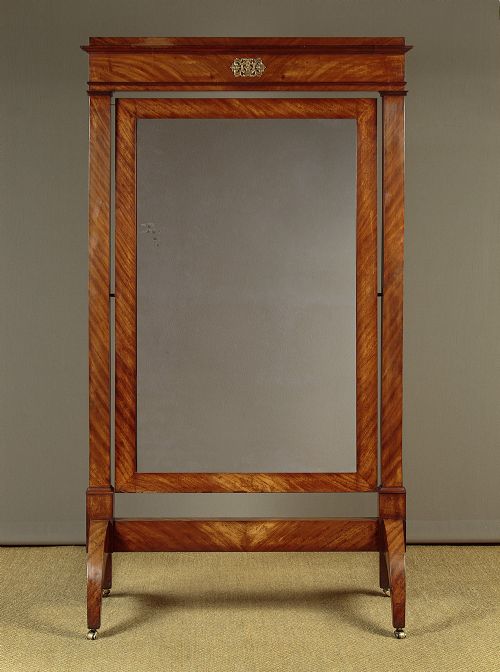
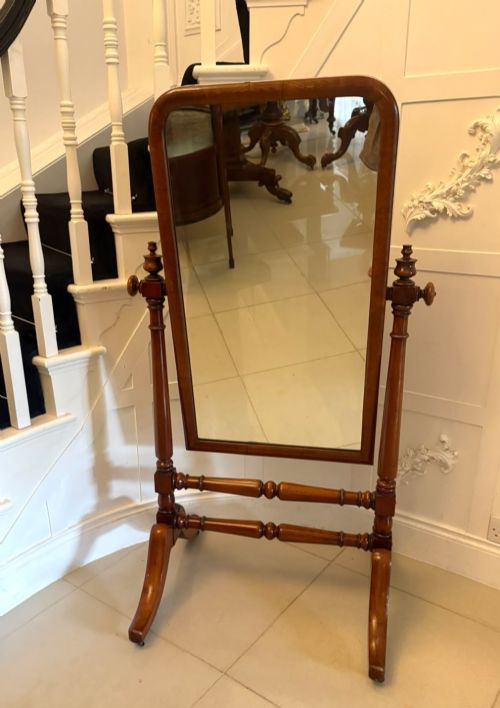
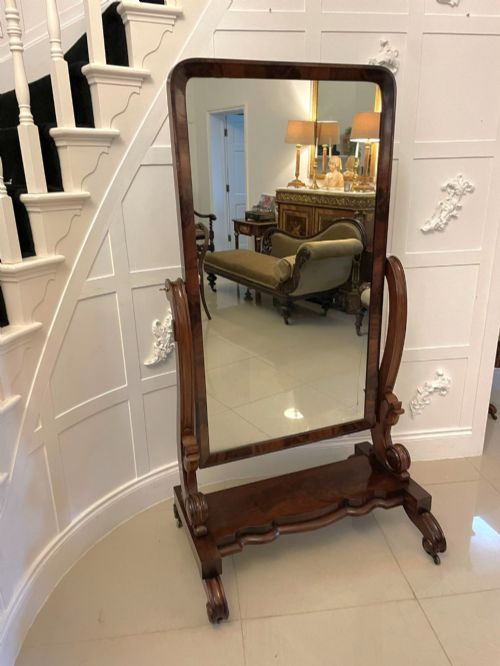
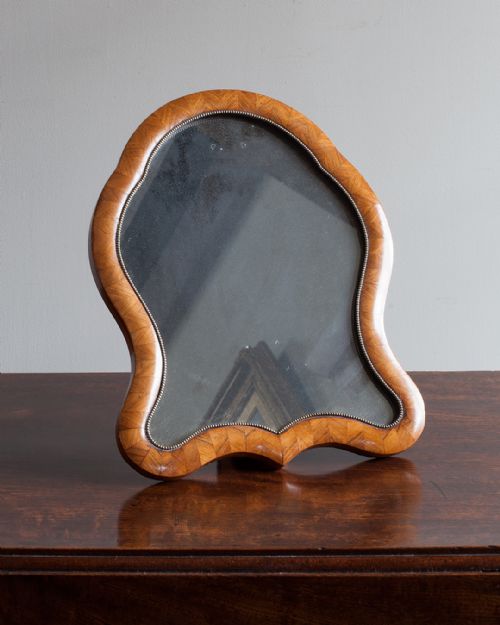
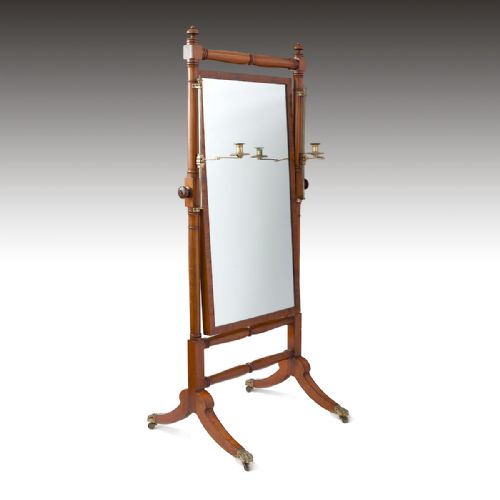
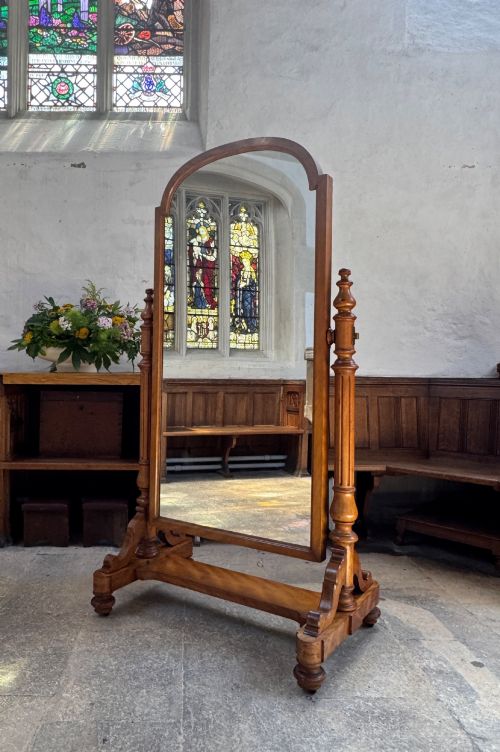
A freestanding mirror encompasses everything from tall cheval glasses designed for full-length views to smaller dressing table and shaving mirrors meant for close use. You will frequently find tall mahogany swing frames alongside compact walnut or oak table versions.
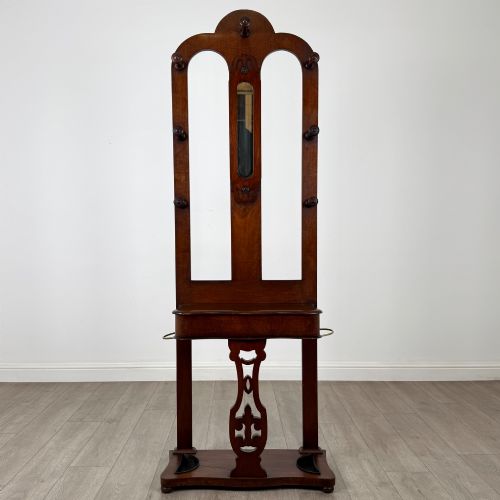
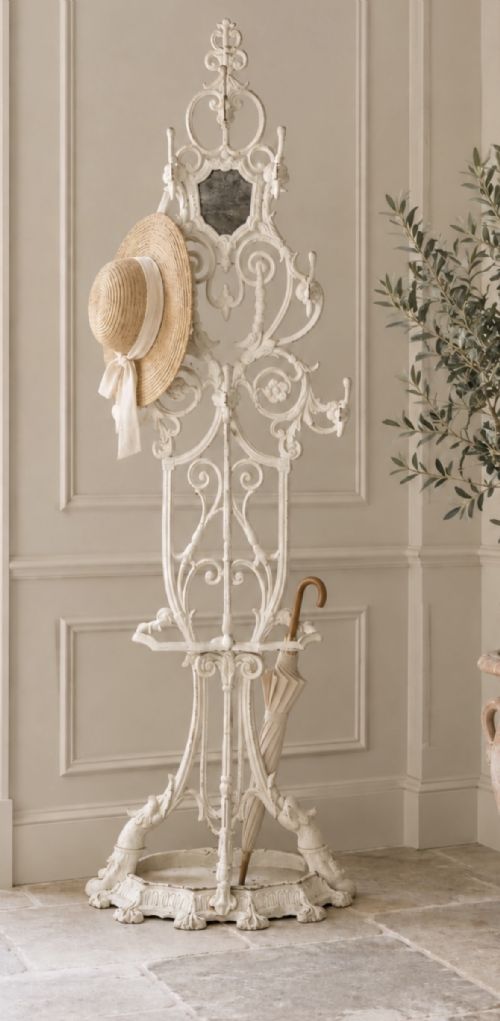
The selection here draws heavily on the nineteenth century, including Victorian and Edwardian examples, alongside Regency and later interpretations. Forms range from simple tilt glasses on tripod bases to elaborate hall stands incorporating coat hooks and umbrella storage.
Materials and construction methods
Timbers such as mahogany, walnut, oak, and satin birch form the primary structures, often paired with brass castors, hinges, and adjustable fittings. Glass plates are set into wooden frames or supported by metal stands, utilising pivot pins or telescopic mechanisms to alter the angle of reflection.
Carving, fretting, and inlay work decorate the surrounds, while cast iron appears in heavier supporting frameworks. Artisans built these pieces to balance stability on the floor or table with ease of movement.
Periods represented span from the Regency era through the Victorian and Edwardian decades into the 1930s.
Distinguishing quality across examples
Quality rests on the selection of timber grain, the crispness of any hand-carved or inlaid detail, and the robustness of the pivoting or telescopic hardware. Heavier, larger frames require sound structural joinery to support the weight of the glass plate without sagging.
The clarity and depth of the mirror plate itself, alongside original brass fittings and castors, separate standard production pieces from finer workshop outputs.
Gillow·Louis Auguste Moreau
The Freestanding Mirror Glossary
- Cheval mirror
- A tall freestanding mirror mounted on a vertical swivel frame between two upright posts. This allows the glass to swing and tilt to various angles.
- Shaving stand
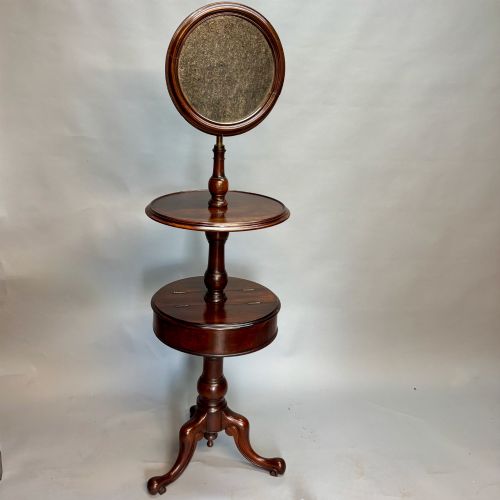
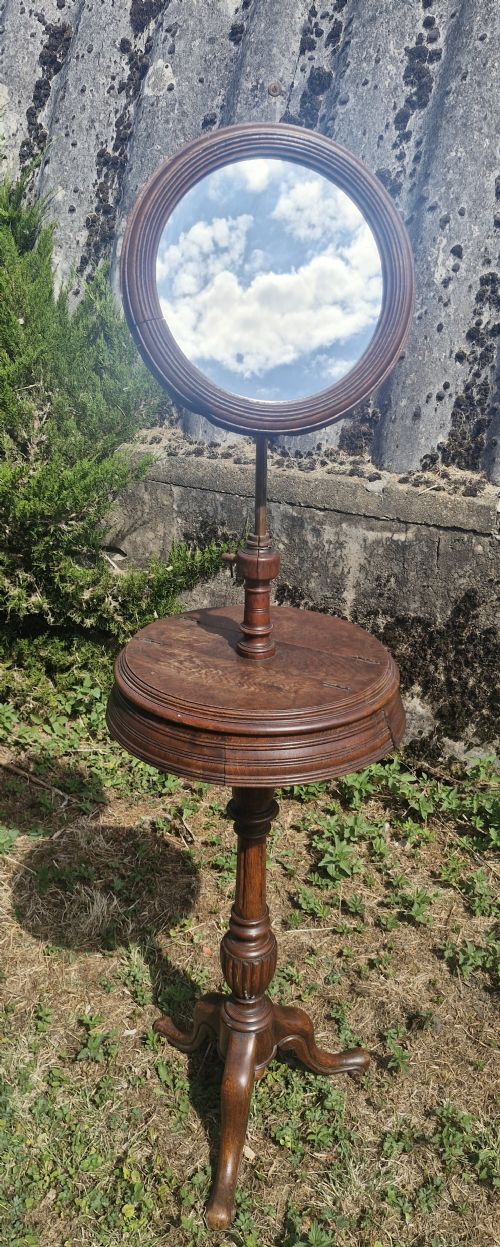
- A specialised adjustable mirror on a pedestal or tripod base intended for personal grooming. Many incorporate small ledges or trays for shaving accessories.
- Giltwood
- Timber that has been coated with a thin layer of gold leaf or gilt paint. This finish appears frequently on decorative nineteenth-century frames.
- Swing mirror
- Any glass hung on pivots within a frame that permits the plate to tilt back and forth. It relies on tension screws or side pins to hold the desired position.
Freestanding Mirror: Frequently Asked Questions
How do I adjust a cheval mirror?
Most cheval mirrors use side pivot screws or pins set into the upright supports. Tightening or loosening these thumb screws allows you to alter the tilt of the glass.
Ensure you hold the glass firmly with both hands while adjusting the tension to prevent the heavy frame from swinging too fast.
What is the difference between a cheval and a dressing mirror?
A cheval mirror stands directly on the floor and provides a full-length reflection. It is tall enough to show an entire outfit.
A dressing mirror is much smaller and sits on top of a table or chest. It focuses on the upper body and face for grooming.
Are shaving stands adjustable?
Many period shaving stands feature telescopic columns or pivoting joints. These let you raise or lower the glass height and tilt the mirror plate.
This adaptability suited different users standing or sitting in nineteenth-century bedrooms and dressing rooms.
How do I place a freestanding mirror in a room?
Position your mirror where it can capture and reflect natural light from a window to brighten darker corners. Ensure there is enough clear floor space in front for a full view.
Keep heavy cheval models away from high-traffic pathways where the swinging frame might be bumped.