

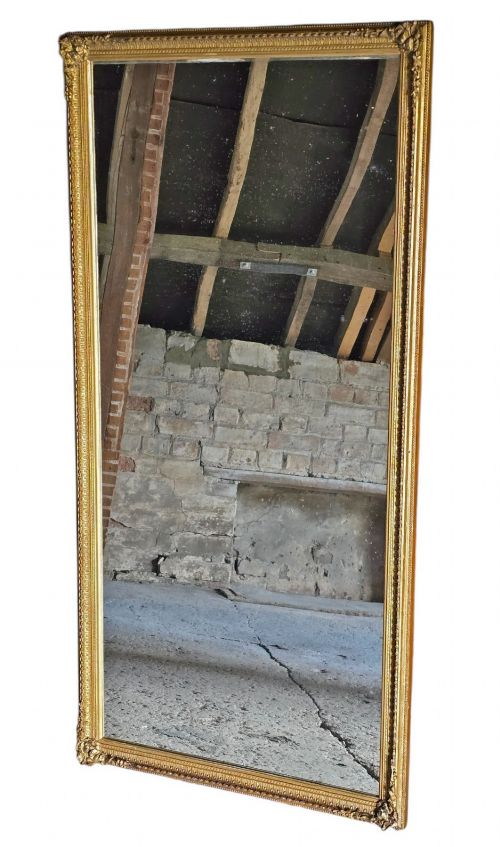
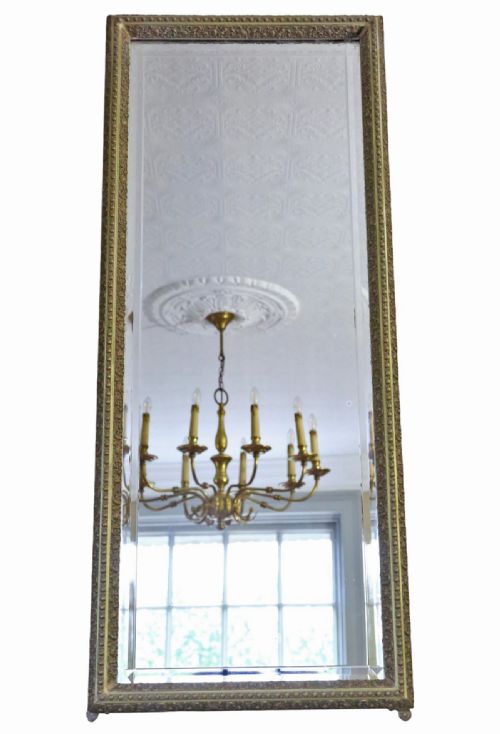


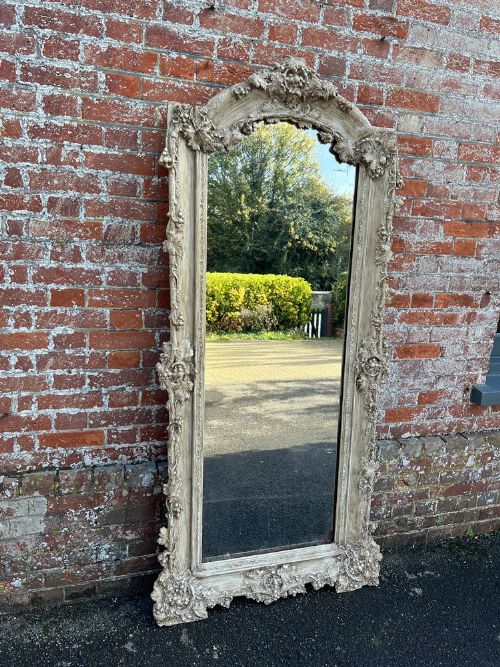

Tall Standing Dressing Mirror
A tall standing dressing mirror offers full-length reflection, anchored in mahogany, walnut, or giltwood frames from the Regency to the Art Deco period.
Tall Standing Dressing Mirror
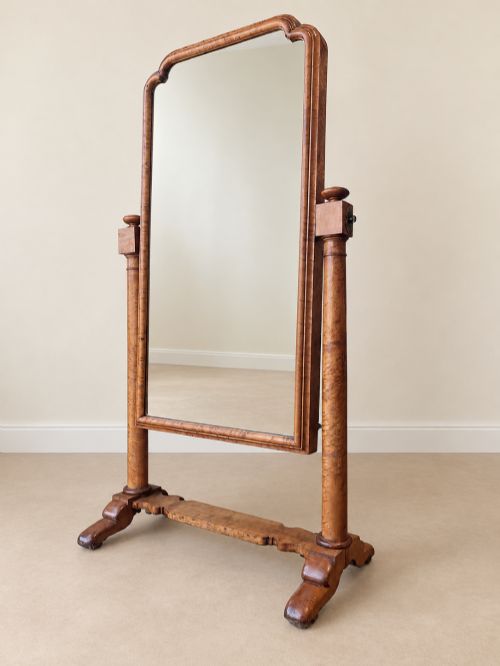
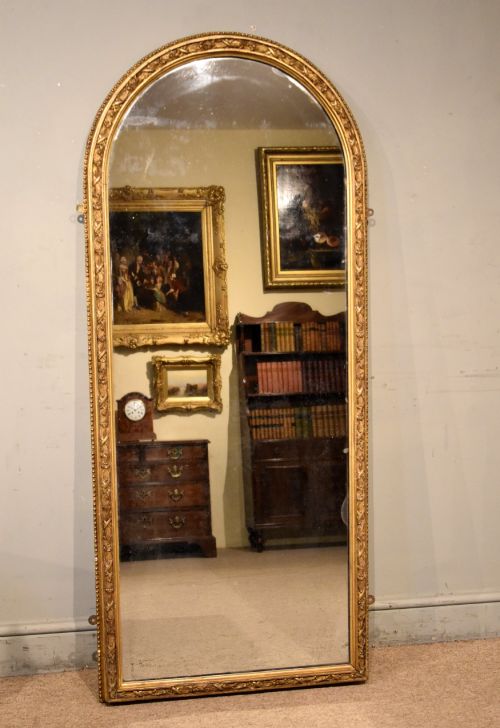
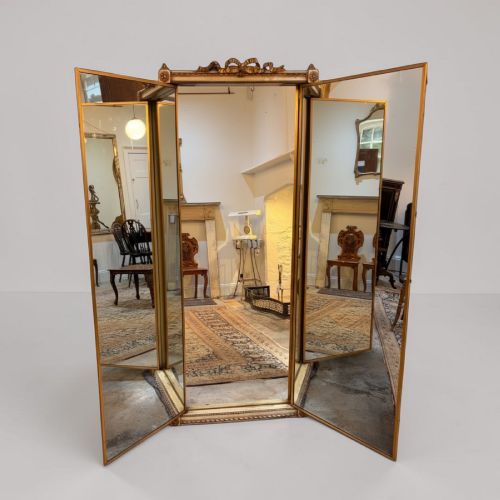
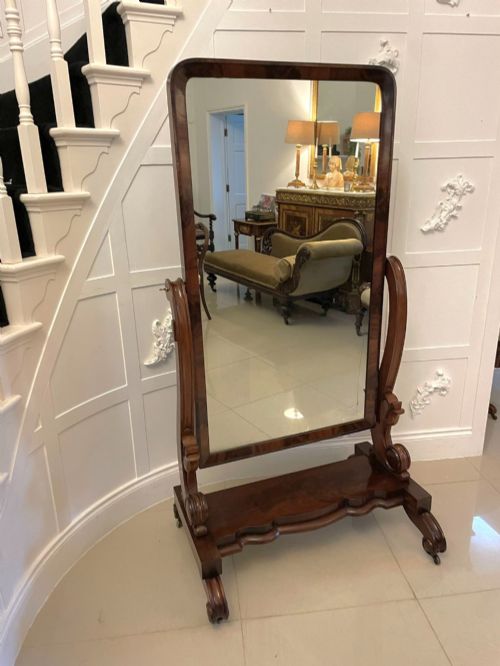
A tall standing dressing mirror is designed for checking attire from head to toe, frequently taking the form of a cheval mirror or a large floor-standing glass panel. These pieces originate across the nineteenth and twentieth centuries, spanning periods such as the Victorian era, the Edwardian years, and the Art Deco movement.
The most common formats on this page are swivel cheval mirrors mounted on freestanding frames, alongside tall wall or floor-standing designs. Materials range from traditional timbers like mahogany and walnut to decorative giltwood, gesso, and painted finishes.
Assessing quality and craftsmanship
Quality shows in the depth and clarity of the timber grain, the crispness of carved wood and gesso ornamentation, and the weight of the supporting frame. Superior examples maintain structural stability without relying on modern reinforcement.
The glass itself indicates standard, with bevelled edges and heavy mercury plates representing finer production. Original brass hardware, such as castors and sabots, distinguishes well-preserved pieces from later replacements.
Tall Standing Dressing Mirror Retail Price Guide 2026
Typical asking prices for tall standing dressing mirror among the pieces listed under this phrase on Sellingantiques today, from the lower quarter to the upper quarter. They describe what is for sale here now, not the wider market.
Object forms include swing cheval mirrors, tall floor mirrors, and outfitters' mirrors originating from commercial settings.
The Tall Standing Dressing Mirror Glossary
- Cheval mirror
- A large standing mirror mounted in a frame with pivots that allow the glass to swing. This freestanding design is intended for full-length dressing.
- Gesso
- A plaster-like material applied to wood frames and carved or moulded into decorative patterns before gilding or painting. It provides a smooth base for fine surface decoration.
- Sabot
- A metal sleeve, usually made of brass, fitted to the foot of a furniture leg. It protects the timber and adds a decorative finish.
- Mercury glass
- An early type of double-walled glass filled with a silvering mixture of mercury and tin, producing a characteristic mottled reflection. It is commonly found in nineteenth-century mirrors.
- Bevelled glass
- Glass with edges that have been cut and polished at an angle to create a framed border effect. This technique adds depth and catches light.
Tall Standing Dressing Mirror: Frequently Asked Questions
How do I secure a tall standing mirror?
Most floor-standing mirrors are heavy enough to remain stable on flat surfaces, particularly cheval designs with wide splayed legs. However, taller examples can be secured to a wall with discreet brackets for safety.
Positioning the mirror away from high-traffic zones prevents accidental knocks, while ensuring the weight is evenly balanced across the floor.
What is a cheval mirror?
A cheval mirror is a full-length dressing glass mounted in an upright frame supported by four legs or feet. The plate swings on vertical pivots.
Originating in the eighteenth century, this form remained popular through the Regency and Victorian periods for bedroom use.
How do I date an antique mirror?
Dating relies on the frame timber, style, construction methods, and the type of glass used. Regency and Victorian models often feature mahogany or giltwood with hand-turned supports.
Later Edwardian and Art Deco pieces introduce simplified lines, oak frames, or machine-bevelled glass plates.
Can these mirrors be used in small rooms?
Tall standing mirrors reflect natural light and create an illusion of depth, making them suitable for compact spaces. Floor-standing designs require no wall hanging.
Placement opposite a window maximises the distribution of light across the room.