






George III Style Mirror
A george iii style mirror brings the refined symmetry and decorative carving of the eighteenth century into any interior.
George III Style Mirror
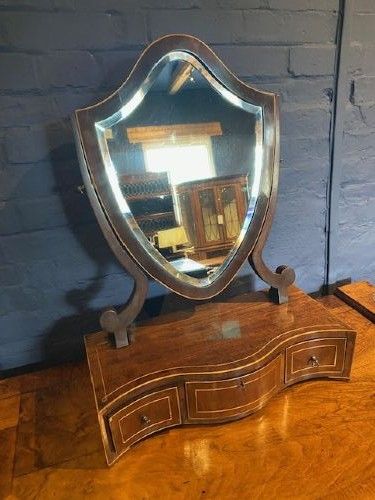
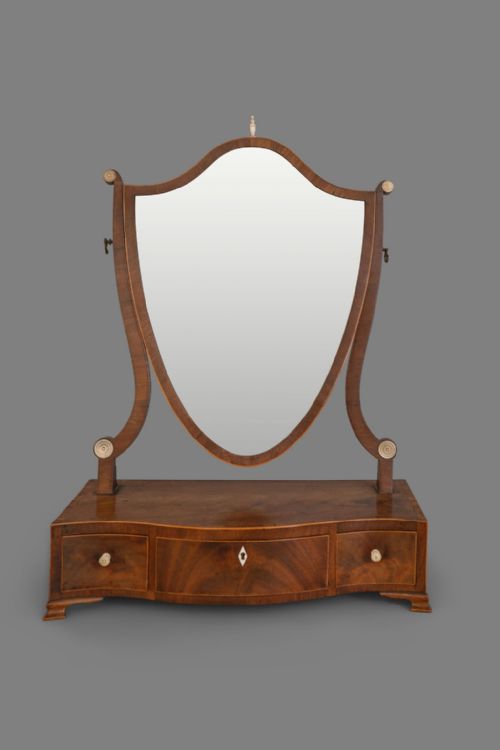
When you search for a george iii style mirror, you encounter pieces spanning original eighteenth-century creations as well as later revivals from the Victorian, Edwardian, and twentieth-century periods. The selection encompasses various forms, including wall mirrors, overmantels, cheval mirrors for dressing, and smaller toilet mirrors designed for table placement.
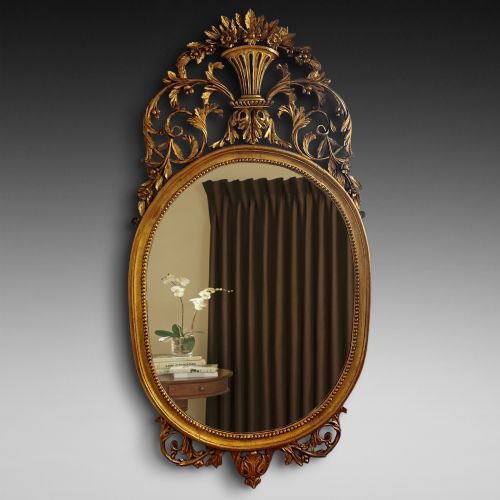
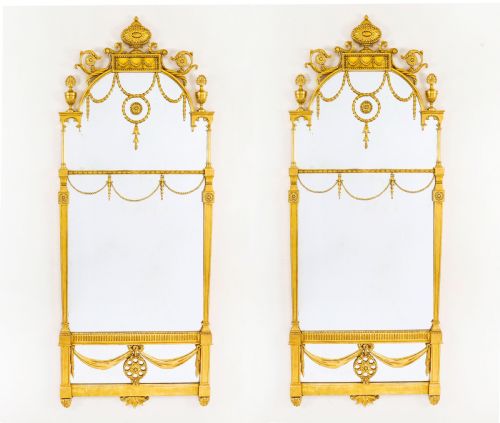
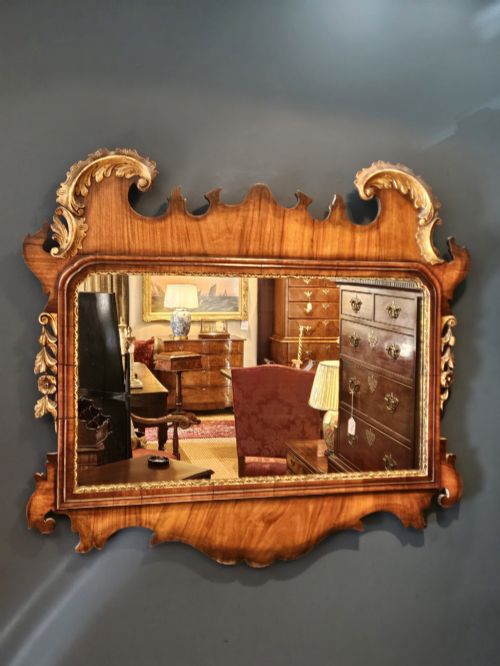
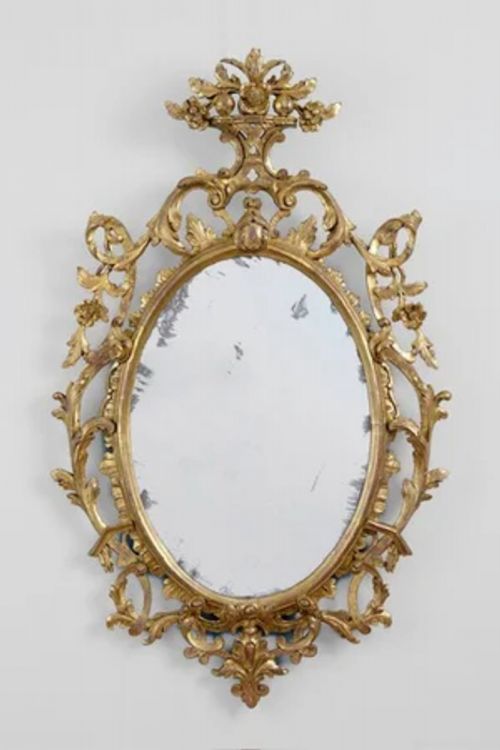
The version you are most likely to meet on this page is the carved giltwood wall mirror, often featuring oval shapes, landscape formats, or intricate fretwork frames. Walnut and mahogany examples also appear frequently, alongside pieces incorporating parcel gilt, gesso, and inlaid details reflecting Adam, Chippendale, and Sheraton influences.
How they were made
Cabinet makers utilised timber such as mahogany, walnut, yew wood, and pollard oak to construct the foundational frames, frequently employing intricate fretwork cutting techniques. These wooden structures were often complemented by inlaid veneers or parcel gilt highlights to add depth and contrast.
For the ornate frames, carvers applied gesso over wood before gilding the surface with gold leaf or applying silvered finishes. Original mirror glass, often held within marginal or multi-panel configurations, completes the traditional construction method.
Several mirrors feature perched ho-ho birds surveying the room from atop their carved wooden frames.
What varies in quality
The standard of a george iii style mirror rests primarily on the depth and crispness of the carving, particularly within complex giltwood scrollwork, rococo motifs, and fretwork panels. Master carvers achieved distinct definition in elements like the ho-ho bird and floral garlands, whereas lesser pieces show softer, shallower relief work.
Materials and assembly also dictate the tier of the piece, with dense grain timbers, original mirror glass, and precise joinery marking out superior examples. The integrity of the original gesso and the finesse of the gilding separate standard production items from truly distinguished pieces.
The George III Style Mirror Glossary
- Giltwood
- Wood that has been coated with gold leaf or a gold-coloured metallic finish. This technique was widely applied to carved wall mirrors to create a reflective, luminous frame.
- Fretwork
- Thin wood or board cut through with decorative scroll or geometric patterns using a fret saw. It frequently defines the flat borders of mahogany wall mirrors.
- Gesso
- A plaster-like mixture applied to wood frames to provide a smooth base for carving and gilding. It allows for intricate moulded details and relief work.
- Cheval mirror
- A freestanding full-length mirror suspended in a frame on pivots, allowing the glass to tilt. These dressing mirrors typically stand on four supportive legs.
- Marginal mirror
- A mirror design where a central plate is surrounded by smaller, separate bevelled glass panels within the main frame. This style creates additional facets and visual complexity.
George III Style Mirror: Frequently Asked Questions
What is a cheval mirror?
A cheval mirror is a freestanding dressing mirror suspended on vertical pivots within a frame, allowing the user to tilt the glass angle. They were designed for full-length viewing in bedrooms and dressing rooms.
Evidence shows both mahogany and cheval formats originating in the Georgian era and continuing through later revival periods.
How do I identify a toilet mirror?
A toilet mirror, also known as a dressing table mirror, is a smaller glass mounted on a miniature frame with a box base or small drawers. They sat atop chests of drawers or dressing tables for close-up grooming.
Listings include mahogany and box base toilet mirrors from both the eighteenth century and later revival periods.
Where were overmantel mirrors placed?
Overmantel mirrors were traditionally hung directly above a fireplace mantelpiece to reflect light and fill the vertical wall space. Their landscape proportions matched the width of the hearth below.
Pieces in the archive include wide gilt and mahogany overmantel formats suited to period interiors.
What distinguishes fretwork mirrors?
Fretwork mirrors feature flat wooden frames cut with intricate pierced designs, often associated with Chippendale styles. These frames commonly incorporate motifs such as birds or scrolling foliage.
Examples on this page include mahogany pieces featuring specific decorative details like the ho-ho bird.