


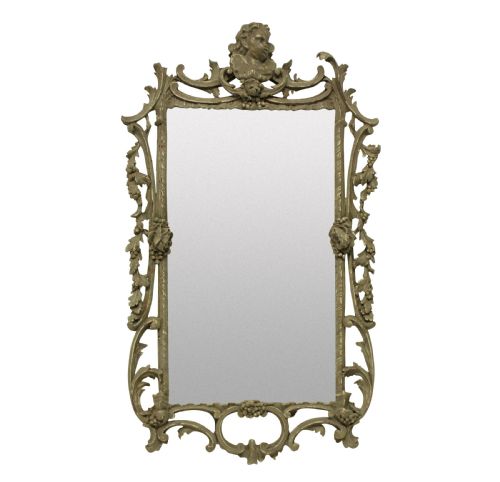
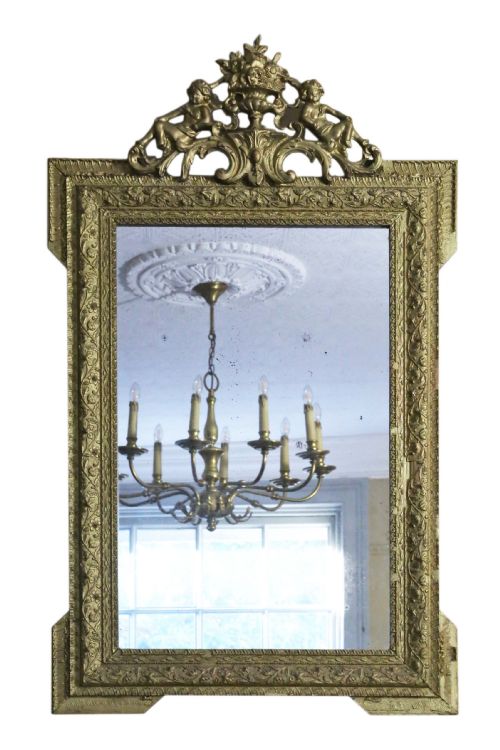


Cherub Crest Wall Mirror
A cherub crest wall mirror brings theatrical French or Victorian drama into a room, offering gilded ornament and carved charm.
Cherub Crest Wall Mirror
A cherub crest wall mirror is an ornamental looking glass topped by carved figures of putti, cherubs, or reclining angels, drawing heavily on French Rococo Revival, Louis XVI, and Baroque idioms. These pieces function primarily as statement wall hangings or grand overmantles designed to anchor a principal room.
Buyers browsing this selection will most frequently encounter 19th Century French examples alongside Victorian interpretations, executed in giltwood, carved wood, and gesso with arched or rectangular frames. Some variants introduce oak and ebonised finishes, while specific regional revivals incorporate lions heads or putto cresting above the glass.
Originating largely from 19th Century production centres, these mirrors combine utilitarian reflection with sculptural excess. The inclusion of putti or cherubs at the summit transforms a standard wall mirror into an architectural feature rich in classical mythology and decorative revival style.
How they were made
Makers constructed the foundational framework of a cherub crest wall mirror using carved wood, oak, or composition materials, layering gesso and plaster to build up the intricate relief details. Artisans then applied silver leaf, gold leaf, or paint over the prepared surfaces to achieve the characteristic metallic finish.
The sculptural cresting depicting cherubs or putti was typically carved separately or moulded from composition before being secured to the top of the frame. Glaziers fitted original glass panels into these ornate surrounds, frequently resulting in the charming, distressed patination seen on surviving 19th Century examples.
Materials recorded across the inventory include giltwood, gesso, plaster, composition, oak, and silver leaf.
What varies in quality
Quality in a cherub crest wall mirror rests upon the depth and dexterity of the carving work, distinguishing crisp, hand-carved wooden details from softer, mass-produced composition ornament. The integration between the cresting and the main frame reveals the maker's hand, where superior examples display seamless joinery and balanced proportions.
The integrity of the original surface finish, whether giltwood, silver leaf, or painted gesso, dictates visual appeal. Pieces retaining their early or original distressed surfaces without heavy modern intervention command greater appreciation among collectors seeking authentic period character.
The Cherub Crest Wall Mirror Glossary
- Giltwood
- Timber coated with gold leaf or metal powder over a prepared gesso ground. This technique provides the bright metallic lustre characteristic of formal antique mirrors.
- Gesso
- A plaster-like mixture applied to wood frames to create a smooth surface for gilding or to build up low-relief ornament. It allows for sharp decorative moulding before finishing.
- Putto
- A plump, often winged child figure derived from classical art and frequently appearing on the crests of revival mirrors. These sculptural elements add a playful, mythological dimension to the frame.
- Overmantle
- A large mirror designed specifically to hang above a fireplace mantelpiece. They often feature expansive horizontal proportions and prominent crest decorations.
- Composition
- A moulded mixture of whiting, resin, glue, and linseed oil pressed into decorative motifs. It was widely used in the 19th Century as a cost-effective alternative to hand carving.
Cherub Crest Wall Mirror: Frequently Asked Questions
Where should I hang a cherub crest wall mirror?
These mirrors work best as focal points above a principal fireplace mantel or suspended on a large, high-ceilinged wall where their ornate cresting can command the space. Their architectural presence requires generous clearance to display the carved figures properly.
Ensure the wall construction and fixings can support substantial weight, particularly for large French overmantles framed in solid wood and heavy gesso layers.
How do I date a cherub crest mirror?
Dating relies on examining the construction materials, backing boards, glass characteristics, and stylistic revival cues such as Louis XVI symmetry or Rococo asymmetry. Nineteenth-century examples frequently employ composition ornament over timber frames with original silvered glass plates.
Look closely at the joinery behind the frame and the wear patterns on the gilt or painted surface to separate genuine 19th Century production from later decorative pieces.
What is the difference between giltwood and gesso?
Giltwood refers to the actual timber substrate coated in gold leaf, whereas gesso is the preparatory plaster foundation applied to the wood to receive that gilding or paint. Many mirrors combine carved wooden elements with moulded gesso details to achieve complex ornamentation.
Understanding this distinction helps identify how a mirror was constructed and why certain areas show distinct cracking or patination over time.
How do I care for an antique gilt mirror?
Dust the frame gently with a dry, soft brush and avoid using liquid cleaners, chemical sprays, or water near the gilt surface or the glass edges. Moisture can lift the delicate gesso and gold leaf layers from the wood substrate.
Keep the mirror away from direct sunlight and sudden temperature shifts to prevent the wood from warping and the gesso from cracking.