

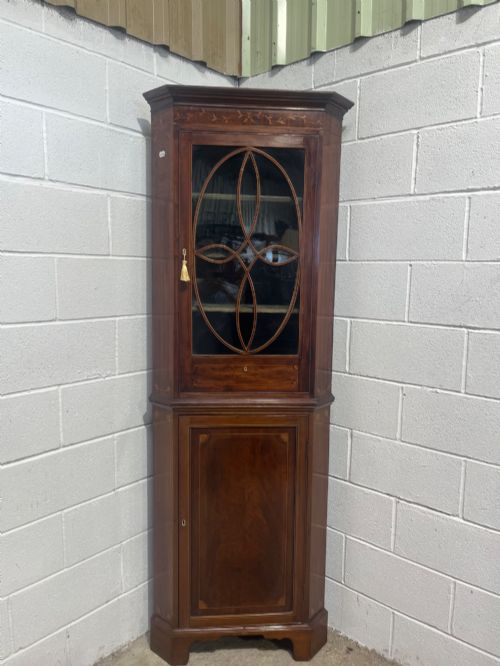
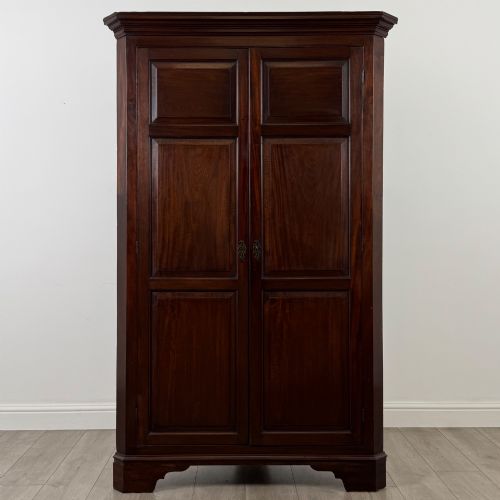
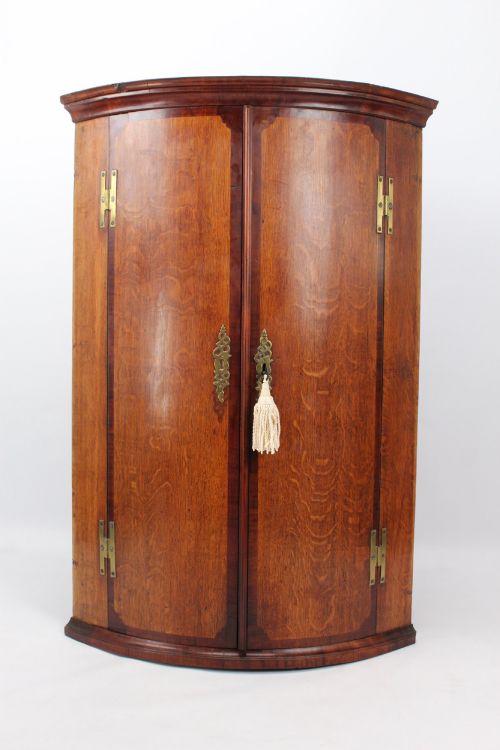
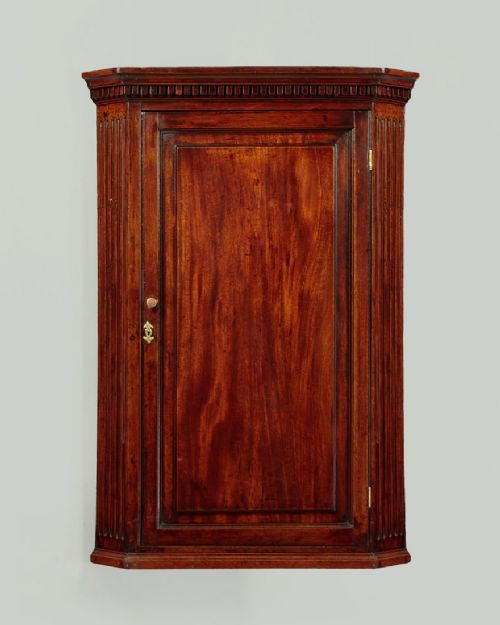
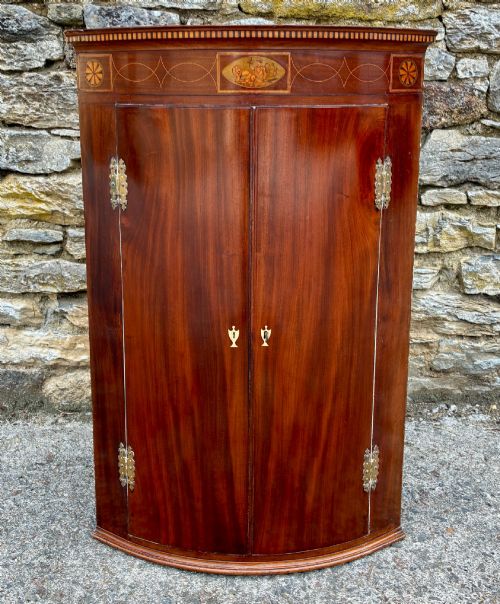
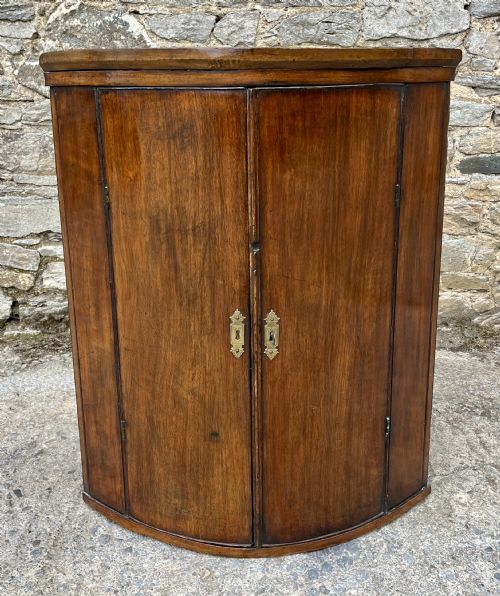
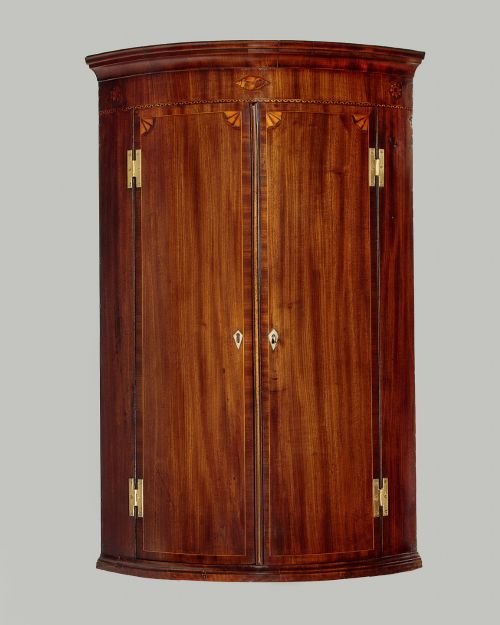
Brown Mahogany Corner Cupboard
A brown mahogany corner cupboard puts dead angles to work with rich timber and period design.
Brown Mahogany Corner Cupboard
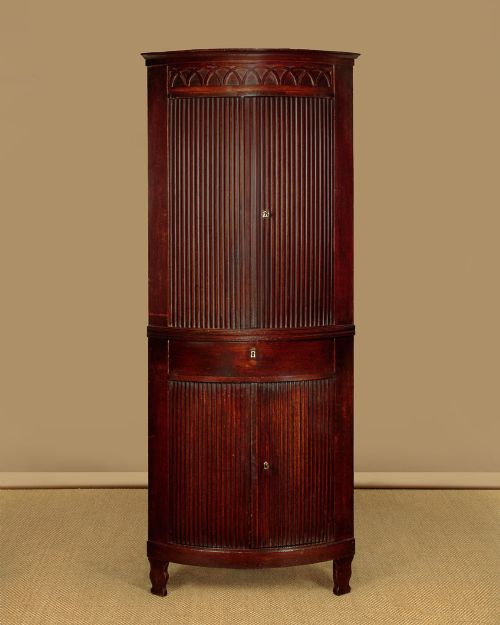
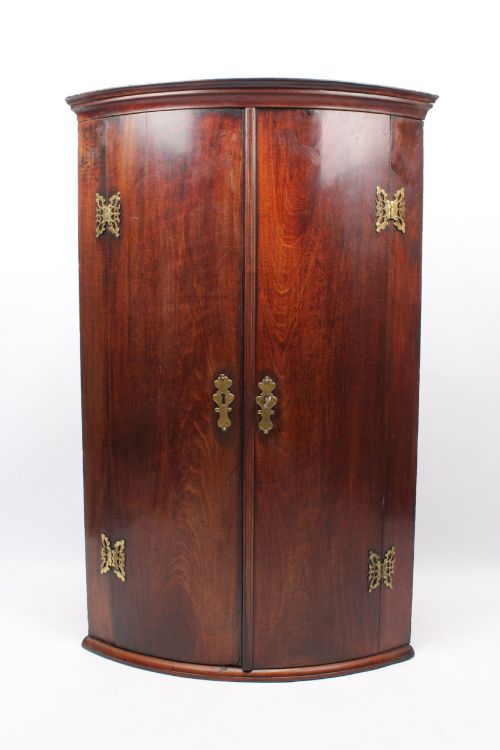
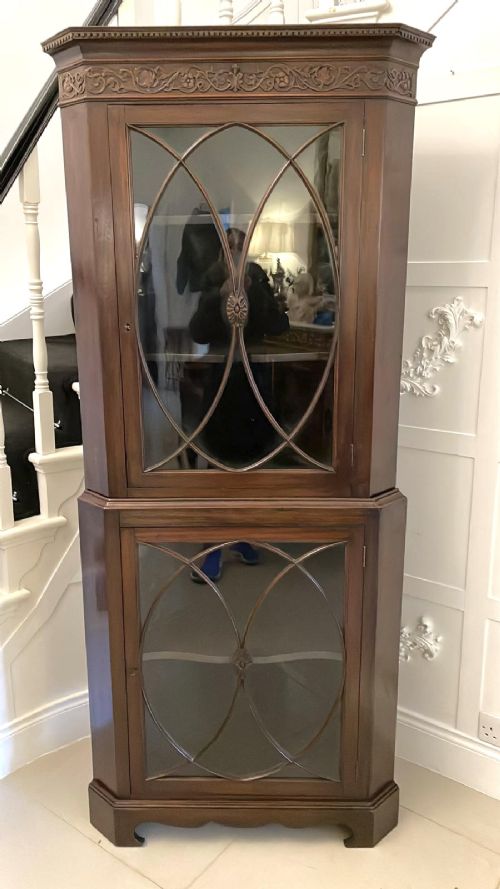
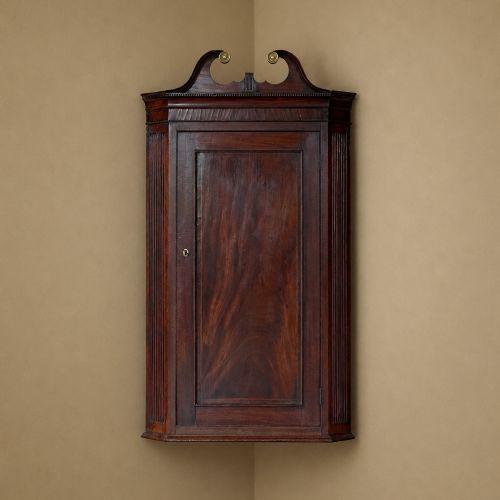
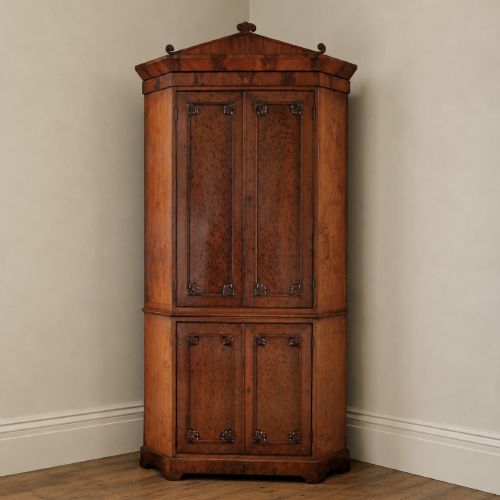
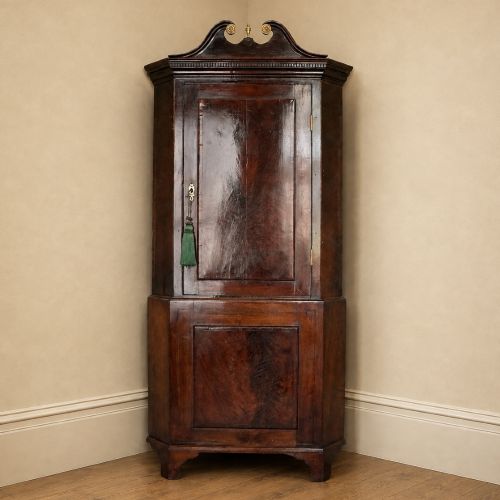
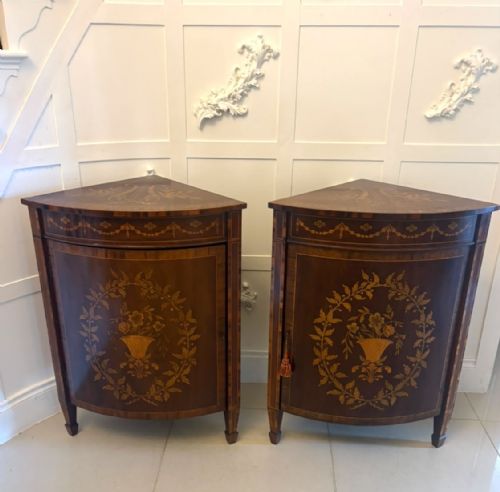
When you search for a brown mahogany corner cupboard, you enter a field dominated by Georgian, Edwardian, and nineteenth-century pieces designed to fit snugly into room angles. The selections span hanging wall cabinets, floor-standing units, and double-height cupboards built to maximise awkward spaces.
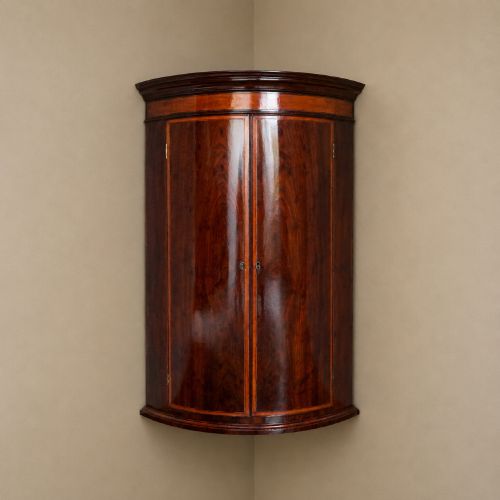
The most common versions met on this page are Georgian wall-hanging cabinets featuring single doors and bow fronts, alongside taller standing pieces from the nineteenth century. These timber items utilise rich mahogany grains, sometimes enhanced by crossbanding, stringing, or glazing.
Originating largely from British workshops, these cabinets served to store china, glassware, or provisions while softening rectangular rooms with curved or panelled doors.
What varies in quality
The distinction between ordinary and exceptional examples rests in the choice of timber figure, such as the prized plum pudding mahogany variants seen in Georgian pieces. Finely figured grain patterns and crisp, hand-cut inlay demonstrate superior workshop execution.
Proportion and structural integrity dictate the upper tier of the range, where doors hang true, brasswork is original, and astragal glazing bars remain slender and precise.
Listings feature mahogany, oak, satinwood, and boxwood, spanning the Georgian, Victorian, and Edwardian periods.
The Brown Mahogany Corner Cupboard Glossary
- Bow front
- A convex, outwardly curved front facade that softens the corner angles of the cabinet. This shape requires advanced woodworking skill to shape solid timber or veneer.
- Astragal
- Moulded timber bars that divide a glass door into smaller panes. They provide structural support while adding geometric decoration to display cabinets.
- Crossbanding
- A border of veneer laid around the edges of a panel with the grain running perpendicular to the centre. It creates a neat framing effect on cupboard doors.
- Escutcheon
- A small plate surrounding the keyhole to protect the surrounding wood from wear. Brass is the standard metal utilised on period pieces.
- Stringing
- Thin inlaid lines of contrasting timber used to outline panels and drawers. It adds delicate linear detail to cabinet surfaces.
Brown Mahogany Corner Cupboard: Frequently Asked Questions
How do I hang a wall cabinet safely?
Hanging corner cabinets require secure fixing into solid masonry or direct wall studs using heavy-duty brackets. Because these timber pieces carry considerable weight, particularly when filled with china, professional installation is strongly recommended.
Ensure the internal fixing blocks or backboards are sound before mounting the unit at eye level or above.
Were these always meant for corners?
Yes, the wedge-shaped carcase was specifically engineered to utilise ninety-degree room intersections that square furniture ignored. This space-saving geometry made them essential fixtures in domestic interiors from the eighteenth century onward.
Their footprint leaves floor areas open while offering deep interior storage capacity.
How do I tell Georgian from Edwardian pieces?
Georgian examples display hand-cut joinery, mature timber patination, and construction methods characteristic of the eighteenth and early nineteenth centuries. Edwardian revivals often feature lighter framing, machine-sawn components, and brighter polished finishes.
Examining the secondary woods inside the cabinet helps clarify the manufacturing era.
Can I use a corner cupboard for drinks?
Many glazed or panelled examples serve effectively as drinks cabinets due to their shelved interiors and lockable doors. Owners frequently store glassware and bottles within the enclosed space, utilising the sturdy shelves designed for china.
Added locks keep contents secure while maintaining period charm.