

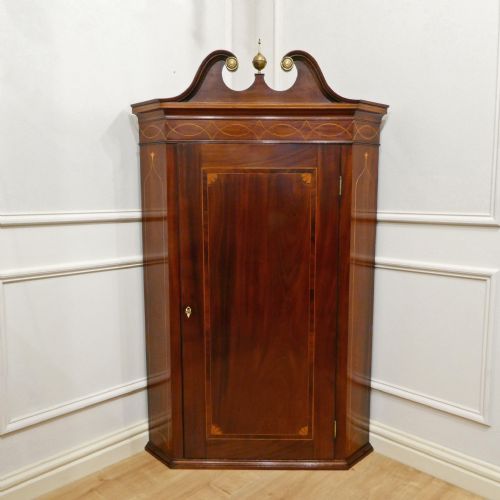


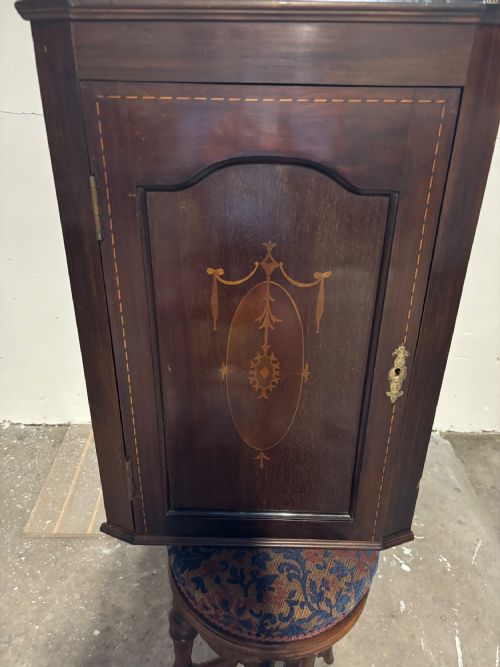


Satinwood Inlaid Corner Cupboard
These satinwood inlaid corner cupboard examples bring sharp geometry and warm timber into awkward rooms, turning dead angles into useful displays.
Satinwood Inlaid Corner Cupboard
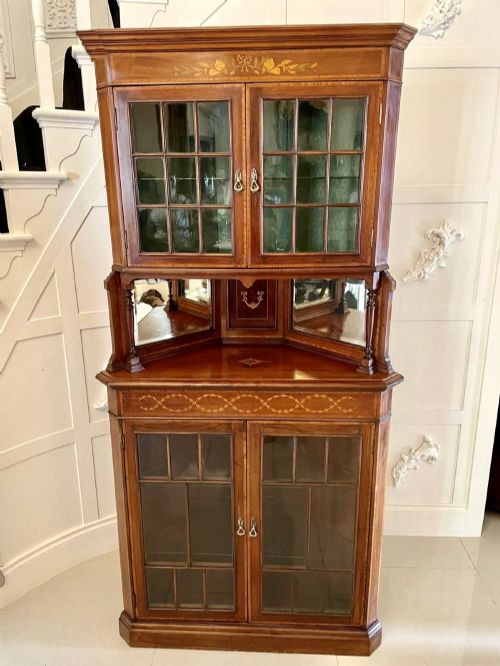
A satinwood inlaid corner cupboard fits directly into the meeting point of two walls, using space that standard rectangular furniture ignores. Most pieces on this page combine a rich mahogany carcass with contrasting pale satinwood, spanning Georgian, Victorian, and Edwardian periods.
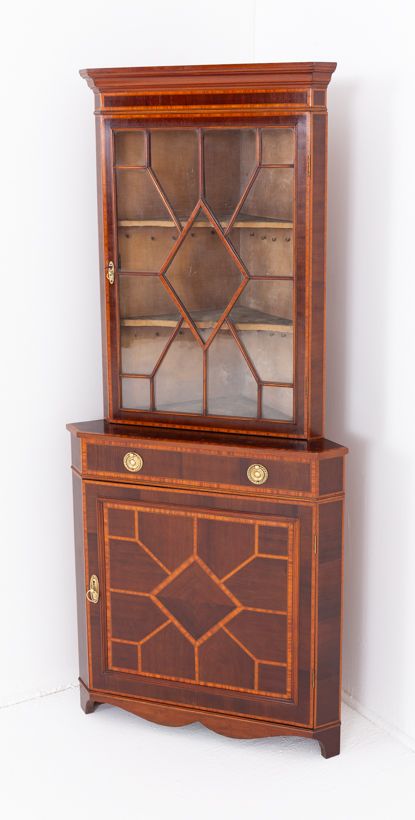
You will find both wall-hanging versions and substantial two-piece standing models. The hanging cupboards suit smaller wall spaces, while standing double-height glazed cabinets offer serious height and presence in a room.
Materials and construction
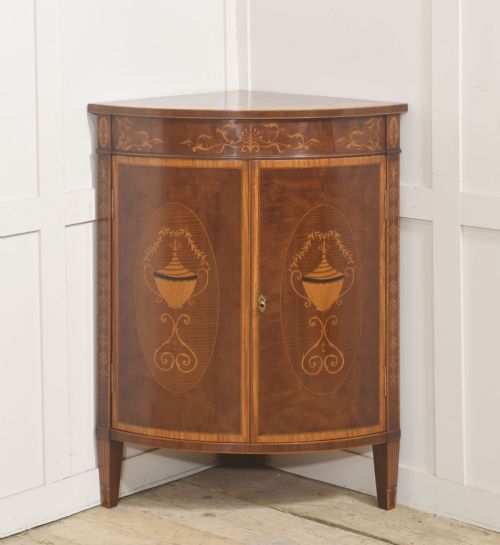
Cabinetmakers built these pieces using solid mahogany and polished veneers, setting light satinwood and boxwood into the timber to create crisp geometric borders and classical motifs. Brass hinges, escutcheons, and occasional glass panels complete the structural and decorative assembly.
Inlaid decoration required precise hand-cutting, where contrasting woods were fitted flush into channels carved directly into the primary timber. This technique produced sharp lines that define the Sheraton Revival and Georgian pieces found here.
Satinwood Inlaid Corner Cupboard Retail Price Guide 2026
Typical asking prices for satinwood inlaid corner cupboard among the pieces listed under this phrase on Sellingantiques today, from the lower quarter to the upper quarter. They describe what is for sale here now, not the wider market.
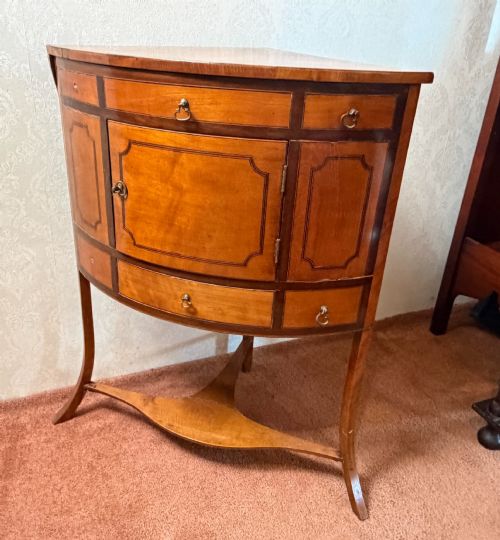
One remarkably honest eighteenth century piece arrives as a folding corner washstand, proving that even grand rooms needed a practical place to splash.
Assessing quality and craftsmanship
The precision of the inlay work marks the difference between standard production and superior cabinetmaking. Tighter joints, clean contrast between boxwood, satinwood, and mahogany, and well-proportioned cornices elevate the better examples.
Original brass hardware, sound glass panes, and balanced door alignment indicate careful preservation. The depth of the timber polish and the crispness of marquetry details reveal the maker's original investment of time and skill.
The Satinwood Inlaid Corner Cupboard Glossary
- Satinwood
- A dense, lustrous hardwood with a natural golden sheen used extensively for contrasting inlay and veneering. It catches the light differently depending on the grain orientation.
- Marquetry
- The art of applying small pieces of veneer to a structure to form decorative patterns and pictorial designs. It differs from simple inlay by covering larger surface areas with intricate mosaic-like compositions.
- Astrigal glazed
- A glass door divided into smaller panes by narrow wooden bars called glazing bars. These frames often add delicate architectural structure to display cabinets.
- Sheraton Revival
- A late nineteenth and early twentieth century style inspired by the late eighteenth century designs of Thomas Sheraton. It relies on neoclassical restraint, satinwood banding, and slender proportions.
Satinwood Inlaid Corner Cupboard: Frequently Asked Questions
How do I hang a wall cupboard safely?
Wall-hanging corner cupboards require sturdy fixings screwed directly into structural wall studs or masonry rather than just plasterboard. The weight of solid mahogany combined with glass doors demands proper load-bearing support.
Professional installation ensures the cabinet stays level and secure over time, protecting both the antique timber and your floor.
Can these cabinets hold heavy books?
Most corner cupboards feature fixed or adjustable wooden shelving designed for display items, ceramics, and glassware rather than dense rows of heavy books. Overloading the shelves can strain the internal supports and the corner joints.
Keep the weight balanced across the centre of the shelves to preserve the structural integrity of the cabinet.
How do I tell Georgian from Edwardian pieces?
Georgian pieces display older timber patination, hand-cut joinery marks, and structural traits typical of eighteenth century workshop practices. Edwardian examples often reflect the lighter, more decorative Sheraton Revival aesthetic popular around nineteen hundred.
Examining the backboards, secondary timbers, and lock mechanisms usually reveals the true age of the cabinet.
Where should I place a corner cupboard?
These cupboards naturally anchor empty room corners, drawing the eye upwards and filling dead space without blocking walkways. They work particularly well in dining rooms, hallways, or reception rooms where floor space is at a premium.
Pairing a standing corner unit with neutral walls allows the contrasting satinwood and mahogany tones to stand out clearly.