




Sheraton Style Corner Cabinet
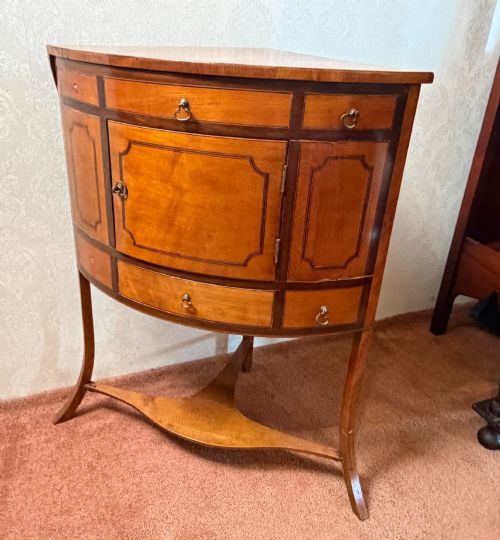
These sheraton style corner cabinet pieces bring refined Georgian lines and delicate inlay to empty corners, offering practical display or storage.

Sheraton Style Corner Cabinet
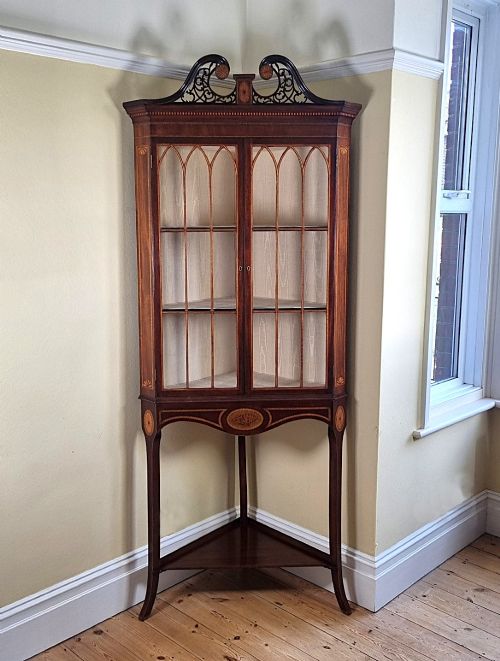
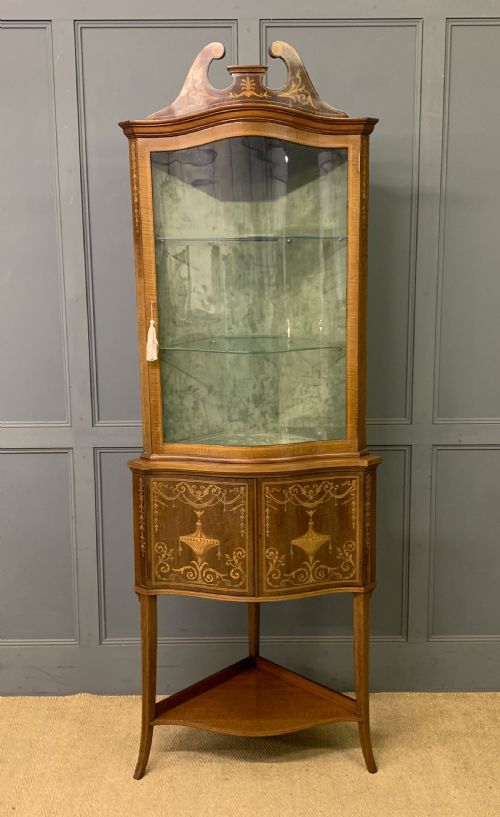
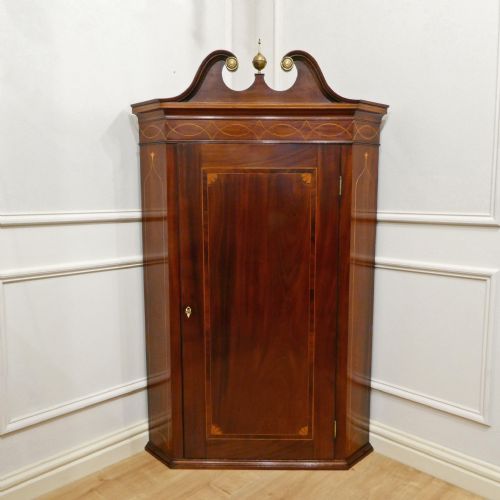
A sheraton style corner cabinet makes efficient use of awkward room angles while providing fitted shelving for display or enclosed storage. These pieces combine upright wall-hanging formats with grander standing variations designed to anchor a room.
The selection here draws primarily from nineteenth and twentieth century revivals alongside eighteenth century originals. Makers of these later periods frequently interpreted the earlier aesthetic through mahogany frames and lighter wood details.
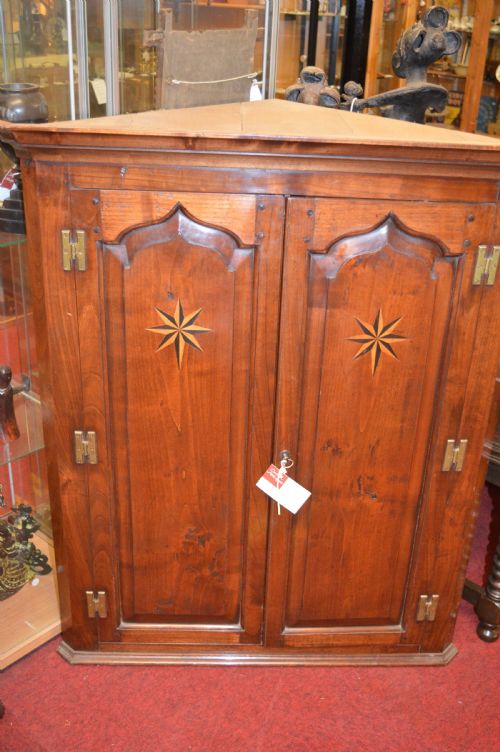
Most examples favour rich timber grains paired with intricate stringing or patterned motifs. They range from compact hanging cupboards to substantial double-door formats resting on dedicated stands.
How they were made
Cabinet makers constructed these bodies primarily from solid mahogany veneers over secondary timbers, shaping the curved or straight fronts to fit snug against ninety-degree walls. Glass panels were glazed into wooden doors to protect delicate contents within.
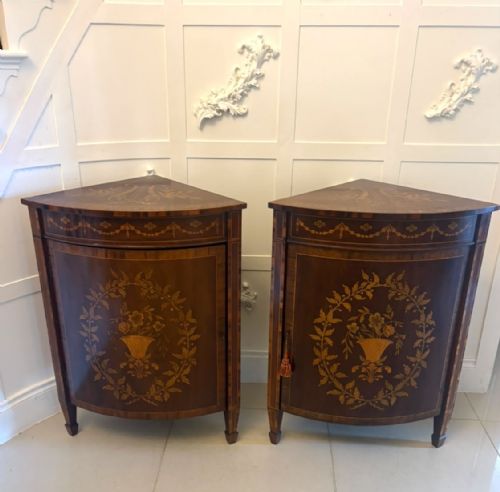
Satinwood inlay, fruitwood inlay, and marquetry formed intricate geometric borders and classical urn motifs across the surfaces. Brass hardware such as hinges and escutcheons finished the doors and secured the closures.
Sheraton Style Corner Cabinet Retail Price Guide 2026
Typical asking prices for sheraton style corner cabinet among the pieces listed under this phrase on Sellingantiques today, from the lower quarter to the upper quarter. They describe what is for sale here now, not the wider market.
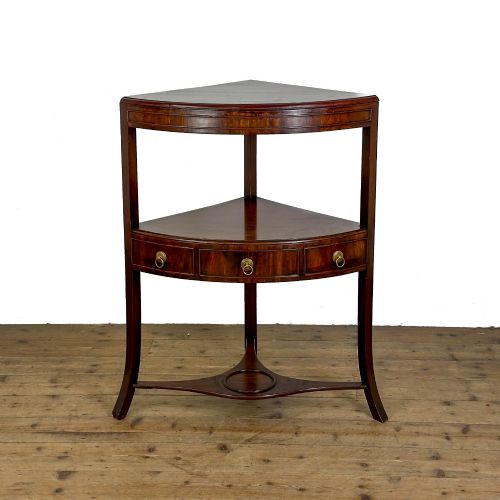
Washstands among these listings doubled as hidden hygiene stations, proving that Georgian and Victorian sanitation could still hide behind fine satinwood.
What varies in quality
Quality rests in the precision of the timber matching and the crispness of the inlaid details. Superior examples exhibit fine, tight grain patterns across the primary surfaces without distraction from poor repairs.
The delicacy of the stringing and the depth of the marquetry distinguish standard production from exceptional pieces. Hardware longevity and smooth door alignment further separate the finer work from simpler utilitarian items.
The Sheraton Style Corner Cabinet Glossary
- Marquetry
- Decorative veneer work forming pictures or patterns by assembling small pieces of different coloured woods. This technique requires steady hands and precise cutting to ensure tight joints.
- Satinwood inlay
- Contrasting yellowish wood inserted into channels cut into the primary timber. It creates bright borders that highlight the architectural lines of the cabinet.
- Sheraton Revival
- A late nineteenth and early twentieth century design movement that reinterpreted the light, neoclassical forms of the eighteenth century. Pieces from this period often utilise rich mahogany and elaborate marquetry.
- Corner cupboard
- An enclosed shelving unit specifically engineered to fit into the junction of two walls. These items maximise floor space utilisation in smaller rooms.
Sheraton Style Corner Cabinet: Frequently Asked Questions
How do I hang a wall cabinet safely?
Wall-hanging corner cupboards require secure fixing directly into wall studs or masonry using appropriate brackets. The internal structure must bear the weight of both the timber body and any displayed items.
Professional installation is recommended for larger nineteenth-century examples to prevent pulling away from the corner plaster.
What rooms suit a corner cabinet?
These units transform neglected room junctions in dining rooms, drawing rooms, or hallways into functional display areas. Their angled footprint keeps floor pathways clear while adding vertical storage.
Matching the wood tone to existing furniture helps the cabinet anchor the corner visually.
How do I distinguish revival pieces?
Revival items from the late nineteenth and early twentieth centuries often feature machine-sawn backing boards and standardised brass hardware. Examination of the secondary timbers reveals the later production methods used by workshops.
Georgian originals display hand-cut joinery marks and older patination consistent with eighteenth-century hand tools.
Can these hold heavy china?
Most interior shelves are designed for moderate display rather than heavy storage. The fixed wooden ledges support lighter porcelain, glassware, or books safely.
Checking the stability of the internal shelf supports ensures the cabinet can bear the intended collection without sagging.