


Georgian Standing Corner Cupboard
A georgian standing corner cupboard solves the problem of dead space in a room while displaying prized possessions.
Georgian Standing Corner Cupboard
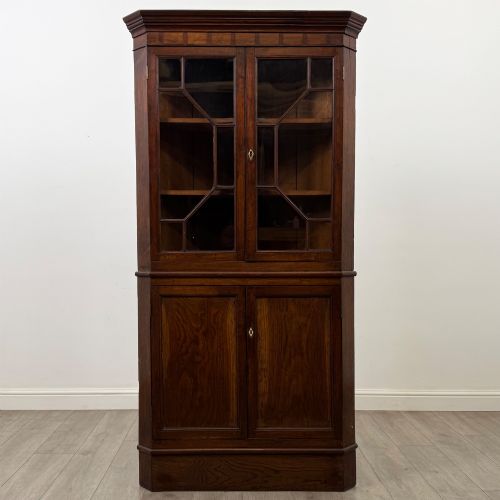
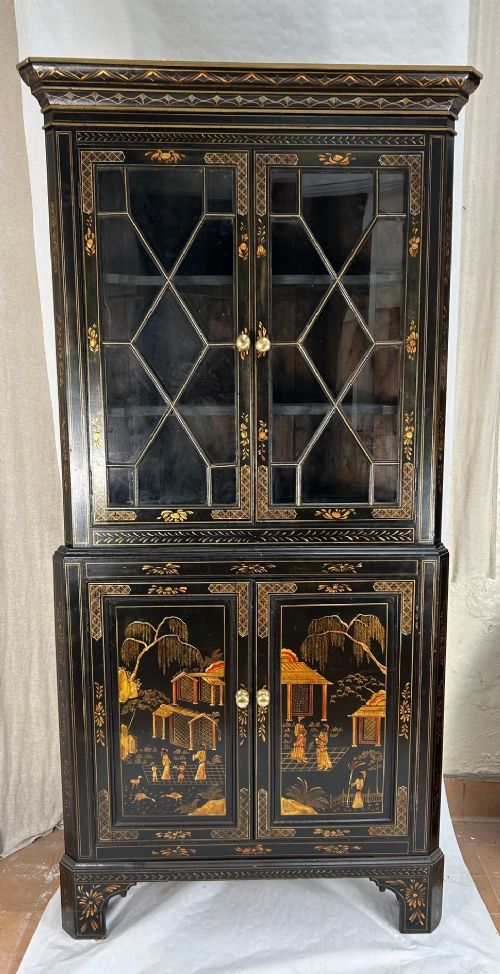
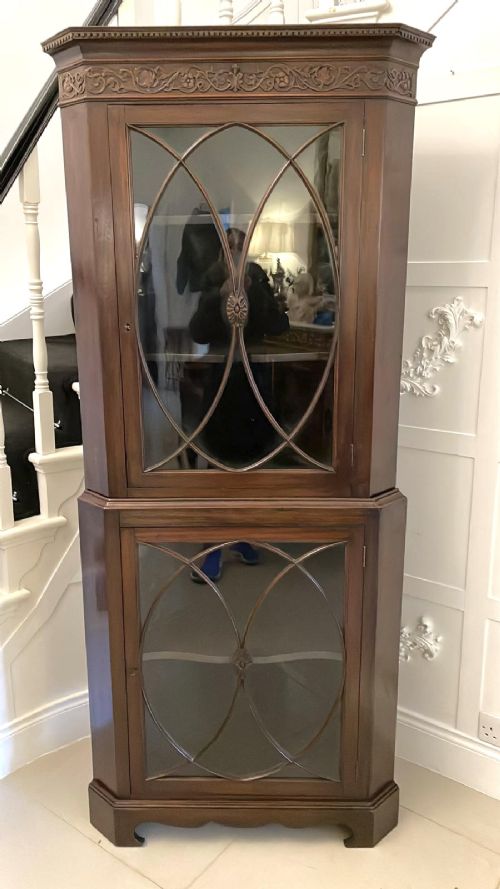
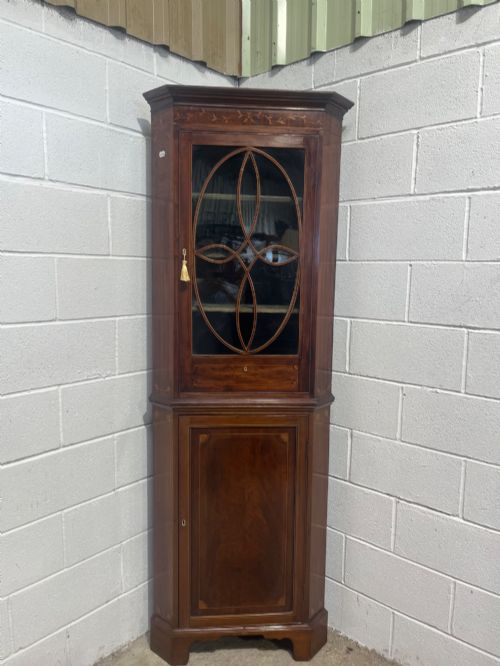
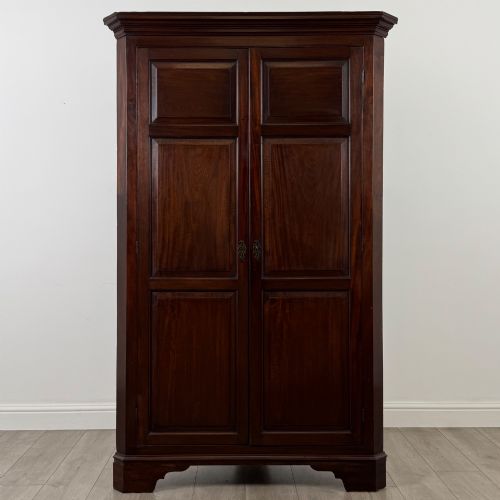
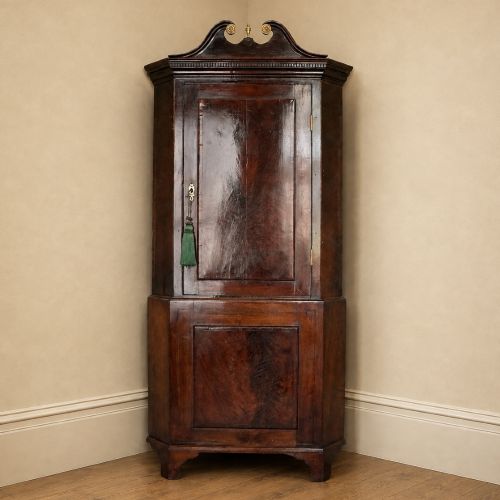
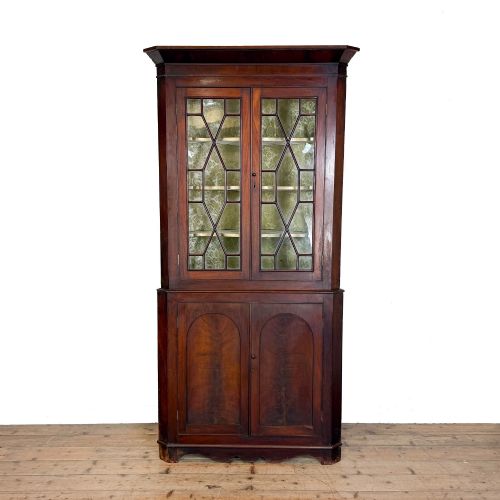
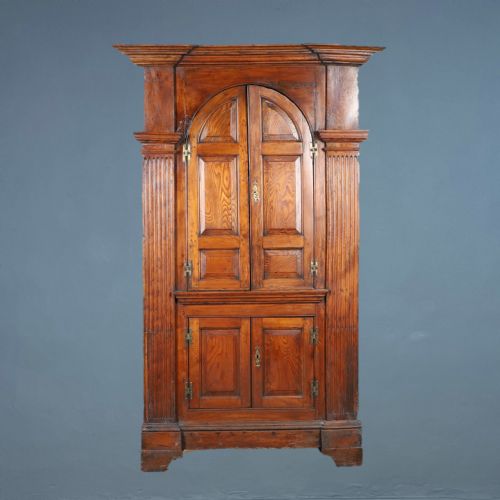
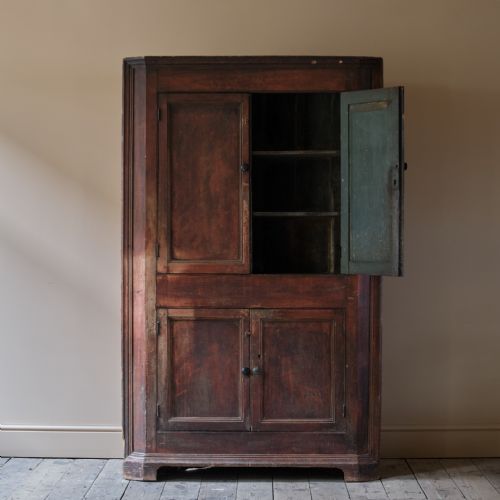
A georgian standing corner cupboard is a floor-standing cabinet designed specifically to fit snugly into the ninety-degree angle of a room. These architectural pieces often span two distinct sections, featuring an upper display area with glazed or panelled doors above a lower enclosed cupboard.
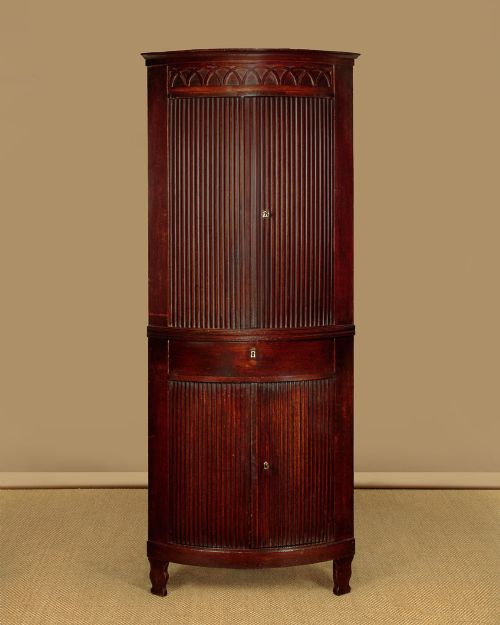
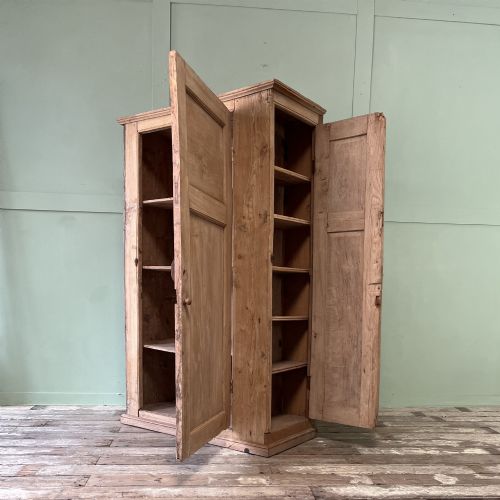
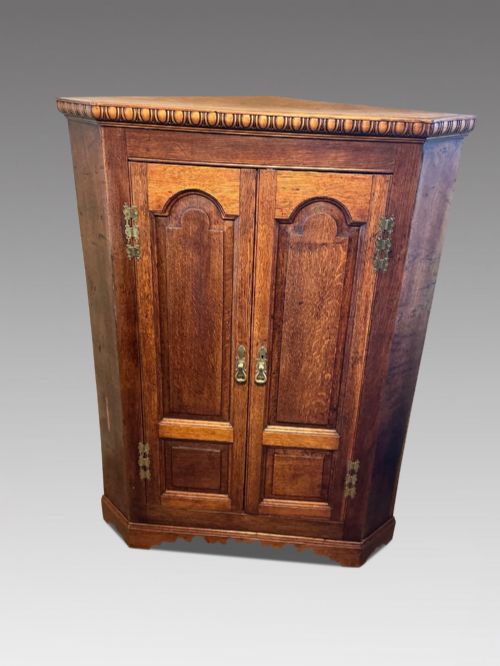
The pieces seen here bridge the eighteenth and nineteenth centuries, spanning from early Georgian oak examples to later mahogany and pine interpretations. Makers built them to utilise awkward corners efficiently, providing substantial storage without dominating the floor plan.
Most examples originate from English and Welsh country houses, reflecting local vernacular tastes alongside more formal urban designs. Buyers encounter both single-height units and taller double-height constructions designed to hold silver, glassware or books.
Proportion and Detail
The visual success of a georgian standing corner cupboard depends heavily on its proportions and the quality of its timber grain. Superior examples display carefully chosen flame mahogany or richly figured oak, paired with fine brass H-hinges and working locks.
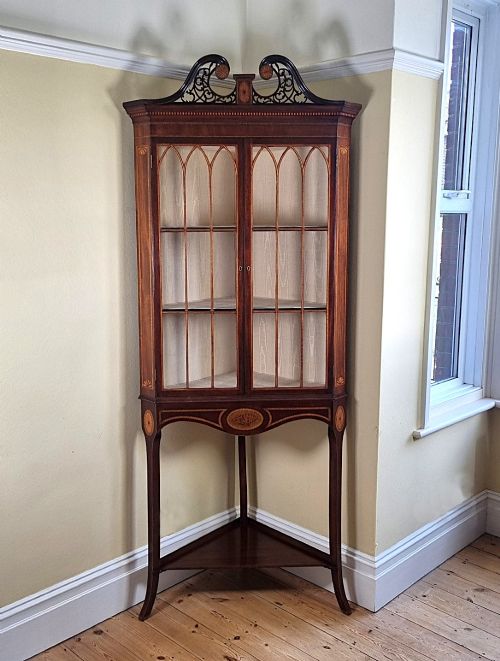
Construction refinement separates standard regional pieces from high-status urban commissions, particularly in the carving of cornices and the delicacy of astragal glazing bars. Original surfaces, untouched by modern stripping, preserve the subtle patina valued by collectors.
Georgian Standing Corner Cupboard Retail Price Guide 2026
Typical asking prices for georgian standing corner cupboard among the pieces listed under this phrase on Sellingantiques today, from the lower quarter to the upper quarter. They describe what is for sale here now, not the wider market.
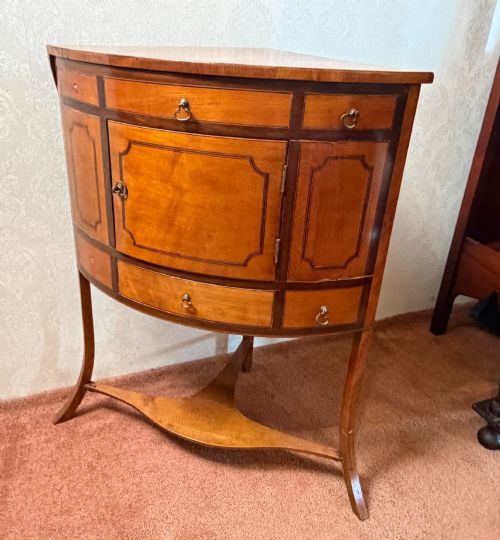
Several cupboards are curved in the front, known as bow-front designs, softening the rigid geometry of the room corner.
The Georgian Standing Corner Cupboard Glossary
- Astragal
- Wooden glazing bars that divide a glass door into smaller panes. They shape the light entering the cabinet and indicate the period style.
- Bracket foot
- A structural support projecting outward from the bottom corner of a cabinet. These feet lift the heavy body off the floor and anchor the design.
- Cross-banding
- A decorative border of veneer laid perpendicular to the grain of the main surface. This technique frames drawer fronts and door panels.
- Cornice
- The moulded projection finishing the top of the cabinet. It crowns the architectural presence of the corner piece.
- Welsh vernacular
- Regional furniture making traditions using local timber. These pieces prioritise functional durability and simple construction over urban ornamentation.
Georgian Standing Corner Cupboard: Frequently Asked Questions
Where should I place a corner cupboard?
These cabinets fit directly into any empty ninety-degree room corner, turning dead space into a focal point.
They work well in dining rooms for tableware or in living spaces to display collections without obstructing movement.
How do I store items inside?
Most interiors feature shaped wooden shelves designed to accommodate ceramics, glassware or books.
Upper glazed sections showcase decorative objects while lower wooden doors conceal everyday storage.
Are these cupboards made in two parts?
Many taller examples divide horizontally into an upper and lower section for easier transport and installation.
Single-height units remain as one solid floor-standing carcass from top to bottom.
How do I distinguish oak from mahogany pieces?
Oak pieces generally exhibit prominent growth rings and a heavier, lighter-brown rustic appearance suited to country interiors.
Mahogany units display a dense, darker reddish-brown grain often associated with more formal eighteenth-century urban parlours.