

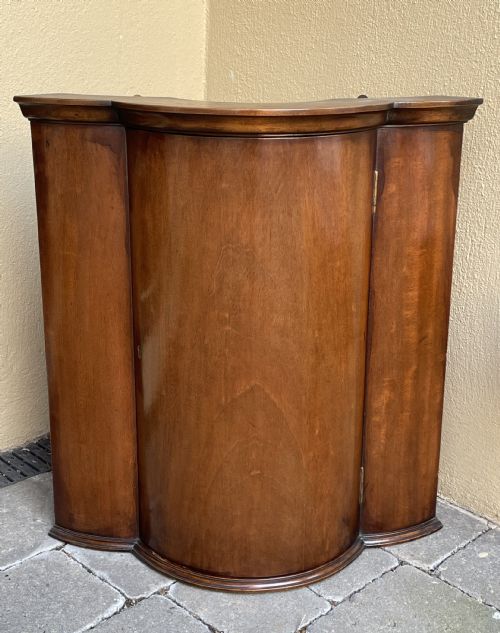


Bowfront Display Cupboard
A bowfront display cupboard brings curved glass and refined timberwork into a room, offering a practical stage for silver and china.
Bowfront Display Cupboard
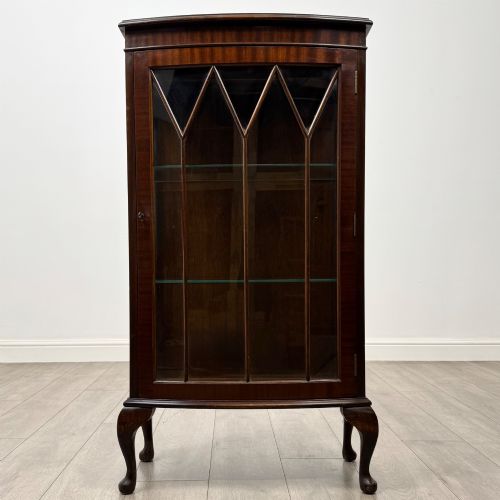
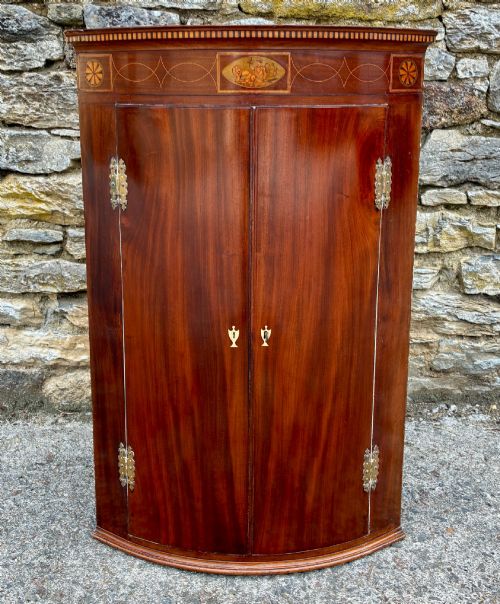
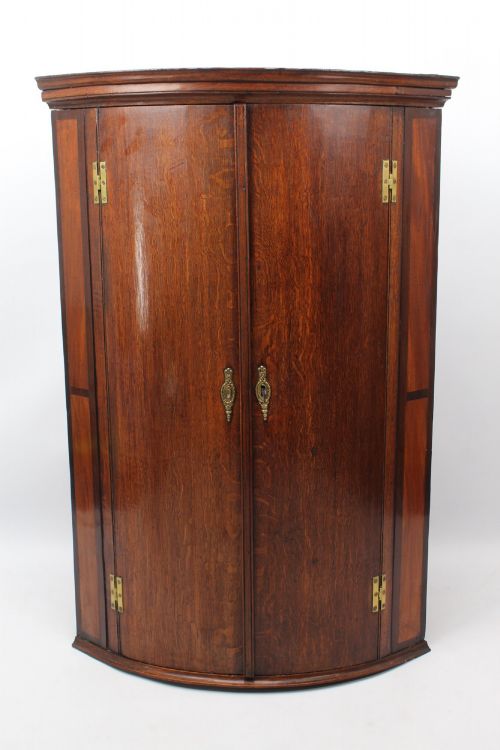
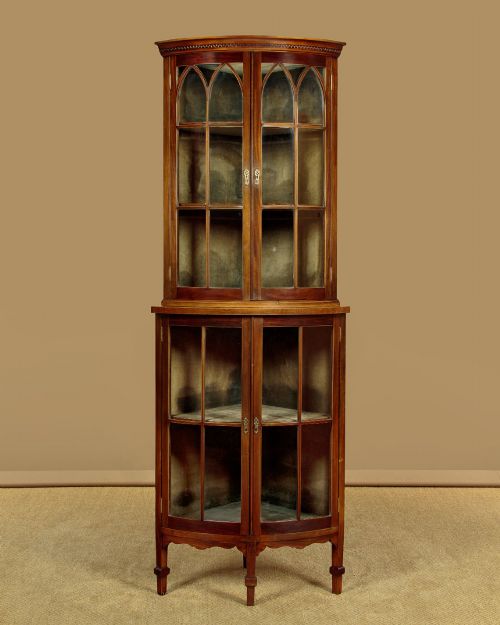
A bowfront display cupboard presents a convex curved front that softens the corner of a room or stands as a distinct focal point on a wall. You meet these pieces most frequently in Georgian, Victorian, and Edwardian formats, ranging from hanging corner cupboards to freestanding floor cabinets.
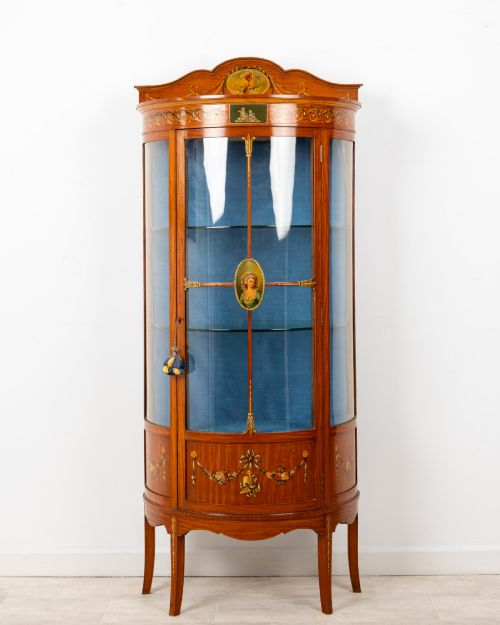
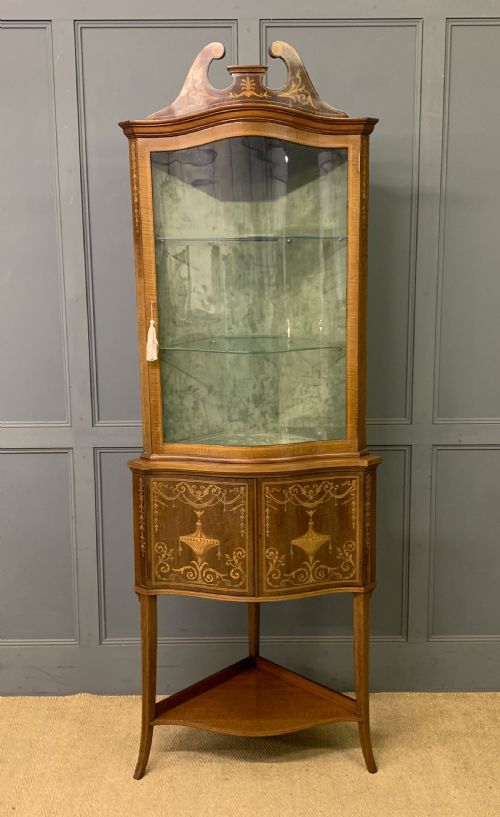
The form developed to maximise interior display space while projecting a gentle profile into the living space. Pieces on this page span several centuries, with Edwardian satinwood and Georgian mahogany standing out as the dominant expressions.
How they were made
Cabinetmakers constructed the distinctive curved fronts using tight-grained timbers like mahogany, walnut, and oak, often reinforced by secondary woods behind the frame. Timber veneers such as satinwood and burr walnut provided contrasting decorative surfaces on the doors and friezes.
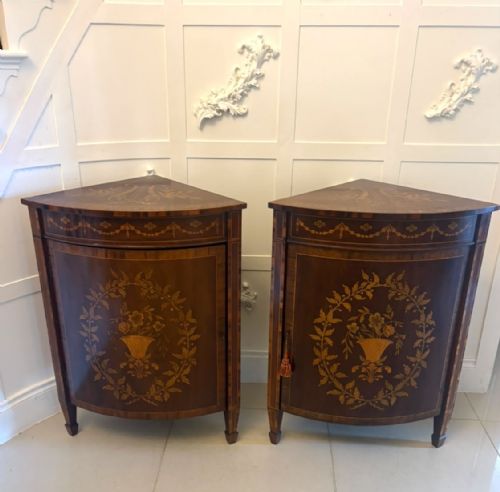
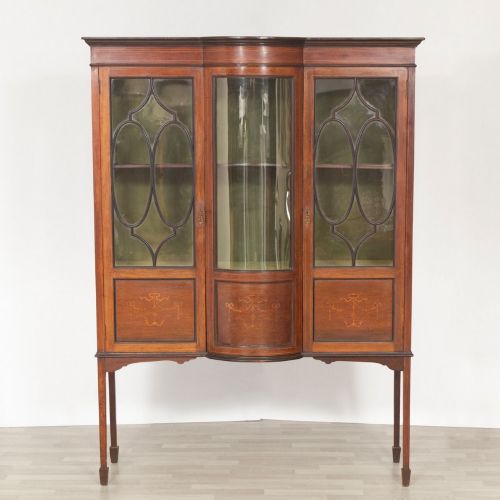
Inlay work in boxwood and marquetry motifs added geometric or floral detail to the primary grain. Glazing bars held individual panes of glass in place across the display doors, while brass hinges and escutcheons completed the hardware.
What varies in quality
The standard of timber selection dictates much of the distinction, visible in the depth of grain and the richness of the polished surface. Plum pudding mahogany and figured burr walnut elevate a piece above standard stock.
Hand-painted floral panels and delicate marquetry inlay require advanced skill from the artisan, separating simple utility furniture from refined drawing-room display cases. The fluidity of the curved glass and the precision of the joinery further define the tier of craftsmanship.
The Bowfront Display Cupboard Glossary
- Bowfront
- A convex curved cabinet front that projects outward from the centre. This shape softens rigid room corners and catches ambient light across polished wood.
- Vitrine
- A glass-fronted display cabinet designed to showcase porcelain, glassware, or small collections. It relies on extensive glazing to maximise visibility.
- Marquetry
- Decorative patterns created by fitting different coloured veneers into a prepared wooden surface. Craftsmen used contrasting woods to render floral or geometric designs.
- Satinwood
- A luminous, fine-grained hardwood native to the tropics, frequently utilised for banding and inlay work during the eighteenth and early twentieth centuries.
- Escutcheon
- A protective plate surrounding a keyhole, usually cast in brass. It serves both a functional purpose and a decorative role on cabinet doors.
Bowfront Display Cupboard: Frequently Asked Questions
How do I date a bowfront display cupboard?
Examine the timber species, construction methods, and secondary woods visible on the interior carcass and drawer linings. Georgian pieces typically feature hand-cut dovetails and native oak or pine framing.
Later Edwardian and Victorian examples often display machine-sawn elements, lighter satinwood veneers, and softer secondary timbers underneath the polished exterior.
Where should I place a corner cupboard?
A corner cupboard fits neatly into the unused angles of a dining room or drawing room, drawing the eye upward and making efficient use of floor space. Hanging versions anchor securely to wall studs at eye level.
Freestanding models stand independently in room corners, though you should verify the angle of the walls to ensure a flush fit.
How do I care for antique mahogany furniture?
Keep wooden cabinets away from direct sunlight and strong heat sources to prevent the timber and veneers from drying out and splitting. Apply a quality beeswax polish sparingly to nourish the grain.
Buff the surface gently with a soft cloth to maintain the natural sheen without building up excessive waxy layers over time.