
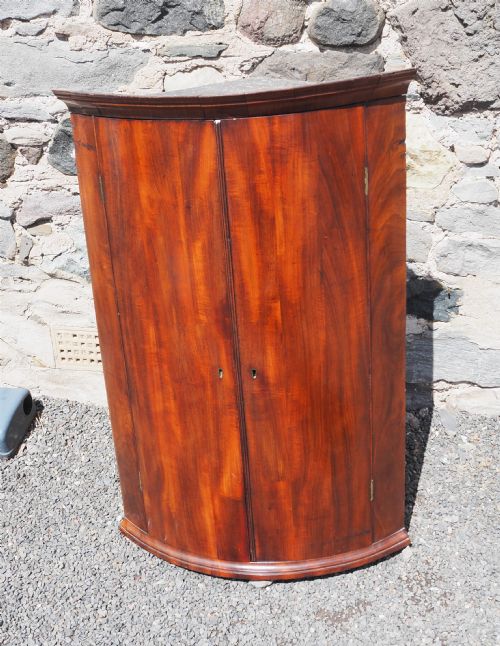
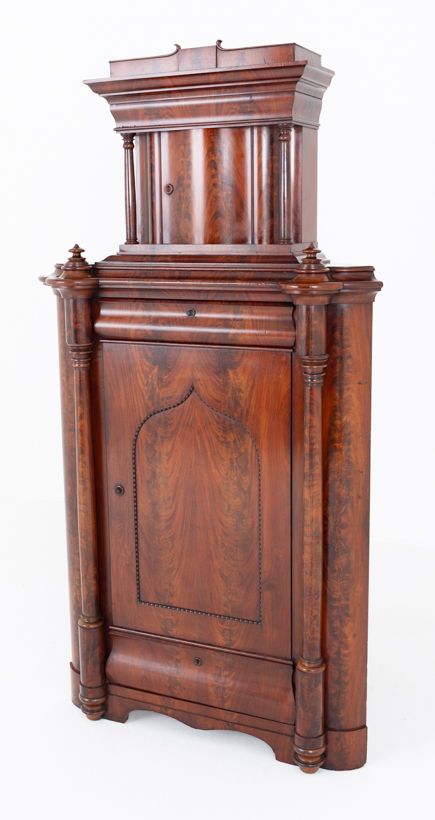


Flame Mahogany Corner Cupboard
A flame mahogany corner cupboard brings rich, figured grain and clever architectural presence to an awkward room junction.
Flame Mahogany Corner Cupboard
A flame mahogany corner cupboard is a specialised storage piece designed to fit snugly into the intersection of two walls, making efficient use of overlooked domestic space. These cabinets range from compact wall-hanging versions to substantial floor-standing or two-piece units that anchor a room.
The most common examples encountered in these records date from the Georgian and Regency periods, particularly the George III era. Makers frequently utilised bow fronts to soften the rigid ninety-degree angle, presenting curved doors finished in striking veneer.
Buyers will also find later interpretations extending into the Edwardian era and the twentieth century, alongside continental pieces displaying Biedermeier or Empire influences. Whether configured as a single hanging wall cabinet or a taller standing furniture piece, the focus remains on displaying prized possessions behind glazed or panelled doors.
How they were made
Cabinet makers built the primary carcass of these cupboards using solid timbers like mahogany or oak, laying down a robust structural foundation. Over this framework, they applied highly figured flame mahogany veneer to the prominent exterior surfaces, slicing the wood to create dramatic, fiery grain patterns.
Detailed enrichment often involved contrasting stringing and banding in satinwood, boxwood, and other light woods to frame the darker field of the mahogany. Glass panels were integrated into upper doors for display purposes, while brass hardware such as H-hinges, escutcheons, and locks completed the construction.
A few clever makers even integrated tiny shaped drawers behind the doors to hide secret correspondence.
What varies in quality
The distinction between ordinary and superior examples lies primarily in the selection and matching of the veneer. Master cabinet makers chose cuts with intense, symmetrical flame figuring and laid them with meticulous care across curved bow fronts and cornices.
Architectural ambition further separates the range, with top-tier pieces featuring architectural details such as broken arch pediments, dental moulding, or refined internal shell carvings. The crispness of the secondary wood inlay and the weight of the original brass furniture also signal higher workshop standards.
The Flame Mahogany Corner Cupboard Glossary
- Bow front
- A convex, outwardly curving front surface that softens angular furniture designs. This shape became especially popular on eighteenth and nineteenth-century corner cabinets.
- Flame mahogany
- A veneer cut from the fork of a mahogany tree where the branch meets the trunk. This method yields a distinctive, flame-like ripple pattern highly prized by period cabinet makers.
- Pediment
- The decorative structure crowning the top of a cabinet. Elaborate versions such as broken arch pediments lend height and formal architectural dignity.
- Stringing
- Thin lines of contrasting timber inlay used to outline panels, drawers, and doors. Makers utilised boxwood or satinwood to create these delicate borders.
- Escutcheon
- A protective plate surrounding a keyhole. On better pieces, these are fashioned from cast brass and shaped to complement the style of the cabinet.
Flame Mahogany Corner Cupboard: Frequently Asked Questions
How do I hang a wall corner cupboard safely?
Wall-hanging corner cupboards require secure fixing directly into solid masonry or substantial internal wall studs using heavy-duty brackets. Because these cabinets carry considerable weight from solid timber and glass doors, proper structural support is essential.
Professional installation ensures the piece hangs level and distributes the load evenly across the corner brackets without stressing the antique joints.
What is the difference between hanging and standing cupboards?
Hanging corner cupboards are designed to be mounted directly onto walls at varying heights, freeing up floor space underneath. Standing or floor-resting versions extend all the way to the floor, often split into two separate pieces for easier transport and placement.
While hanging models offer compact vertical storage, standing cabinets provide a more imposing architectural presence and greater internal capacity.
How do I care for flame mahogany veneer?
Protect antique flame mahogany by keeping it away from direct sunlight and extreme temperature fluctuations, which can cause the delicate veneer to dry out and lift. Regular dusting with a soft, dry cloth is usually sufficient for maintenance.
Applying a traditional beeswax polish occasionally helps nourish the wood and maintain the deep lustre of the grain without building up heavy chemical residues.
Were these cabinets used for specific items?
Georgian and Regency corner cupboards were traditionally utilised in dining rooms or parlours to store and display fine porcelain, glassware, or bottled spirits. Their enclosed shelving protected delicate tableware from household dust.
Today, they serve a similar purpose while adding period character to modern living spaces, studies, or hallways.