
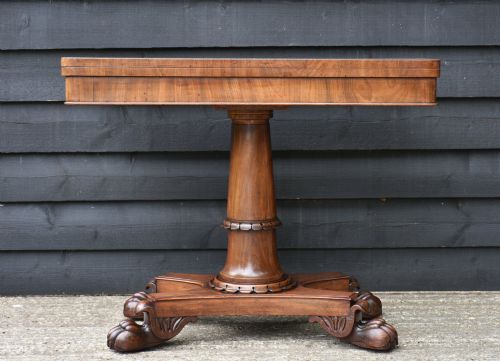
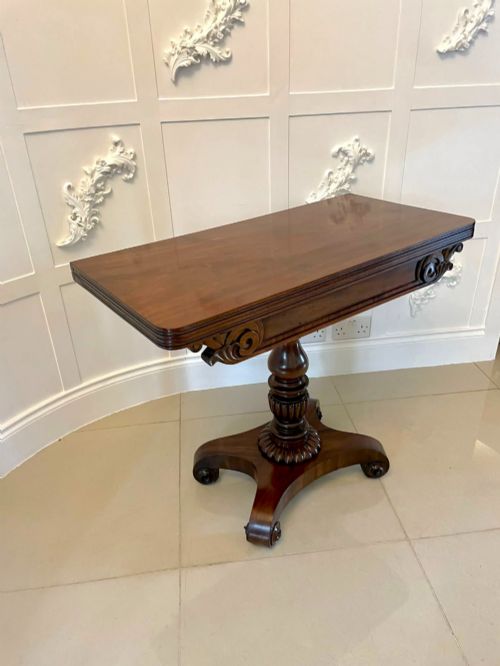
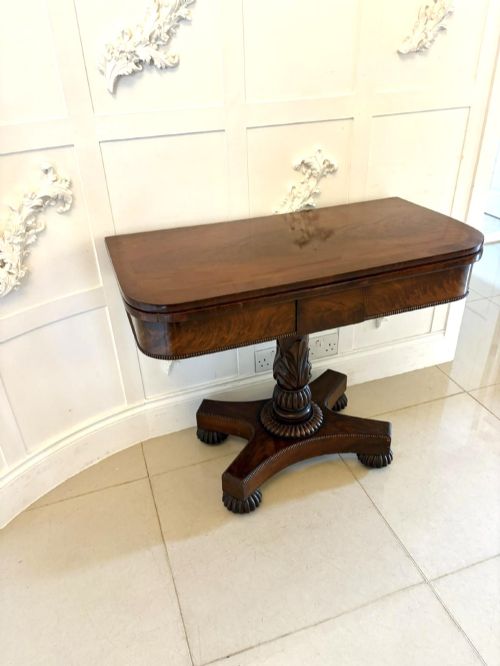
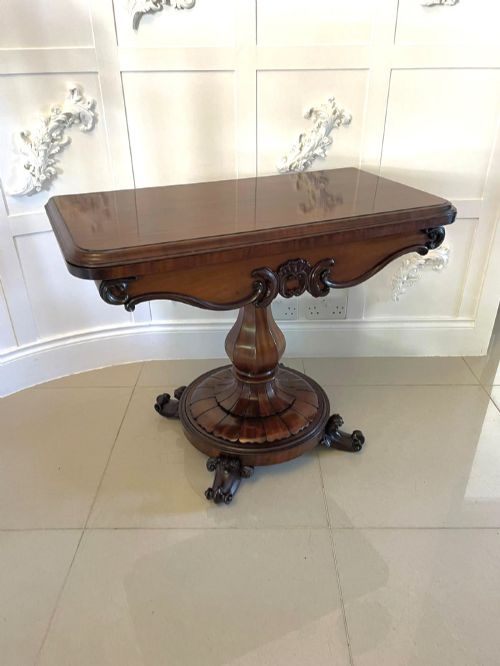
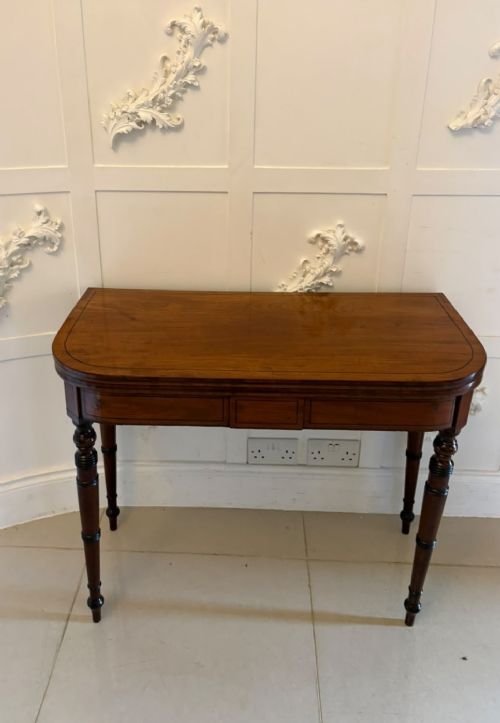
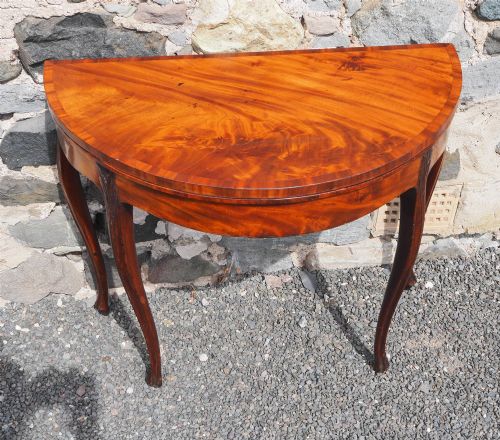
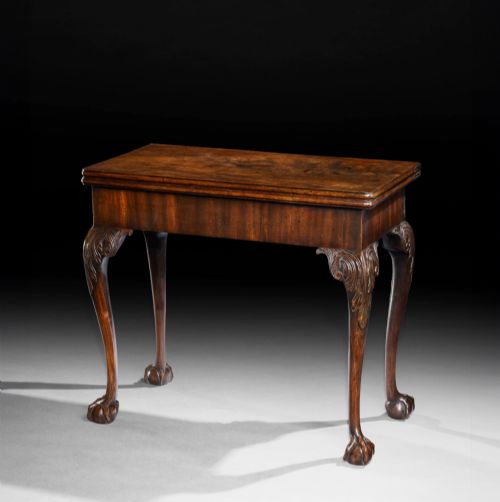
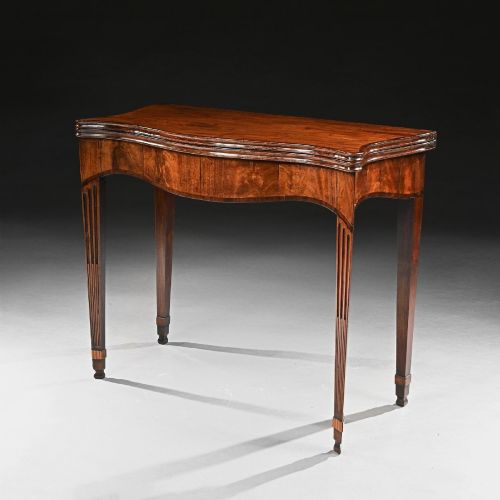
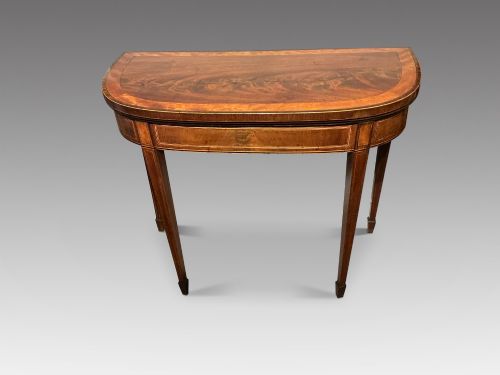
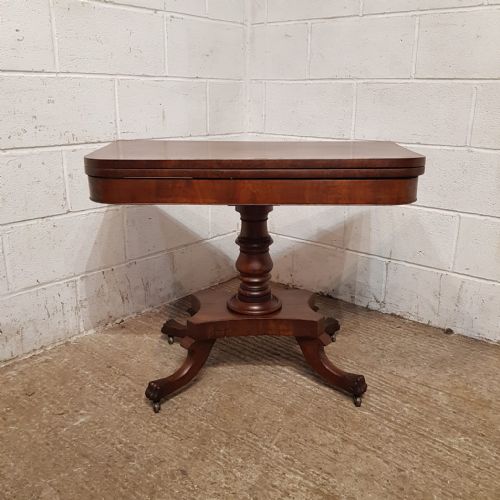


Brown Mahogany Card Table
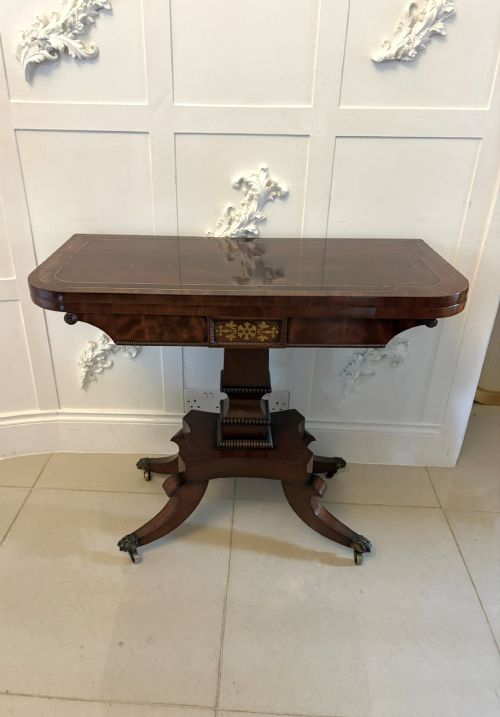
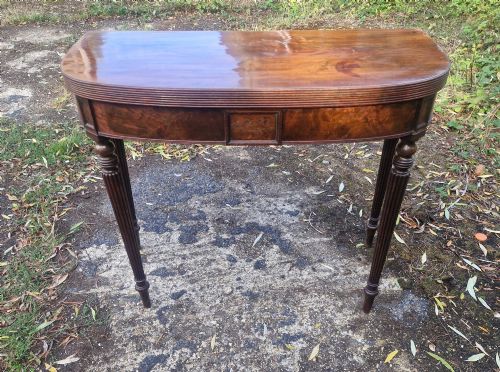
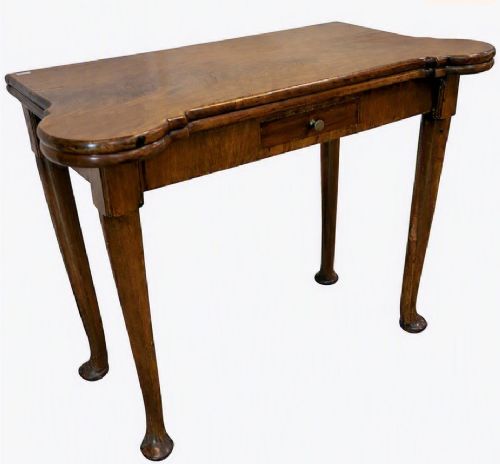
A brown mahogany card table brings folding utility and polished grain into a room, spanning periods from the eighteenth century to the Edwardian era.
Brown Mahogany Card Table
A brown mahogany card table is a folding piece designed for gaming and social use, appearing in various forms across multiple eras.
The pieces on this page span the 18th century, 19th century, Georgian, Regency, William IV, Victorian, and Edwardian periods.
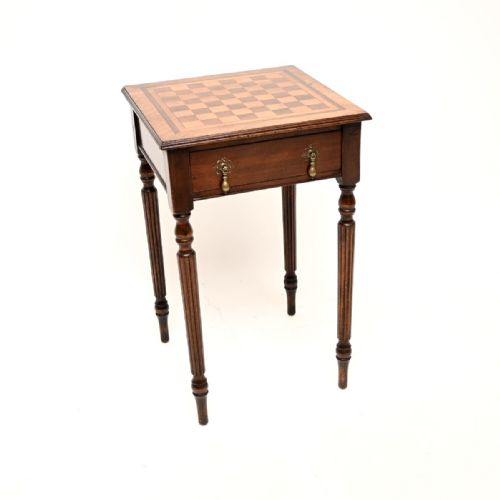
Common formats include card tables, tea tables, games tables, and console tables with fold-over tops.
Materials and Construction
Makers utilised solid mahogany and wood veneer, frequently highlighting figured mahogany and flame mahogany grains.
Decoration often involved brass inlay, satinwood, boxwood, and wood inlay to create contrasting borders and motifs.
Mechanisms include concertina action frames, D-shaped tops, and demi-lune folding leaves supported by various leg styles.
Brown Mahogany Card Table Retail Price Guide 2026
Typical asking prices for brown mahogany card table among the pieces listed under this phrase on Sellingantiques today, from the lower quarter to the upper quarter. They describe what is for sale here now, not the wider market.
Listings feature mahogany, satinwood, and boxwood materials across Georgian, Regency, Victorian, and Edwardian periods.
Distinctions in Execution
Quality rests in the choice of timber, where well-figured grain and original patina elevate the presence of the table.
Cabinetmaking skill shows in the precision of the concertina or folding action and the crispness of any inlaid banding.
Bruce and Burns of Edinburgh·Antoine Lampre
The Brown Mahogany Card Table Glossary
- Concertina action
- An expanding frame that extends all four legs outward when the table is opened, providing stable support for the folding top. This mechanism requires precise joinery.
- Demi lune
- A half-moon shape used for tables designed to stand flat against a wall when folded. These often open to form a full circle or oval for card games.
- Cross banded
- A border of veneer laid with the wood grain running perpendicular to the main surface. It frames the top of the table.
- Patina
- The surface sheen and colour developed by wood over decades of handling and exposure to light. Original patina is valued by collectors.
- Flame mahogany
- Timber cut from the fork of the tree where branches meet, producing a distinct flickering flame pattern. It is utilised on prominent surfaces like table tops.
Brown Mahogany Card Table: Frequently Asked Questions
What is a brown mahogany card table?
A brown mahogany card table is a piece of antique furniture featuring a hinged top that folds open to reveal a baize-lined or polished playing surface for cards and board games.
These tables date from the eighteenth century through the Edwardian era and often double as side or tea tables when closed.
How do you use a fold over card table?
To use a fold over card table, swing the top leaf outward on its hinges so it rests horizontally on the extended frame or swing leg.
When not in use for games, fold the top back against the base and place the table flat against a wall as a console or side table.
How do I identify a Georgian card table?
A Georgian card table typically displays characteristic period traits such as straight or cabriole legs, rich mahogany grain, and sometimes concertina actions.
Stylistic markers align with designers and periods like George III, Chippendale, or Hepplewhite.
What is the difference between a tea table and a card table?
A tea table is traditionally built to hold tea service items, while a card table is engineered with a fold-over top specifically for gaming.
Many antique examples served both functions interchangeably depending on the household's immediate needs.