


Brown Glaze Pitcher
A brown glaze pitcher brings rich earthy tones and solid utilitarian forms to a room, offering both historic character and everyday function.
Brown Glaze Pitcher
When you search for a brown glaze pitcher, you encounter robust vessels designed for serving and display, originating primarily from the nineteenth century alongside select seventeenth and eighteenth-century examples. These pieces encompass jugs, ewers, and pitchers formed from durable ceramic bodies.
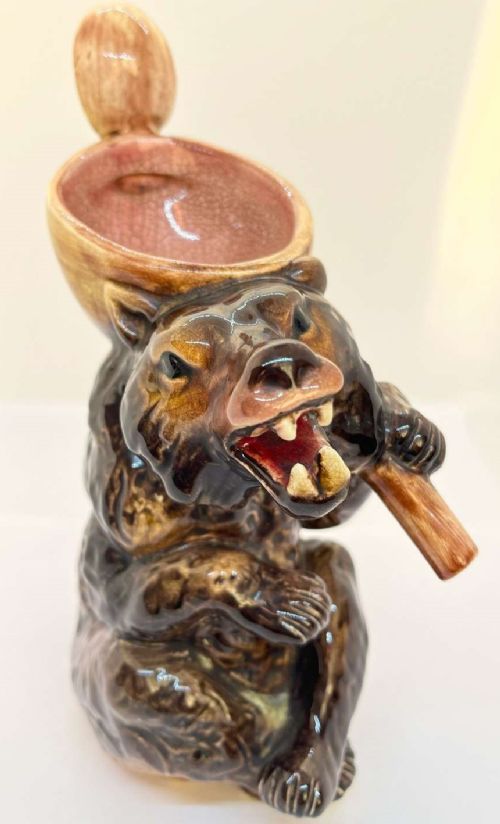
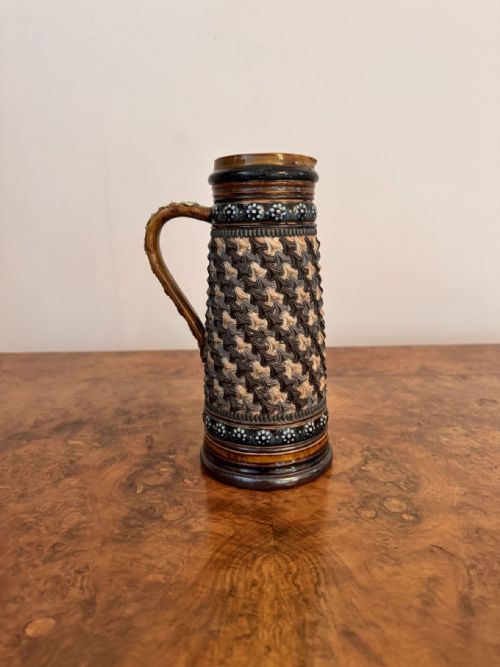
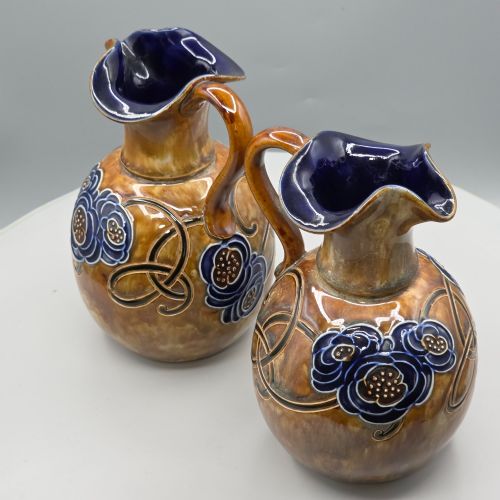
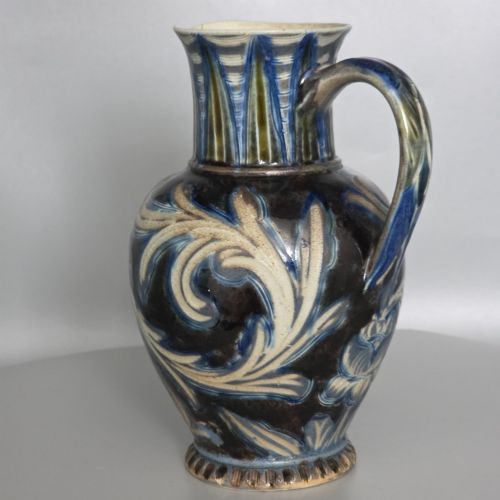
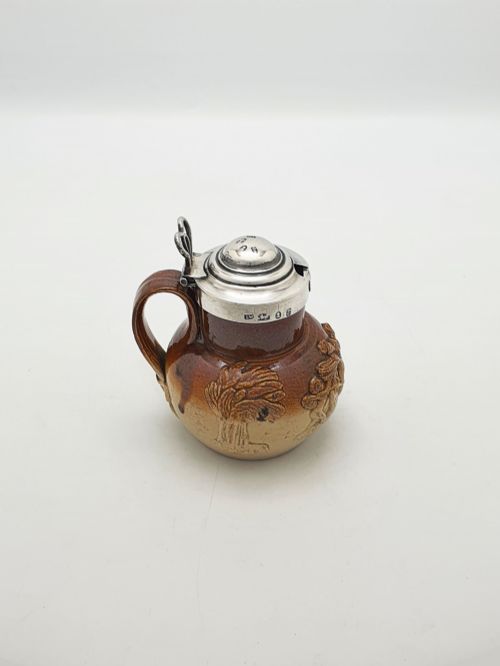
The selection on this page relies heavily on Victorian stoneware and earthenware, including salt glaze harvest jugs, harvest pieces, and Toby jugs. Makers utilised rich dark brown finishes, sometimes paired with yellow transfer prints, slipware decoration, or sterling silver collars.
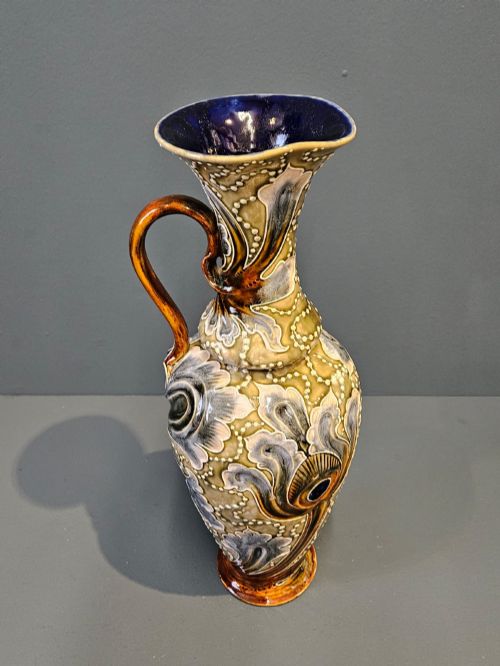
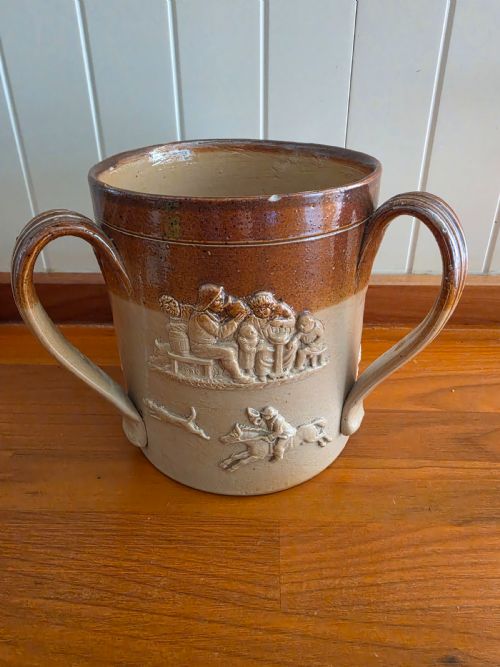
Forms range from large multi-handled tygs and puzzle jugs to decorative ewers and character figures. Makers such as Doulton Lambeth dominate the offerings, producing utilitarian vessels with distinct artistic flair.
How they were made
Potters shaped clay on the wheel or in moulds, employing earthenware and dense stoneware bodies suited for holding liquids safely. Lead glaze and salt glaze techniques produced the characteristic glossy or textured brown surfaces seen across the pieces.
Artisans applied surface decoration through incising, moulded reliefs, or slipware trails before firing the pottery in kilns. Workshops frequently added functional details like sterling silver rims, hinged lids, and metal collars to secure the tops of high-end vessels.
Listings feature stoneware, earthenware, and salt glaze materials spanning the seventeenth century to the Victorian era.
What varies in quality
The standard of a pitcher depends on the crispness of the moulded or incised details and the depth of the brown glaze finish. Superior examples display precise execution by named makers and artists, alongside balanced proportions in the handle and spout.
The integration of precious metal mounts, such as hallmarked sterling silver collars or hinged lids, elevates the status of a vessel. Pieces bearing distinct factory stamps or artist signatures achieve a higher standing than unmarked domestic wares.
Doulton Lambeth·Royal Doulton·George Jones·Emma Shute·Holdcroft
The Brown Glaze Pitcher Glossary
- Stoneware
- A hard, vitrified pottery body fired at high temperatures, making it completely impermeable to liquids without requiring a secondary glaze.
- Salt Glaze
- A glossy, slightly textured finish achieved by throwing common salt into the kiln during high-temperature firing, creating a surface akin to orange peel.
- Slipware
- Pottery decorated with slip, which is liquid clay applied to the damp body before firing to create patterns or contrasting background colours.
- Tyg
- A large drinking vessel featuring three or more handles designed to be passed around a table among multiple drinkers.
- Toby Jug
- A pottery jug modelled as a stout, full-length figure, typically wearing eighteenth-century attire and a tricorn hat.
Brown Glaze Pitcher: Frequently Asked Questions
How do I date a stoneware pitcher?
Examine the base, handle attachment, and overall manufacturing style to estimate the period of creation. Nineteenth-century pieces often feature factory stamps, registration marks, or specific stylistic cues like Art Nouveau incising.
Compare the glaze type and decorative motifs against known historical examples. Salt glaze finishes and applied sprig reliefs point towards specific manufacturing eras.
Were these pitchers used for ale or water?
Historic pitchers served multiple functions, ranging from pouring ale at tavern tables to holding water or milk in domestic settings. Large harvest jugs and tygs handled communal drinking during gatherings.
Specialised vessels like hotel ice water jugs and puzzle jugs indicate more specific dining and social uses. The inclusion of hinged silver lids suggests contents intended to be kept covered.
What is a salt glaze finish?
A salt glaze is created by introducing common salt into the kiln at the peak of the firing process. The sodium reacts with the silica in the clay body to form a durable, glassy coating.
This technique produces a characteristic textured surface that resembles orange peel. It protects the porous ceramic underneath and makes the pitcher waterproof.
How do I display a brown glaze pitcher?
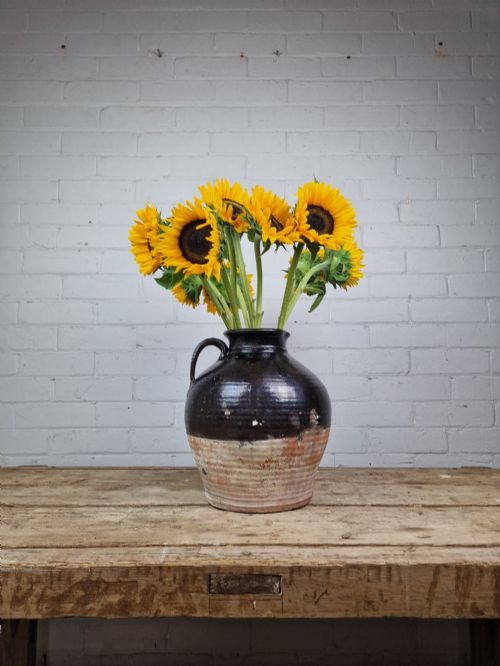
Place pitchers on open wooden shelving, dresser tops, or mantels where their earthy brown tones can contrast with neutral walls. Grouping pieces of varying heights creates a balanced display.
Ensure sturdy placement away from heavy traffic areas, particularly for heavier stoneware and ceramic vessels. Pairing them with complementary items like pewter or antique bowls enhances their historic character.