

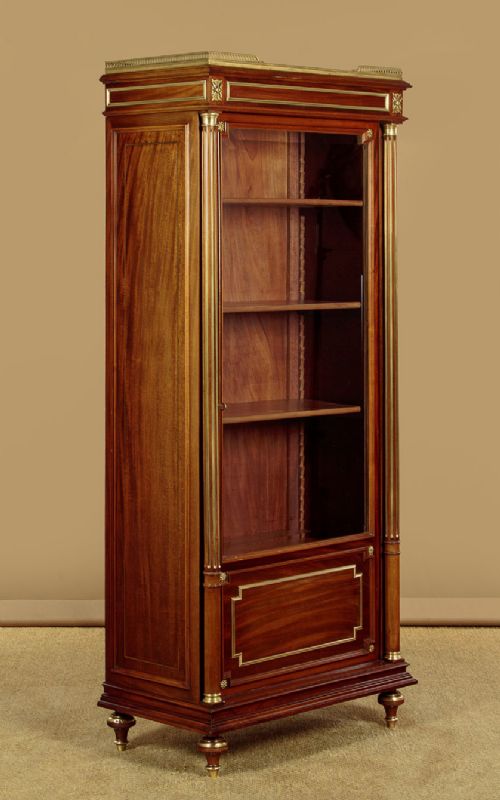
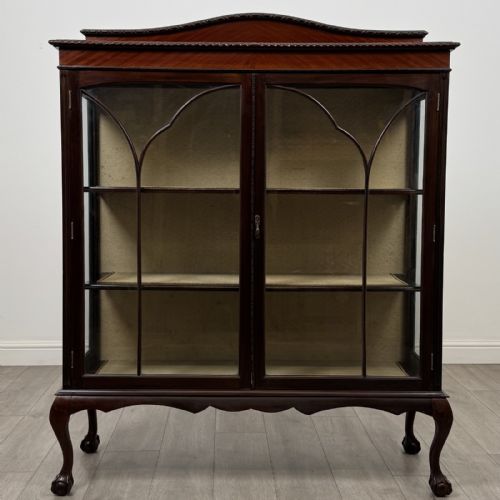
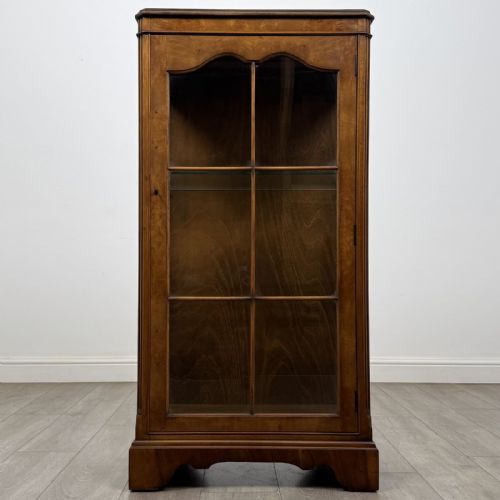
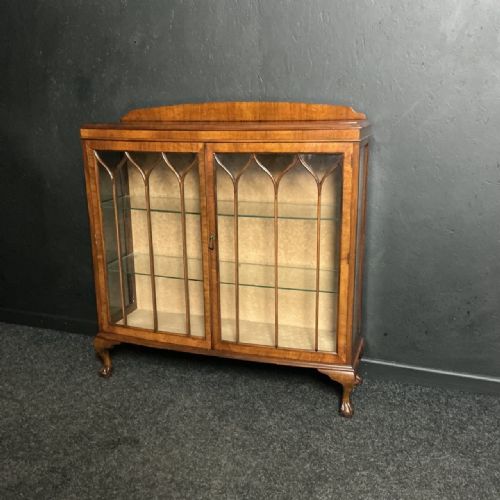
Brown Glass Vitrine
A brown glass vitrine holds small treasures behind glazed doors, bringing light and order to collections of porcelain and silver.
Brown Glass Vitrine
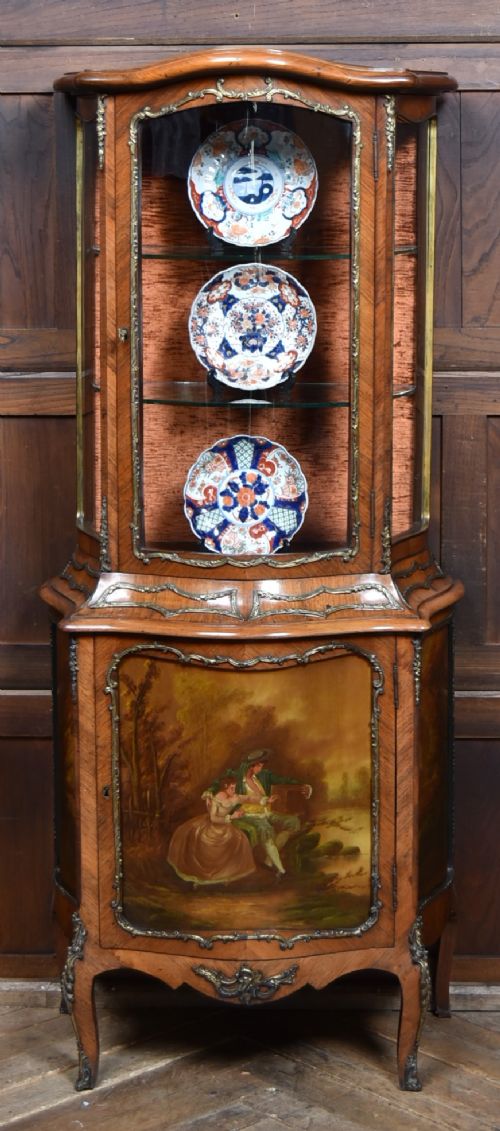
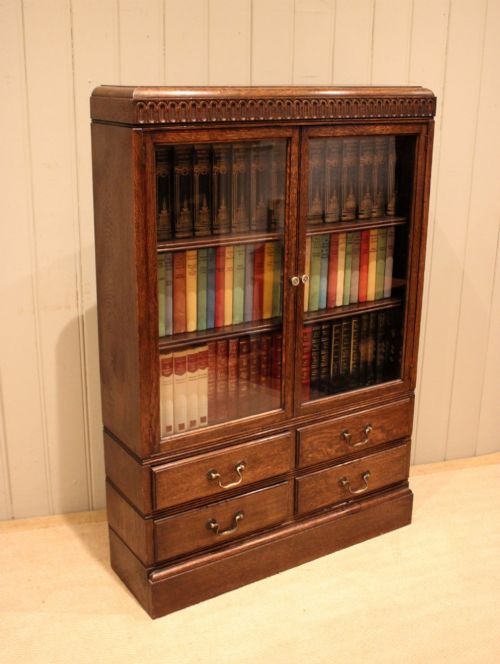
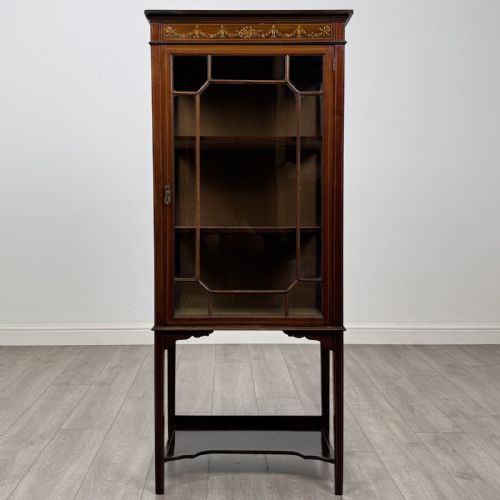
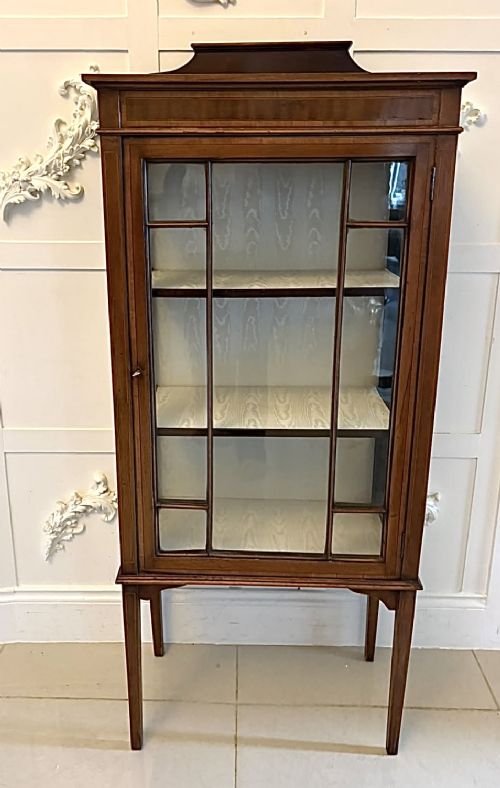
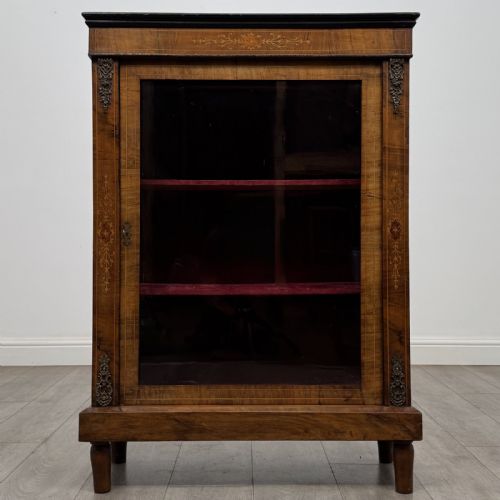
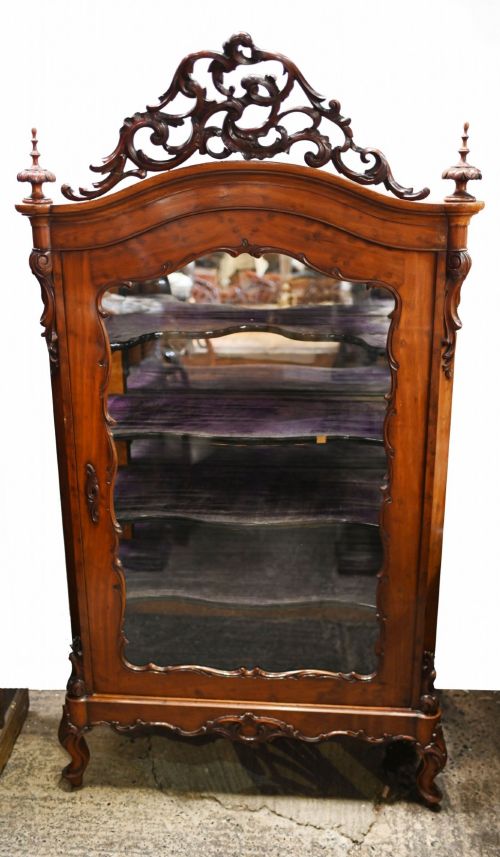
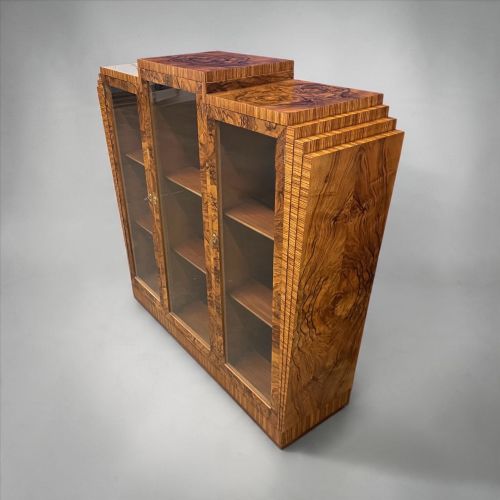
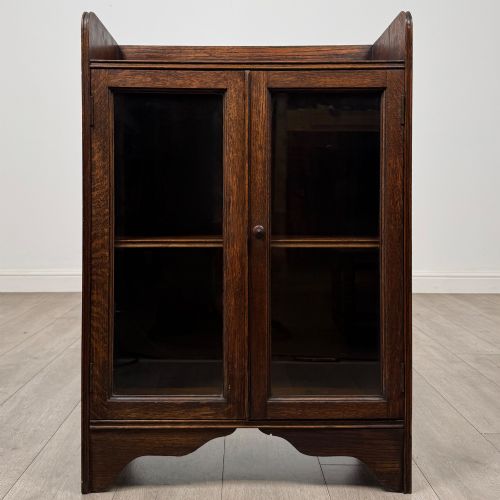
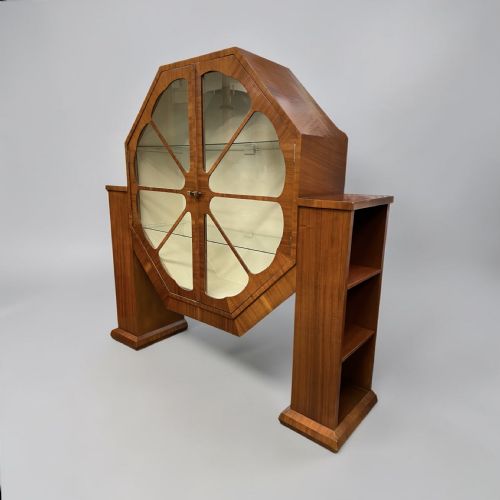
A brown glass vitrine typically appears in timber frames such as mahogany, walnut, oak, and satinwood, designed to exhibit ornaments while protecting them from dust.
The pieces listed here span the Edwardian period, the nineteenth century, and the nineteen-thirties, showing forms ranging from corner cabinets and bookcases to bijouterie tables.
Makers and workshops of the Edwardian era and the Victorian years dominate the selection, often employing revival styles including Sheraton and Louis XV.
Materials and construction
Cabinet makers utilised solid timbers and veneers, incorporating mahogany, walnut, and oak alongside decorative marquetry and inlay work.
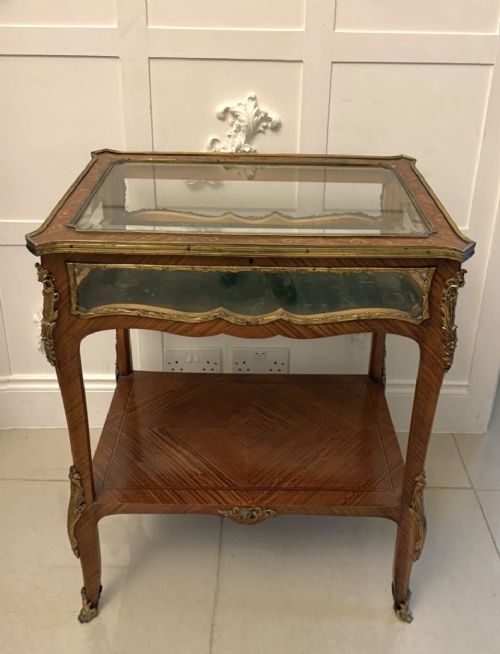
Glazing techniques secure glass panels within wooden frames, whilst brass mounts and ormolu provide structural and decorative accents on French and English examples.
Brown Glass Vitrine Retail Price Guide 2026
Typical asking prices for brown glass vitrine among the pieces listed under this phrase on Sellingantiques today, from the lower quarter to the upper quarter. They describe what is for sale here now, not the wider market.
Some nineteenth-century tables include lift-off glass trays so owners could hand round their rings and medals like hors d'oeuvres.
Distinguishing quality
The standard of a cabinet rests on the precision of its timber selection, such as figured mahogany or detailed marquetry, and the crispness of its carved or inlaid details.
Superior execution shows in the weight of the bronze or ormolu mounts, the smoothness of glazed door fittings, and the integrity of the original fabric linings.
Edwards & Roberts·Maple & Co.
The Brown Glass Vitrine Glossary
- Vitrine
- A glass-fronted cabinet designed for displaying fine objects and porcelain. The term derives from the French word for glass.
- Marquetry
- Decorative veneer patterns formed from pieces of wood, shell, or ivory fitted together. Craftsmen apply these to cabinet doors and cornices.
- Bijouterie
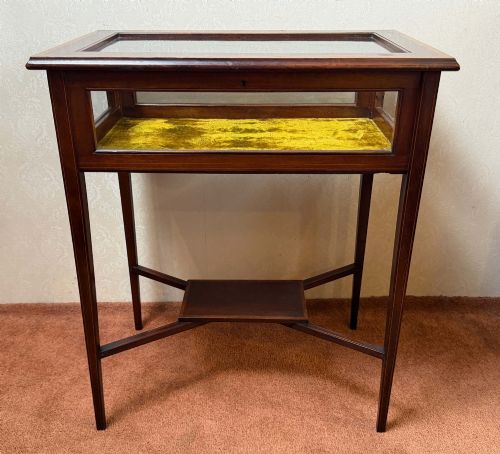
- Small decorative items and jewellery, housed in glass-topped display tables. These tables stand on slender legs to showcase contents from above.
- Astragal
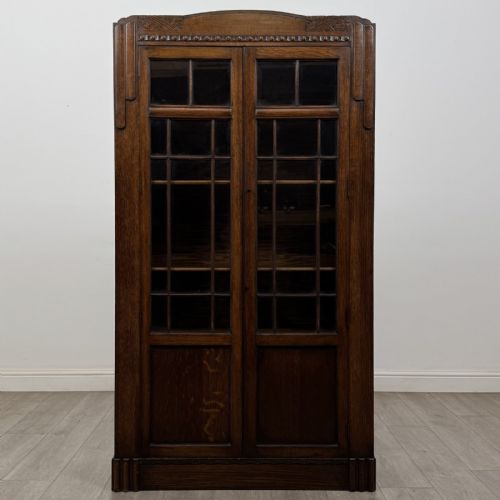
- A small moulding profile used to divide panes of glass within a glazed door. These bars create geometric patterns across the cabinet front.
- Ormolu
- Gilded bronze mounts applied to furniture. This technique is common on continental pieces from the nineteenth century.
Brown Glass Vitrine: Frequently Asked Questions
What is a brown glass vitrine used for?
These cabinets were built to house porcelain, glassware, and small ornaments where light could reach them.
Collectors use them today to keep dust away from delicate pieces while maintaining visibility in a room.
How do I identify an Edwardian vitrine?
Edwardian cabinets often feature light mahogany timbers, delicate stringing, and satinwood inlay motifs.
They frequently display classical revival influences from the Sheraton or Hepplewhite traditions.
Where should I place a corner cabinet?
Corner cabinets fit directly into the junction of two walls, making use of otherwise vacant room angles.
They work well in dining rooms or drawing rooms to display matched sets of tableware.
What is the difference between a bookcase and a vitrine?
Bookcases generally contain adjustable wooden shelves intended for holding bound volumes.
Vitrines emphasise glass panels on the sides as well as the front to illuminate objects from multiple angles.