


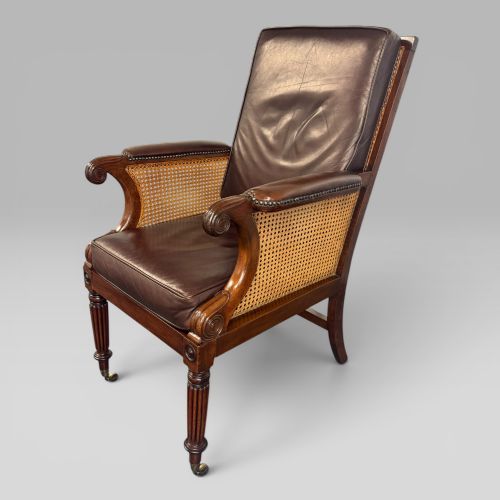
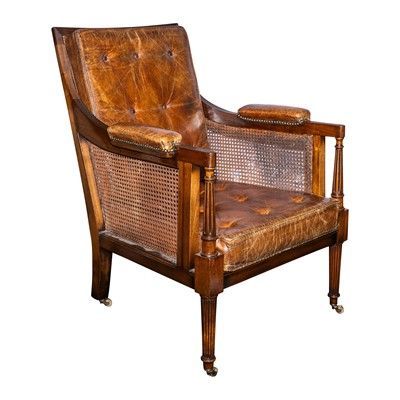
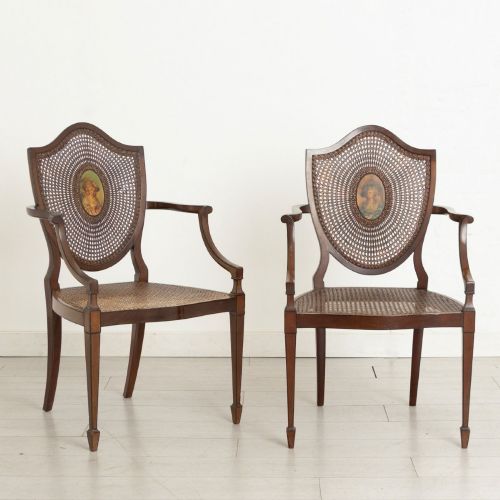
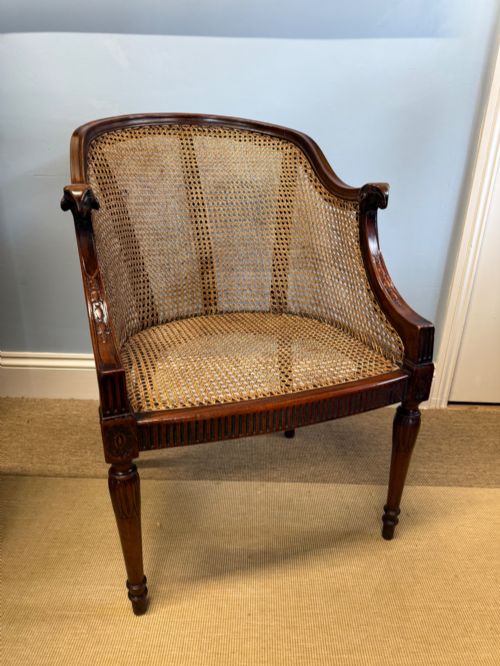

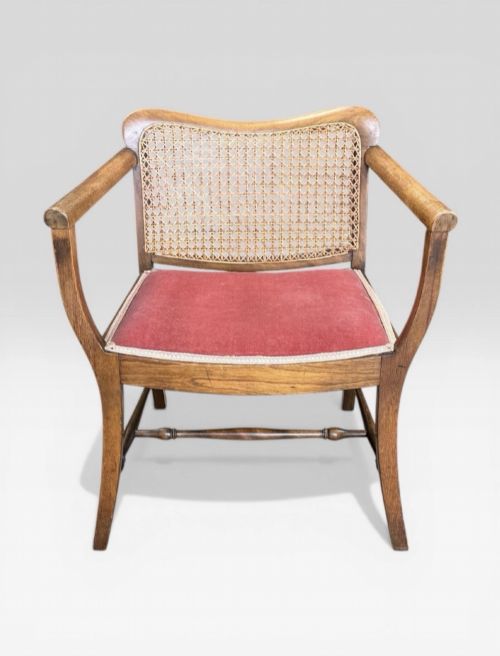
Brown Cane Armchair
A brown cane armchair is a seated piece combining timber framing with woven plant material that brings texture and practical comfort to a room.
Identifying the brown cane armchair
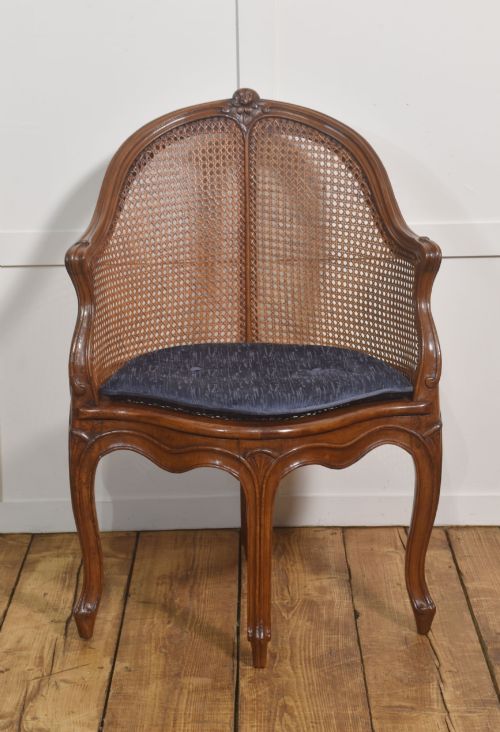
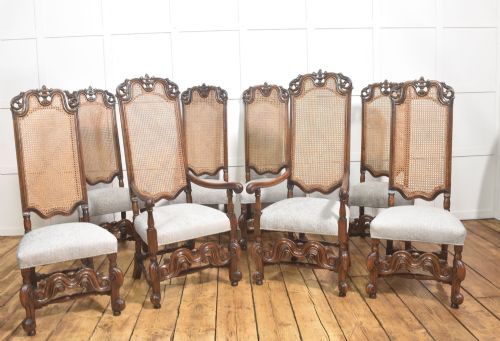
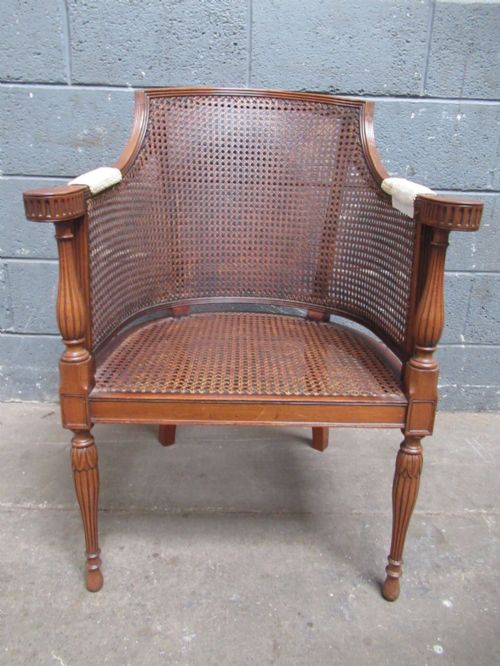
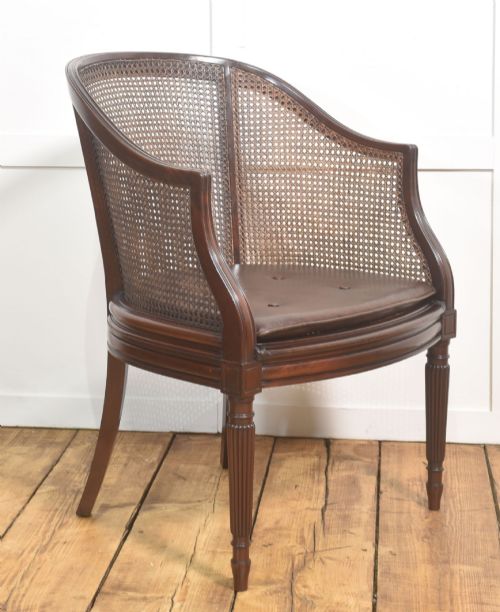
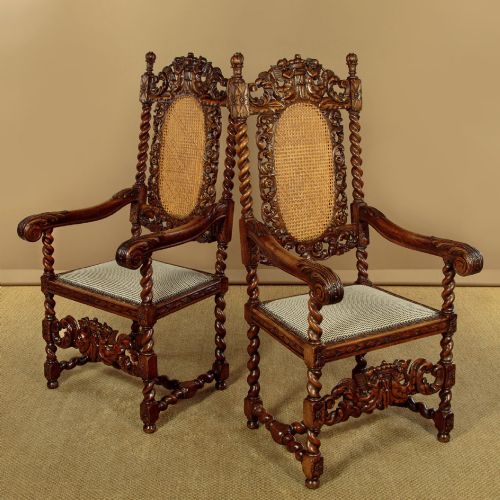
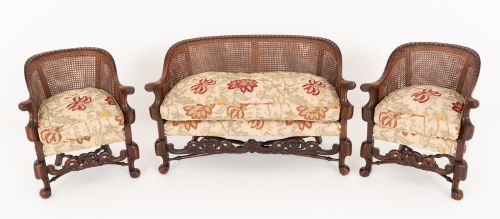
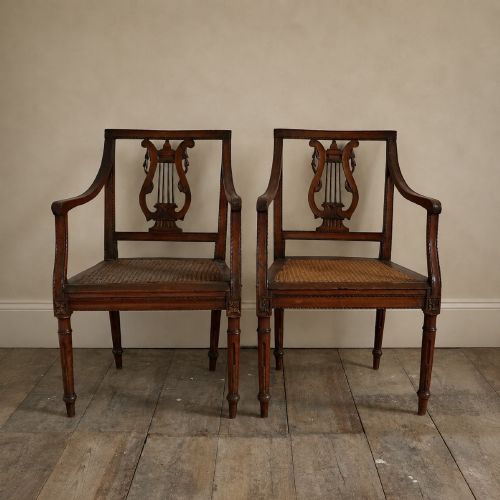
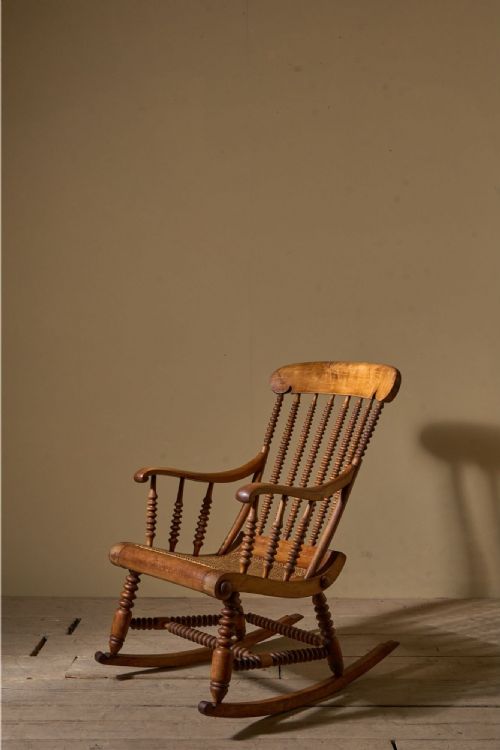
When you search for a brown cane armchair, you encounter seating forms spanning the Regency, Victorian, and nineteenth-century periods. The titles on this page show library armchairs, tub chairs, throne chairs, and rocking armchairs.
The wood framing appears in mahogany, walnut, oak, beech, and various finished timbers showing brown tones. The most frequent versions on this page are mahogany bergère library armchairs from the Regency period and nineteenth-century examples in walnut, beech, or oak.
Makers drew on French Louis XV, Jacobean Revival, Regency, and Victorian styles to shape these brown cane armchairs. They function as reading chairs, library seats, and occasional chairs that combine timber structures with woven cane panels.
Materials and construction
Frames are constructed from solid hardwoods such as mahogany, walnut, oak, and beech, sometimes incorporating brass fittings or fabric elements. These timbers provide the structural skeleton for the seat, back, and arm supports.
Cane panels are hand-woven into the wooden channels of the chair frames to form supportive backrests and seat bases. This technique creates a resilient, breathable surface that requires structural joinery in the surrounding timber.
Retail Price Guide 2026
Typical UK retail prices for brown cane armchair, calculated from the Sellingantiques database of over a million retail prices indexed since 2003. This retail price guide relies exclusively on Sellingantiques data; no external sources or auction records are used, so the figures do not describe the wider market.
Some nineteenth-century makers mounted these brown cane frames on rockers, ensuring that your library chair can also double as a gentle nursery seat.
Assessing quality and character
Quality rests in the crispness of the timber carving and the tightness of the cane weaving across the frame. Finer examples show refined joinery in woods like mahogany and walnut, while simpler pieces utilise beech or oak.
Proportion and stylistic integrity separate standard utility seating from ambitious cabinetmaker pieces. The distinction lies in how cleanly the French Louis XV, Jacobean Revival, or Regency style is executed in the wood and cane.
The Brown Cane Armchair Glossary
- Bergère
- An enclosed upholstered armchair with wooden framing, often featuring cane work on the back and sides. This French seating form became popular in Britain during the Regency period.
- Cane
- Woven material made from the peeled bark of rattan palms. It provides a flexible, supportive surface for chair backs and seats.
- Tub chair
- An upholstered armchair with a continuous curved back and arms forming a low, rounded enclosure. It offers compact seating supported by a timber frame.
- Regency
- A British design period spanning the early nineteenth century, characterised by classical restraint and revival styles. Furniture from this era often utilises mahogany and neat proportions.
Frequently Asked Questions
What is a bergere armchair?
A bergère is an enclosed armchair with wooden framing and woven cane panels on the back or sides. It originated as a French seating form that gained popularity in British libraries during the Regency period.
The style provides a deep, comfortable seat supported by a rigid timber skeleton, making it suitable for reading rooms and formal studies.
How do I date a cane armchair?
Dating relies on identifying the timber species, framing style, and structural characteristics recorded in the piece. Regency pieces often feature mahogany and classical lines, while nineteenth-century variants adopt Jacobean Revival or French Louis XV details.
Changes in turning, joinery methods, and wood preparation help distinguish nineteenth-century production from earlier Regency work.
Where should I place a brown cane armchair?
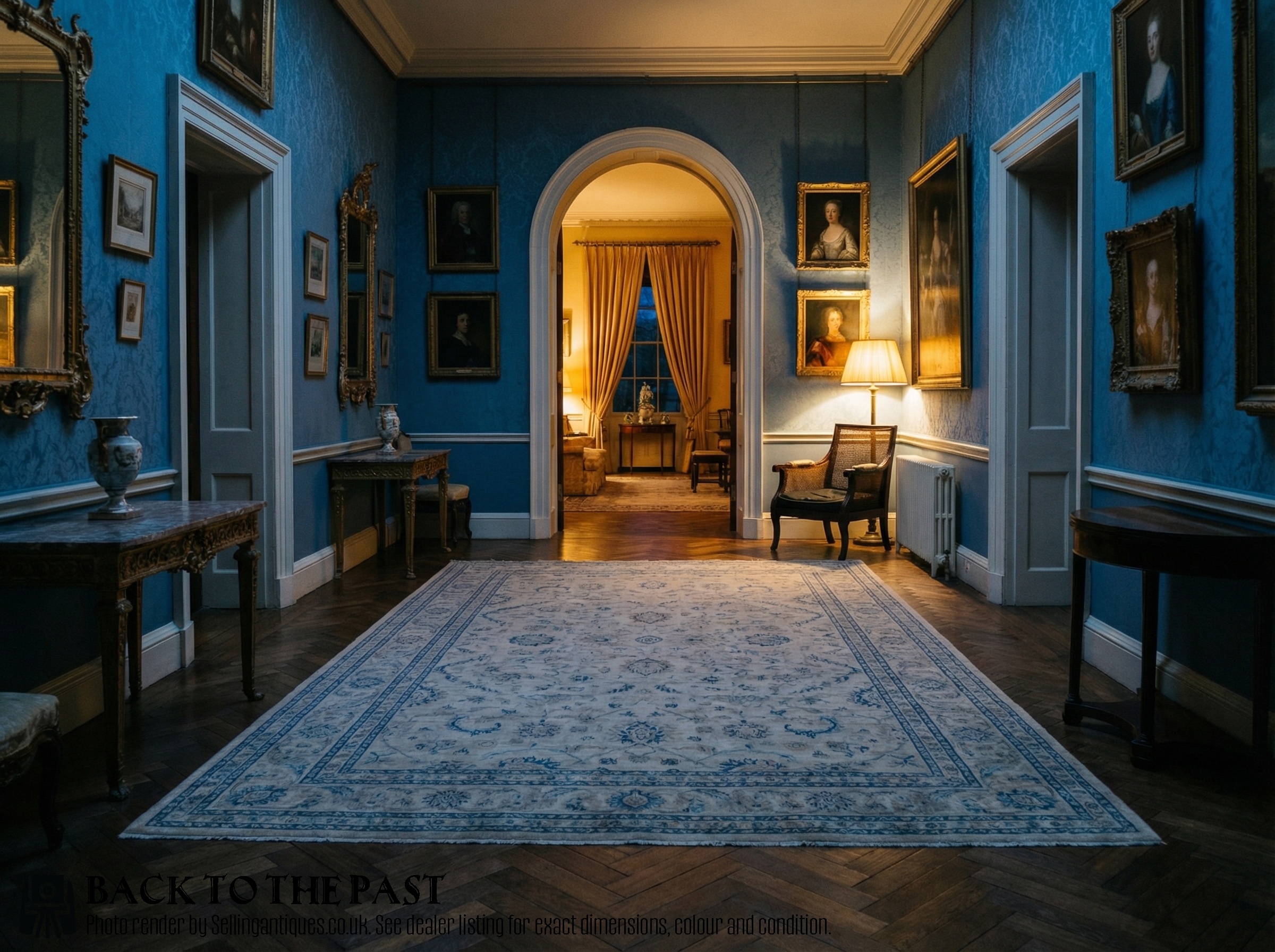
These armchairs suit studies, libraries, and living spaces where their brown timber tones and woven cane textures complement interior woodwork. Library armchairs work well beside desks or bookshelves.
Rocking chair variants and tub chairs fit comfortably into corners or bedrooms, providing functional seating without dominating the room.
How do I care for cane seating?
Cane requires moderate humidity to prevent the plant material from drying out and snapping under pressure. Regular dusting keeps the woven panels clear of grit that can weaken the strands.
Avoid placing these chairs directly next to intense heat sources, which can cause the timber frames and cane panels to warp or split.