

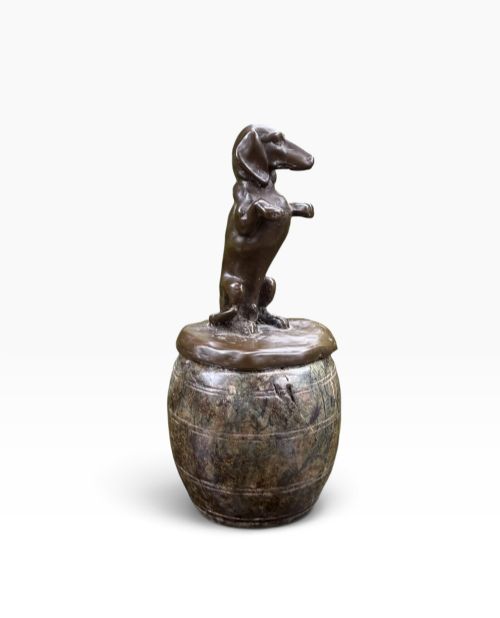
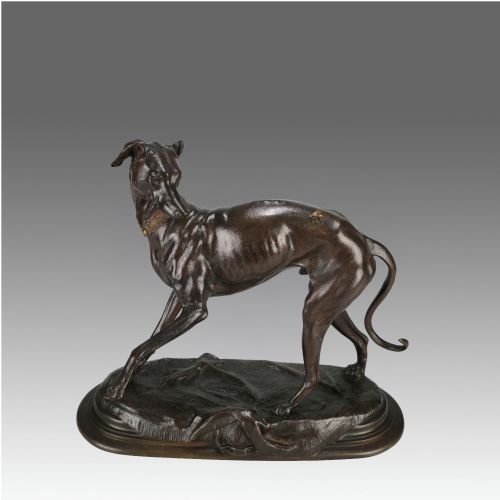
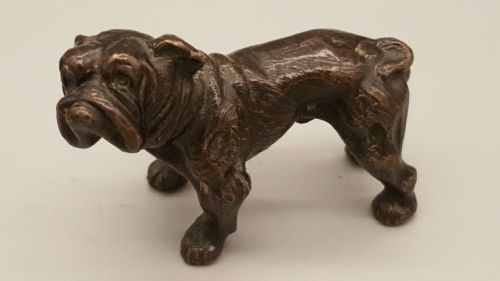


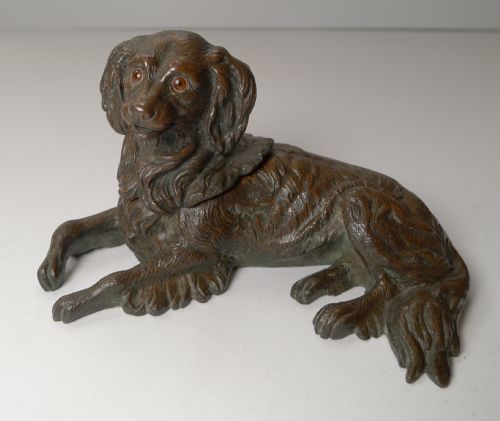


Bronze Dog Desk Ornament
A bronze dog desk ornament brings character and utility to a workspace, combining animalier sculpture with practical desktop items.
Bronze Dog Desk Ornament
A bronze dog desk ornament serves as a functional desktop accessory or a decorative desk sculpture. You will find items that double as paper clips, paperweights, inkwells, and desk tidies.
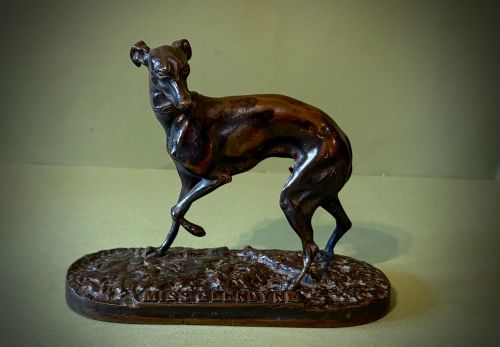
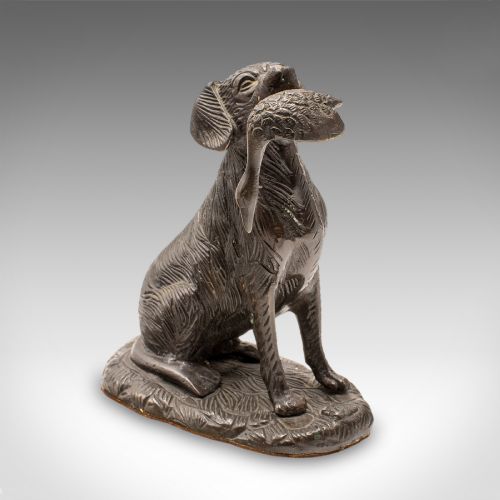
The selections span the Victorian, Edwardian, and Art Deco periods, drawing from French animalier, Austrian cold-painted, and Viennese traditions. Figures range from greyhounds and terriers to pugs and bulldogs.
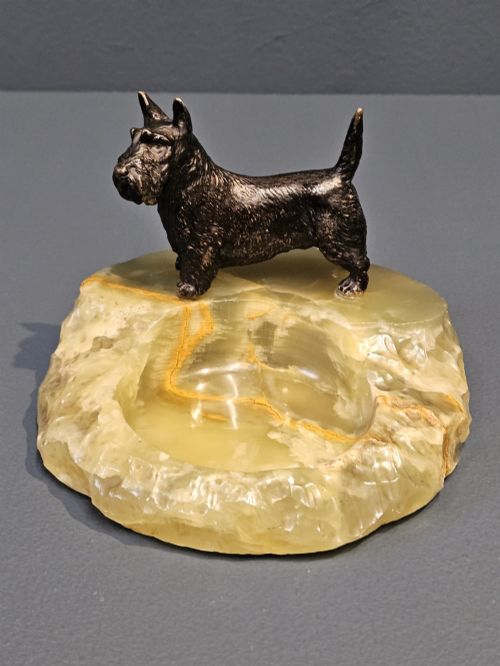
Many items mount the cast metal directly onto bases of marble, onyx, or timber, anchoring the sculptural weight for daily office use.
How they were made
Foundry workers cast these figures in bronze or spelter, often applying a dark patination or hand-applied cold paint to render realistic coats. Paintwork requires careful touch to survive decades of handling.
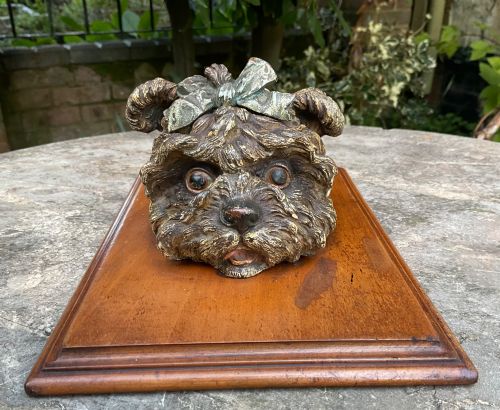
Artisans combined the metal castings with carved blocks of marble, onyx, glass, and timber to form inkwells, desk tidies, and paper clip mounts.
Bronze Dog Desk Ornament Retail Price Guide 2026
Typical asking prices for bronze dog desk ornament among the pieces listed under this phrase on Sellingantiques today, from the lower quarter to the upper quarter. They describe what is for sale here now, not the wider market.
Listings feature works from the 19th Century, Edwardian era, and Art Deco period, utilising bronze, marble, onyx, and timber.
What varies in quality
Fidelity of anatomical detail and expressiveness separate standard castings from masterworks. The precision in fur texture, muscle definition, and posture dictates the sculptural merit.
The preservation of original cold paint and the integration of functional elements, such as hinged inkwell lids or secure paper clip springs, determine the grade of the piece.
Alfred Barye·Edith Parsons·Arthur Waagen·P de Soete·Joseph Francois Victor Chemin·Franze Bergman·Barbedienne
The Bronze Dog Desk Ornament Glossary
- Animalier
- A nineteenth-century artistic movement focused on the realistic portrayal of animals. Sculptors in this tradition studied anatomy closely to capture creatures in motion or repose.
- Cold-painted bronze
- A technique where bronze figures are painted with polychrome oil paints without firing in a kiln. This finish is delicate and prone to chipping if handled roughly.
- Patination
- The chemical treatment applied to the bronze surface to alter its colour and tone. A rich patina develops depth and character through age and handling.
- Inkwell
- A small container for holding ink, fitted with a lid and housed on a desk stand. Many examples integrate a sculpted dog figure beside or upon the ink reservoir.
- Desk tidy
- A compartmentalised desk accessory used to organise stationery and letters. Often decorated with figural metal ornaments.
Bronze Dog Desk Ornament: Frequently Asked Questions
What is a cold-painted bronze dog?
A cold-painted bronze is a metal casting decorated with non-fired oil paint to depict realistic animal colours. This technique gained popularity in Austrian workshops.
Over time, handling can cause the painted surface to wear, making well-preserved examples particularly sought after by collectors.
How were dog inkwells used?
These desk accessories held liquid ink for dip pens, with the dog figure acting as a sculptural lid or base ornament. Secretaries and writers dipped their nibs directly into the reservoir.
The heavy bronze and marble construction kept the inkwell stable on busy writing tables.
Are these desk ornaments purely decorative?
While many function simply as paperweights or shelf figures, a large portion served practical roles. They functioned as paper clips, pen trays, inkwells, and desk tidies.
Victorian and Edwardian writing desks relied on these heavy items to organise correspondence.
How do I date a bronze dog figure?
Dating relies on stylistic clues, such as the geometric lines of Art Deco pieces versus the ornate realism of Victorian animalier work. Materials like marble bases and cold-painted finishes also point to specific eras.
Signatures from known founders or sculptors help place pieces within active nineteenth and early twentieth-century workshop dates.