


Antique Bronze Hound
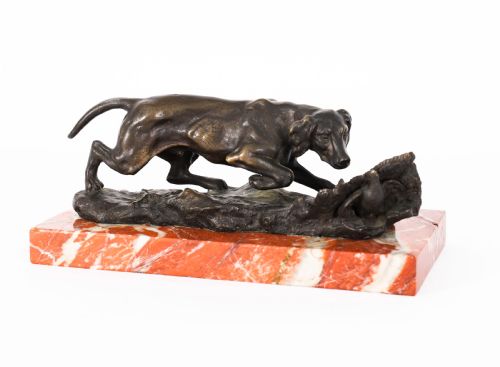
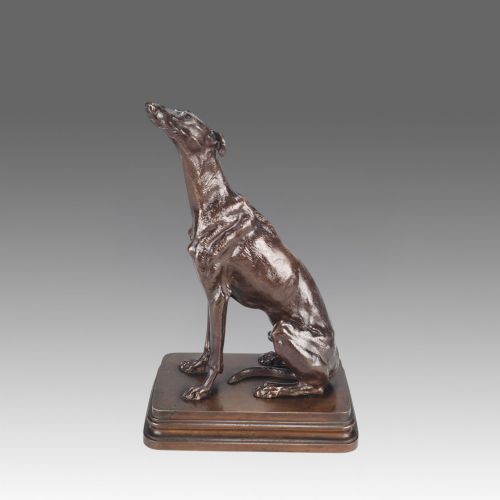
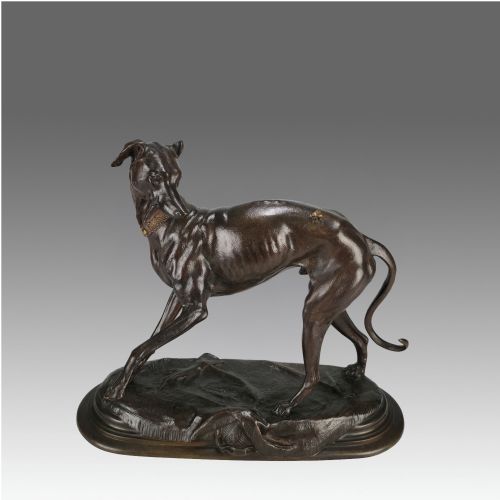
An antique bronze hound captures the tense focus and muscular grace of the animal, translating the energy of the field into cast metal.
Antique Bronze Hound
An antique bronze hound brings together the distinct forms of greyhounds, bassets, setters, and borzois captured in sculptural casts. When searching for an antique bronze hound, buyers encounter pieces originating primarily from nineteenth-century France and England, alongside twentieth-century Art Deco interpretations.
The selections range from single resting or seated figures mounted on marble bases to complex hunting groups involving birds, prey, or human figures. Many pieces function purely as sculptural desk ornaments, while others incorporate utility through inkwells, pen trays, and letter openers.
How They Were Made
The primary material is cast bronze, frequently complemented by patinated finishes, gilt accents, or ormolu mounts to highlight texture and musculature. Many works utilise heavy marble or onyx plinths to ground the dynamic forms of leaping or seated dogs.
Makers employed the lost-wax casting method or sand casting techniques, followed by meticulous hand-chasing to define fur, collars, and facial expressions. Alternative compositions substitute spelter or cast iron for bronze, particularly within later decorative groupings.
Several hounds keep watch over game birds or chase elusive balls across their marble bases.
What Varies in Quality
The fidelity of the cast determines the sharpness of anatomical details such as taut tendons, rippling skin, and individual hairs. Superior examples retain crisp finishing from the chaser's tools rather than relying on heavy patination to mask softened edges.
The quality of the secondary base materials, including polished multi-coloured marble or fitted ormolu details, indicates the overall ambition of the atelier. The integration of functional elements like hinged inkwells or desk clips demonstrates precision in mechanical assembly.
Carl Kauba·Alfred Dubucand·Alfred Barye·Pierre Jules Mene·Auguste Nicholas Cain·Arthur Waagen·Geo Maxim·Antoine Louis Barye·Joseph Francois Victor Chemin·Christophe Fratin·John Willis Good·Nikolai Lieberich·Francisque Joseph Duret
The Antique Bronze Hound Glossary
- Animalier
- A nineteenth-century artistic movement focused on the realistic depiction of animals, particularly in sculpture. Practitioners studied live subjects at menageries to achieve precise anatomical movement.
- Patinated Bronze
- Metal treated with chemical solutions to produce a specific surface colour and tone. This process enhances depth and protects the underlying alloy.
- Ormolu
- Gilded bronze used as an ornamental mount or decorative accent. The technique involves applying a mercury-gold amalgam to the metal surface.
- Spelter
- A zinc alloy commonly used as an economical alternative to bronze. It accepts metallic finishes but possesses a lighter weight and softer density.
Antique Bronze Hound: Frequently Asked Questions
How do I identify French animalier bronzes?
French animalier bronzes typically display foundry stamps or artist signatures along the naturalistic base. The casting quality reveals sharp anatomical precision characteristic of nineteenth-century Parisian foundries.
Examining the underside often uncovers threaded bolts or casting marks consistent with period manufacturing methods.
Were these hounds meant for desks or displays?
Many sculptures served dual purposes as decorative desk accessories, housing inkwells, pen trays, or letter openers within the composition. Others remained purely artistic table sculptures designed to display sculptural mastery.
The inclusion of functional hardware determines whether a piece belonged in a study or a formal antechamber.
What is the difference between bronze and spelter?
Bronze is a heavy copper alloy capable of holding exceptionally sharp chased details and deep patination. Spelter is a softer, lighter zinc-based metal that mimics bronze appearance but lacks the same structural durability.
A magnet fails to stick to either material, but the weight and coldness to the touch typically distinguish bronze from spelter.
How should I clean an antique bronze hound?
Dusting with a soft, dry brush removes surface particles without disturbing the underlying patina. Avoid applying chemical polishes, oils, or water, as these can strip away the historical finish built up over decades.
Preserving the original surface maintains both the aesthetic depth and the historical integrity of the piece.