



Greyhound Dog Ornament
A greyhound dog ornament captures the lean elegance of the breed in bronze, porcelain, and Staffordshire pottery across the nineteenth and twentieth centuries.
Greyhound Dog Ornament
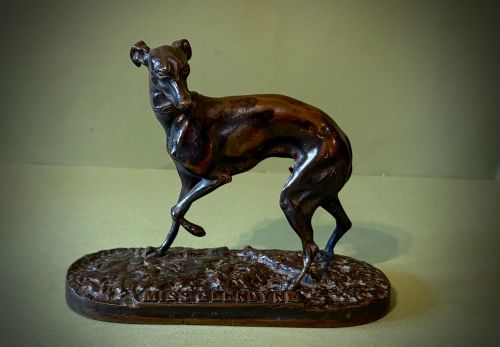
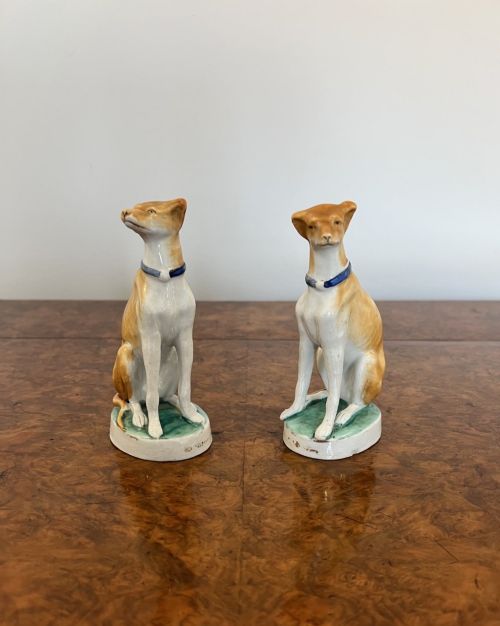
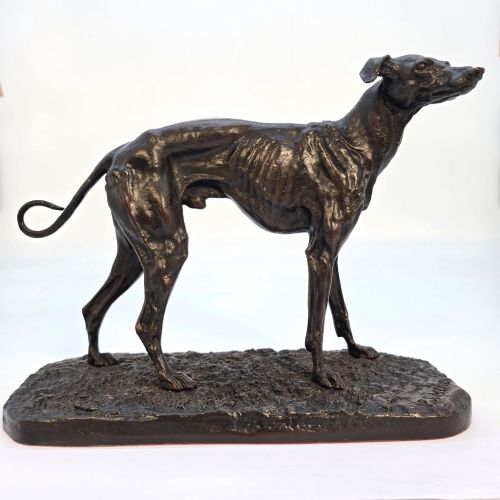
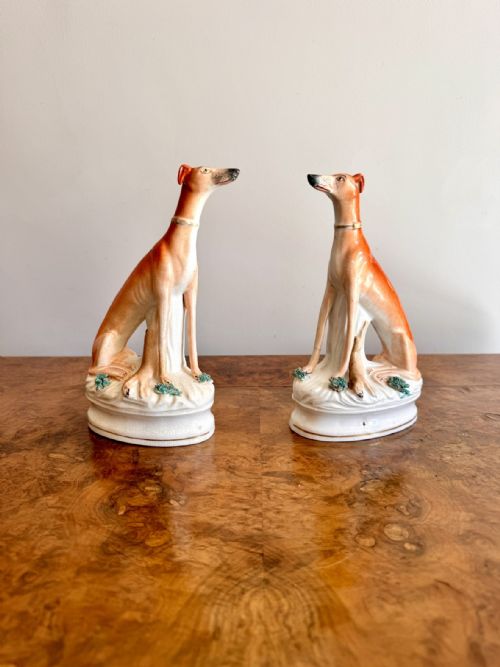
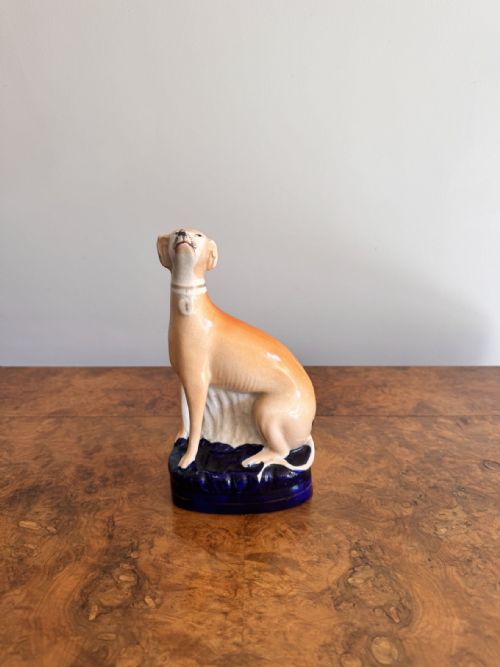
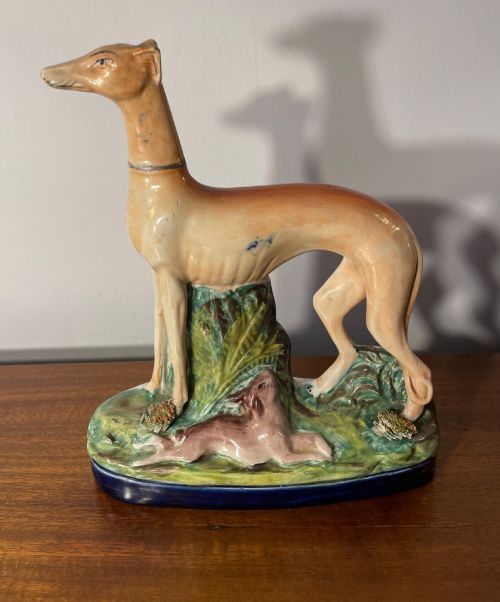
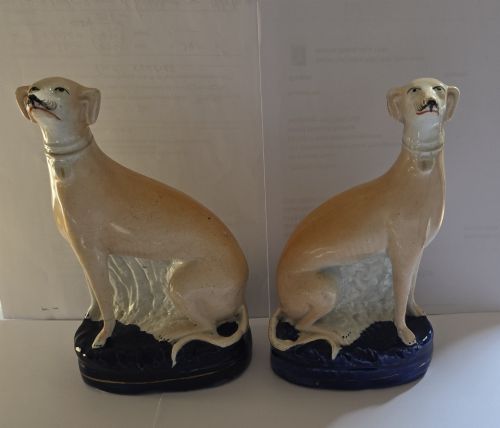
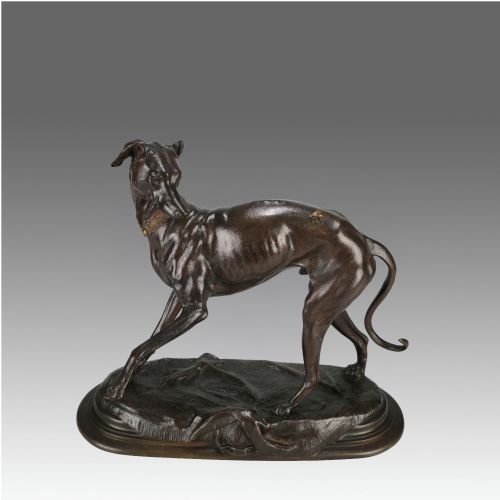
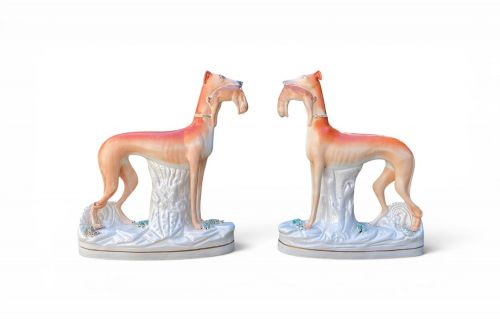
A greyhound dog ornament appears in various forms, most commonly as nineteenth century Victorian Staffordshire pottery figures and French animalier bronzes. Buyers encounter seated pairs, quill holders, and hunting hounds with hares alongside twentieth century Art Deco metal mascots.
The selection ranges from country pottery figures to signed bronzes by makers such as P. J. Mène and Alfred Barye. These decorative ornaments served as mantelpiece figures, desk paperweights, and automotive mascots.
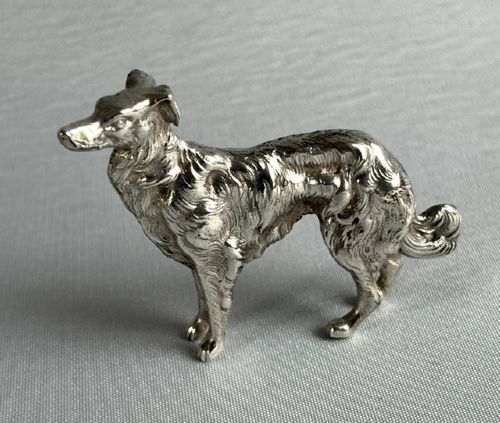
Victorian Staffordshire examples often feature lead glaze, enamel paint, and gold leaf detailing on earthenware bodies. Later twentieth century pieces bring cast silver and cold-painted bronze into the category.
How they were made
Staffordshire pottery figures are shaped from earthenware and finished with lead glaze and enamel paint, occasionally incorporating gold leaf highlights. Potters moulded these dogs in pairs or as single seated figures.
Bronzes are produced using the lost-wax casting method, capturing musculature and fur in fine detail. French animalier sculptors and later Art Deco makers applied patination and chasing to finish the metal surface.
Porcelain and ceramic versions undergo high-temperature kiln firing under protective glazes. Silver and cast iron examples demonstrate alternative metalworking traditions applied to animal subjects.
Greyhound Dog Ornament Retail Price Guide 2026
Typical asking prices for greyhound dog ornament among the pieces listed under this phrase on Sellingantiques today, from the lower quarter to the upper quarter. They describe what is for sale here now, not the wider market.
Some nineteenth-century greyhounds doubled as quill holders, keeping a writer's desk tidy with a hunting hound.
What varies in quality
Quality rests in the anatomical accuracy of the carving or casting and the crispness of the surface detail. Finer bronzes retain sharp muscle definition and subtle patination, whereas lesser castings lose texture.
In pottery and porcelain, the clarity of the enamel painting and the smoothness of the glaze determine the standard. Signed works by documented makers command greater interest than unsigned or generic factory output.
Berthold Muller·P. J. Mène·Alfred Barye·Pierre Jules Mene·Thomas Parr·Louis Lejeune·Joseph Francois Victor Chemin
The Greyhound Dog Ornament Glossary
- Animalier
- A nineteenth-century French artistic movement focusing on realistic depictions of animals, particularly predators and hounds. Sculptors in this tradition studied anatomy from life.
- Staffordshire pottery
- Earthenware figures produced in the pottery districts of England during the Victorian era. These decorative ornaments frequently depict dogs, lions, and pastoral scenes.
- Lead glaze
- A glossy coating containing lead oxide applied to earthenware before firing. It creates a smooth, waterproof surface that enhances the underlying colours.
- Patina
- The surface sheen and colour developed on bronze through age and chemical treatment. A good patinated finish highlights the underlying metal sculpture.
- Quill holder
- A desk accessory featuring a hollow base or attached trough designed to hold writing feathers. Greyhound figures were frequently adapted for this functional purpose.
Greyhound Dog Ornament: Frequently Asked Questions
How do I date a Staffordshire greyhound?
Examine the glaze, weight of the earthenware body, and hand-painted enamel details. Nineteenth-century pieces typically show craquelure and softer colour application.
Compare the moulding style to documented pairs from the Victorian period. Maker attributions often rely on base markings and characteristic clay bodies.
What is an animalier bronze?
An animalier bronze is a nineteenth-century sculpture focusing on realistic animal forms. These works were cast in workshops using traditional foundry methods.
Artists studied live subjects in menageries to achieve precise anatomical proportions in their hound figures.
Where were these dog ornaments displayed?
Victorian Staffordshire greyhounds traditionally stood upon mantelpieces in pairs. Smaller bronze figures functioned as desk paperweights.
Automotive versions served as radiator mascots on vehicles during the Art Deco era.
Are these figures made of porcelain or pottery?
The listings include both porous earthenware pottery and vitrified porcelain. Earthenware pieces usually feature lead glaze and enamel paint.
Porcelain figures undergo higher kiln temperatures, resulting in a denser, non-porous white body beneath the glaze.