

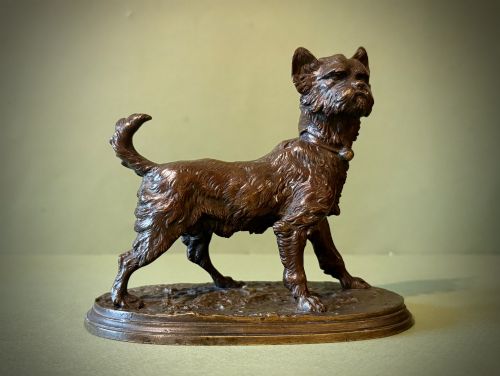
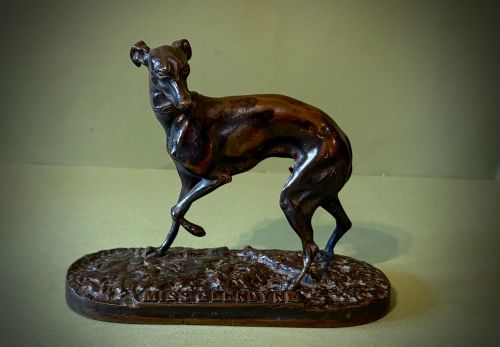
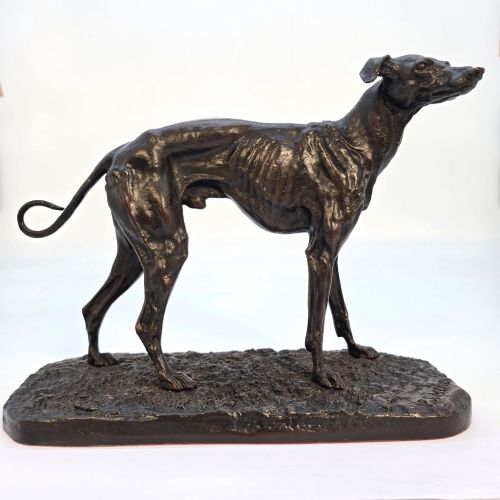

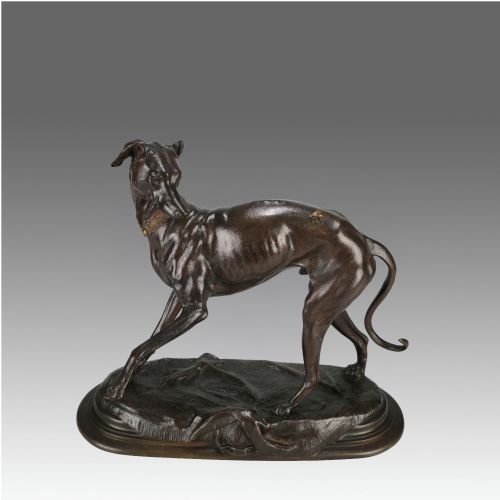
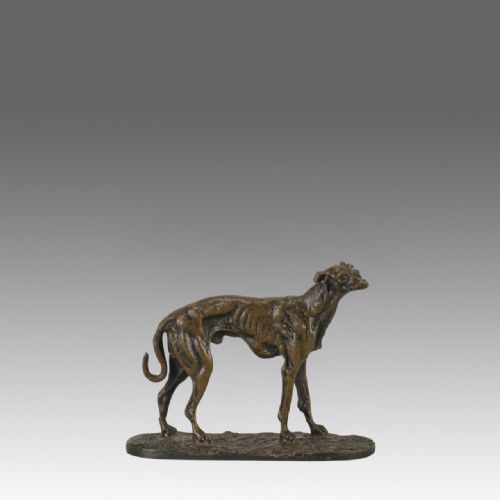


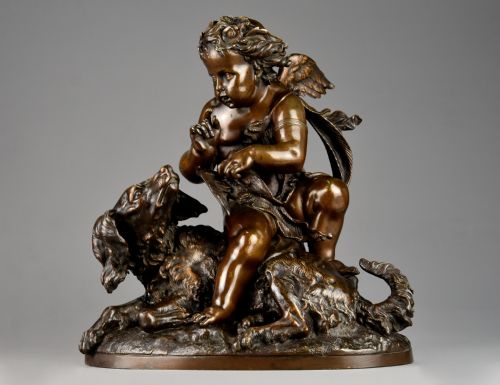


French Bronze Dog Statue
When you search for a french bronze dog statue, you enter the nineteenth-century world of animalier sculpture and its sharp realism.
French Bronze Dog Statue
A french bronze dog statue represents canine subjects cast in metal during the nineteenth and early twentieth centuries. These works emerge from the French animalier tradition, capturing terriers, greyhounds, setters and spaniels in natural poses. They appear as standalone figures, paperweights or bookends mounted on stone bases.
Most pieces date from the Victorian era up to the nineteen-thirties, spanning periods from nineteenth century naturalism to art deco abstraction. The subjects range from solitary hounds with game to multi-figure groups involving children or winged putti. Founders and sculptors rendered these animals to reflect precise anatomical study and spirited movement.
Materials and Casting Methods
Sculptors utilised bronze alongside patinated metal, spelter and ormolu, often mounting the finished metal figures upon heavy bases of marble, onyx or alabaster. Surface treatment involved chemical patination to achieve deep brown or green tones, while certain pieces received cold-painted polychrome finishes.
Foundries employed traditional lost-wax or sand casting methods to capture fine fur textures, muscular tension and accessories like balls or prey. Signatures, foundry marks and titles frequently appear cast directly into the metal or inscribed upon the base.
French Bronze Dog Statue Retail Price Guide 2026
Typical asking prices for french bronze dog statue among the pieces listed under this phrase on Sellingantiques today, from the lower quarter to the upper quarter. They describe what is for sale here now, not the wider market.
Several bronze greyhounds share their tabletop domains with tiny flies, balls and hunted birds.
Evaluating the Castings
Quality rests upon the crispness of the chase work, where artisans hand-tooled the raw metal after casting to define eyes, claws and individual hairs. A superior cast retains dynamic anatomical accuracy without softness in the musculature or blurring around the paws.
The choice of base material and the harmony between metal figure and stone mount distinguish workshop standards. Signatures of recognised animalier sculptors or documented foundry cachets elevate the standing of a piece within the genre.
P. J. Mène·Alfred Barye·Jules Moigniez·Louis Riché·Antoine Louis Barye·Christophe Fratin
The French Bronze Dog Statue Glossary
- Animalier
- A nineteenth-century artistic movement focused on the realistic portrayal of animals, particularly predators and domestic dogs in active poses.
- Patinated Bronze
- A bronze sculpture treated with chemical solutions to produce a specific surface colour and tone, protecting the underlying metal.
- Spelter
- A zinc-based alloy commonly utilised as a substitute for bronze during the late nineteenth and early twentieth centuries, particularly in art deco production.
- Ormolu
- Gilt bronze produced by applying a finely ground gold-mercury amalgam to metal objects, creating a rich golden surface layer.
French Bronze Dog Statue: Frequently Asked Questions
What is an animalier bronze?
An animalier bronze is a nineteenth-century sculpture focused on realistic depictions of animals, particularly dogs, horses and wildlife in motion. These pieces gained widespread popularity across Europe for their accurate anatomy and lively character.
Sculptors studied live animals in menageries and domestic settings to capture authentic postures, translating their observations into durable metal casts that functioned as decorative desk objects and mantel sculptures.
How do I identify a speller piece from bronze?
Spelter is a softer zinc alloy that feels lighter than bronze and often shows a greyish metal beneath worn areas of paint or patination. Bronze maintains a heavier weight, a resonant feel and greater durability.
Many spelter pieces date from the art deco era and rely on applied polychrome finishes rather than chemical bronze patinas to achieve their decorative surface colour.
Why are marble bases used on these statues?
Marble, onyx and alabaster bases provide structural stability for heavy metal sculptures while offering a clean architectural contrast to the dark patinated animal figures. They ground the composition visually and protect furniture surfaces.
During the Victorian and art deco periods, stone bases became standard for animalier studies, bookends and figural groups to anchor the dynamic weight of the cast metal.
How should I clean my bronze dog statue?
Cleaning requires only a soft, dry cloth to remove dust from crevices and textured fur. Avoid using commercial metal polishes, water or chemical cleaners that strip the original patina.
Maintaining the piece in a stable environment away from high humidity preserves the chemical finish applied by the nineteenth-century foundry.