

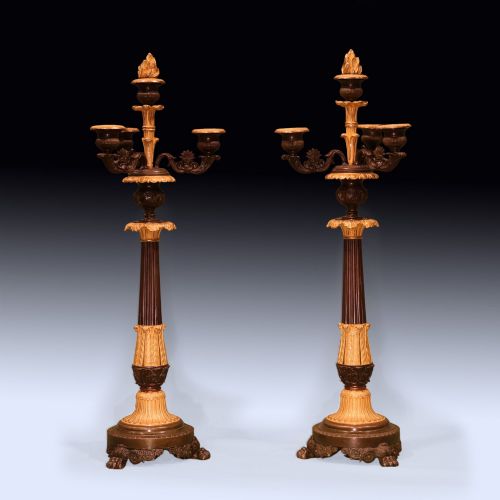
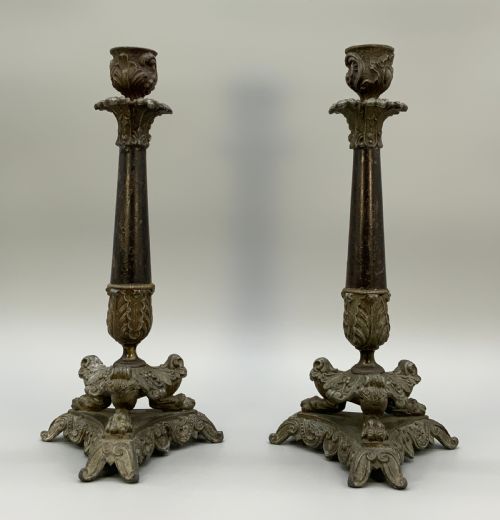
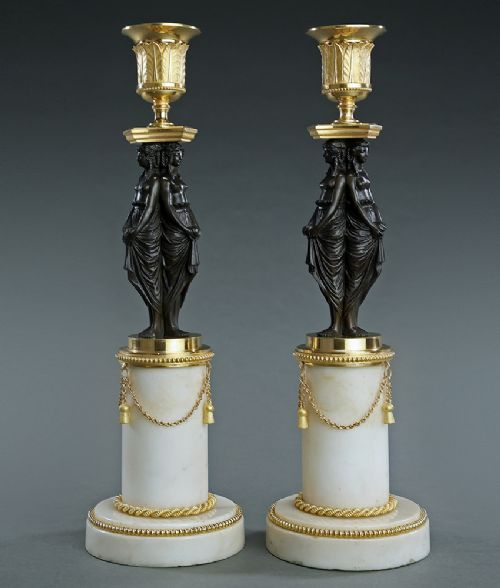
Bronze Candlestick Holders
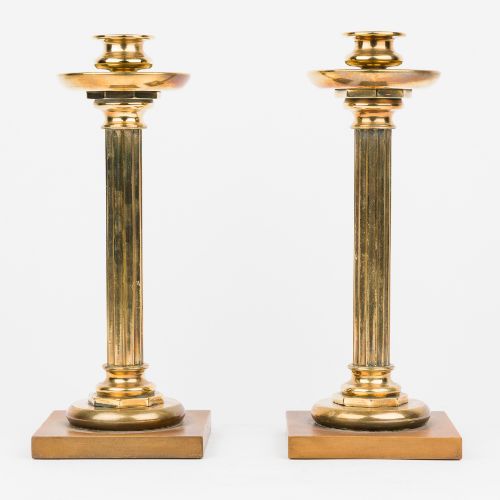
Bronze candlestick holders bring sculptural weight and warm metallic gleam to a room, ranging from austere Regency designs to ornate French gilt creations.
Bronze Candlestick Holders
Bronze candlestick holders encompass everything from simple single sconces to elaborate multi-branch candelabra designed for dining tables and mantelpieces. When searching for bronze candlestick holders, buyers encounter a strong representation of nineteenth-century French and English manufacture, alongside decorative Continental and Japanese examples.
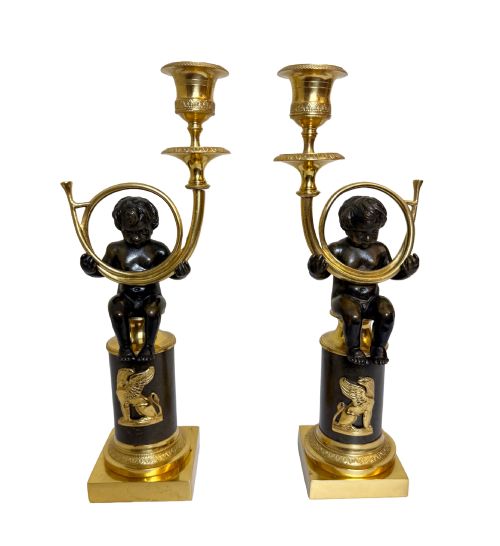
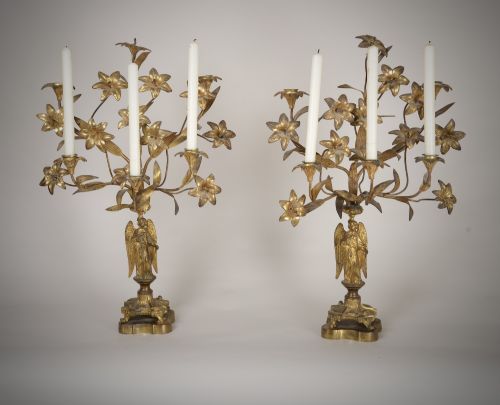
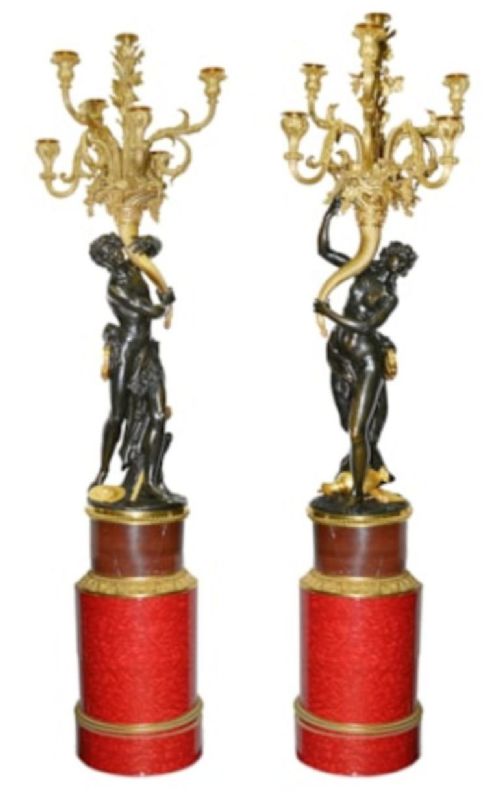
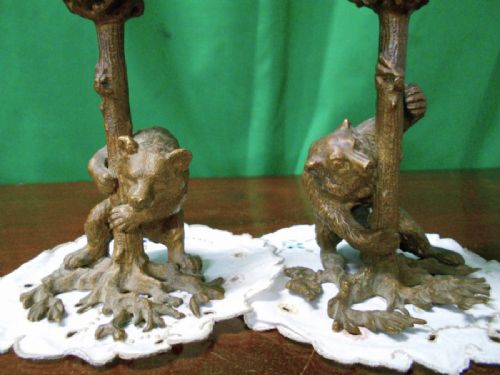
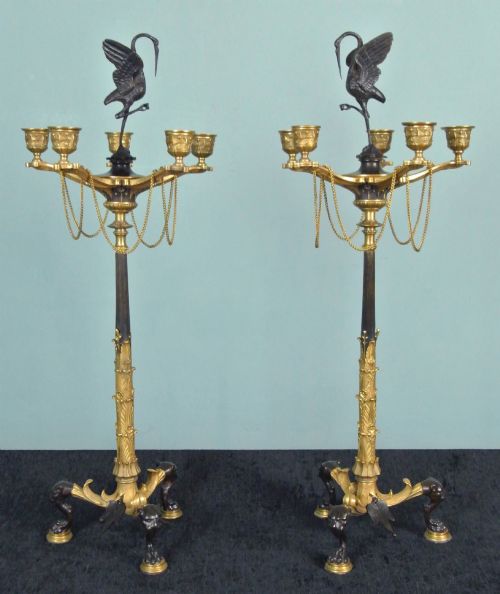
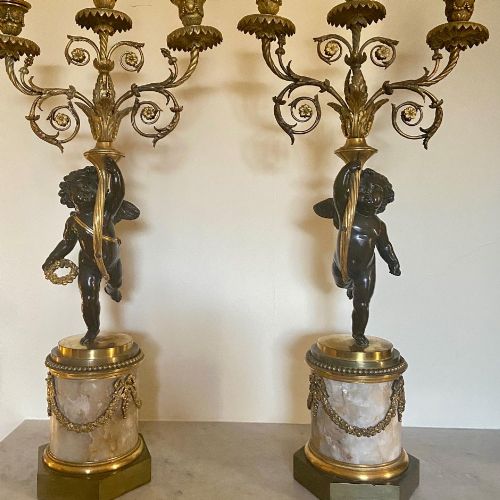
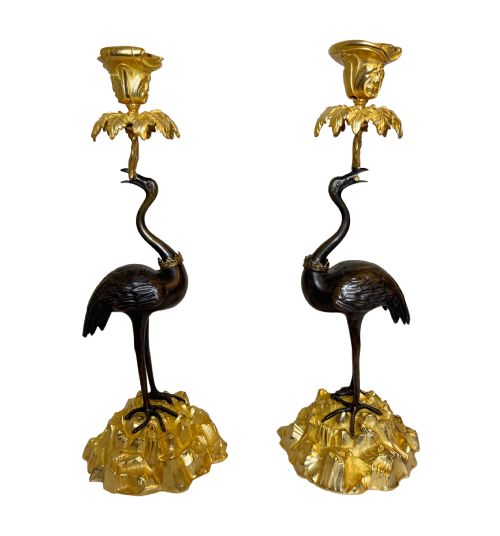
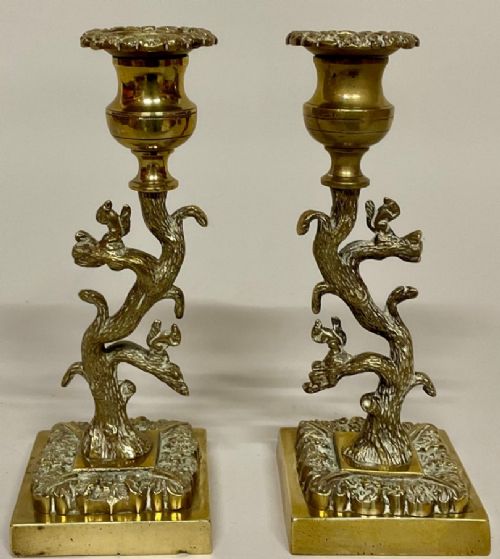
Makers utilised various forms, including figural subjects like cherubs, animals, and mythological figures, as well as classical architectural columns and naturalistic tree branches. Pairs dominate the selection, often accompanied by matching garniture sets or desk accessories like inkstands.
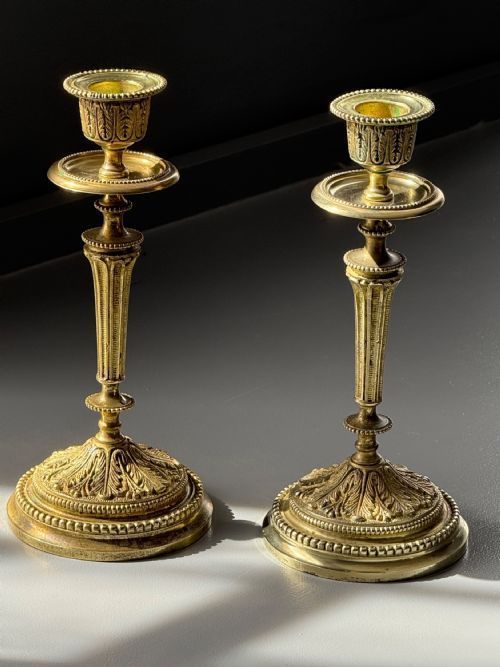
The aesthetic stretches across distinct historical revivals, with Louis XVI style, French Empire, and Gothic Revival heavily influencing the silhouette and ornamentation of the metalwork.
Materials and methods
Foundries created these objects primarily through sand casting or lost-wax casting in bronze, frequently combining the dark metal with polished ormolu for striking visual contrast. Artisans applied mercurial gilding to create rich ormolu surfaces, while others left the bronze with a deep patinated finish or highlighted details with cold paint.
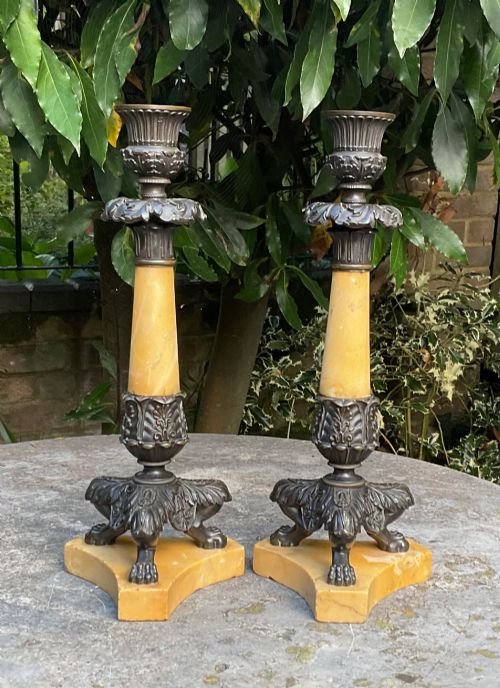
Many designs incorporate contrasting natural elements, mounting the metalwork on bases of white marble, onyx, or fluorspar. Champlevé enamel work also appears on select nineteenth-century pieces, adding vibrant colour compartments directly into the bronze structure.
Listings feature eighteenth-century Georgian examples alongside nineteenth-century French Empire and Victorian pieces incorporating marble and enamel.
Evaluating craftsmanship
The weight and stability of the base indicate the substance of the casting, while the retention of original fire gilding or patination distinguishes better-preserved specimens from tired or overly polished alternatives.
Barbedienne·Francois Redmond·Dugourc·Thomas Hope
The Bronze Candlestick Holders Glossary
- Ormolu
- Gilded bronze, where a gold-mercury amalgam is applied to the metal surface and heated to leave a rich golden layer. This technique was widely practiced by French bronziers.
- Pricket
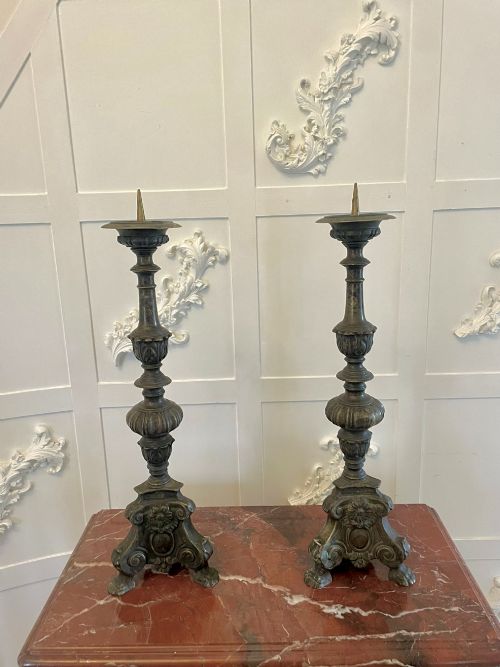
- A sharp spike on a candlestick designed to skewer the base of a large candle, common in ecclesiastical or Gothic revival pieces. Later domestic examples generally replaced this with a socket.
- Candelabra
- A branched candlestick holding multiple lights on a single stem. They often feature removable branches to allow use as simple single sticks.
- Patinated bronze
- Metal that has been chemically treated or allowed to age naturally to produce a dark, protective surface skin. This finish highlights the underlying form without added gleam.
- Garniture set
- A matched group of decorative objects, typically consisting of a central clock flanked by matching candelabra or vases for a mantelpiece display.
Bronze Candlestick Holders: Frequently Asked Questions
How do I clean antique bronze?
Dust gently with a soft dry brush to remove particles without disturbing the protective skin.
Avoid commercial metal polishes, which strip away original patination and thin gold layers.
Were these always sold in pairs?
Mantel and dining table lighting was traditionally produced in balanced pairs to flank mirrors or centerpieces.
Single survivors do appear, but matched pairs remain the standard format for formal display.
What is the difference between ormolu and brass?
Ormolu is a surface finish of applied gold on a bronze base, offering a deep buttery lustre.
Brass is a distinct copper-zinc alloy showing a lighter, yellower tone throughout the metal body.
How do I spot a reproduction?
Examine the underside and joins for modern machining marks, Allen screws, or lightweight hollow construction.
Period pieces show hand-filed surfaces, peg-and-slot assembly, and honest wear consistent with age.