
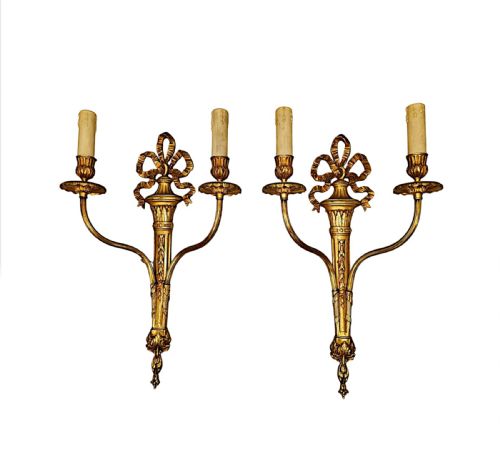
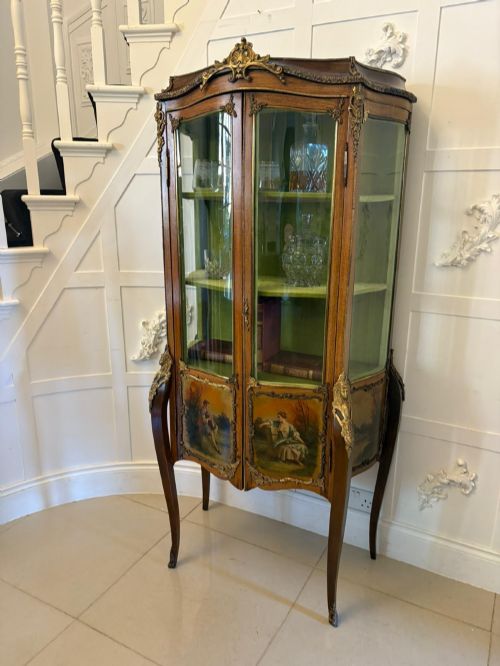
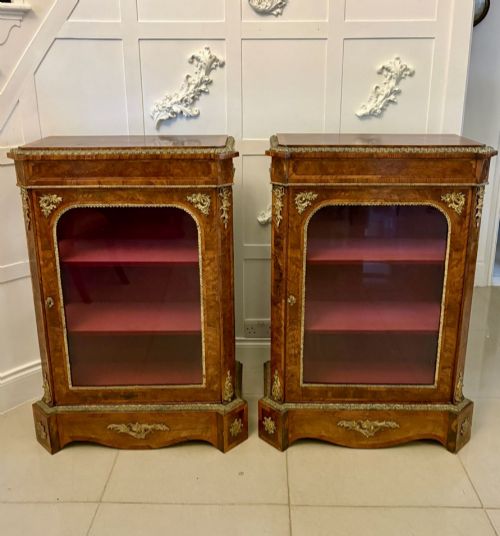
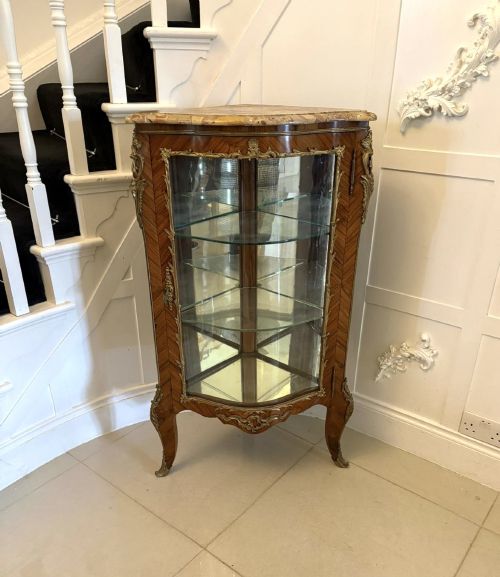
Antique French Ormolu
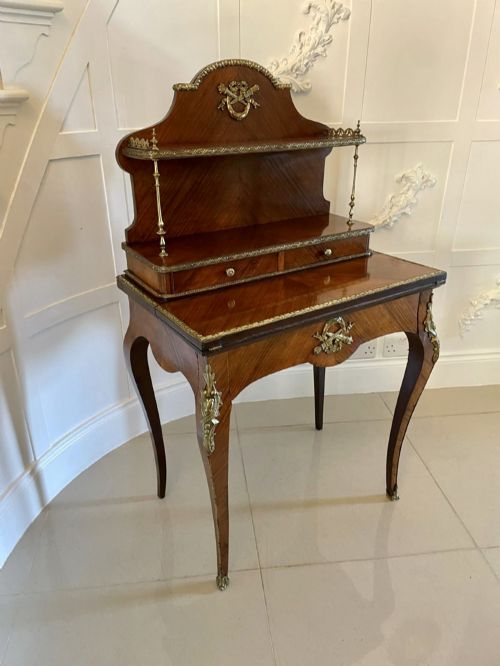
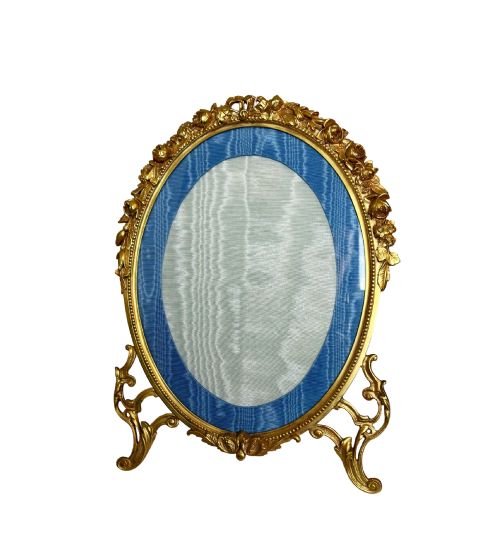
Antique french ormolu brings together fire-gilded bronze mounts, intricate woodwork, and marble surfaces characteristic of nineteenth-century craftsmanship.

Antique French Ormolu
When searching for antique french ormolu, buyers encounter decorative objects and furniture embellished with mercury-gilded bronze mounts.
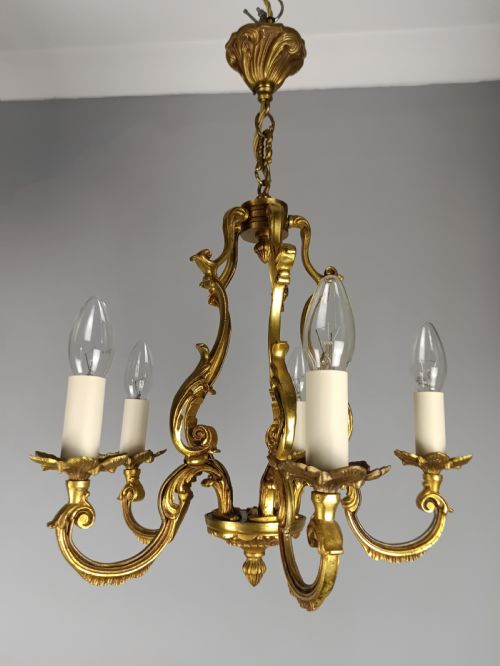
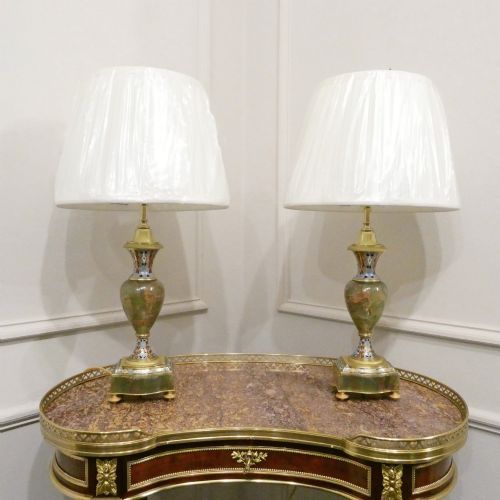
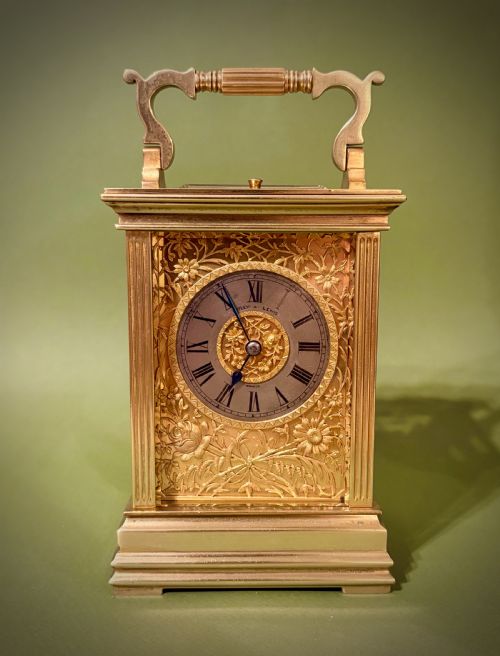
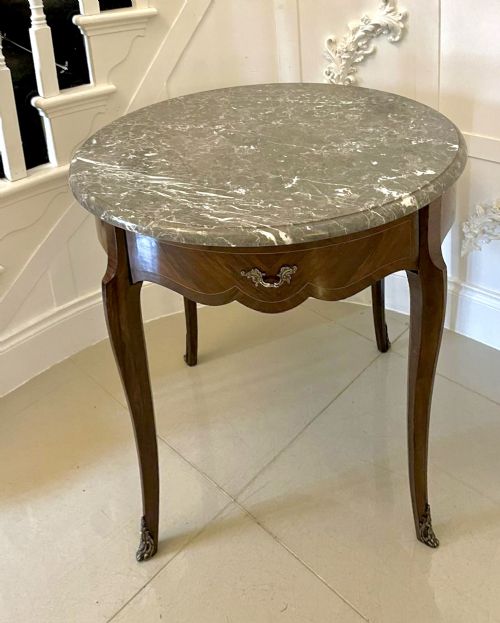
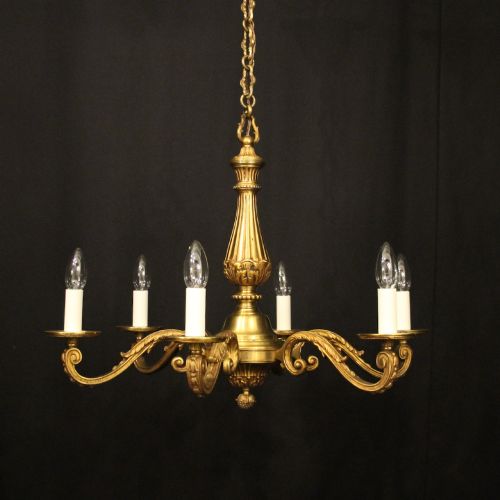
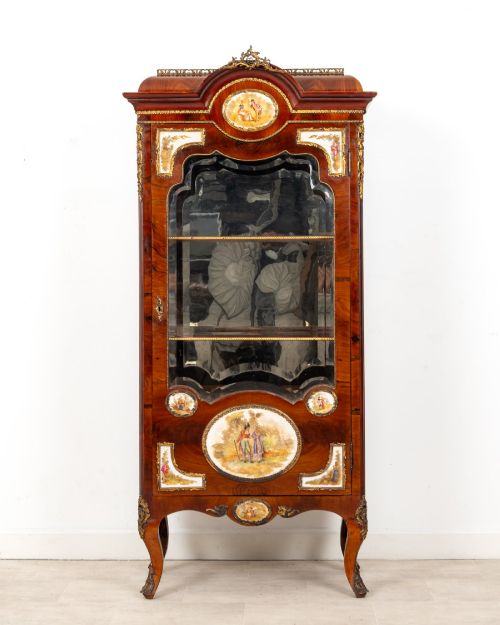
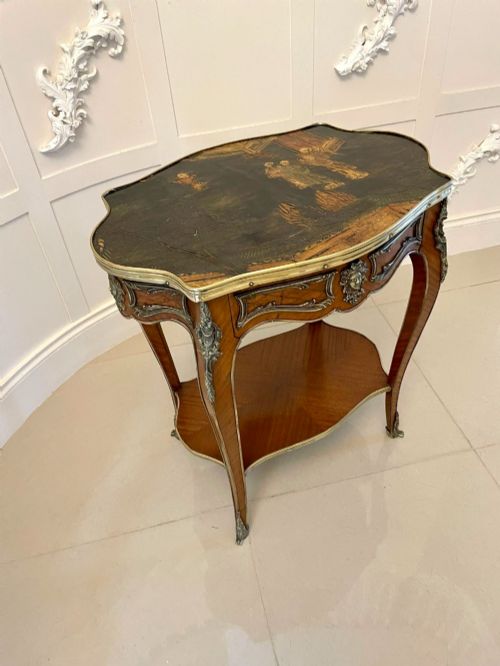
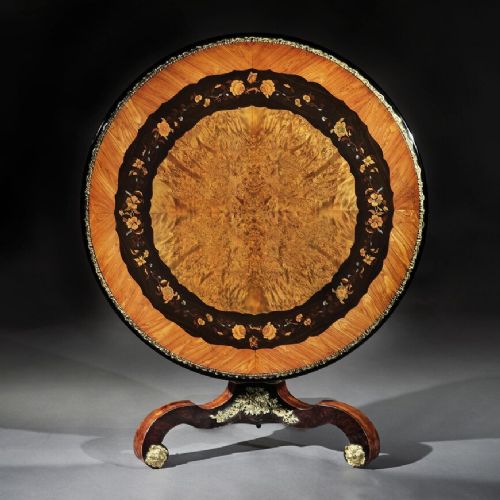
The selections on this page span centre tables, mantel clocks, vitrines, and wall lights originating across the nineteenth and early twentieth centuries.
Kingwood, walnut, and mahogany form the primary wooden carcasses for mounted cabinets and desks, while marble and porcelain provide contrasting top surfaces.
Materials and construction methods
Ormolu mounts begin as cast bronze that undergoes mercury gilding to produce a rich, durable gold surface.
Cabinetmakers combine hardwoods like kingwood and rosewood with marquetry inlay, securing the metallic mounts with small brass screws.
Porcelain plaques from Sevres and varied marbles integrate directly into the woodwork and clock housings.
Listings feature items spanning the 1850s to the 1930s, incorporating kingwood, walnut, marble, and porcelain.
Distinctions in quality
The crispness of the bronze chasing separates standard mounts from masterwork examples, where every leaf and scroll remains sharply defined.
Cabinetwork quality shows in the precision of the parquetry, the selection of figured veneers, and the structural integrity of freestanding pieces.
Clock movements signed by established makers command greater attention than unsigned mechanical equivalents.
Edward Holmes Baldock·Poix Blin·JAS Shoolbred·Achille Brocot·Susse Freres·Japy Freres·Mougin
The Antique French Ormolu Glossary
- Ormolu
- Gilded bronze produced through an amalgamation of mercury and gold applied to a bronze base. This technique creates a distinct warm lustre found on nineteenth-century mounts.
- Sevres
- A famous French porcelain factory producing plaques and vessels used to decorate clocks, cabinets, and vases. These ceramic elements often feature hand-painted scenes.
- Marquetry
- The art of applying pieces of veneer to a structure to form decorative patterns. Craftsmen utilise woods like kingwood and tulipwood to achieve contrasting pictorial designs.
- Vitrine
- A glass-fronted display cabinet designed to showcase porcelain and small objects. These pieces frequently incorporate extensive ormolu mounts along the edges and feet.
- Champleve
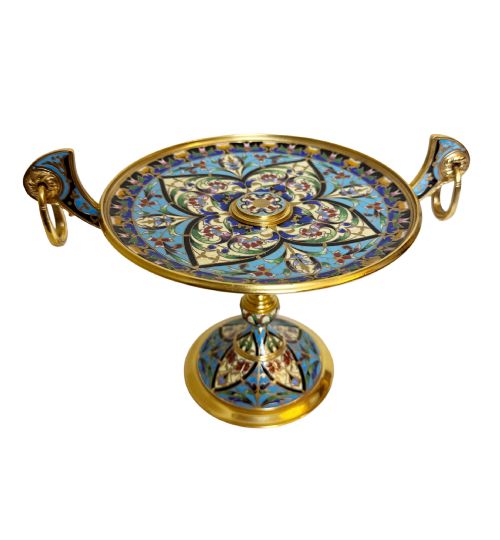
- An enamelling technique where troughs are dug into a metal surface and filled with vitreous enamel before firing. It appears on tazzas and lamp bases alongside bronze.
Antique French Ormolu: Frequently Asked Questions
How do I clean ormolu mounts safely?
Dust the mounts gently with a soft, dry brush to prevent the accumulation of dirt in the recesses. Avoid abrasive cleaners or metal polishes that strip away the historic mercury gilding.
Moisture can damage the underlying bronze and adjacent wood veneers, so keep liquid cleaners away from these surfaces entirely.
What is the difference between ormolu and gilt bronze?
Ormolu and gilt bronze describe the same underlying material and finishing technique. Historic pieces use the term ormolu interchangeably with gilded bronze.
Both involve applying a gold-mercury amalgam to a cast bronze foundation, which is then heated to vaporise the mercury and bond the gold.
Where were ormolu mounted pieces placed in a home?
Large centre tables and vitrines occupied principal reception rooms to display wealth and refined taste. Smaller items like mantel clocks and candelabra sat atop fireplaces and sideboards.
Wall lights and girandoles were positioned around rooms to reflect candlelight from their metallic surfaces.
How can I tell a nineteenth-century piece from a later reproduction?
Examine the casting quality of the ormolu mounts and the construction methods used on the wooden carcass. Nineteenth-century examples show hand-chasing marks and traditional joinery rather than modern fasteners.
Wear patterns on the gilding and natural shrinkage in the wood veneers provide further clues to genuine age.