







Regency Gilt Bronze Urn
A regency gilt bronze urn brings neoclassical authority and rich metalwork into a room.
Regency Gilt Bronze Urn
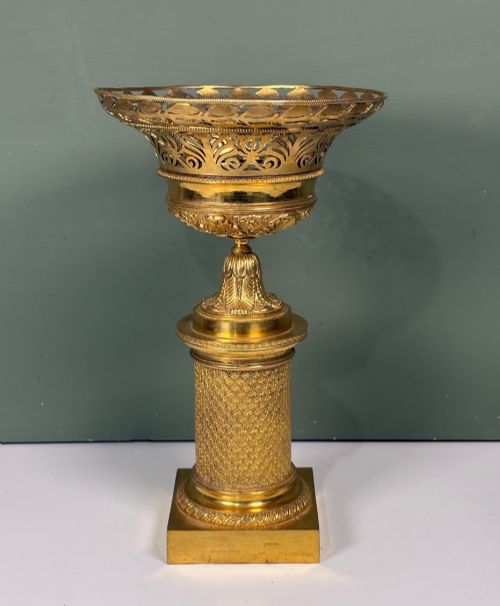
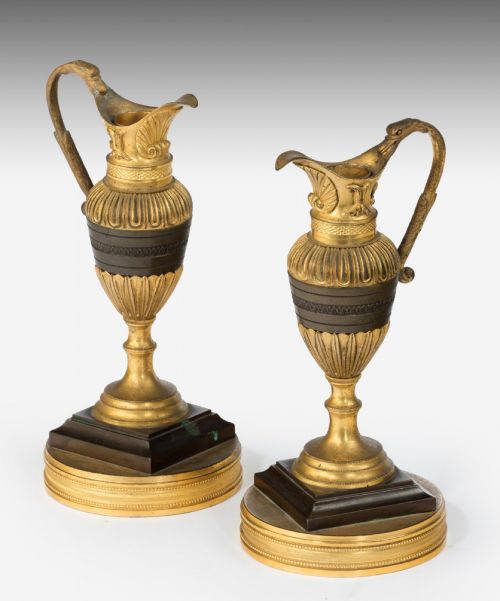
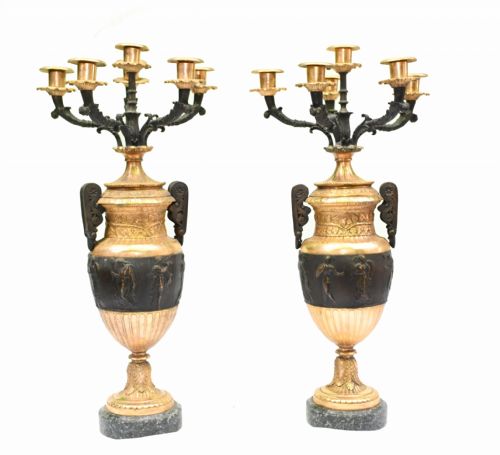
A regency gilt bronze urn is a classical decorative vessel drawing on ancient Greek and Roman forms, often adapted for lighting or display during the nineteenth century. These pieces reflect the neoclassical and French Empire tastes that dominated elite interiors of the period.
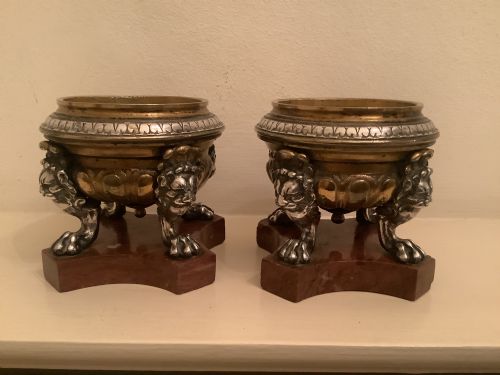
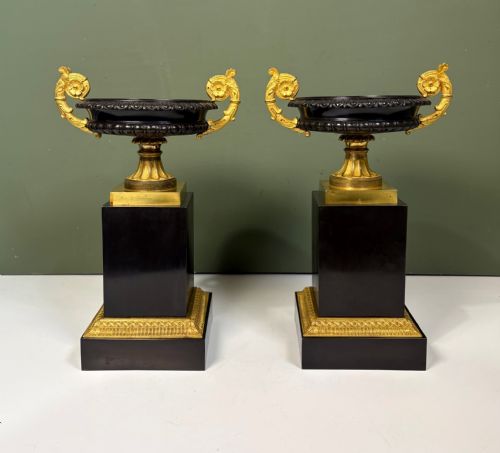
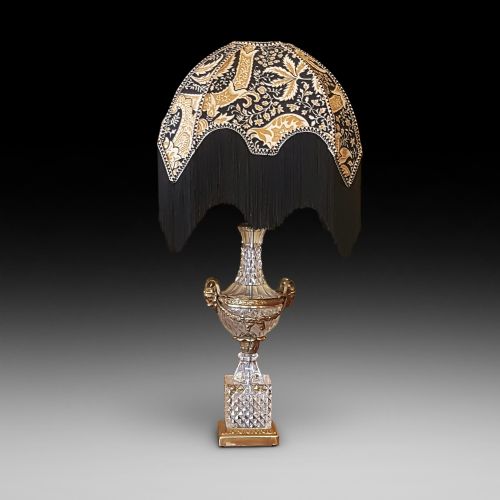
The versions most commonly met on this page include decorative urns, tazzas, and table lamps mounted on marble bases. Makers combined patinated bronze with gilded highlights to echo archaeological finds from the Grand Tour.
Materials and construction
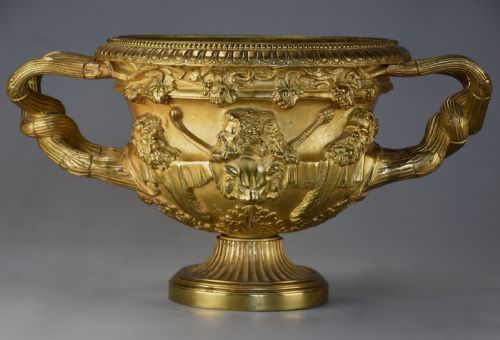
Craftsmen cast these objects in bronze, utilising both fire-gilding and applied ormolu to create contrasting matte and polished surfaces. The resulting gilt bronze or ormolu provides a durable golden lustre that highlights chased details.
Many examples incorporate contrasting natural stones, notably Sienna marble and white alabaster, for plinths and bases. These heavy mineral supports ground the metallic bodies and provide architectural stability.
Listings feature 19th Century and Regency periods alongside Victorian and Edwardian examples utilising gilt bronze, ormolu, bronze, and marble.
Distinguishing quality in metalwork
Quality rests upon the crispness of the chasing and the depth of the metalwork, where sharper surface toolwork separates finer commissions from standard production. Details such as rams' heads, acanthus leaves, and classical drapery require precise hand-finishing.
The integration of the marble base with the bronze casting dictates the overall harmony of the piece. Superior examples feature well-fitted mounts and substantial stone plinths free from unnecessary repairs.
Thomas Hope·Pons De Paul
The Regency Gilt Bronze Urn Glossary
- Ormolu
- Gilded bronze produced by applying a mercury and gold amalgam to a bronze object and heating it. This historic technique yields a rich golden surface that resists tarnish.
- Tazza
- A shallow saucer-like vessel resting on a stem and foot, used historically for display. Nineteenth-century interpretations often follow classical models in bronze and marble.
- Neoclassical
- A style reviving the art and architecture of ancient Greece and Rome. It emphasises symmetry, proportion, and classical motifs such as urns and laurel wreaths.
- Grand Tour
- A traditional trip through Europe undertaken by upper-class young men to collect art and antiquities. The reductions of famous antiquities seen here originate from this practice.
Regency Gilt Bronze Urn: Frequently Asked Questions
What is a regency gilt bronze urn?
A regency gilt bronze urn is a decorative metal vessel modelled on ancient antiquities, produced during the early nineteenth century and later revival periods.
These pieces served primarily as ornamental items, decorative tazzas, or adapted lamp bases within classical interiors.
How were these urns used originally?
In period interiors, these vessels functioned as decorative centrepieces on sideboards, mantelpieces, or pedestal tables. They demonstrated the owner's classical learning and refined taste.
Later conversions turned many into table lamps by running wiring through the hollow bronze bodies.
How do I style an urn in a room?
Place a bronze and marble urn on a mahogany pedestal or sideboard where its metallic lustre catches natural light. Pairing symmetrical pairs on a mantelpiece reinforces the neoclassical aesthetic.
Keep surrounding objects understated to let the chased metalwork and coloured marble bases stand out.
How do I tell Regency from Victorian pieces?
Regency pieces typically display restraint and tighter classical proportions inspired by authentic archaeological finds. Victorian revivals often layer heavier ornamentation onto similar neoclassical forms.
Examining the crispness of the bronze chasing and the type of marble helps distinguish the early nineteenth-century originals from later nineteenth-century interpretations.