







Alabaster Marble Urn
An alabaster marble urn brings classical proportion and soft translucency into a room, channelling centuries of Mediterranean heritage straight to your mantelpiece.
Alabaster Marble Urn
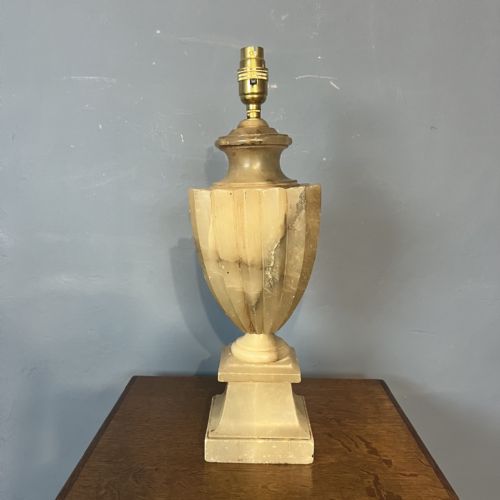
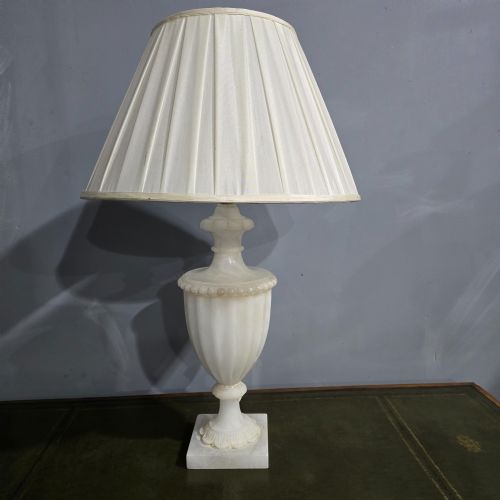
When you search for an alabaster marble urn, you are looking at carved stone vessels and decorative objects drawn from nineteenth-century grand tour souvenirs, Edwardian lighting, and Victorian garnitures. These pieces range from classical vases and tazze mounted on black marble bases to functional table lamps and sculptural groups.
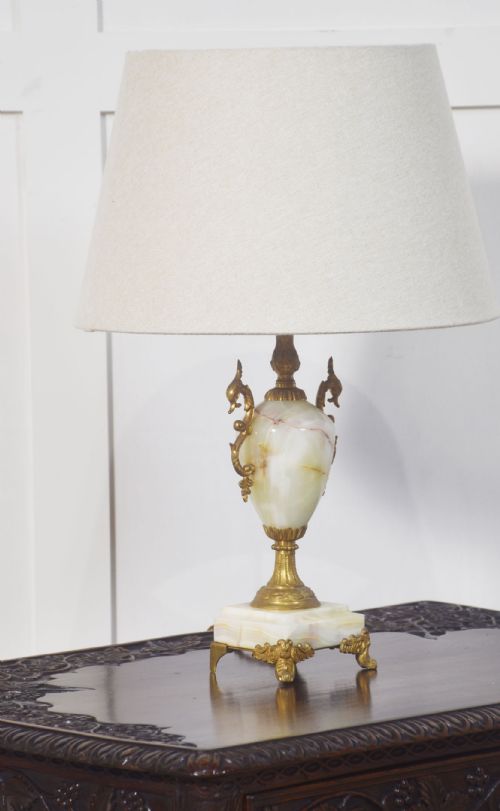
The version you are most likely to meet on this page is an Italian table lamp or decorative vase dating from the nineteenth century or the early decades of the twentieth century. Many adopt neoclassical or Louis XVI revival styles, echoing ancient forms discovered during European travels.
Beyond vessels, the selection occasionally encompasses mantel clocks with garniture sets, decorative bowls, and figurative groups carved from stone. Each piece relies on the natural figuring of the material to create depth and visual texture without excessive surface ornament.
Materials and construction
Carvers shaped these objects primarily from quarried alabaster and marble, often utilising specialist turning lathes and hand chisels to achieve thin, translucent walls. This stonework frequently incorporates brass, gilt bronze, or metal mounts to secure handles, bases, and electrical fittings.
Many nineteenth-century items draw upon Italian workshops specialising in alabastro egiziano and white marble, finished with polished surfaces to highlight natural veining. Later adaptations integrate glass and fabric elements, particularly in mid-period table lamps and fruit lamps.
Children pushing a cart in carved stone remind us that even classical sculptors occasionally enjoyed a spot of playground humour.
Assessing quality and finish
The distinction between standard decorative items and superior examples lies in the crispness of the hand-carved detailing and the depth of the stone's figuring. Master carvers achieved remarkable thinness in the vessel walls, allowing light to pass through the alabaster with an even, warm glow.
Mount quality also separates the tiers, with heavier cast brass or gilt bronze fittings indicating a higher grade of production than simple plated metal. The integrity of the stone block, free from heavy internal fractures or clumsy repairs, dictates the lasting stability of the piece.
James Ritchie and Son
The Alabaster Marble Urn Glossary
- Alabaster
- A dense, translucent stone often used for carving classical vases, urns, and lighting bases. It transmits light gently when cut thin.
- Grand Tour
- A traditional trip through Europe undertaken by upper-class young men in the eighteenth and nineteenth centuries, yielding souvenirs like carved stone urns.
- Tazza
- A shallow ornamental vase or cup on a pedestal foot, frequently seen in nineteenth-century Italian stone carvings.
- Campana Urn
- A bell-shaped vessel with a flaring rim and foot, originating in classical antiquity and revived in later decorative arts.
- Garniture
- A set of matching ornamental objects for a mantelpiece, typically comprising a central clock flanked by matching urns or candelabra.
Alabaster Marble Urn: Frequently Asked Questions
Are these urns waterproof?
Most antique stone urns and tazze are porous and unsealed. They serve best as decorative dry displays rather than functional vases for holding water and fresh flowers.
How do I date an alabaster lamp?
Examine the wiring, base construction, and mounting style. Edwardian and early twentieth-century pieces often feature heavy brass fittings and turned stone components characteristic of the period.
Why do some pieces glow?
Alabaster naturally possesses a fine crystalline structure that allows light to pass through its surface. When a lamp bulb is placed inside, the stone diffuses the light warmly.