





Classical Alabaster Urn
These classical alabaster urn pieces bring quiet, carved neoclassical form and soft translucent stone into a room.
Classical Alabaster Urn
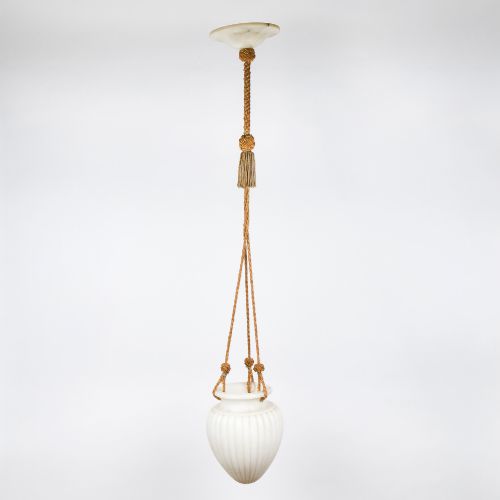
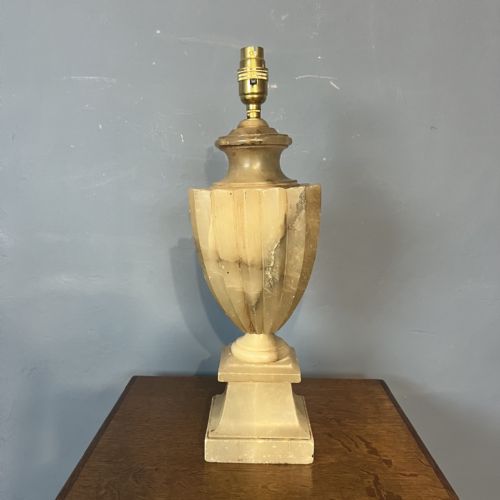
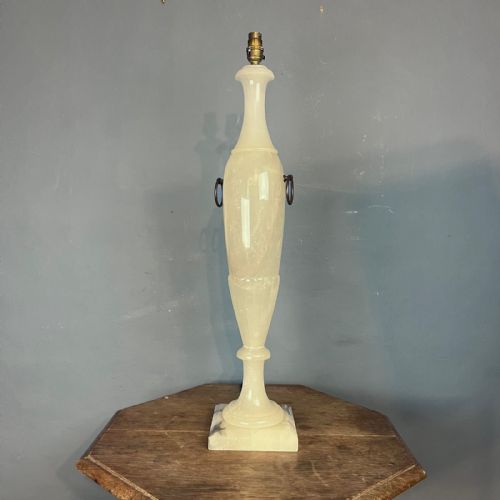
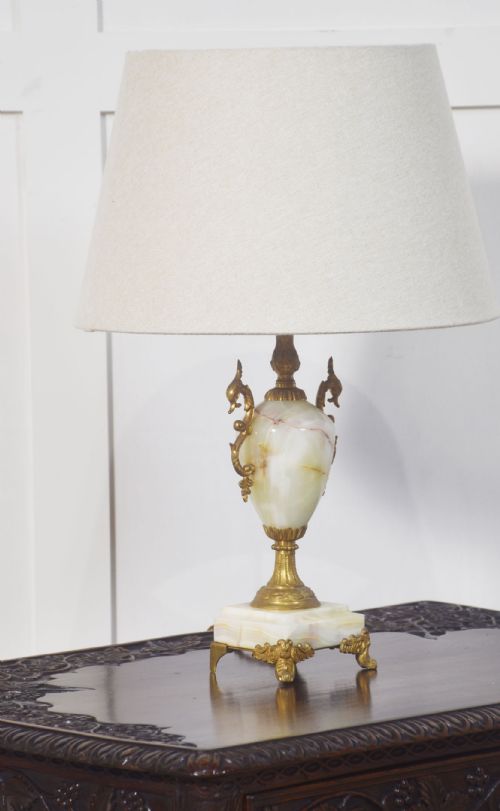
A classical alabaster urn is a carved vessel drawing upon ancient Greek and Roman design, frequently adapted into decorative table lamps, hanging lights, and mantel ornaments. When you search for classical alabaster urn, you encounter forms that range from solid decorative vessels to converted lighting fixtures.
The selections span the nineteenth century through the art deco period, taking in Victorian and Edwardian examples alongside Grand Tour souvenirs. Table lamps and pendant lights dominate the available output, often utilising white alabaster or marble-effect stone.
Neoclassical and classical revival styles govern the aesthetics, bringing turned bodies and classical proportions into domestic interiors. Pieces from the early twentieth century sit alongside nineteenth-century continental items and Victorian clocks.
Materials and construction
Makers shaped white alabaster and marble on lathes or carved them by hand to achieve the thin, translucent walls characteristic of classical vessels. This stone allows light to pass through the material when lamps are illuminated internally.
Metal mounts in brass, gilt bronze, and metal are frequently integrated to secure bases, rims, and handles. Fabric, braided cord, and glass components complete the lighting configurations seen in the period pieces.
The listings show alabaster and marble combined with brass, gilt bronze, fabric, and glass across the nineteenth and early twentieth centuries.
Judging quality and execution
Quality rests upon the purity of the stone and the crispness of the turned or carved detail. Finer examples display subtle natural veining without distracting fissures, alongside precisely fitted metal mounts that sit flush against the alabaster.
Proportion and scale separate ordinary domestic items from grander decorative urns and Grand Tour souvenirs. The articulation of handles, bases, and classical motifs reveals the hand of a more accomplished workshop.
James Ritchie and Son
The Classical Alabaster Urn Glossary
- Alabaster
- A soft, fine-grained stone prized for its translucency and white coloration. It is easily carved into detailed vessels and lamp bodies.
- Grand Tour
- A cultural journey undertaken by nineteenth-century travellers who collected souvenirs such as small alabaster vases and urns in Italy.
- Neoclassical
- A style reviving the architectural and decorative forms of classical antiquity. It emphasises symmetry, restraint, and ancient motifs.
- Gilt bronze
- Copper alloy treated with a layer of gold. It provides decorative mounts and mounts for stone urns and lamps.
Classical Alabaster Urn: Frequently Asked Questions
What is a classical alabaster urn?
A classical alabaster urn is a decorative or functional vessel carved from translucent stone, styled after ancient Greek and Roman antiquities. These pieces often date from the nineteenth and early twentieth centuries.
Many examples from this period were subsequently adapted into table lamps or hanging lights, retaining their neoclassical proportions while serving modern domestic functions.
How do I care for alabaster?
Alabaster is a relatively soft stone that is sensitive to moisture, acids, and rough handling. Dusting with a dry, soft cloth is sufficient for routine maintenance.
Avoid using water, chemical cleaners, or polishes, as these can permanently stain or dissolve the polished surface of the stone.
Where were these pieces made?
Many of these pieces originate from Italy, particularly as souvenirs brought back by travellers undertaking the Grand Tour during the nineteenth century. British workshops also produced similar decorative objects.
Italian makers specialised in turning soft alabaster and marble into classical vases, urns, and sculptural groups for the European export market.
How do I date an alabaster urn?
Dating relies upon examining the style of the mounts, the wiring if converted to electricity, and the turning technique of the stone. Nineteenth-century pieces often reflect Grand Tour aesthetics.
Early twentieth-century items, including those from the art deco and Edwardian periods, frequently incorporate metal mounts or fittings characteristic of that era.