
Gilt Bronze Urn Vase
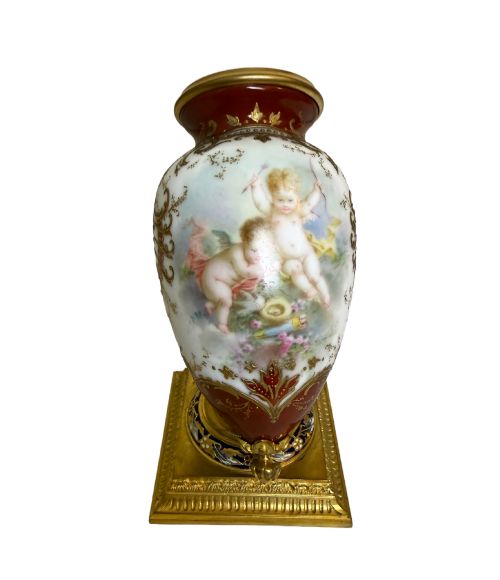
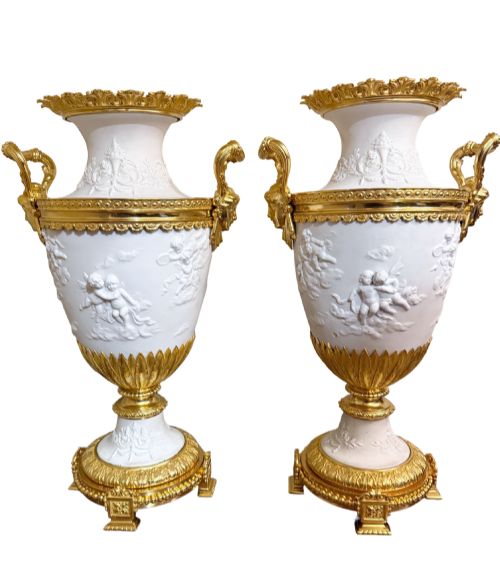
These gilt bronze urn vases combine cast metal mounts with porcelain, marble, or glass vessels, reflecting nineteenth-century revivals of classical and rococo forms.
Gilt Bronze Urn Vase
A gilt bronze urn vase is a decorative vessel that bridges classical antiquity and nineteenth-century interior display. These pieces function as decorative vases, table lamps, cassolettes, and ewers designed for prominent placement on mantelpieces and side tables.
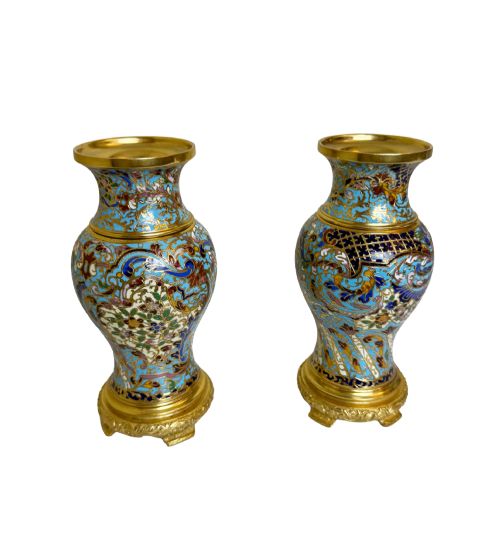
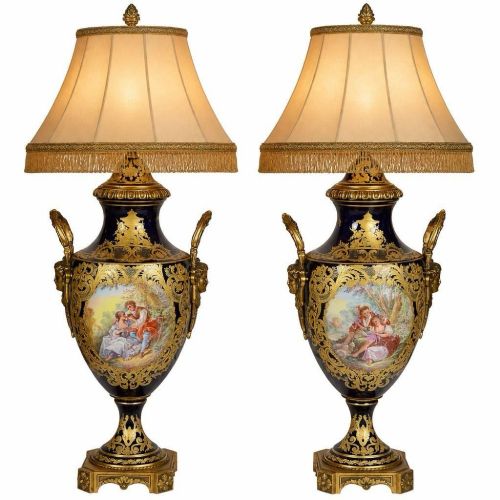
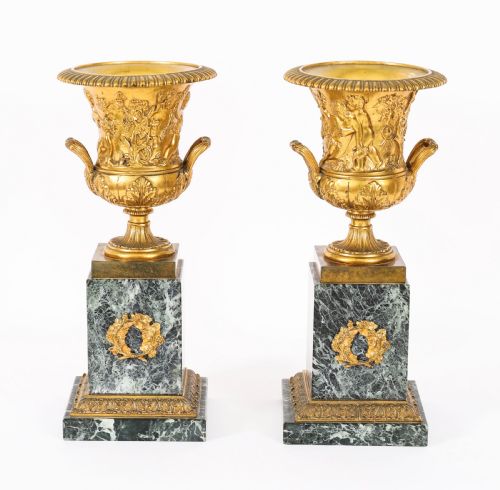
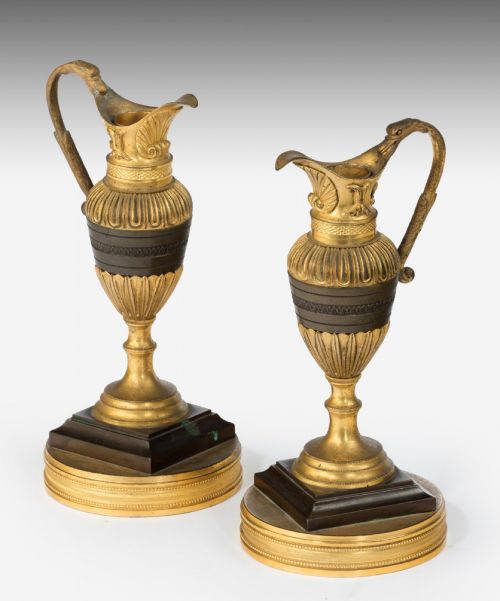
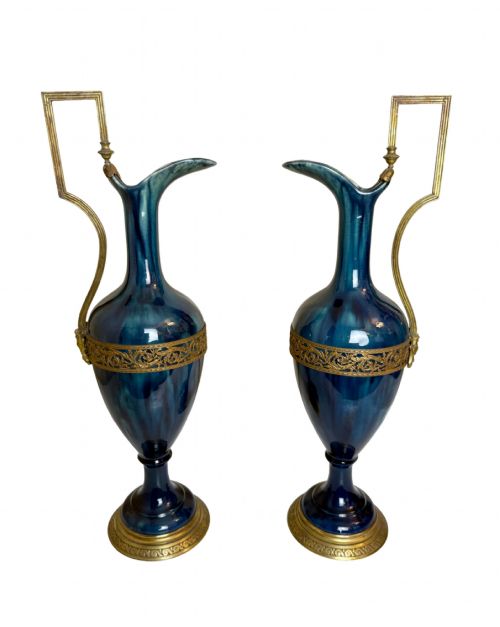
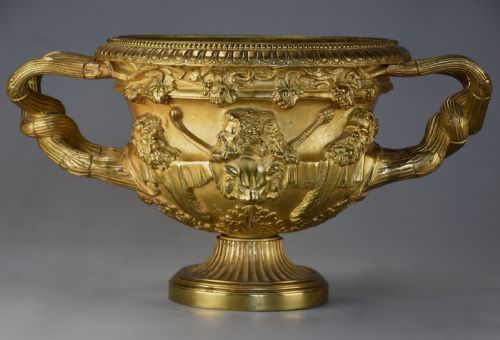
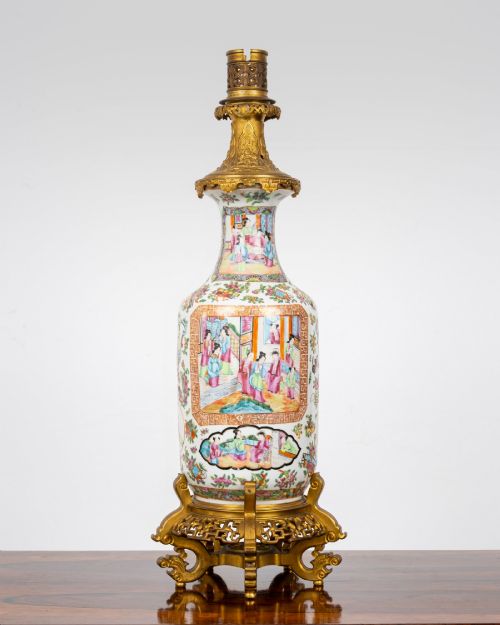
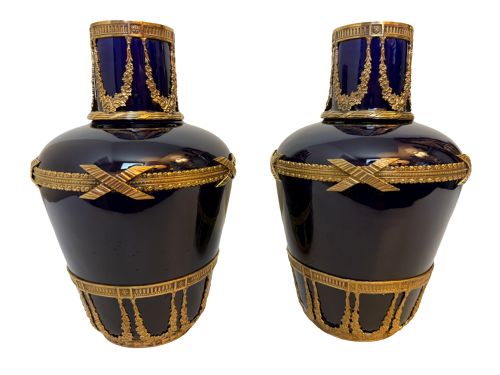
Nineteenth-century makers drew heavily on French Empire, Louis XVI, and Rococo Revival idioms, alongside Grand Tour souvenirs and Asian porcelain imports fitted with European mounts. The most frequent examples on this page pair gilt bronze or ormolu mounts with Sèvres-style porcelain, marble bodies, or cloisonné enamel.
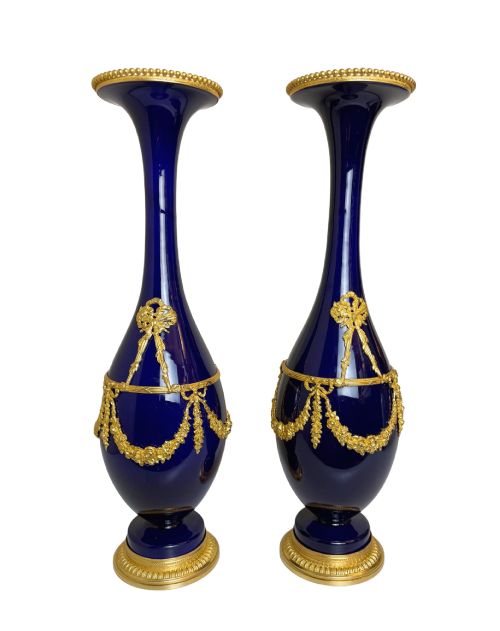
Originating largely from French workshops and Italian Grand Tour production, these objects manifest in matched pairs as well as single decorative garnitures. Collectors encounter variations spanning white and coloured porcelain, green and white marble, onyx, and blue glass.
How They Were Made
The creation of these works relies on the integration of cast bronze or ormolu mounts with ceramic, stone, or glass bodies. Artisans utilised lost-wax casting for the intricate handles, bases, and rims, applying gold leaf or mercury gilding to achieve the characteristic rich surface finish.
Vessels combine turned marble, onyx, or moulded porcelain bodies secured with threaded bronze rods and nuts. Enamelling techniques such as champlevé and cloisonné further enrich the metal surfaces with coloured glass pastes fired within recessed cells or wire compartments.
Current listings feature nineteenth-century items alongside eighteenth-century pieces, incorporating porcelain, marble, bronze, and cloisonné.
What Varies in Quality
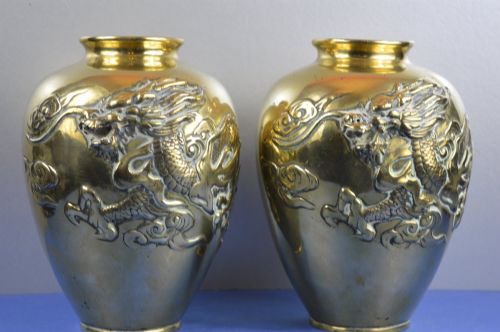
Quality rests upon the crispness of the bronze chiding and the depth of the metal chasing. Superior examples exhibit sharp relief in foliage, figural mounts, and dragon motifs, whereas inferior castings appear soft and generalized.
The integration of materials dictates overall merit. Finer pieces demonstrate precise alignment between metal mounts and ceramic or stone bodies, utilising high-grade porcelain, dense marbles, and heavy gauge bronze rather than lighter brass alternatives.
Sevres·Meissen·Clodion
The Gilt Bronze Urn Vase Glossary
- Ormolu
- Gilt bronze produced by applying a finely ground high-carat gold-mercury amalgam to a bronze object, followed by firing. This French technique yields a distinctive warm, golden lustre.
- Cassolette
- A dual-purpose decorative vase featuring a reversible lid that transforms the vessel from a closed urn to an incense burner. They frequently incorporate marble bodies with ormolu mounts.
- Grand Tour
- A traditional trip through Europe, particularly Italy and France, undertaken by young upper-class Europeans during the eighteenth and nineteenth centuries. Souvenirs included bronze reductions of classical antiquities.
- Champlevé
- An enamelling technique where troughs or cells are carved into the surface of the bronze and filled with vitreous enamel before firing. The metal remains visible as thin lines dividing the colours.
- Garniture
- A set of matched decorative vases or urns designed to be displayed together on a mantelpiece or sideboard. They typically comprise a central larger vessel flanked by smaller matching pieces.
Gilt Bronze Urn Vase: Frequently Asked Questions
What is a gilt bronze urn vase?
A gilt bronze urn vase is a decorative vessel combining metal mounts with bodies of porcelain, marble, or glass. These pieces were produced primarily during the nineteenth century in imitation of classical, Renaissance, and French court styles.
Craftsmen utilised cast bronze to frame ceramic and stone bodies, creating ornamental objects designed for display on mantelpieces and tables. Many incorporate Asian porcelain or Grand Tour motifs.
How were these vases used originally?
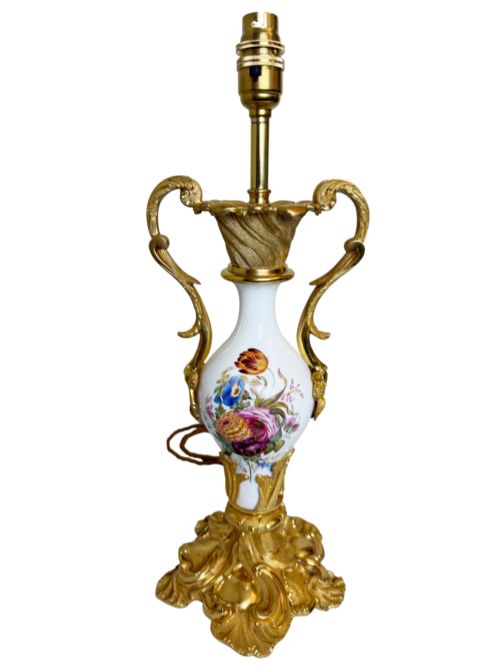
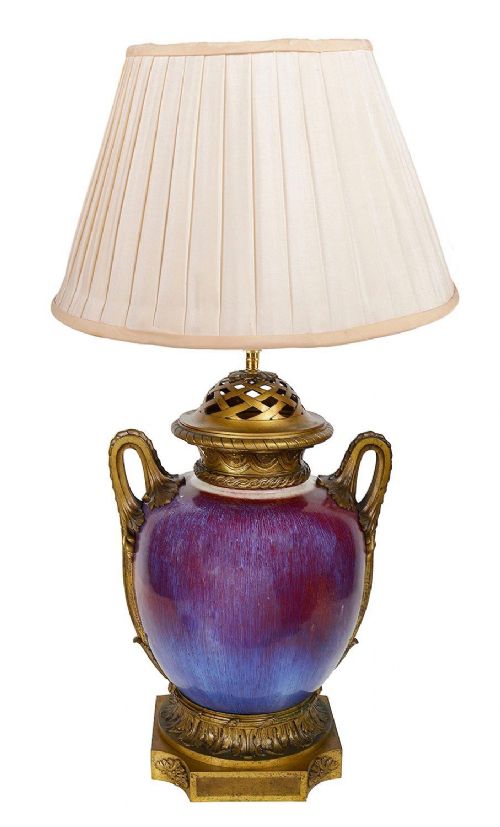
These vessels served as decorative garnitures, centrepieces, and mantel ornaments in nineteenth-century drawing rooms. Some functioned as cassolettes for burning perfumes, while others were later adapted into table lamps.
Their primary purpose was to display taste and wealth through references to classical antiquity and European porcelain manufactories. Pairs were typically arranged symmetrically on furniture surfaces.
How do I identify French Empire style?
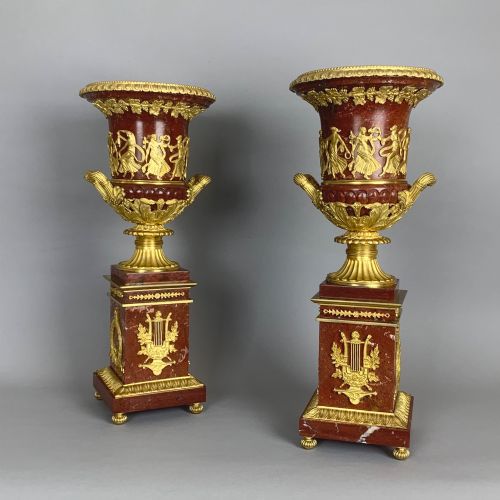
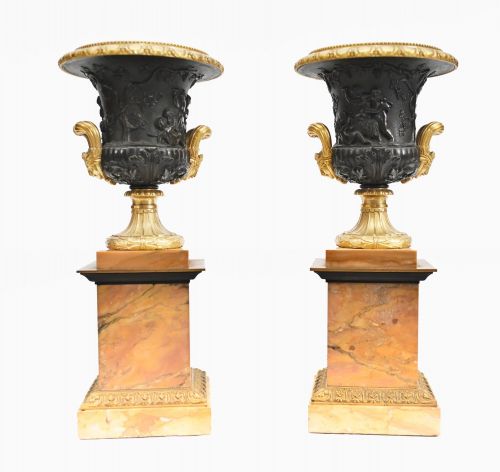
French Empire style objects draw heavily on motifs from ancient Rome, Greece, and Egypt, dating roughly from the early nineteenth century. Look for symmetrical compositions, classical urn shapes, and military or laurel leaf ornamentation in the bronze mounts.
The materials often combine dark patinated bronze with bright ormolu highlights, mounted on square marble plinths. This aesthetic projects monumentality and formal architectural balance.
Are these pieces purely decorative?
Most surviving examples are ornamental objects designed for visual impact rather than utilitarian storage. Many retain their original function as display urns or potpourri jars, though a significant portion have been converted to hold electrical lamp fittings.
Their construction prioritises sculptural quality, combining cast metal mounts with delicate porcelain or stone bodies. They remain interior focal points rather than working vessels.