




British Marine Landscape Painting
British marine landscape painting captures the shifting light and working harbours of our coasts on canvas and paper.
British Marine Landscape Painting
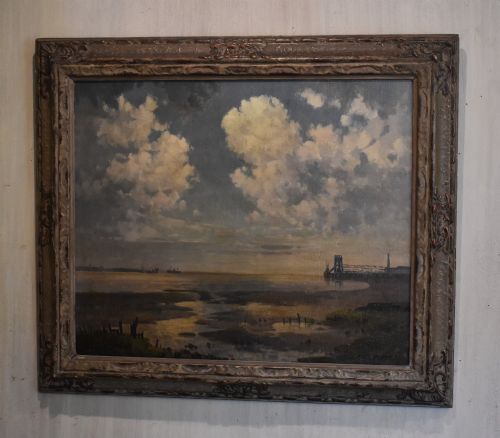
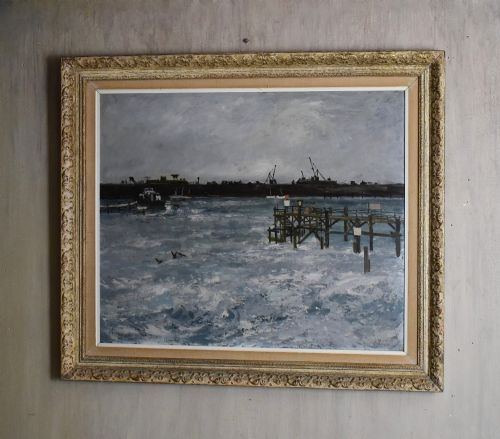
A British marine landscape painting depicts coastal views, estuaries, harbours, and shipping scenes rooted in the geography of the British Isles. Buyers searching this phrase commonly encounter nineteenth-century watercolours and oils alongside mid-twentieth-century interpretations.
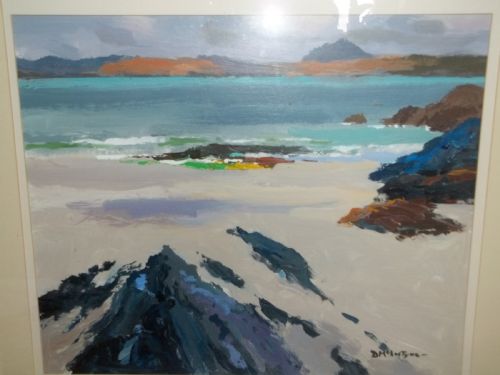
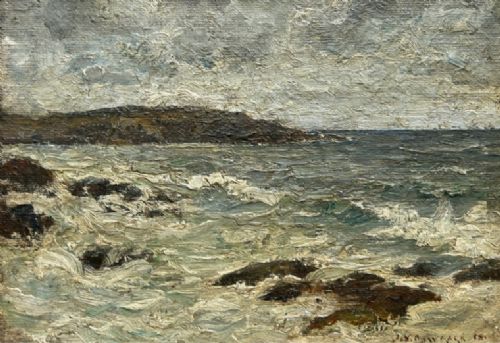
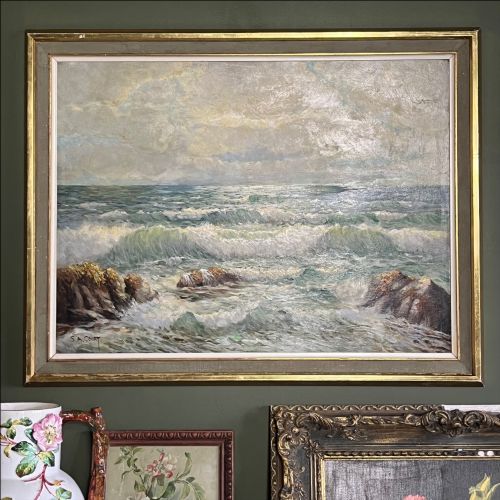
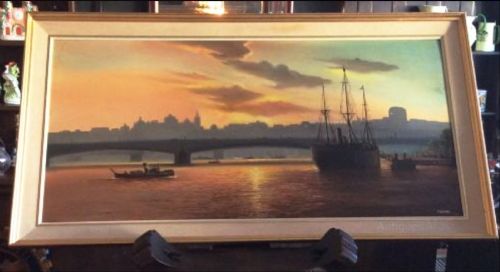
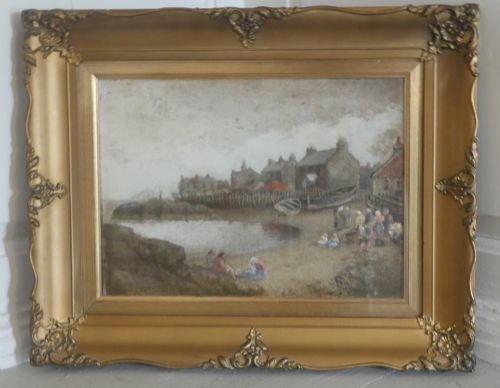
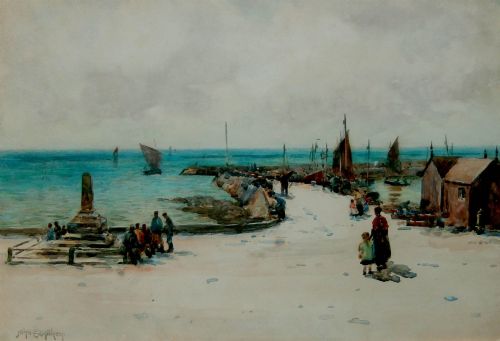
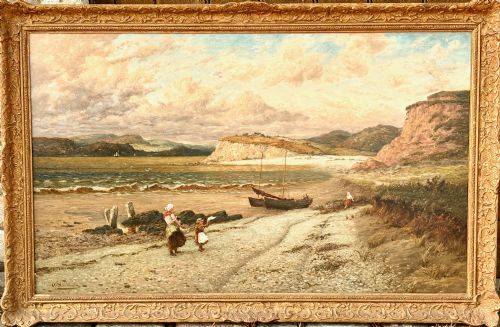
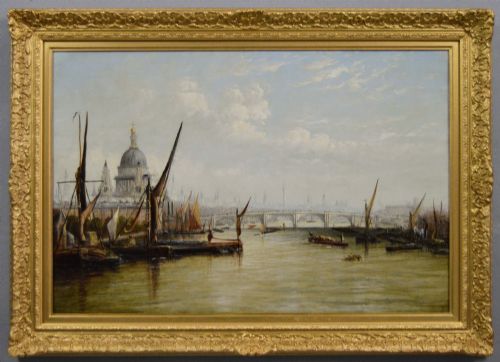
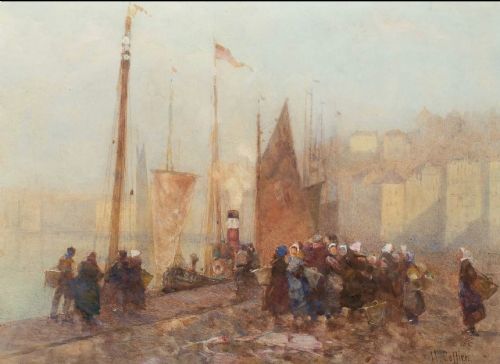
The selection spans tranquil river scenes on the Thames and Humber to rugged northern cliff faces and bustling fishing ports like Whitby and St Ives. Victorian maritime works sit alongside later Edwardian and mid-century pieces, reflecting changing artistic approaches to coastal topography.
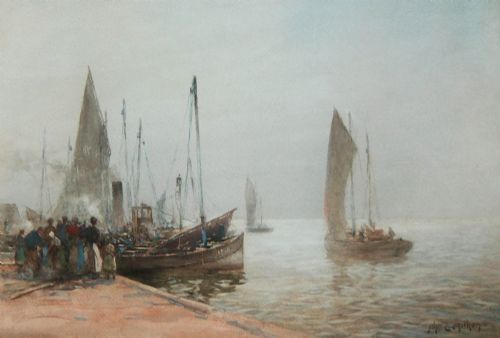
Compositions frequently feature working vessels, from coastal luggers and barges to steamships, anchored or navigating tidal waters. These works combine topographical precision with atmospheric depictions of weather, sea state, and coastal light.
Materials and methods
Artists worked primarily in oil on canvas or board, and watercolour pigment on paper, choosing their medium to suit the desired atmosphere. Watercolours allowed for rapid, translucent washes ideal for capturing shifting coastal mists and open skies, whilst oils provided depth for heavy seas and dramatic coastal light.
Support materials range from traditional stretched canvas and wooden panel to heavy watercolour paper, often framed behind glass for works on paper. Brushwork varies from the tight, precise detail of Victorian maritime illustration to the looser, impasto application characteristic of later impressionist and mid-century works.
Represented subjects span rural British fishing ports, major river bridges, and open coastal waters from Cornwall to the North Sea.
Judging quality in marine works
Quality rests upon the artist's command of atmospheric perspective, convincing water movement, and accurate rendering of rigging and vessel architecture. Stronger examples demonstrate a confident handling of light that unifies sky, water, and shoreline rather than treating them as isolated elements.
The handling of the medium distinguishes accomplished pieces, whether through crisp watercolour washes that retain luminosity or assured, textural brushwork in oil. Compositional balance and the vitality of the figures or shipping integrated into the landscape further separate routine topographical records from compelling artistic statements.
Clifford Hanney·Sidney A Court·Francis Moltino·John Wilson Carmichael·George Stanfield Walters
The British Marine Landscape Painting Glossary
- Seascape
- A work of art depicting the sea, coastal views, or maritime activity. These compositions focus primarily on open water or shorelines.
- Impasto
- Paint applied thickly to a canvas or board, standing visibly above the surface. This technique creates texture and catches light to suggest movement in water or clouds.
- En plein air
- Painting outdoors in direct natural light. Artists using this method aimed to capture transient weather and atmospheric conditions on site.
- Provenance
- The documented history of ownership of an artwork. A clear record helps confirm authenticity and origin.
British Marine Landscape Painting: Frequently Asked Questions
How do I date a marine painting?
Dating relies on stylistic clues, framing conventions, and the rigging or design of any vessels shown in the composition. Costume details of figures on the shore also offer reliable chronological markers.
Signatures, exhibition labels on the reverse, and the specific composition of the canvas or paper provide further evidence to narrow the decade of creation.
Are watercolours as durable as oils?
Watercolours on paper require careful protection from direct sunlight to prevent fading of sensitive pigments over time. Glazing with conservation glass helps preserve the paper and the underlying medium.
Oil paintings on canvas or board generally withstand environmental changes better, though both mediums benefit from stable indoor humidity and temperature.
Where should I hang a marine painting?
Choose an interior wall away from direct sunlight, heating vents, and damp areas to protect the canvas, paper, and original framing. Proper placement prevents warping of wooden panels and degradation of pigments.
Eye-level placement in a room with balanced ambient light allows the atmospheric details and brushwork of the coastal scene to be fully appreciated.
How do I identify a specific coastal location?
Clues often appear in titled mounts, handwritten inscriptions on the reverse of the canvas, or distinctive architectural landmarks like lighthouses, abbeys, and bridge structures. Geological formations such as specific cliffs or harbour walls also point to exact sites.
Local historical records of shipping and coastal development help verify the exact stretch of coastline depicted by the artist.