



Sepia Marine Painting
A sepia marine painting captures coastal and maritime scenes through monochromatic tones, offering an atmospheric record of historic ports and open waters.
Sepia Marine Painting
When you examine a sepia marine painting, you are looking at works executed primarily in monochrome brown pigments that record coastal views, bustling ports, and vessels at sea. These pieces capture the changing moods of British waters through tonal variation rather than full colour.
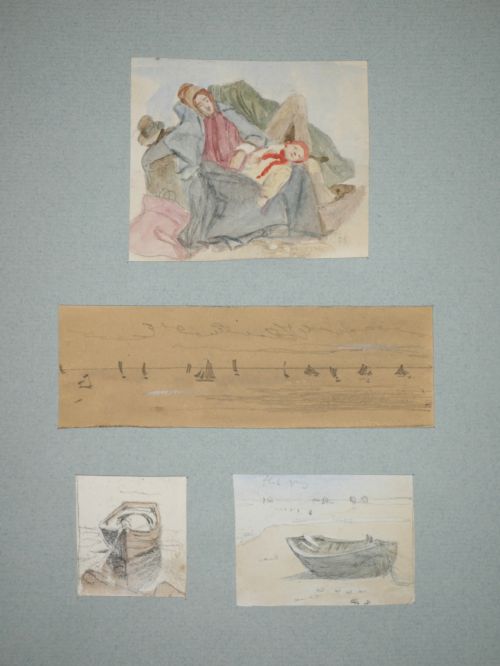
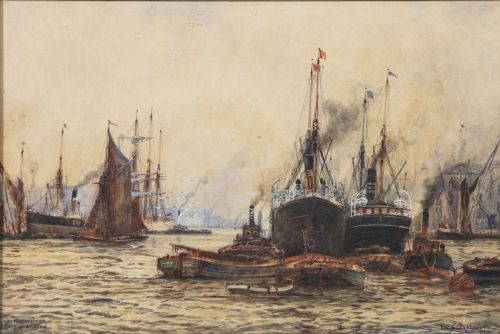
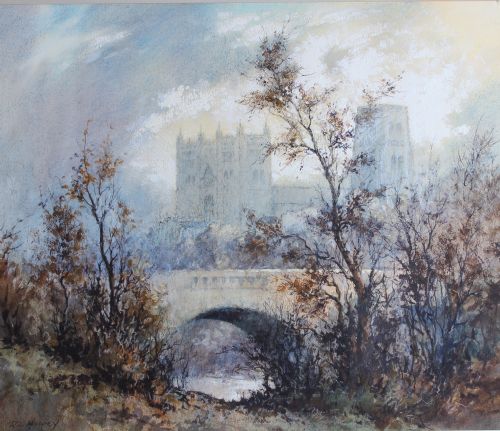
The selections you meet on this page span the nineteenth and twentieth centuries, taking the form of detailed watercolours on paper and occasional oil on canvas works. They range from small artist sketches to finished framed watercolours depicting familiar coastal locations such as Whitby, London, and the West Country.
How they were made
Artists created these maritime works primarily using watercolour pigment and wash applied to paper, though some compositions utilise oil on canvas or support structures of wood and glass. The application of monochrome pigment demanded precise control over water density to achieve depth in sea and sky.
Framed presentation often incorporated protective glass alongside traditional wooden frames, occasionally accented with gold leaf details to enhance the visual weight of the artwork. The preparation of paper or canvas preceded the careful layering of sepia tones.
Several artists preferred capturing rainy London docks, proving that British gloom has inspired fine art for generations.
What varies in quality
The distinction between standard works and finer examples lies in the artist's handling of tone and atmospheric perspective within a restricted palette. Stronger works convey movement in the water and detail in the rigging with notable economy of line.
Provenance and documentation also separate pieces, as signed works by recognised nineteenth and twentieth-century painters carry clearer attribution than unsigned initialled sketches. The preservation of the paper and the integrity of the original framing further influence the standing of each piece.
James Smetham·Frank William Scarbrough·Robert Leslie Howey·Richard Harry Carter·William Frederick Settle·Frederick William Booty·William Wyld·Harry Wanless·Harold E Frecker·Thomas Clavering Alder·Edward Fletcher
The Sepia Marine Painting Glossary
- Sepia
- A brown pigment traditionally derived from the ink sac of the cuttlefish. It provides the characteristic monochromatic warmth seen in these maritime works.
- Watercolour
- A painting method in which the paints are made of pigments suspended in a water-based solution. Paper serves as the primary support medium for this technique.
- Maritime
- Pertaining to ships, shipping, navigation, and the sea. This classification unites coastal views, port scenes, and open ocean paintings.
- Impressionism
- A style of painting emphasising a spontaneous capture of light and atmosphere. Maritime impressionism focuses on shifting weather and water conditions.
Sepia Marine Painting: Frequently Asked Questions
What subjects appear in these paintings?
The subjects focus primarily on coastal towns, working ports, and various vessels ranging from sailing yachts to trawling luggers.
Artists frequently recorded specific locations along the British coastline and rivers like the Thames and the Medway.
How should I display works on paper?
Works on paper require framing behind glass to protect the delicate surface from moisture, dust, and handling damage.
Positioning them away from direct sunlight prevents the sepia tones and paper supports from fading over time.
How do I identify the period?
Dating relies on stylistic clues, artist signatures, and framing methods associated with the nineteenth and twentieth centuries.
Victorian and Edwardian pieces often display specific handwriting or mounting techniques characteristic of their respective decades.
Are these works always monochrome?
While the defining characteristic is the use of sepia brown tones, individual watercolours occasionally incorporate subtle washes of other pigments.
The dominant visual impact remains rooted in monochromatic tonal contrast.