



Victorian Coastal Castle Painting
A victorian coastal castle painting captures nineteenth-century maritime drama and historic masonry, bringing rugged shores and ruined strongholds directly into your home.
Victorian Coastal Castle Painting
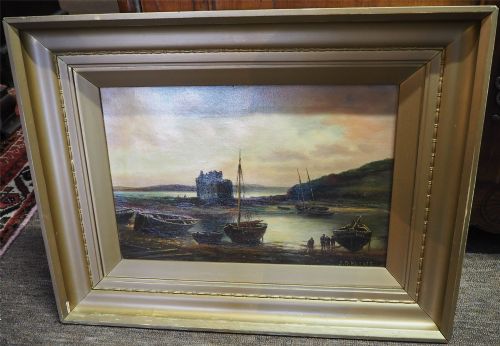
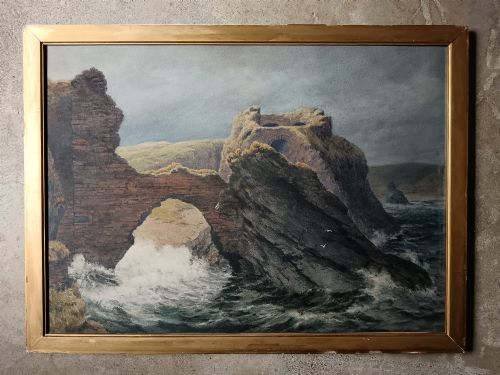
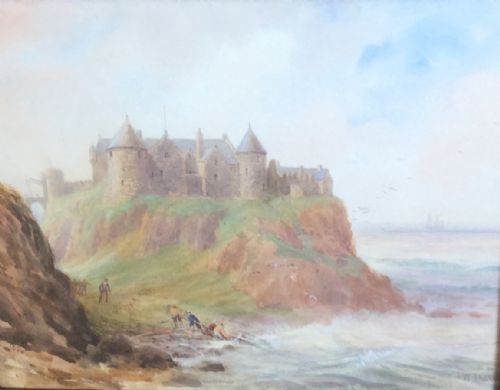
When you search for a victorian coastal castle painting, you encounter nineteenth-century works depicting coastal landscapes, historic fortresses, and maritime scenes. These pieces capture specific locations such as Dunbar, Bamburgh, Hastings, and Dunluce, alongside broader romantic vistas.
The selection on this page consists primarily of oil paintings on canvas and watercolour paintings on paper. Artists record these dramatic seaside settings through distinct topographical and marine traditions spanning the victorian period.
Makers represented in these listings include John Moxon, George Gregory, Claude Thomas Stanfield Moore, R.P. Noble, William Edward Webb, and Joseph William Carey. Their works range from detailed watercolours to large oil compositions framed in wood, gesso, and gold leaf.
How they were made
Painters of this period apply oil on canvas or watercolour on paper to capture the shifting light and atmosphere of coastal locations. Many works incorporate detailed brushwork to delineate historic stonework, churning seas, and stranded shipping vessels.
Surviving pieces frequently retain their original framing materials, utilising wood, gesso, and gilt or gold leaf finishes. Glass often protects delicate watercolour paintings on paper from environmental degradation.
Several artists demonstrated a persistent fascination with maritime misfortune, repeatedly placing wrecked ships directly beneath medieval castle walls.
What varies in quality
The distinction between standard works and exceptional pieces rests upon the precision of topographical detail and the handling of atmospheric light. Master painters render the turbulent motion of waves and the weathered texture of castle ruins with palpable conviction.
The quality of the associated materials, particularly the preservation of the original canvas or paper and the integrity of the gilt frames, influences the overall character of the artwork.
John Moxon·George Gregory·Claude Thomas Stanfield Moore·R.P. Noble·William Edward Webb·Joseph William Carey
The Victorian Coastal Castle Painting Glossary
- Oil on canvas
- Pigment suspended in a drying oil medium applied to a stretched woven fabric support. This technique allows for rich colour depth and textured application.
- Watercolour
- A paint consisting of colour pigments suspended in a water-soluble vehicle, typically applied to paper. It produces translucent washes suited to atmospheric coastal light.
- Gesso
- A plaster-like mixture applied to wood frames before gilding. It provides a smooth surface for subsequent layers of gold leaf.
Victorian Coastal Castle Painting: Frequently Asked Questions
What is a victorian coastal castle painting?
These artworks are nineteenth-century paintings depicting historic coastal fortresses, stormy seas, and maritime activity along British and European shores.
Artists utilise oil on canvas or watercolour on paper to record specific locations, often naming recognised ruins such as Bamburgh or Hastings within the composition.
How were these paintings displayed?
Original presentation typically involved substantial wooden frames enhanced with gesso and gold leaf or gilt finishes. Watercolours were additionally framed behind glass to protect the paper support.
Victorian interiors utilised these marine and topographical scenes to introduce romantic narratives and dramatic coastal views into domestic reception rooms.
How do I identify the period?
Dating relies upon stylistic markers associated with nineteenth-century romanticism, marine art, and topographical landscape traditions. Specific dates and named artists often appear within the titles or signatures.
Materials such as nineteenth-century canvas, traditional watercolour paper, and period gilt frames further anchor these pieces firmly within the victorian era.
Where do the depicted scenes come from?
The landscapes record actual geographic locations across Britain and Ireland, including Scottish coastal views, Dunluce Castle in County Antrim, and English seaside towns.
Artists frequently travelled to these specific coastal sites to sketch ruins and marine traffic directly from observation before completing the final work in the studio.